

Round Mahogany Tea Table
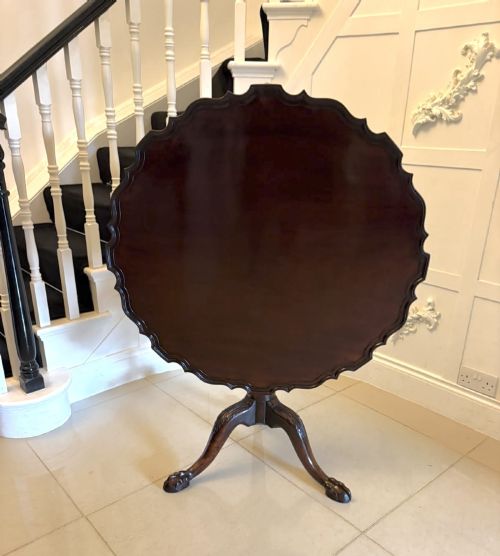
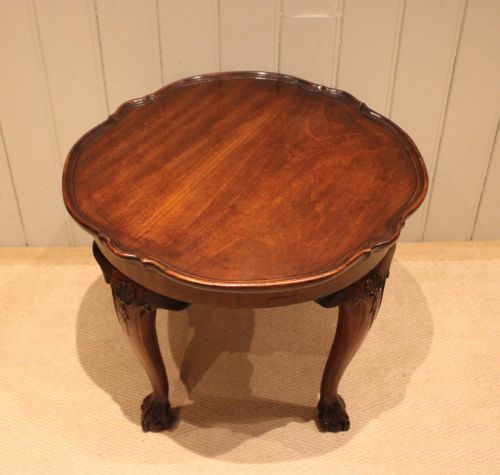
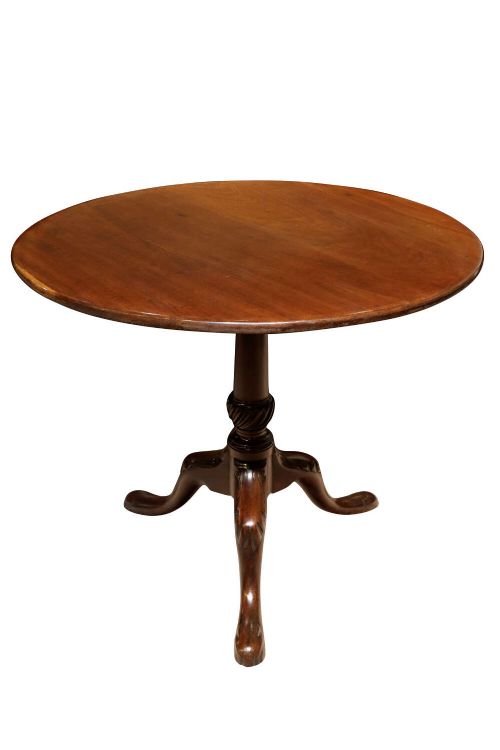
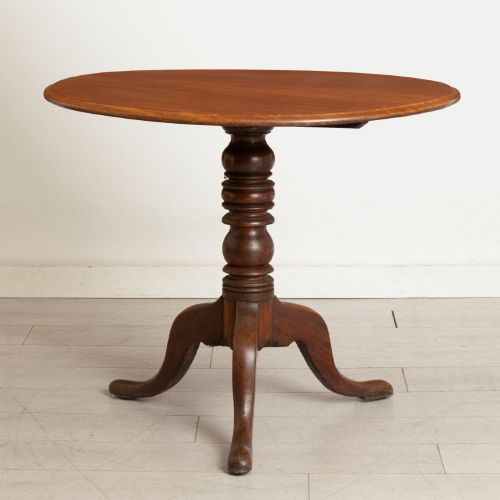
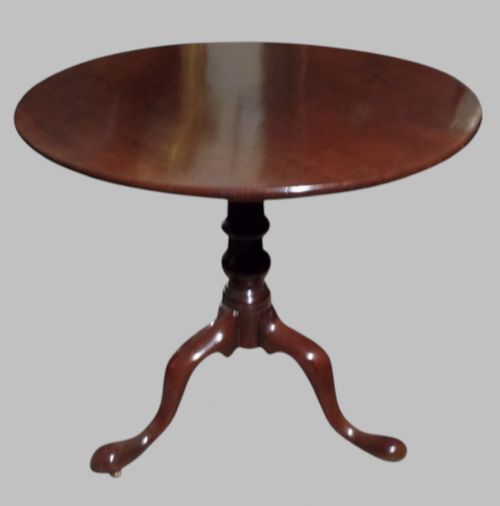
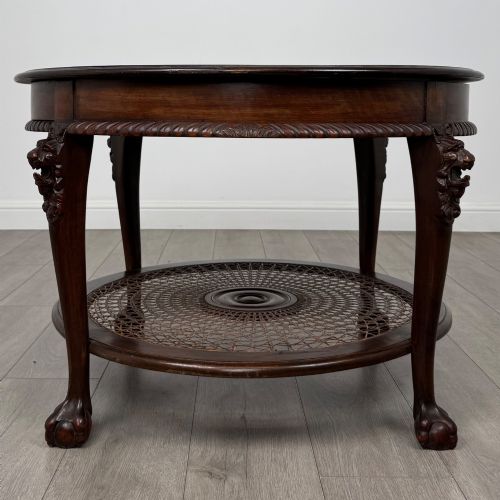
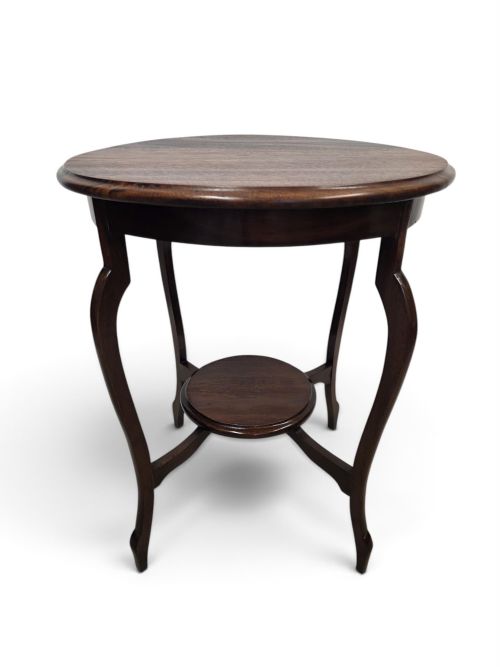
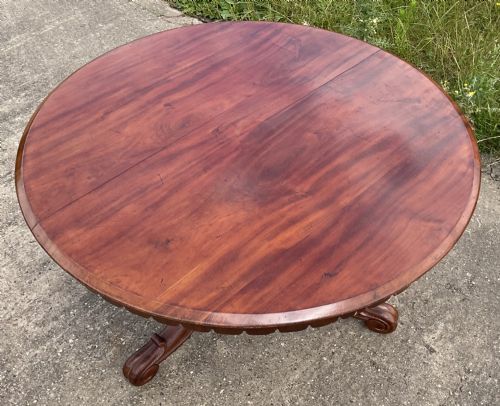
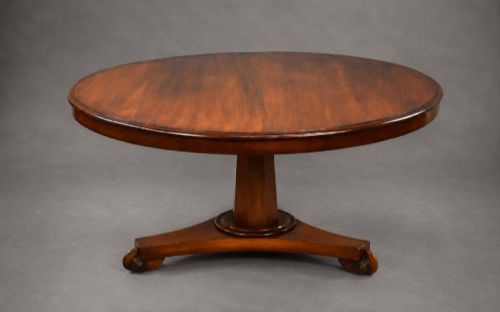
A round mahogany tea table brings a distinct eighteenth or nineteenth-century formality to a room, offering a circular top suited to a lamp or a cup.
Round Mahogany Tea Table
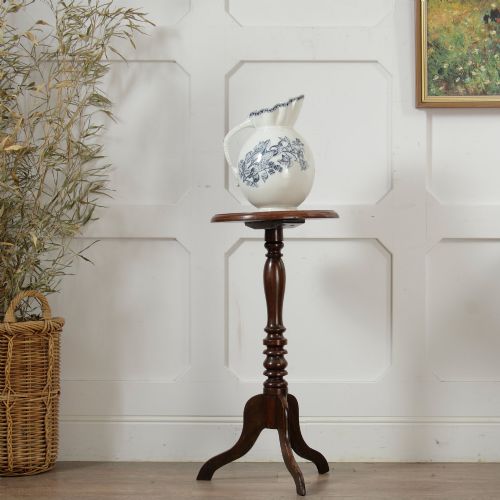
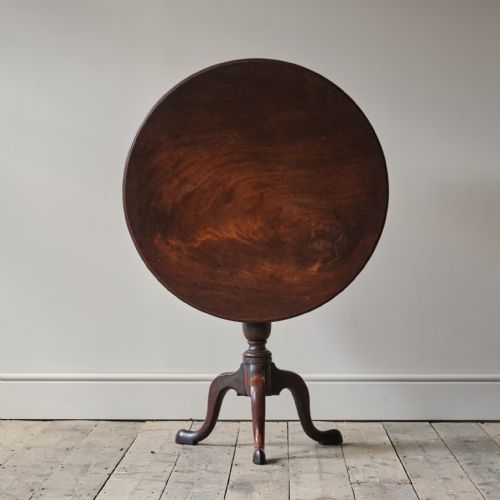
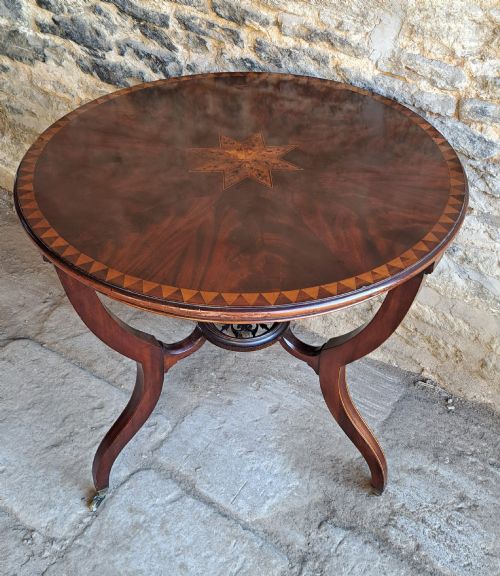
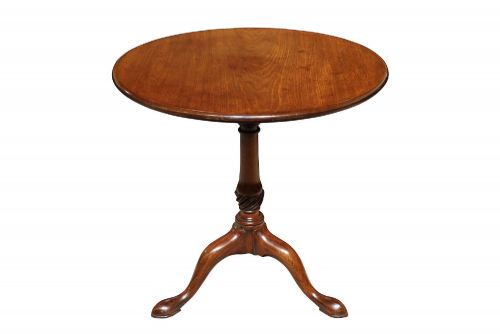
A round mahogany tea table sits on a central pedestal with tripod legs, or on folding and half-round frames designed to stand against a wall when not in use. You will frequently encounter George III and Victorian examples alongside later Edwardian and 1930 interpretations.
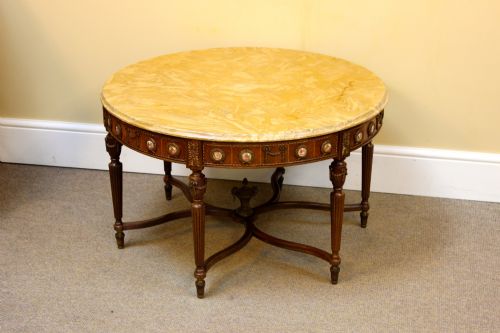
The form spans occasional, wine, and centre tables, often featuring tilt-top mechanisms that allow the circular surface to fold vertically to save space. Mahogany is the primary timber, occasionally accented with satinwood or walnut.
Georgian and Victorian pieces dominate the selection, showing the enduring utility of a small circular surface for afternoon tea or general display.
How they were made
Cabinetmakers used solid mahogany and Cuban mahogany, sometimes selecting specific cuts like plum pudding mahogany for rich grain patterns. Inlays of satinwood added contrast on later Edwardian and Victorian tops.
Tripod tables rely on a birdcage mechanism or a tilting block fixed to a central pillar, allowing the circular top to pivot and fold flat. Brass components appear in castors and hinges on specific folding games and tea tables.
The listings show mahogany as the dominant timber, paired with periods ranging from Georgian and Victorian to Edwardian and 1930.
What varies in quality
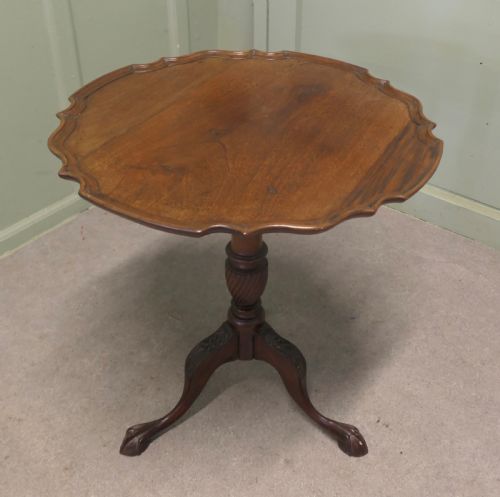
The crispness of carved tripod legs and the elegance of the central pillar dictate the visual success of the piece. Tables with piecrust edges or well-turned birdcage mechanisms show superior craftsmanship.
Timber selection creates a clear division, where dense Cuban mahogany or figured grain commands greater visual depth than plain secondary woods.
The Round Mahogany Tea Table Glossary
- Tilt-top
- A table mechanism allowing the circular surface to pivot ninety degrees and lock vertically. This clever design lets the furniture stand flat against a wall when not in use.
- Tripod table
- A small freestanding table supported by a central pillar above three spreading legs. This configuration prevents wobbling on uneven historical floors.
- Birdcage
- A revolving wooden framework beneath the tabletop that permits both rotation and tilting. It connects the pillar to the surface with neat joinery.
- Piecrust edge
- A raised, scalloped rim carved from the solid timber of the tabletop. It provides a decorative border associated with eighteenth-century pieces.
- Cuban mahogany
- A dense, dark timber harvested in the Caribbean and prized for its rich grain. Furniture makers utilised it extensively during the Georgian period.
Round Mahogany Tea Table: Frequently Asked Questions
How do I date a mahogany table?
Dating relies on observing the leg style, timber weight, and construction methods. Georgian examples often display slender carved tripod legs and heavy Cuban mahogany, while Victorian pieces feature darker finishes and turned pedestals.
Secondary woods and fixing screws also help establish the decade of manufacture, shifting from hand-cut components to machine-made parts by the late nineteenth century.
Where were these tables used?
These tables served primarily in sitting rooms and parlours for holding porcelain teapots, cups, and saucers during afternoon gatherings. Their portable nature allowed servants to move them near fires or windows as needed.
Later Victorian and Edwardian examples adapted to domestic life as lamp tables, wine stands, or occasional surfaces for decorative objects.
What is a birdcage mechanism?
The birdcage is an ingenious assembly of small wooden posts and a rotating platform located directly beneath the tabletop. It permits the surface to spin horizontally as well as tilt vertically.
This construction method requires precise carpentry to ensure the moving parts operate smoothly without excess looseness over centuries of use.