


Round French Pedestal Table
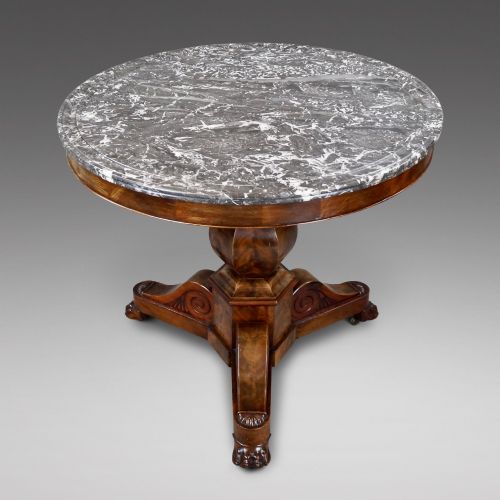
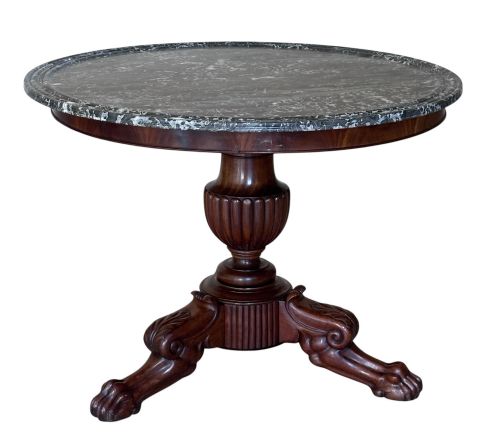
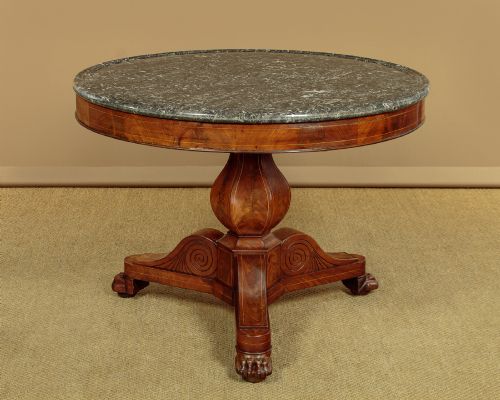
These round french pedestal table pieces bring compact classical proportion and marble or timber tops to a room.
Round French Pedestal Table
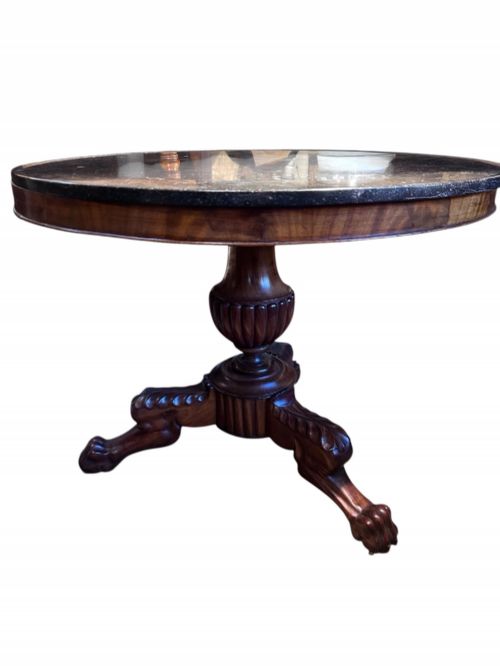
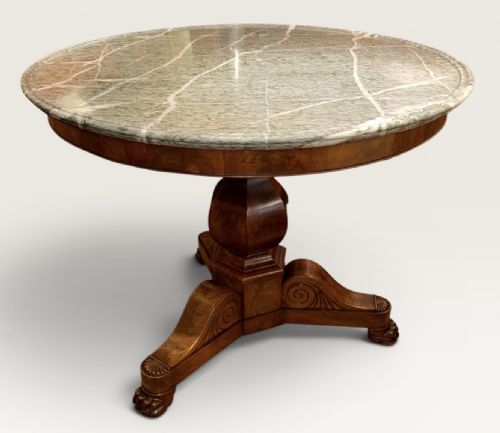
A round french pedestal table stands on a central column supported by a tripod foot or heavy base, functioning as a centre table, occasional table, or bistro table. The form originates in the traditional gueridon, designed to sit freely in the middle of a room or beside seating.
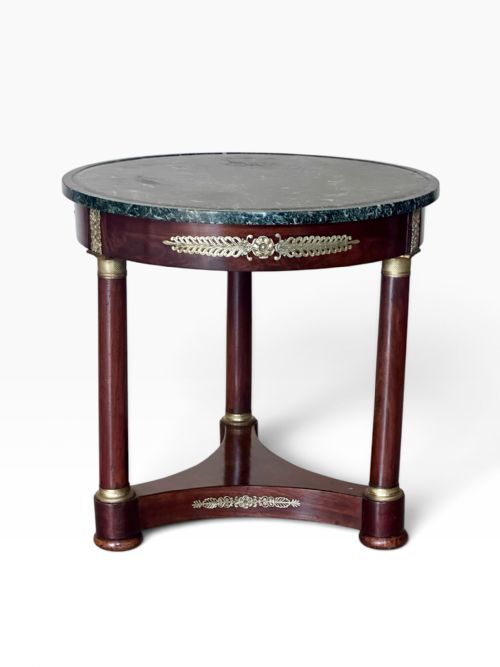
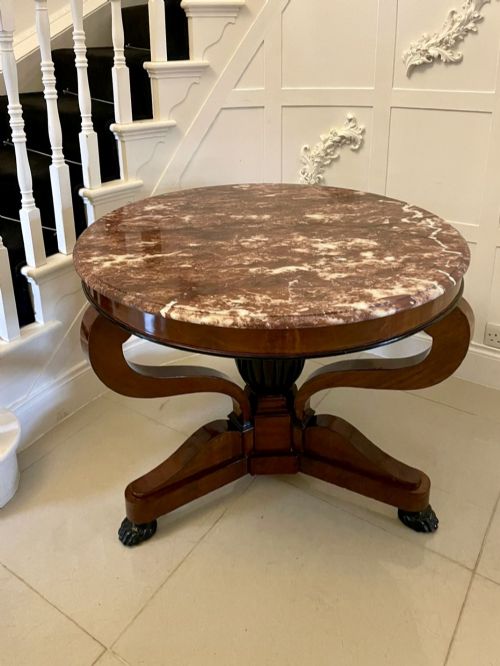
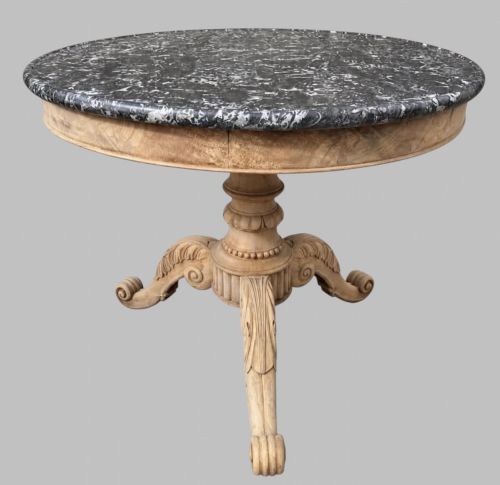
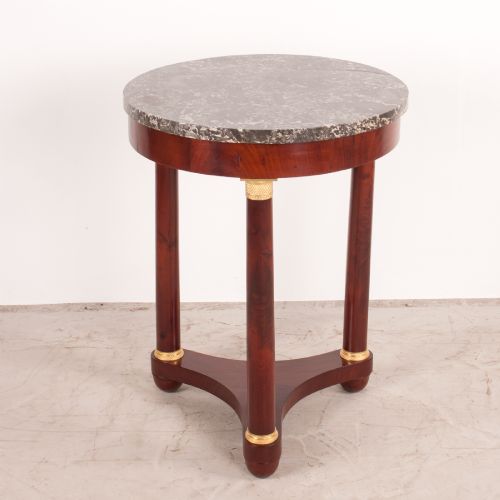
Most examples found here date from the nineteenth century, spanning periods from the Empire and Restoration eras through to Louis Philippe and Victorian designs. Woods such as mahogany, flame mahogany, walnut, and burr elm predominate, often paired with inset white or grey marble tops.
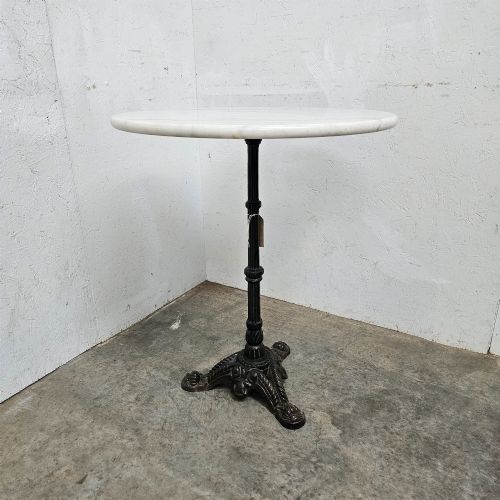
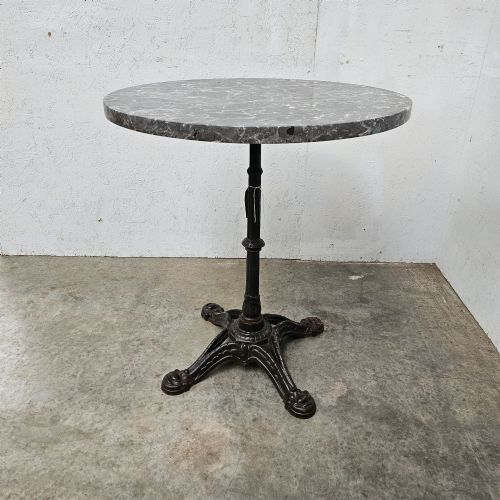
Smaller formats include cafe tables combining cast iron bases with marble slabs, alongside low occasional pieces and wine tables. The silhouette remains consistently circular, balancing a substantial central weight upon slender proportions.
Materials and Construction Methods
Cabinetmakers utilised dense hardwoods like mahogany and walnut, applying figured veneers and flame mahogany to tabletops to catch the light. Ormolu mounts, brass collars, and cast bronze details accent the structural joints and friezes on formal Empire and Restoration pieces.
Carved timber elements incorporate gilt wood, painted finishes, and decorative mouldings executed directly into the solid wood framing. Construction relies on sturdy central pillars secured to robust underframes to support heavy stone without tipping.
Design styles span French Empire, Louis Philippe, and bistro formats.
Distinctions in Quality and Execution
Quality rests upon the selection of timber veneers and the crispness of any cast bronze or ormolu ornament applied to the frieze and base. Finer examples display carefully matched flame mahogany or burr elm grain across the circular surface, whereas simpler utility pieces utilise plain painted or stained pine and cherrywood.
The integrity of the central column and the weight distribution of the pedestal dictate physical stability, particularly when carrying heavy marble tops. Superior mounting of brass galleries and detailed carvings such as rams heads indicate workshops of higher ambition.
The Round French Pedestal Table Glossary
- Gueridon
- A small round table supported by a single central pillar, originating in France during the seventeenth century. These tables evolved from candle stands into versatile centre and occasional furniture.
- Ormolu
- Gilded bronze mounted onto furniture as decorative enrichment. This technique involves applying a gold amalgam to cast bronze before heating.
- Louis Philippe
- A mid-nineteenth-century French style characterised by restrained classical curves and rich mahogany veneers. Decoration remains simpler than the preceding Empire period.
- Malachite
- A green copper carbonate mineral used in thin slices for decorative inlay on luxury furniture surfaces. Its distinctive banding creates rich visual contrast against timber.
Round French Pedestal Table: Frequently Asked Questions
What is a gueridon table?
A gueridon is a traditional French round table supported by a single central pedestal rather than four legs. This design allows the piece to sit compactly in a room without corner legs obstructing chairs.
Historically utilised as candle stands, they evolved into general centre and occasional tables suitable for holding lamps or decorative objects.
How do I maintain a marble top?
Marble tops require gentle cleaning with warm water and soft cloths to avoid scratching the polished stone surface. Acidic liquids like wine or citrus should be wiped away immediately to prevent staining.
Most historic tables feature unsealed stone that benefits from occasional specialist waxing to maintain its natural finish.
Can I use a bistro table outside?
Cast iron and marble cafe tables were originally built for commercial hospitality use and tolerate sheltered outdoor conditions well. However, historic iron frames and older marble slabs are vulnerable to frost and heavy weathering.
Protecting the table during winter months preserves both the cast metal and the integrity of the stone.
How do I date an Empire style table?
Empire and Restoration pieces often feature characteristic architectural woods like flame mahogany, paired with cast bronze or ormolu mounts. Motifs such as classical columns and animal forms point towards early nineteenth-century production.
Later nineteenth-century revivals replicate these forms using machine-cut veneers and lighter internal framing.