

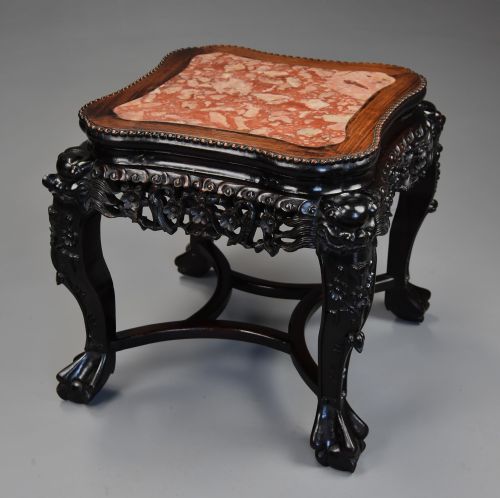
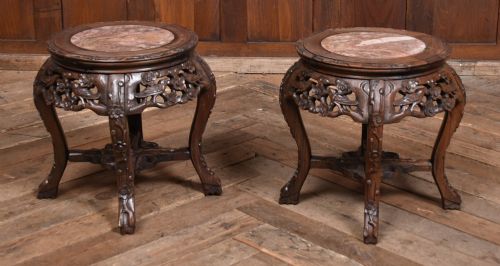
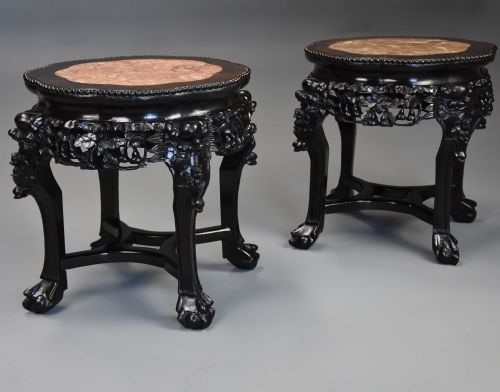


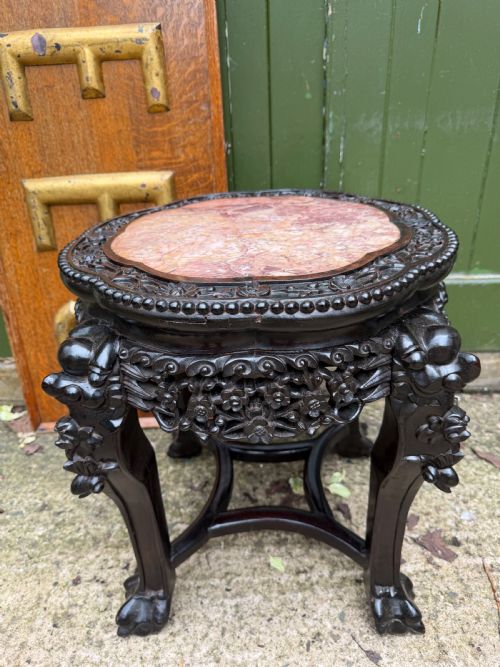


Inset Marble Top Stand
An inset marble top stand brings a cool stone surface and heavy carved wood into a room, serving as a perch for plants, urns and lamps.
Inset Marble Top Stand
Buyers encounter numerous low tables, pot stands and occasional tables originating from the Qing Dynasty and the late nineteenth century. Many pieces feature shaped or circular tops where a smooth marble slab sits flush within a carved wooden frame.
How they were made
Joiners constructed the frames of these tables using dense timbers such as rosewood, padouk, hongmu, mahogany and ebonised wood. Artisans shaped these heavy woods through intricate carving, creating curved aprons, barrel forms and cabriole or straight legs.
The defining element is the stone insert, typically white, variegated or rouge marble, cut to fit precisely into the wooden recess of the top surface. European pieces occasionally added brass mounts or gilt details to the timber frames.
Inset Marble Top Stand Retail Price Guide 2026
Typical asking prices for inset marble top stand among the pieces listed under this phrase on Sellingantiques today, from the lower quarter to the upper quarter. They describe what is for sale here now, not the wider market.
Some nineteenth-century makers built these stands in an unusual barrel form, giving a plump, organic silhouette to the otherwise rigid geometry of stone and wood.
What varies in quality
The distinction between standard utility items and finer examples rests on the depth and crispness of the wood carving. Heavy, dense timbers like hongmu and padouk carry sharper, more deeply undercut relief work than softer or plainer woods.
The character of the marble insert also separates pieces, with richly veined rouge or variegated stone commanding greater visual presence than plain white slabs. The precision of the joinery where the stone meets the wooden frame dictates the structural integrity.
The Inset Marble Top Stand Glossary
- Hongmu
- A dense, heavy Chinese hardwood often used for carved furniture. It translates literally to red wood and develops a deep patina over time.
- Jardiniere stand
- A tall or low table specifically designed to hold a ceramic plant pot or flower bowl. These stands protect interior flooring from water and elevate greenery.
- Padouk
- A durable, heavy tropical timber with reddish tones utilised in nineteenth-century Chinese cabinetmaking. It provides strong support for heavy stone tops.
- Rouge marble
- A decorative limestone featuring deep red, grey and white veining. It provides a striking contrast against dark ebonised or polished hardwoods.
- Ebonised wood
- Timber treated with a dark finish to imitate expensive ebony. This technique was popular in nineteenth-century European and Chinese export furniture.
Inset Marble Top Stand: Frequently Asked Questions
What is an inset marble top stand used for?
These pieces serve primarily as plant stands, jardiniere holders, vase supports and lamp tables in reception rooms. The stone surface provides a durable, waterproof platform that resists moisture from potted plants.
Beyond botanical displays, they function as occasional side tables for holding small decorative objects or serving drinks. Their compact footprints allow them to fit into corners or beside seating without dominating a room.
How do I identify a nineteenth century Chinese stand?
Nineteenth-century Chinese examples typically employ dense exotic hardwoods like hongmu, padouk or rosewood, often carved with traditional floral, geometric or biological motifs. The construction relies on traditional joinery techniques designed to accommodate the heavy weight of the stone.
Many of these pieces date from the Qing Dynasty or the Meiji period, showing distinct regional carving styles. The marble insert is usually heavy and sits tightly within a recessed wooden channel framed by a raised edge.
How do I clean the marble top?
Cleaning requires only a soft cloth dampened with warm water and mild, neutral soap. Harsh chemical cleaners, vinegar or abrasive scouring pads will dull the polished surface of the stone and etch the calcium.
Dry the marble thoroughly after wiping to prevent water spots from forming. Treating the stone with a suitable marble sealer periodically helps protect against staining from plant water or condensation.
Where should I place a low stand?
Low stands work effectively beside armchairs, low sofas or as central accents supporting a large ceramic bowl or lamp. Their modest height keeps sightlines open across a room while offering a convenient surface within arm reach.
Positioning them away from direct heat sources and strong sunlight preserves the polished finish of both the timber frame and the marble insert. Placing felt pads beneath heavy pots on the marble prevents scratching.