


Round Dial Wall Clock
A round dial wall clock brings the precise engineering of railway stations, schools and offices straight into a room.
Round Dial Wall Clock
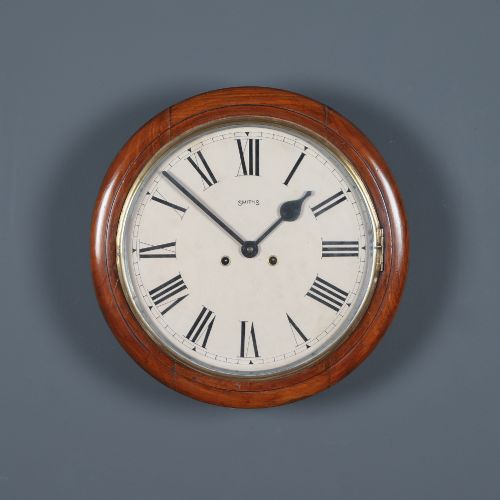
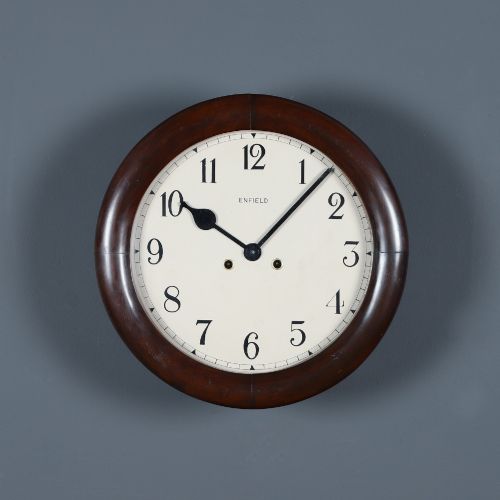
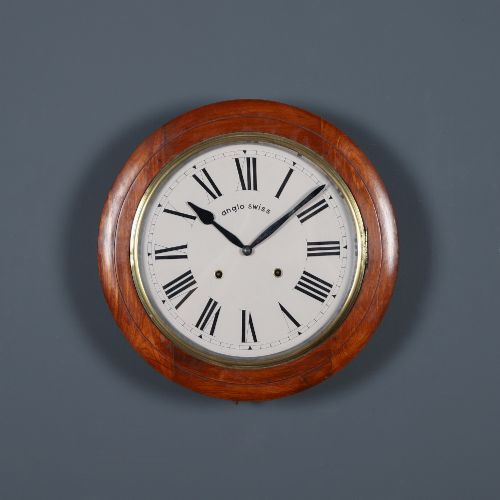
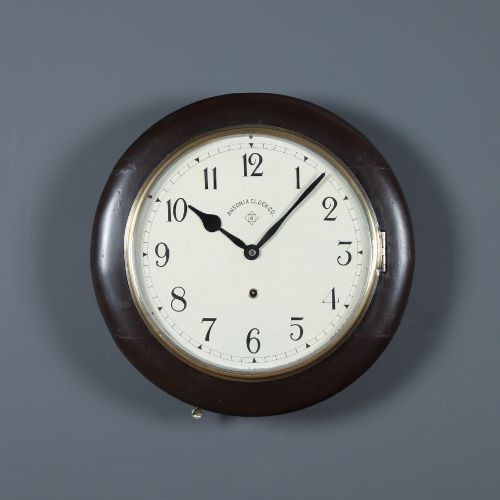
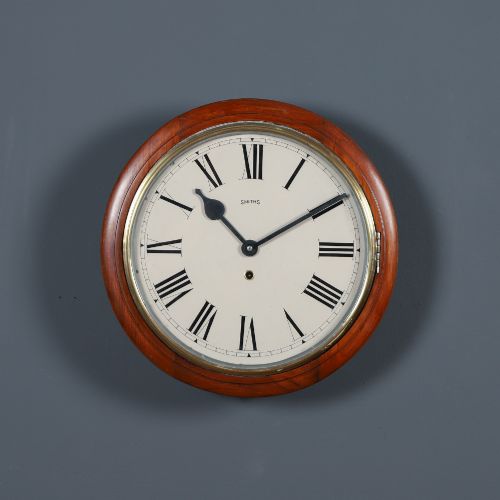
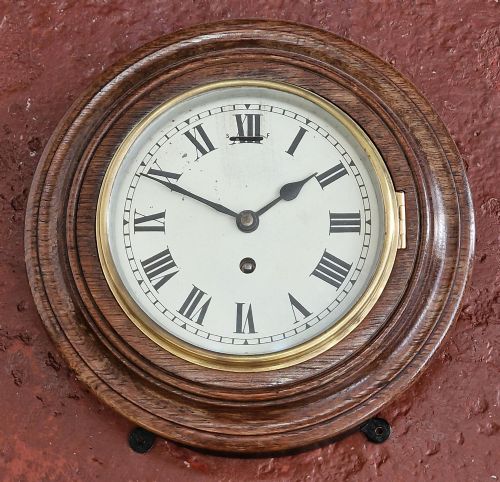
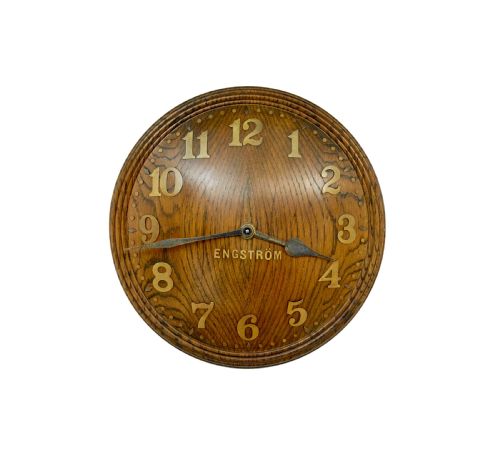
A round dial wall clock is a timepiece designed for public spaces, transport hubs and institutions, built to be read from a distance. When searching for a round dial wall clock, buyers most frequently encounter mahogany and oak cases dating from the Victorian and Edwardian eras through to the mid-twentieth century.
The selection ranges from small dial clocks measuring six inches across to large railway and factory examples spanning sixteen inches or more. These pieces carry the utilitarian aesthetic of British and international railways, schools and municipal buildings into domestic and commercial interiors.
How They Were Made
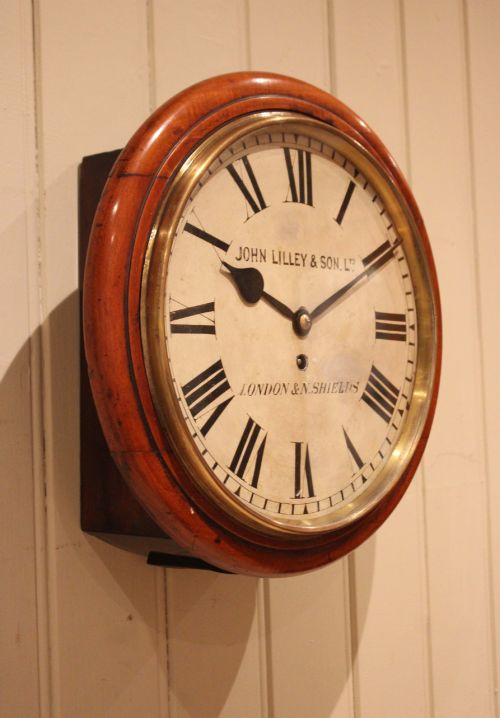
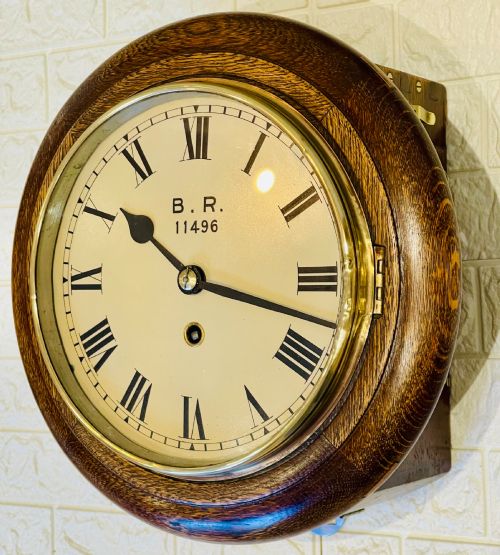
Cases are turned and joined from dense timbers such as mahogany and oak, often featuring hinged side doors and heavy bezels glazed with glass to protect the face. Movements are driven by weights or fusee spring mechanisms enclosed in brass and iron, housed securely behind the dial.
Faces are formed from painted metal, enamel or convex glass over paper and metal dials, marked with clear numerals for rapid timekeeping. Many incorporate fusee movements, which use a conical pulley to equalise the declining power of the mainspring as it unwinds.
Listings feature woods like mahogany and oak, alongside metals such as brass, iron, and copper used in movements and bezels.
What Varies in Quality
Quality rests in the crispness of the case timber turning, the original patination of the mahogany or oak, and the integrity of the brass movement inside. Superior examples retain their matching matching pendulum, original dial lettering, and well-maintained fusee mechanisms that demonstrate precise mechanical execution.
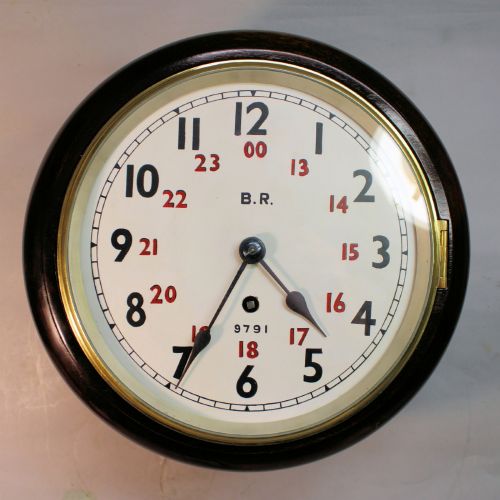
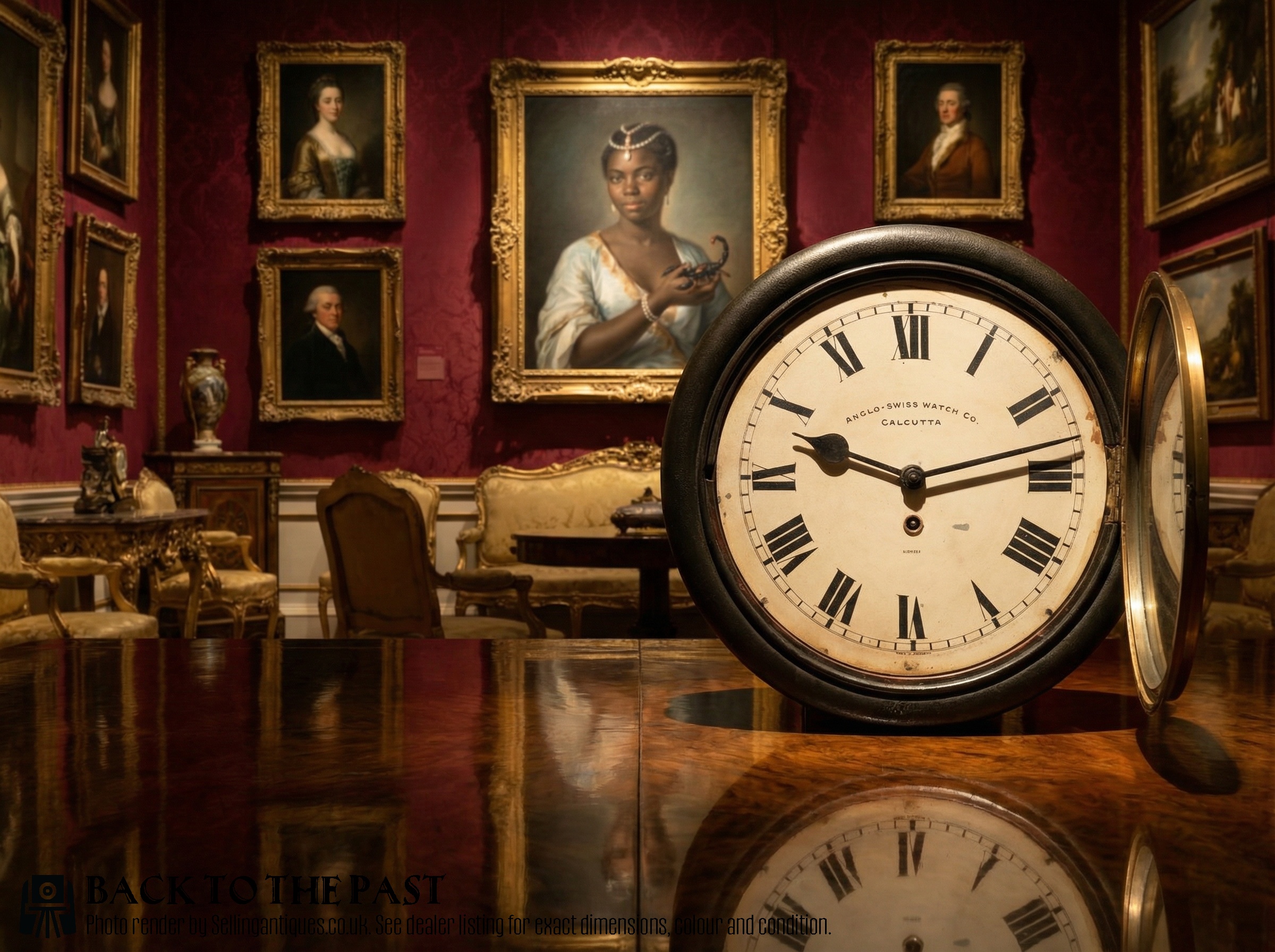
The distinction also lies in the provenance marked upon the dial, such as railway company ciphers or retail signatures, alongside the clarity and preservation of the painted or enamelled face.
Smiths·Enfield·Ansonia·John Walker·Zenith·Balbiani BROOKLEY·Payne of Tunbridge Wells·Webster
The Round Dial Wall Clock Glossary
- Fusee
- A conical pulley connected to the mainspring by a chain or cord, designed to maintain even tension and consistent timekeeping as the spring runs down. This mechanism sits at the heart of better-quality British dial clocks.
- Bezel
- The brass or wooden ring that holds the glass door protecting the clock face. It usually opens on a hinge to allow hand-setting.
- Drop-dial
- A clock case featuring an extended lower section below the round dial, often housing a pendulum bob window and providing room for a longer drop.
- Timepiece
- A clock movement that indicates the hours and minutes without a striking or chiming train. These mechanisms focus purely on accurate time recording.
Round Dial Wall Clock: Frequently Asked Questions
Where were these clocks originally used?
These timepieces hung in bustling railway stations, school assembly halls, post offices, and municipal municipal boardrooms across Britain and beyond. Their clear dials ensured workers and travellers could read the time at a glance.
Later examples served in military installations, factories, and transport offices such as the L.N.E.R. and British Rail networks.
How do I hang a heavy dial clock securely?
Mount the clock directly into wall studs or use appropriate masonry fixings capable of supporting the combined weight of the timber case and brass movement. The weight rests primarily on the upper hanging bracket or internal backboard.
Ensure the wall is flat so the case sits flush, preventing the pendulum from catching on the interior sides of the wooden housing.
How can I tell the difference between Victorian and later models?
Victorian examples frequently utilise fusee movements housed in rich mahogany cases with hand-painted dials and cast brass bezels. The construction methods show traditional cabinet-making techniques like dovetails and pegged joints.
Mid-century and later pieces often incorporate oak cases, simpler mechanical or electric movements, and stencilled dial lettering associated with nationalised rail networks and government offices.