
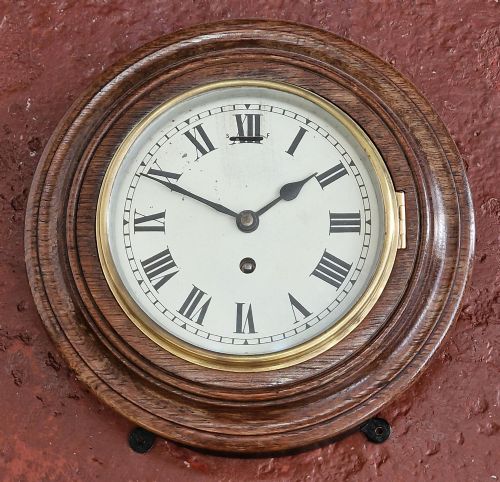
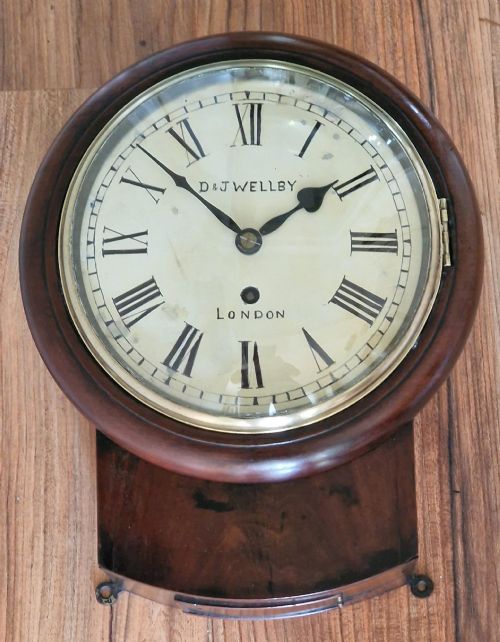
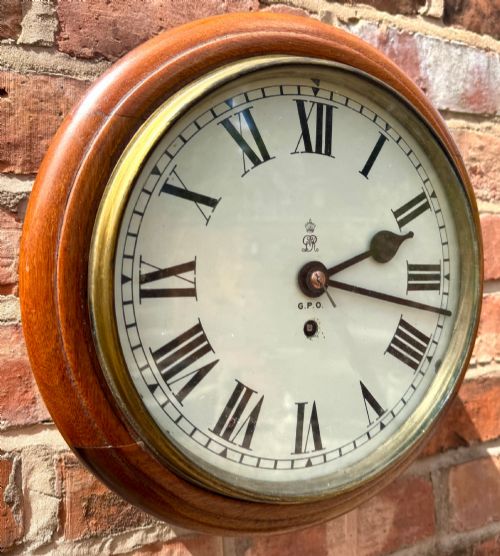
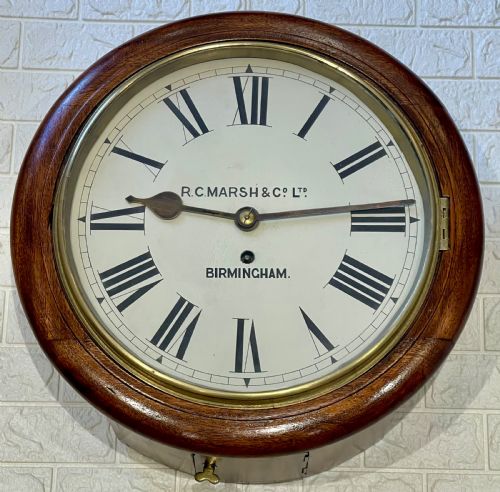
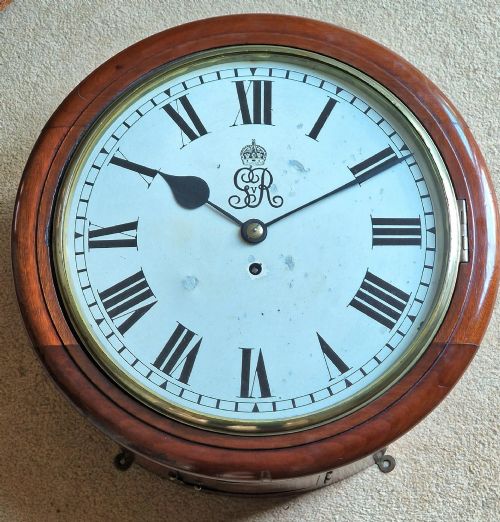
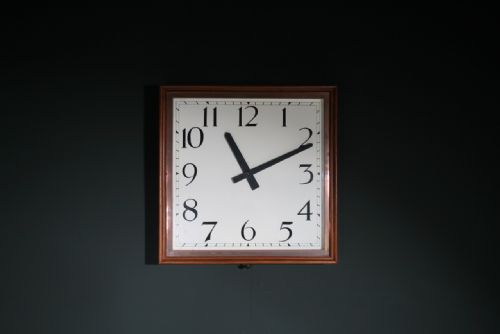


Edwardian School Wall Clock
An edwardian school wall clock brings practical timekeeping and bold, clean dials into a room with utilitarian charm.
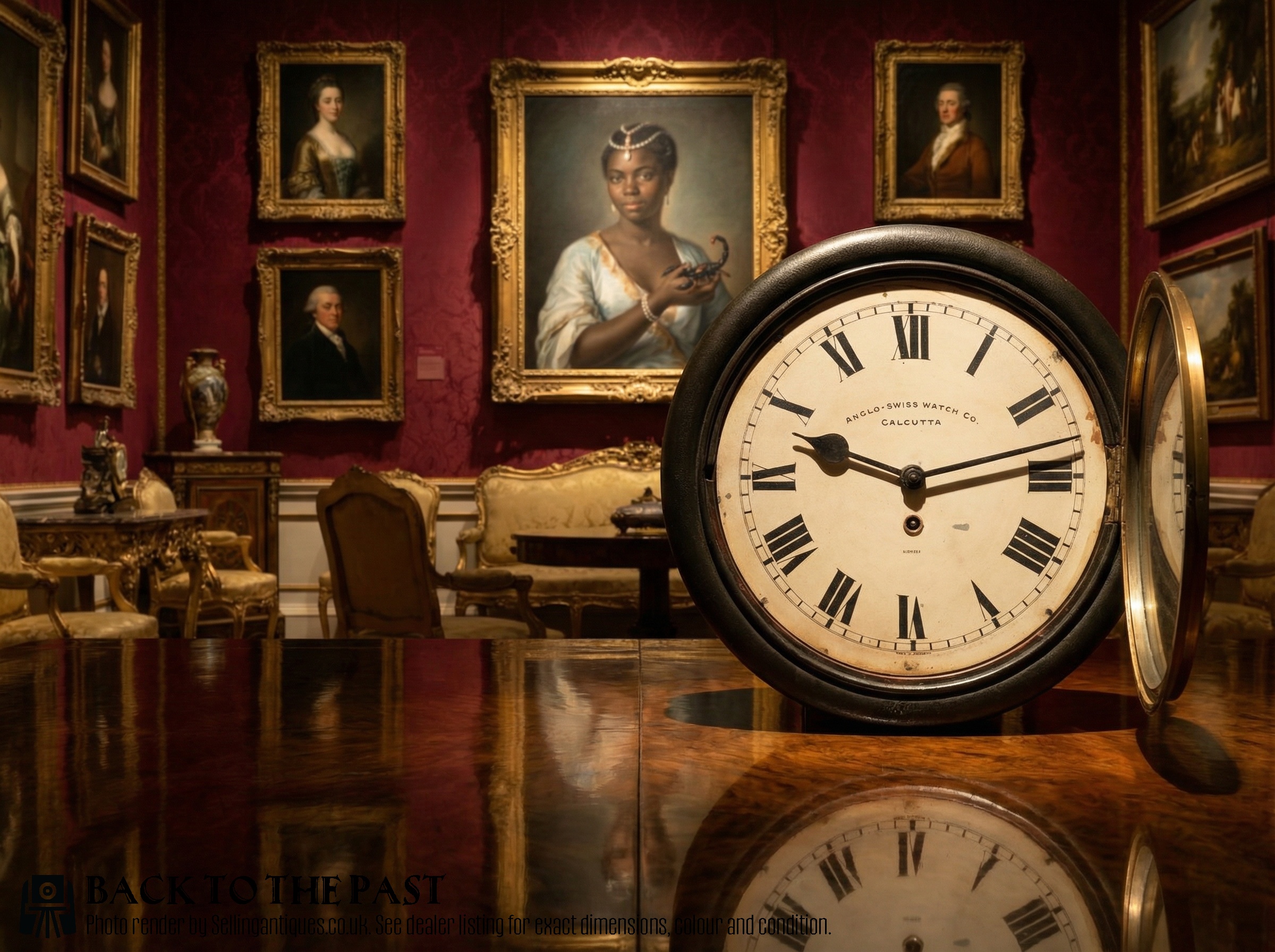
Edwardian School Wall Clock
An edwardian school wall clock is a round dial timepiece originally built for institutional spaces such as classrooms, railway stations, and municipal offices. Buyers seek these pieces for their clear, legible faces and solid timber surrounds that anchor a wall.
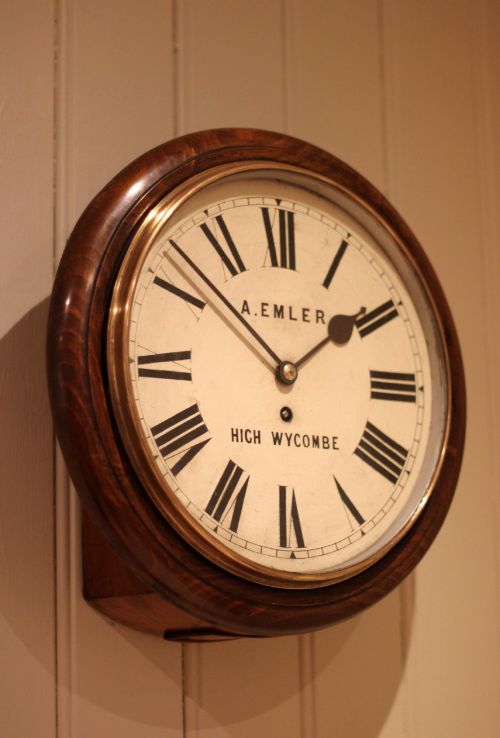
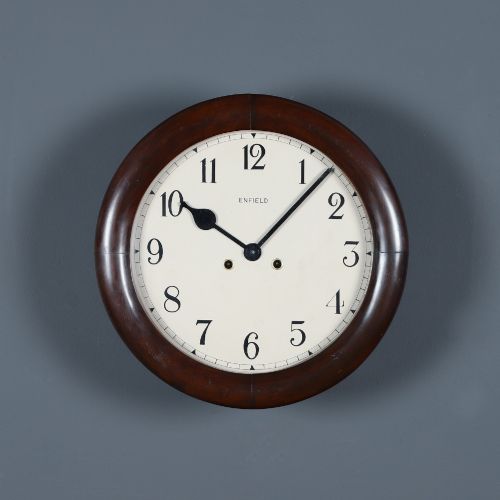
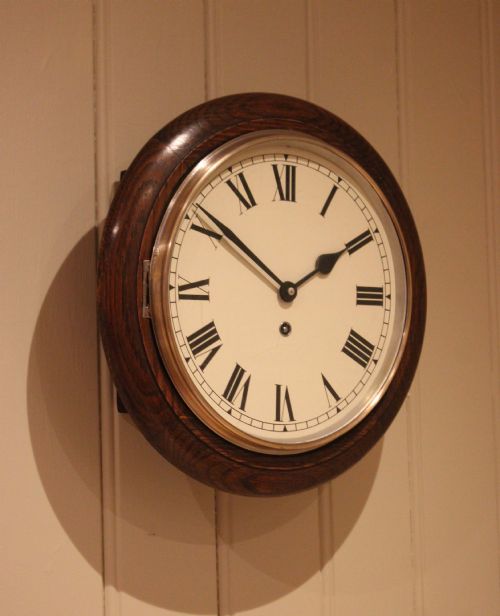
The version most commonly met on this page is housed in a circular wooden case with a hinged bezel, designed to be read easily from a distance. These clocks combine functional mechanics with straightforward architectural presence.
Materials and construction
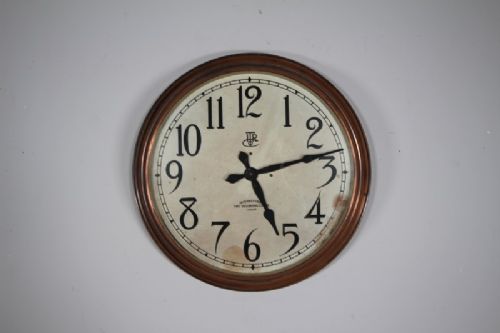
Cases are predominantly constructed from dense timbers such as mahogany, oak, and beech, turned or joined to form robust circular housings. Glass protects the dial, held within a brass, copper, or wooden bezel that swings open for winding and hand-setting.
Movements rely on traditional fusee mechanisms or spring-driven calibres designed for reliable, sustained timekeeping. Metal components utilise brass and iron within the gear trains to ensure durability under daily institutional use.
Listings feature clock cases rendered in mahogany, oak, and beech, alongside metal bezels in brass and copper.
Distinctions in quality
Quality separates clocks by the crispness of dial lettering and the integrity of the timber case construction. Superior examples retain original bevelled glass, unblemished painted dials, and properly proportioned bezels without warping or heavy timber shrinkage.
The refinement of the movement mechanism also dictates value, with cleanly cut fusee gear trains and stamped maker signatures holding greater distinction. Better pieces display harmonious proportions between the dial diameter and the depth of the wooden surround.
D&J Wellby London·Anglo Swiss Watch Co·Camerer Cuss And Co
The Edwardian School Wall Clock Glossary
- Fusee
- A conical pulley used with a cord or chain to maintain even force on the clock movement as the mainspring unwinds. This mechanism improves timekeeping consistency throughout the running period.
- Bezel
- The metal or wooden ring that holds the glass door protecting the clock face. It typically opens on a hinge to allow access for setting the hands.
- Dial
- The visible face of the clock where the numerals and minute markers are painted or engraved. School clocks usually feature bold Arabic or Roman numerals for maximum legibility.
- Drop dial
- A clock case featuring an extended lower portion below the main circular dial. This drop often houses a pendulum box or weight chute.
- Timepiece
- A clock that indicates the time but does not include a striking mechanism to chime the hours. Many utilitarian wall clocks were built purely as timepieces to avoid distraction in public rooms.
Edwardian School Wall Clock: Frequently Asked Questions
How do I wind an edwardian school wall clock?
Winding requires inserting a dedicated key into the small winding aperture on the dial face and turning it slowly clockwise until resistance is felt.
Care must be taken not to over-wind the mainspring, which can cause internal strain on the gear train.
Where should I hang a heavy wall clock?
These clocks require secure mounting directly into wall studs or solid masonry using appropriate fixings to support the weight of the timber case and movement.
Hanging them on standard plasterboard without a proper anchor risks damaging the wall and destabilising the pendulum.
Why does my clock need to be level?
A wall clock relies on an even suspension to ensure the pendulum swings with equal duration to the left and right. If the case tilts, the beat becomes uneven and the clock will eventually stop.
Adjusting the small regulating nut below the pendulum bob helps correct minor timing discrepancies.
How do I tell an original school clock from a modern reproduction?
Original examples display authentic timber patina, hand-painted or aged paper dials with natural crazing, and traditional fusee or spring movements bearing genuine mechanical wear.
Modern replicas often use quartz mechanisms, lightweight manufactured boards, and printed plastic dials that lack the depth of vintage materials.