


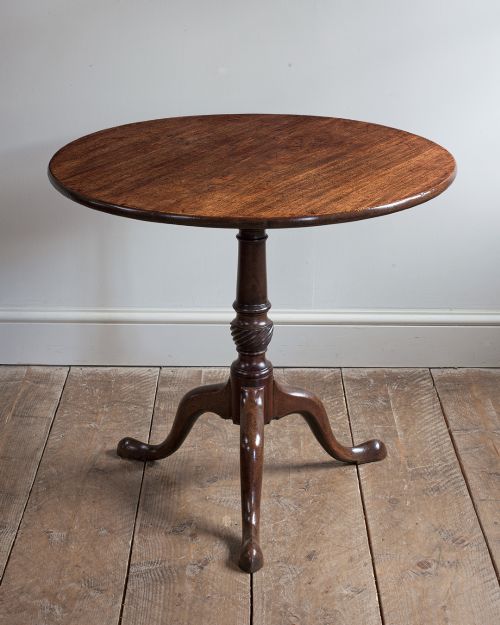
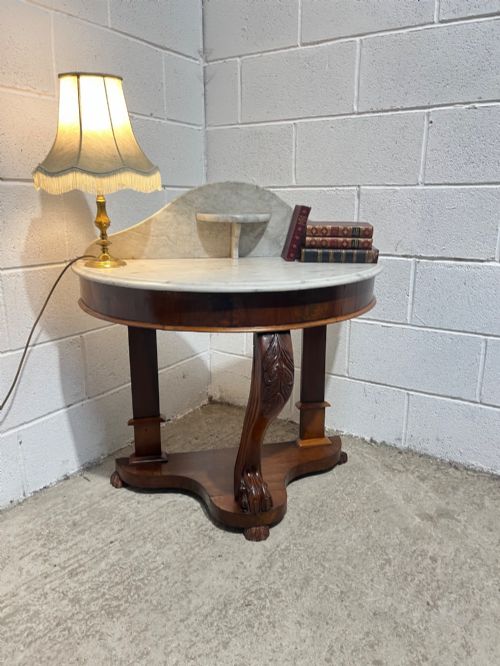
Round Dark Mahogany Table
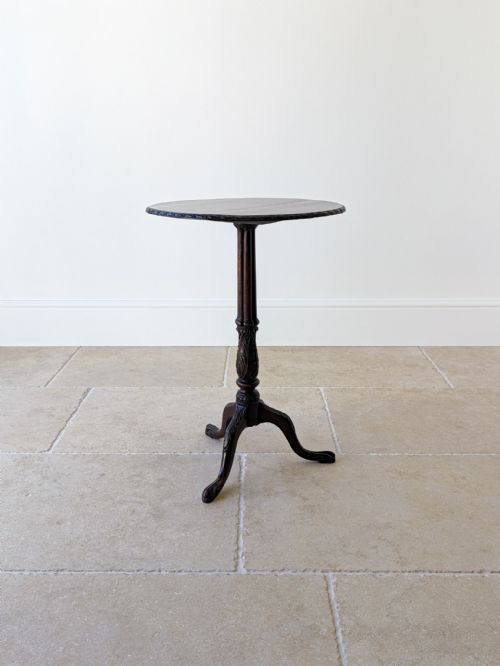
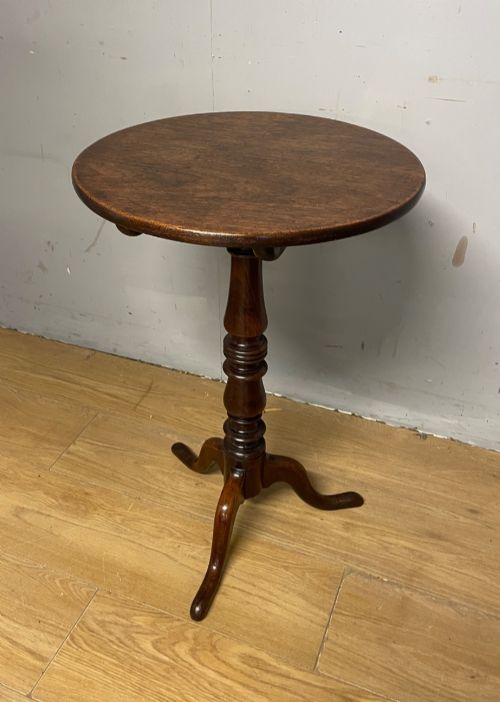
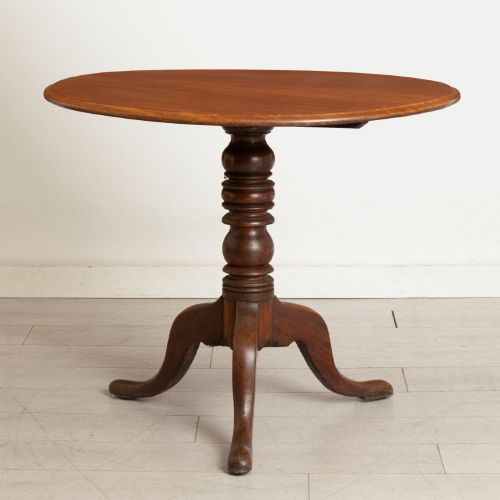
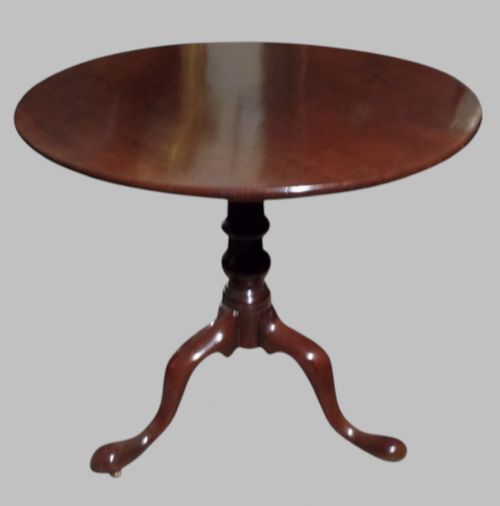
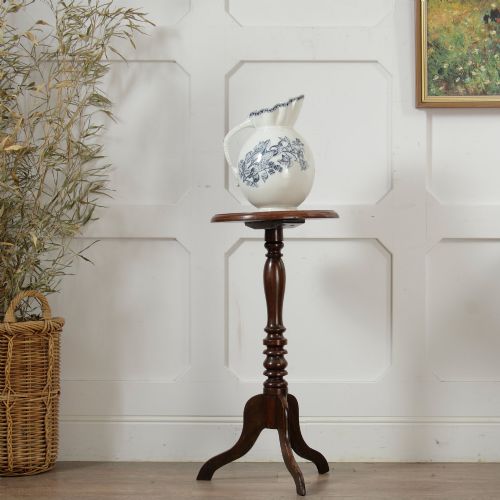
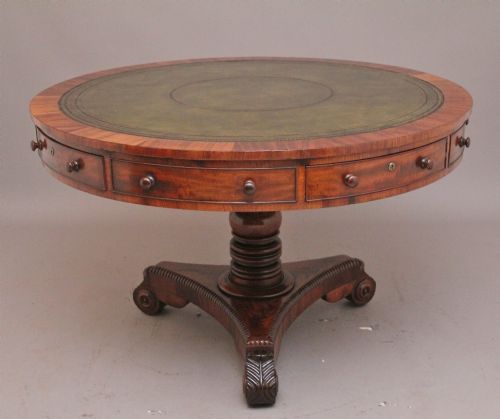
A round dark mahogany table offers a solid circular top raised on pedestals or tripod legs, spanning Georgian, Victorian, and later eras.
Round Dark Mahogany Table
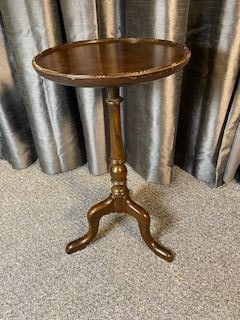
A round dark mahogany table functions primarily as a dining, occasional, wine, or centre table. The evidence reveals pieces spanning the 18th century, Georgian period, Victorian era, Edwardian period, and up to the 1930s. Buyers searching for a round dark mahogany table encounter forms ranging from tilt-top tripod wine tables to large extending dining tables and pedestal coffee tables.
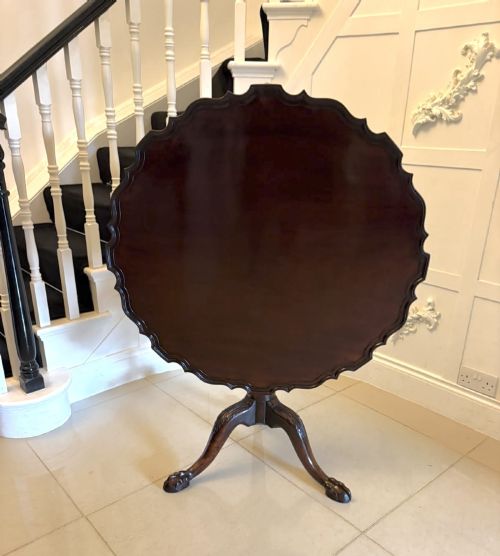
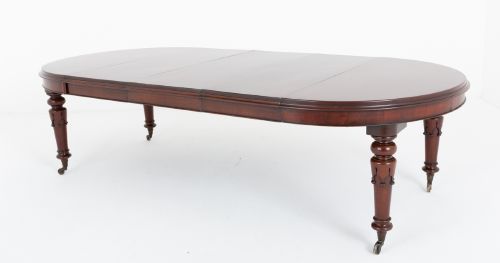
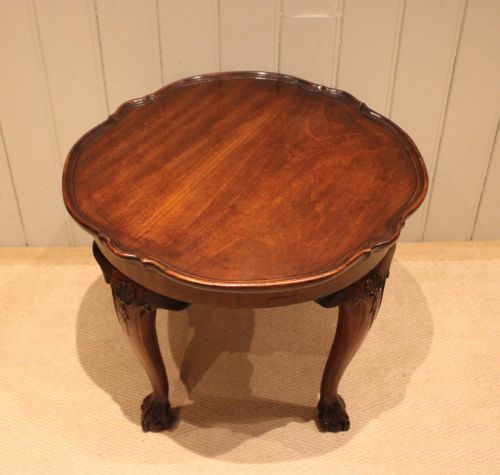
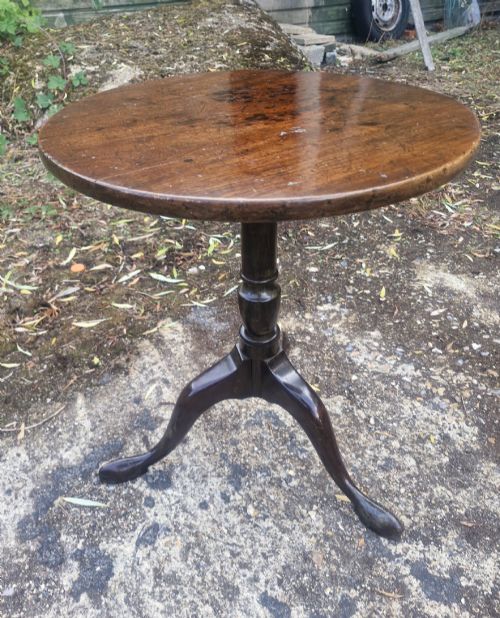
Georgian and George III examples frequently feature tilt-top mechanisms, birdcage supports, and piecrust edges resting on tripod legs. Victorian and William IV pieces often display circular tops with robust pedestals, triform bases, or extending wind-out mechanisms for larger dining settings. Edwardian and later 20th-century variations include occasional lamp tables and coffee tables.
How they were made
Cabinet makers constructed these tables predominantly from solid mahogany, frequently augmented by flame mahogany veneer, satinwood, walnut, and occasional brass fittings or marble tops. Wood was selected for deep grain patterns and rich dark tones, sometimes shaped into circular tops supported by carved central pillars and tripod leg assemblies.
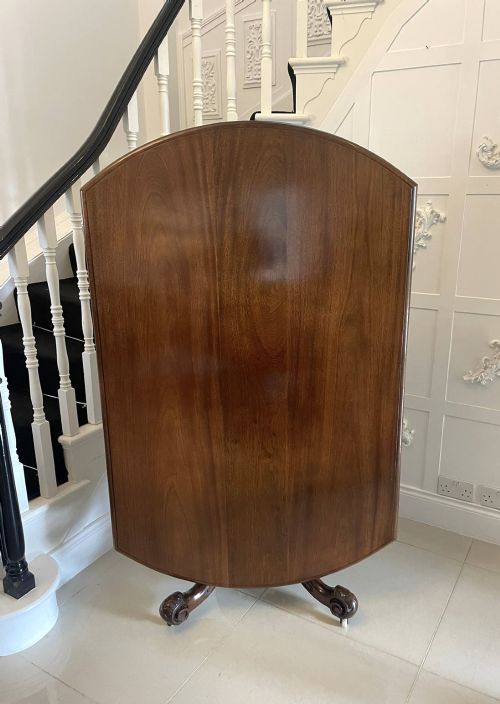
Specialised mechanics appear in the construction of expanding dining tables through integrated wind-out systems. Tilt-top tables utilise clever pivoting mechanisms and wooden catches, allowing the circular top to fold flat when not in active use.
Form variations on this page include occasional tables, side tables, centre tables, dining tables, coffee tables, console tables, wine tables, and breakfast tables.
What varies in quality
The refinement of timber selection dictates visual depth, where dense Cuban mahogany or highly figured flame veneer separates standard utility pieces from more ambitious cabinet work. Superior examples demonstrate crisp carving on tripod legs, pedestals, and piecrust borders rather than soft, worn detailing.
Structural integrity of mechanisms marks a distinct grade in value, evident in the smooth operation of wind-out dining extensions or the precise fit of tilt-top latches and birdcage pivots.
The Round Dark Mahogany Table Glossary
- Tilt-top
- A circular table top mounted on a pivoting mechanism that allows the surface to be folded into a vertical position. This space-saving design became popular for 18th-century tripod tables.
- Tripod table
- A small freestanding table supported by a central pillar resting on three legs. These versatile pieces frequently served as wine or tea tables in Georgian rooms.
- Birdcage
- A rotating wooden framework fitted between the top of the pedestal and the table surface. It allows the circular top to both tilt and rotate independently.
- Piecrust edge
- A decorative raised rim carved into a wave-like or scalloped perimeter around a circular table top. It is typically associated with fine George III and Georgian Revival pieces.
- Wind-out mechanism
- An internal screw-geared system operated by a crank handle to expand the length of a dining table. It separates the top smoothly to accommodate additional leaves.
Round Dark Mahogany Table: Frequently Asked Questions
How do I use a tilt-top table?
Release the wooden catch or brass latch beneath the circular top to pivot the surface upright. This allows the table to rest flat against a wall when floor space is needed.
In daily use, lower the top back to the horizontal position and secure the latch before placing items on the surface.
Where should I place an occasional table?
Position a small tripod or wine table beside seating areas to hold lamps, drinks, or books. Their compact circular footprints fit easily into corners or empty wall spaces.
Larger centre tables work best anchored in the middle of a room, allowing clear circulation around the perimeter.
How do I identify a Georgian piece?
Look for timber characteristics like heavy Cuban mahogany, hand-carved tripod legs, and fine birdcage mechanisms beneath the top. Georgian and George III examples often display proportions and joinery typical of the 18th century.
Inspect the underside and interior components for traditional hand-tool marks and period construction methods.
How do extending dining tables operate?
Insert a crank handle into the side aperture of tables fitted with a wind-out mechanism. Turn the handle to part the circular halves and reveal internal runners.
Drop additional matching leaves into the central gap and wind the mechanism back together to secure the extended surface.