
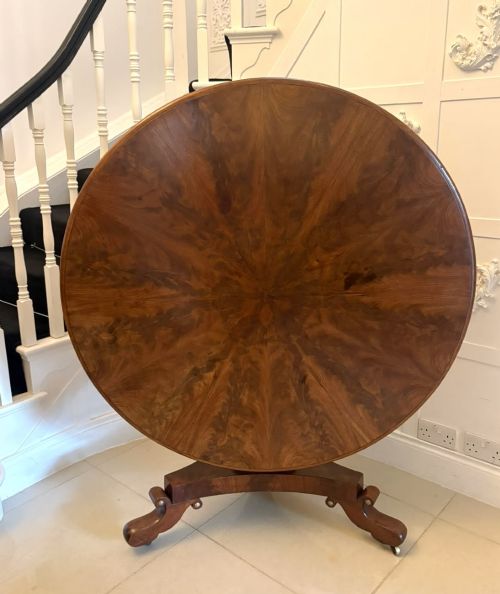
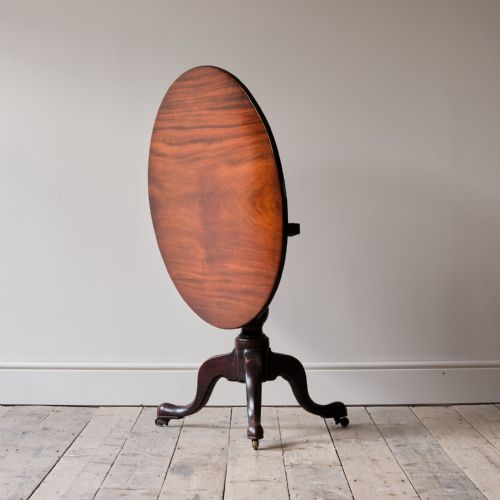
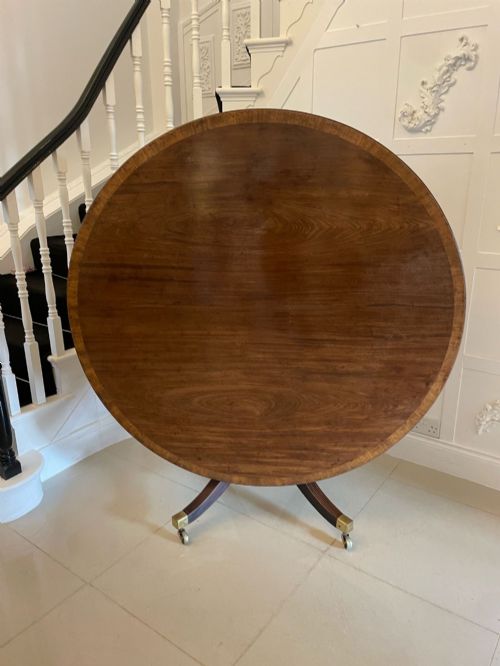
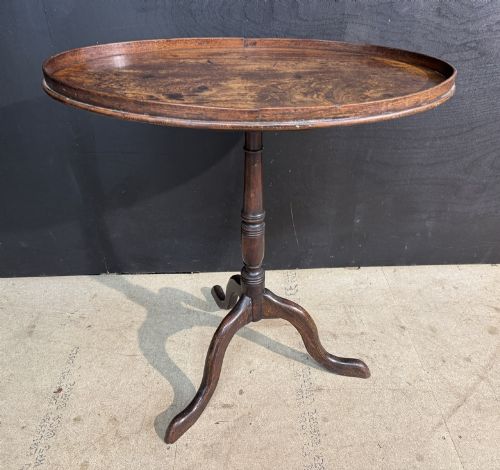
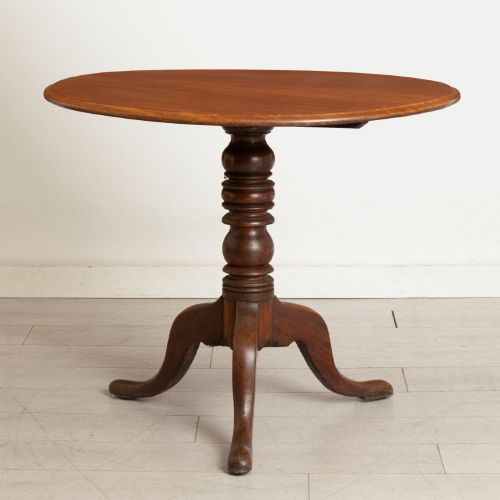
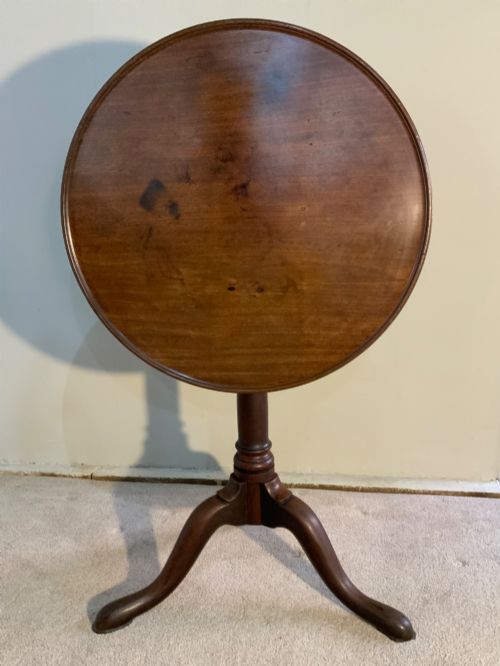
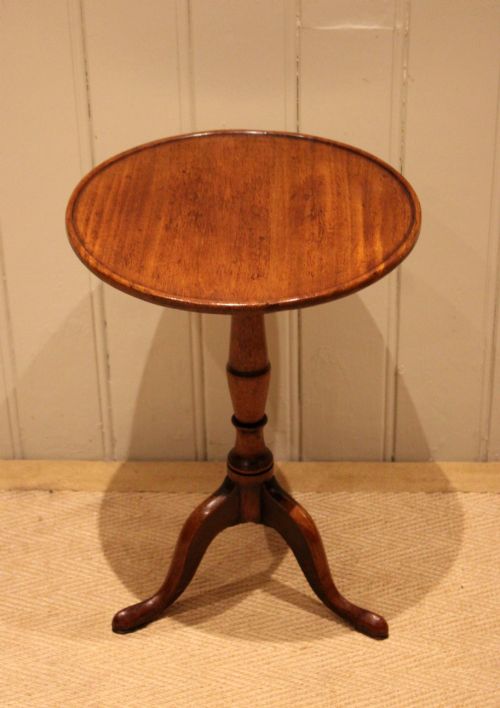
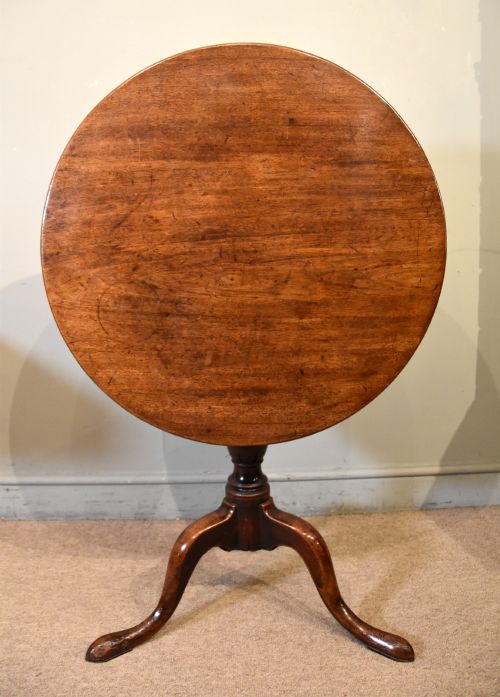
Circular Mahogany Tilt Top Table
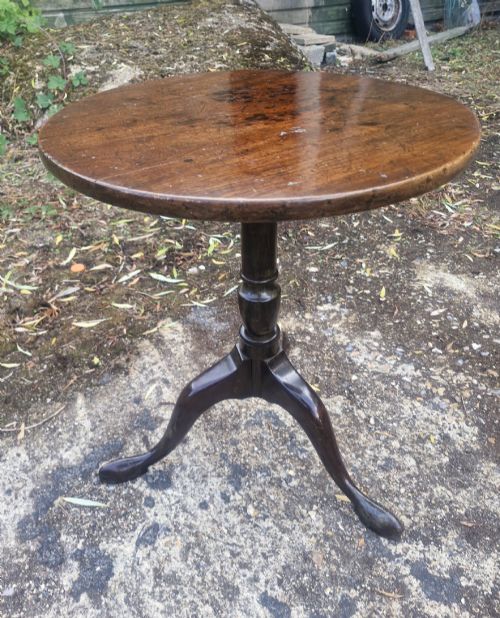
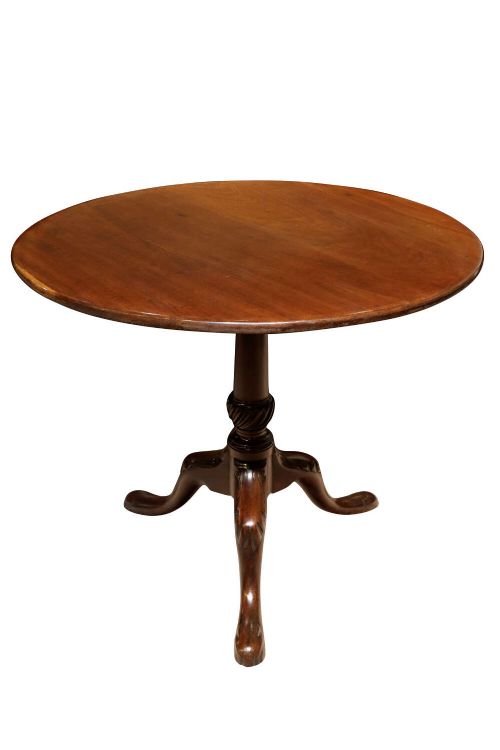
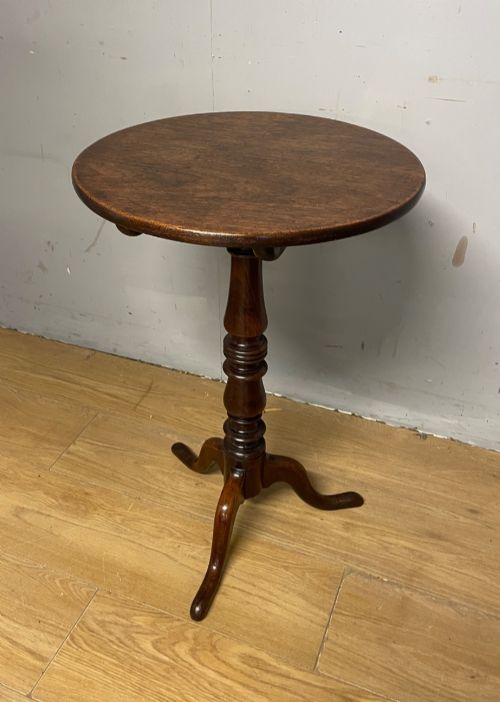
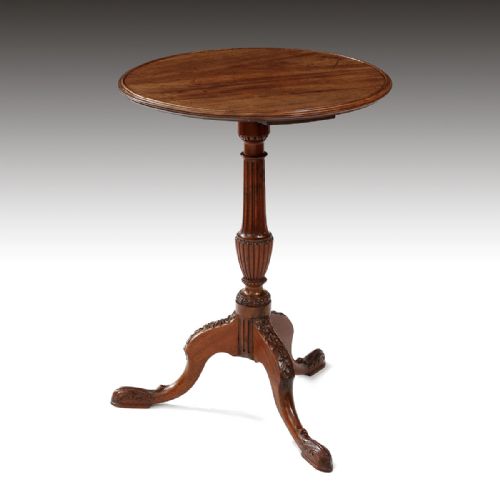
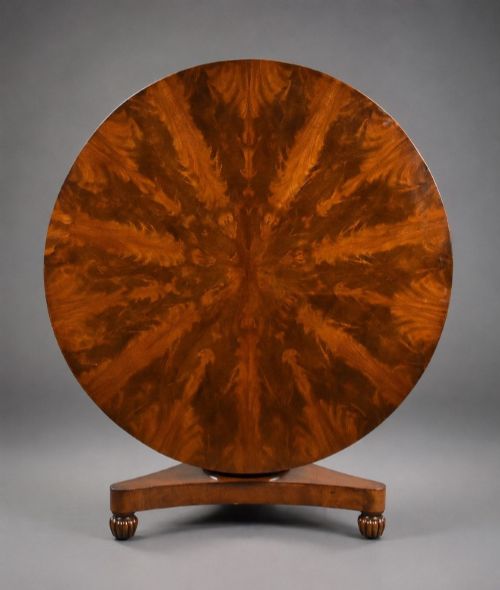
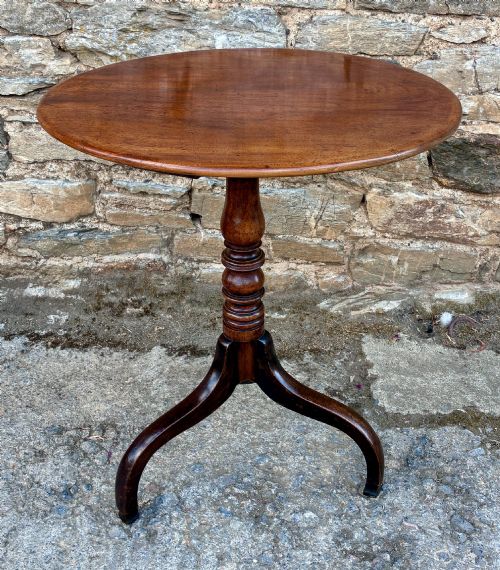
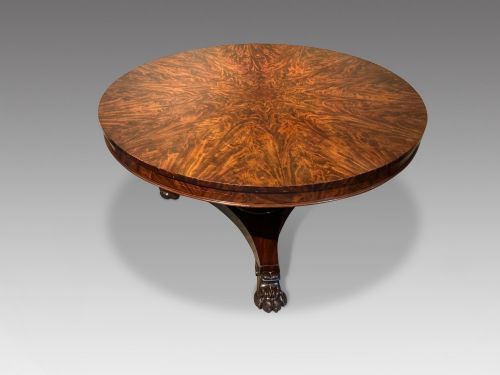
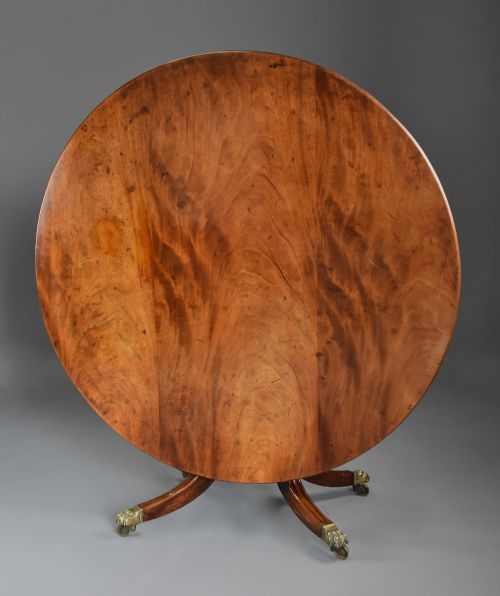
A circular mahogany tilt top table offers practical flexibility through a tilting mechanism that allows the top to fold away when not in use.
How they were made
Makers constructed these pieces primarily using solid mahogany or flame mahogany veneer laid over secondary timbers, often supported by brass castors and iron fittings within the tilting mechanisms. The central columns frequently incorporate turned or spiral twist pillars standing upon tripod legs.
The birdcage mechanism, an assembly of rotating wooden blocks beneath the top, allows both rotation and tilting without straining the central pivot. Joinery methods relied on precise tenoning and dovetailed framing to maintain stability across the folding joint.
What varies in quality
Quality rests in the selection of timber figures, such as highly figured flame mahogany or single-plank tops, which display rich grain patterns and deep patination. The crispness of carved details on tripod legs and columns also distinguishes workshop production levels.
Engineering precision within the tilt action and birdcage mechanism dictates smooth operation without excessive play in the joint. Well-balanced proportions between the diameter of the top and the spread of the base ensure structural stability.
Listings feature circular mahogany tilt top tables spanning the Georgian, Regency, and Victorian periods, constructed with tripod and pedestal bases.
Gillow·Walker Lancaster·James Winter
The Circular Mahogany Tilt Top Table Glossary
- Tilt top
- A table top hinged to fold into a vertical position for storage or corner placement when not in use.
- Birdcage
- A framework of small wooden posts and rotating rings beneath the top that permits both swivelling and tilting actions.
- Tripod table
- A piece supported by three legs radiating from a central pillar, common in smaller wine and occasional formats.
- Snap top
- A spring-loaded or latched catch securing the horizontal top firmly to the pedestal support during use.
- Flame mahogany
- Timber veneer cut from the branch forks of the mahogany tree, displaying characteristic flickering flame patterns.
Circular Mahogany Tilt Top Table: Frequently Asked Questions
What is a birdcage mechanism?
A birdcage mechanism consists of a wooden framework beneath the table top that enables the surface to rotate independently of the column. This construction allows diners or users to spin the surface toward them easily.
Craftsmen integrated this feature into finer Georgian examples to improve utility during tea service or dining. The assembly requires precise joinery to prevent looseness over years of pivoting.
How were these tables used originally?
Households utilised these pieces primarily as occasional, tea, or breakfast tables in parlours and dining rooms. The tilting function allowed servants to store the furniture flat against walls to clear floor space.
Larger formats served for evening dining or card games before being folded away at the end of the evening. Smaller tripod versions functioned as wine tables placed beside seating.
How do I tell a Georgian table from a Victorian one?
Georgian examples often display lighter proportions, slender tripod legs, and restrained carving associated with 18th-century design. Timber selection frequently emphasises plain solid mahogany or subtle figuring.
Victorian pieces tend to feature heavier pedestal bases, bolder scrolling on the legs, and rich veneer work such as flame mahogany or walnut. Proportions generally increase in scale to suit larger 19th-century interiors.
Can I use a tilt top table daily?
These tables adapt well to modern living rooms and dining spaces as coffee tables or side tables. The tilting action remains fully functional for occasional room rearrangement.
Placing coasters on the surface protects the antique polish from moisture and heat rings. Regular maintenance involves gentle waxing to preserve the aged mahogany patina.