
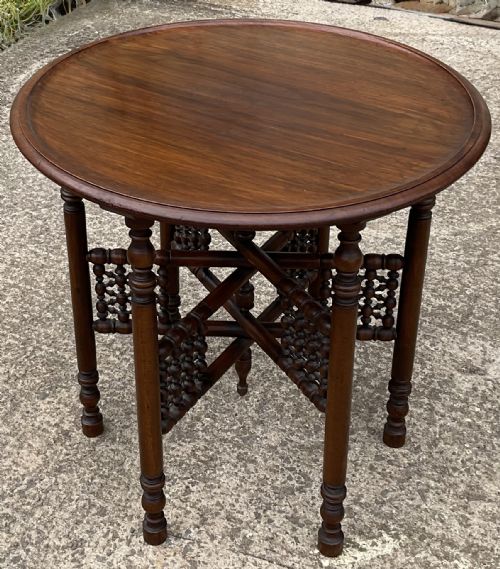
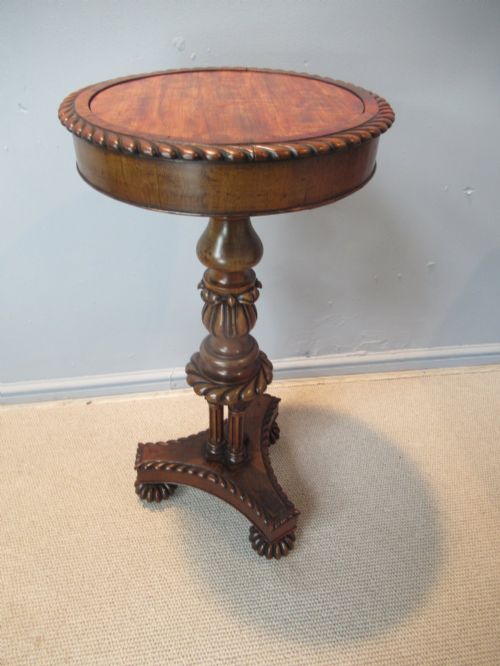
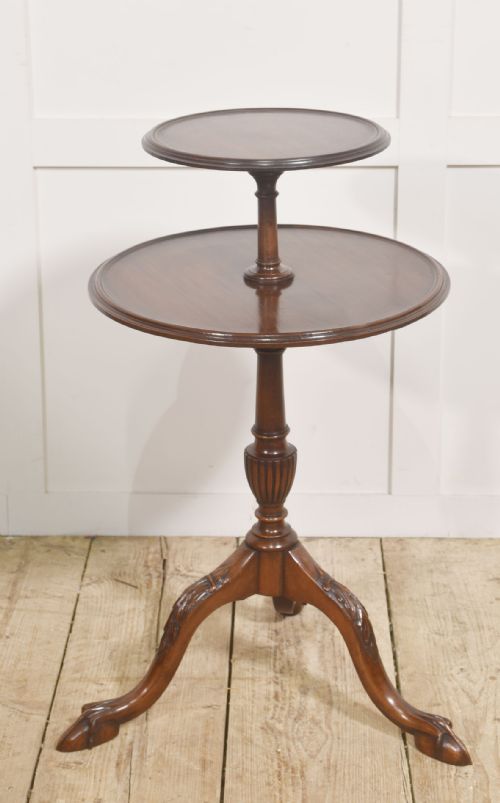

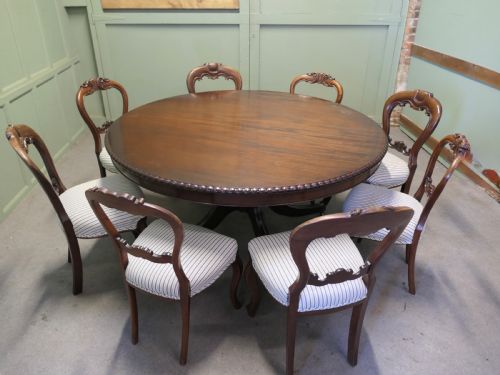


Round Carved Wooden Table
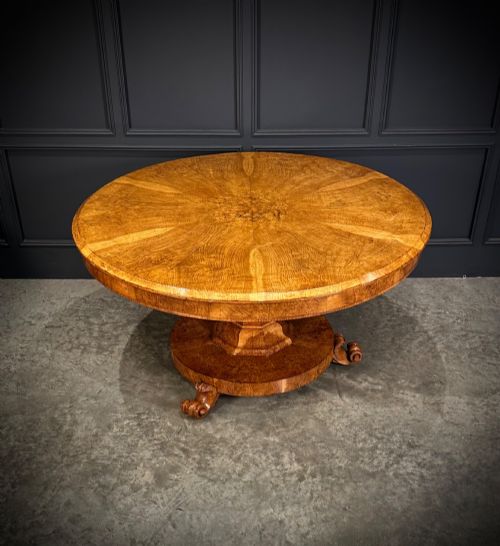
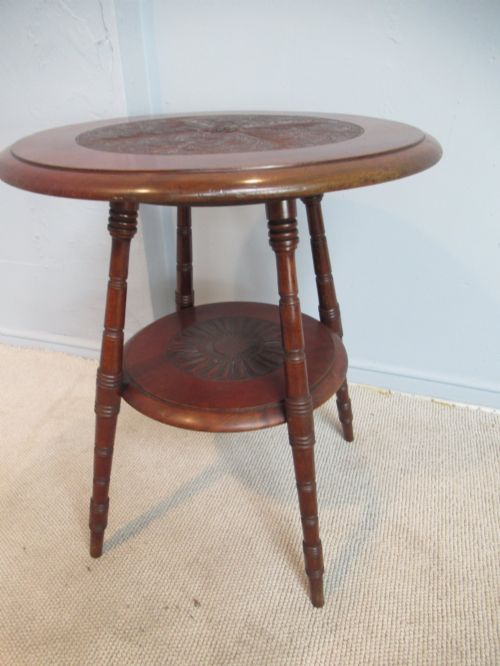
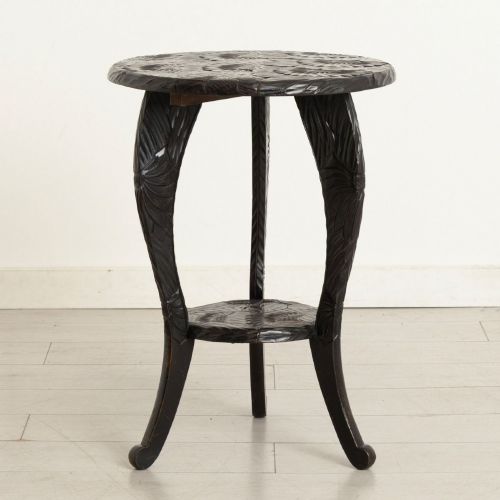
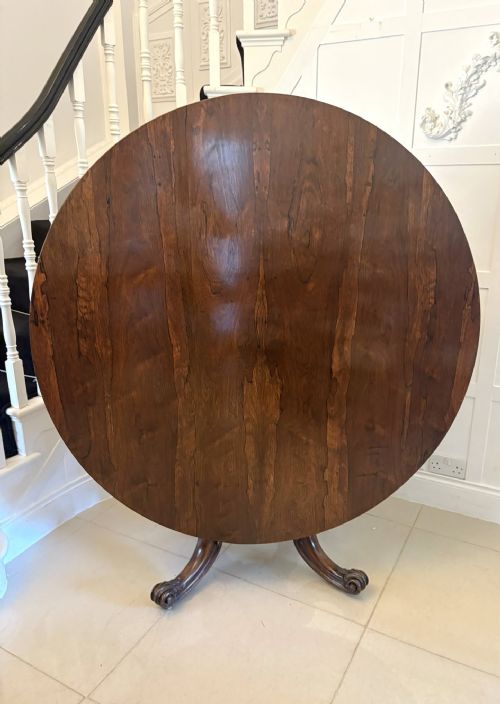
A round carved wooden table brings sculptural warmth and enduring utility to any room, anchoring a space with its circular top and worked detail.
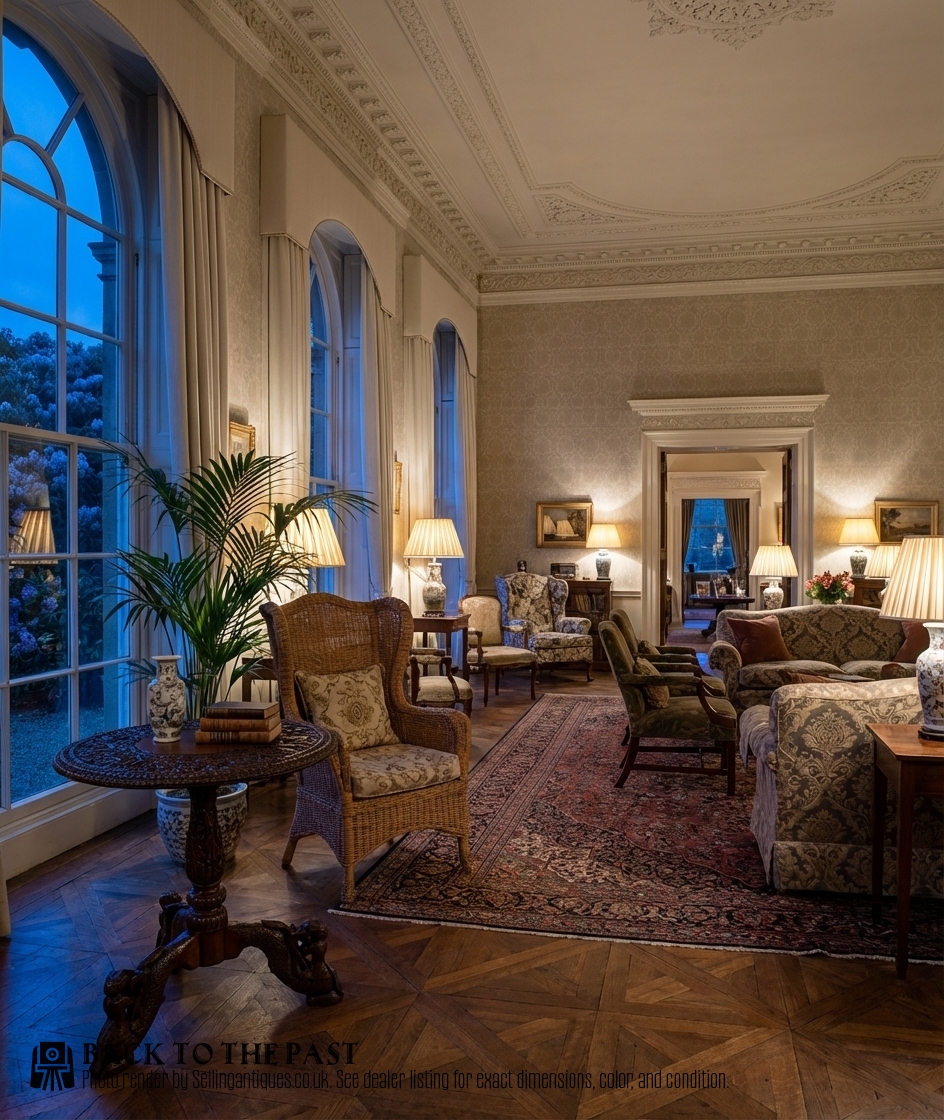
Round Carved Wooden Table
When you search for a round carved wooden table, you encounter a diverse selection of forms spanning the nineteenth and early twentieth centuries. The inventory comprises occasional tables, wine tables, breakfast tables, and centre tables designed for various domestic rooms.
Victorian and Edwardian examples dominate the selection, appearing alongside Regency, William IV, and later pieces from the 1920s and 1930s. Makers and workshops from England, France, Germany, China, Sweden, and India contributed to this international array of circular tables.
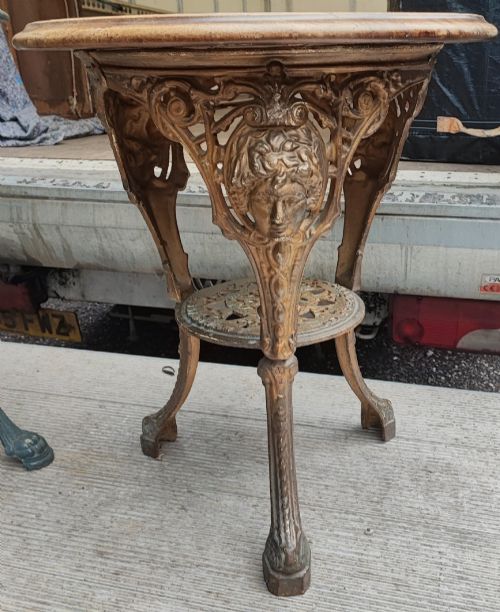
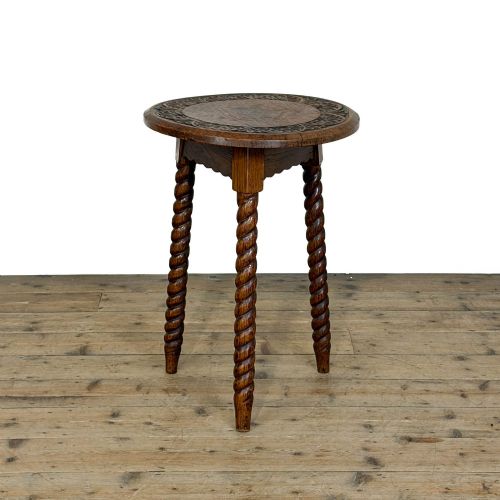
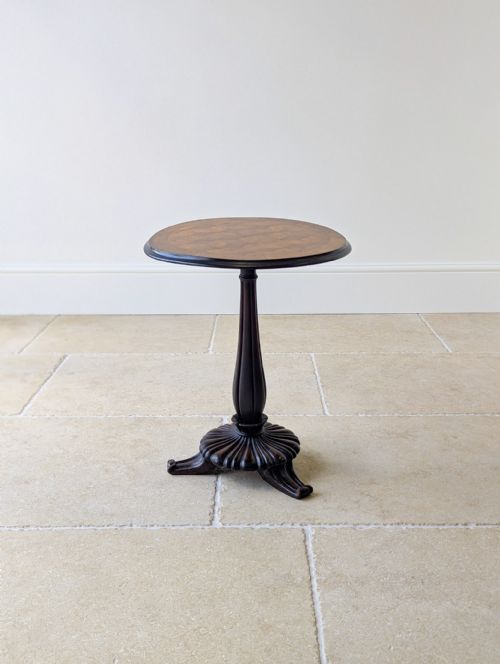
Formats range from small tripod cricket tables and lamp tables to large breakfast and dining tables with pedestal bases. Carved decoration appears on borders, pedestals, and tripod legs, utilising the natural grain of the timber.
How they were made
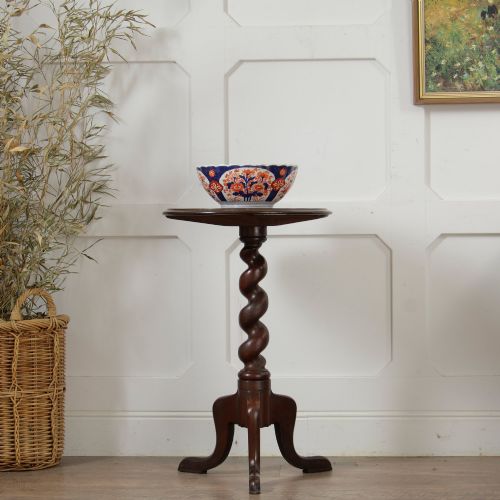
Cabinetmakers constructed these tables using a variety of native and exotic hardwoods such as mahogany, walnut, oak, burr walnut, rosewood, elm, birch, and satinwood. Turnery techniques produced barley twist pedestals and delicate legs, while hand-carving shaped floral motifs, animal figures, and pie crust borders.
Construction methods often incorporated tilt-top mechanisms, tripod bases for stability, and snap-top fixtures on wine and supper tables. Marquetry inlay, brass mounts, and painted finishes supplemented the carved woodwork on specific regional and period pieces.
What varies in quality
The distinction between standard domestic furniture and exceptional pieces rests upon the crispness of the hand-carving and the selection of timber figures. Burr walnut, pollard oak, and figured mahogany veneers indicate superior material choice by the cabinetmaker.
Structural integrity of the pedestal support and the seamless movement of tilt-top or tripod mechanisms reflect the original craftsmanship. Tables bearing workshop attributions or specific regional carving styles command greater interest from collectors.
Liberty of London·Gillows
The Round Carved Wooden Table Glossary
- Tripod table
- A small freestanding table supported by three legs radiating from a central pillar. This form gained popularity in the eighteenth and nineteenth centuries for tea and occasional use.
- Tilt-top table
- A table featuring a hinge mechanism beneath the circular top that allows the surface to tilt vertically when not in use. This clever design enabled tables to stand flat against walls to save floor space.
- Pie crust table
- An occasional table with a raised, carved circular edge shaped in undulating curves resembling a pastry crust. Cabinetmakers carved these decorative borders from solid timber margins.
- Wine table
- A diminutive occasional table designed to hold a single glass or bottle, typically standing on a slender pillar and tripod base. These portable pieces served drawing rooms during the Georgian and Victorian eras.
- Barley twist
- A type of turned wooden pillar or column resembling a twisted rope or barley stalk. This decorative turning technique appears frequently on nineteenth-century table supports and legs.
- Marquetry
- The art of applying pieces of veneer to a structure to form decorative patterns and pictures. Craftsmen utilised contrasting timbers to create elaborate floral or geometric tabletop designs.
Round Carved Wooden Table: Frequently Asked Questions
How were round wooden tables used historically?
These tables served multiple domestic functions depending on their scale and height. Smaller versions acted as wine tables, lamp tables, or occasional stands for afternoon tea.
Larger circular tables functioned as breakfast tables or centre tables in reception rooms, often positioned beneath a central ceiling rose to display decorative objects.
How do I care for a antique wooden table?
Maintain antique timber surfaces by keeping them away from direct heat sources and strong sunlight, which can dry out the wood and fade polished finishes. Dust regularly with a soft, dry cloth and apply occasional specialist wax to nourish the grain.
Avoid using modern liquid polishes or placing damp items directly onto the unshielded wood surface to protect the historic polish and veneer.
What is a tilt-top table mechanism?
A tilt-top mechanism utilises a clever catch and block pivot beneath the tabletop that allows the circular surface to lock flat for use or tilt upright against the central pillar.
This historical feature enabled households to store multiple tables compactly against room perimeters when floor space was required for other activities.
How can I distinguish Victorian from Regency tables?
Regency tables, dating from the early nineteenth century, typically exhibit classical restraint with clean architectural lines, brass paw feet, and rosewood or mahogany veneers influenced by ancient Greek and Roman design.
Victorian pieces from the mid-to-late nineteenth century often display heavier proportions, more exuberant hand-carved ornamentation, barley twist stems, and elaborate burr walnut or figured mahogany surfaces.