



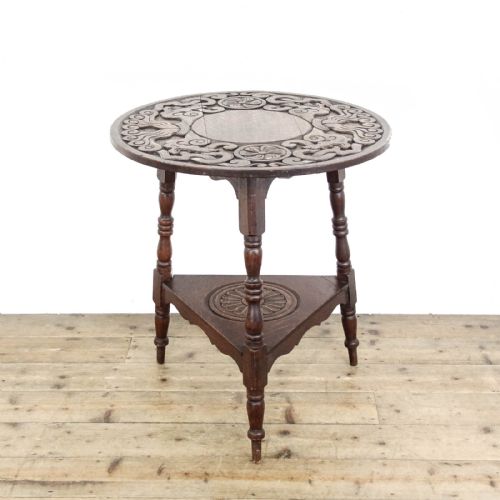


Round Carved Oak Table
These round carved oak table examples bring tactile timber and historic craftsmanship directly into your home.
Round Carved Oak Table
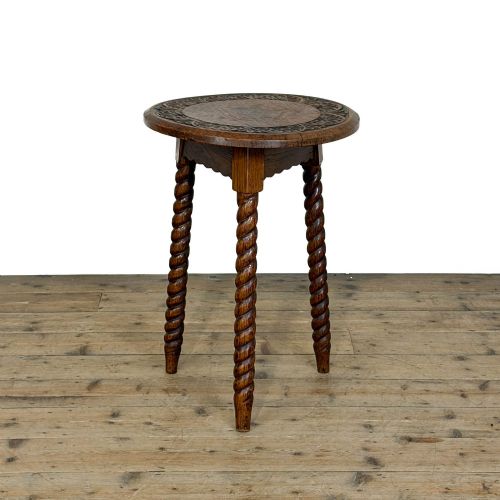
A round carved oak table brings solid timber character into a room, often taking the form of an occasional table, centre table, or coffee table. When you search for a round carved oak table, you encounter diverse historic interpretations ranging from compact Edwardian tripod cricket tables to substantial nineteenth-century breakfast and dining pieces.
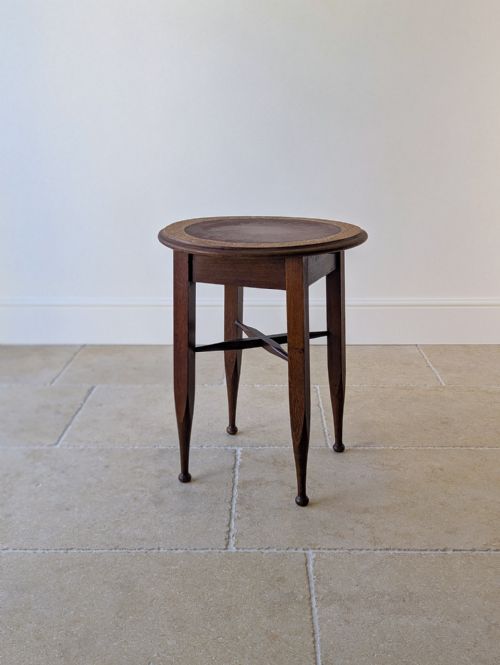
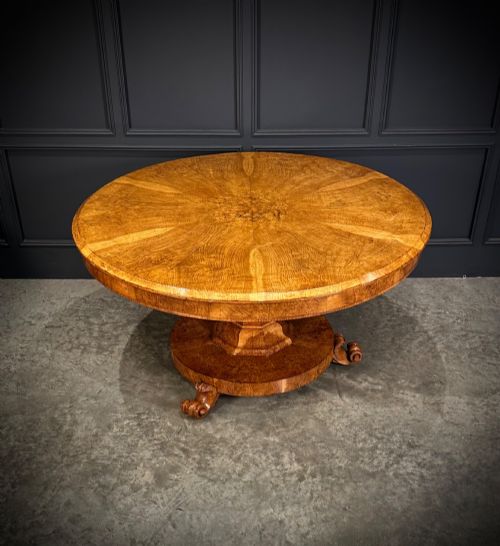
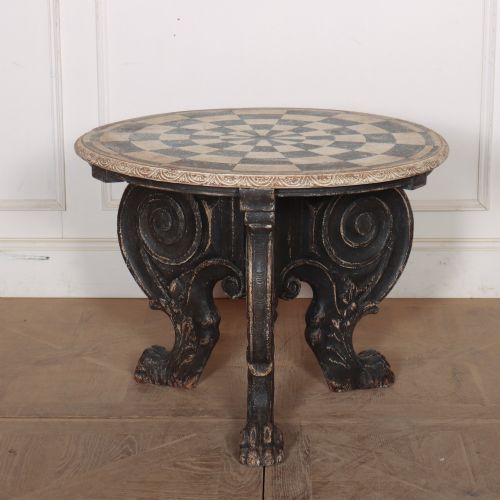
The material vocabulary spans plain oak alongside more decorative pollard and burr oak varieties, occasionally enriched with satinwood, yew wood, or brass details. Stylistic influences stretch from Jacobean and Baroque Revivals to Arts and Crafts simplicity and Art Deco restraint, reflecting the shifting tastes of makers across the nineteenth and twentieth centuries.
How they were made
Makers utilised solid oak alongside specialised veneers like pollard and burr oak to create striking circular surfaces, often supporting them on turned central pillars or tripod legs. Surface ornamentation relies on traditional carving techniques, turning, and occasional inlay work to highlight the natural grain of the timber.
Construction methods vary from traditional gateleg mechanisms and tripod bases to stable pedestal designs found on larger nineteenth-century centre and dining tables. Iron and brass components frequently appear as functional hardware or decorative accents, securing joints and supporting drop-leaf formats.
Listings feature oak alongside burr oak and pollard oak, spanning the Regency, Victorian, and Edwardian periods.
What varies in quality
The depth and crispness of the carving distinguish finer examples from plain production, as skilled hands create sharp relief work rather than shallow surface stamping. The selection of timber also dictates the visual appeal, with figured burr and pollard oak surfaces commanding attention through complex natural grain patterns.
Proportion and stability separate standard utility pieces from exceptional items, particularly in tripod and pedestal formats where the balance of the central column determines overall grace. The warmth of the finish and the condition of the timber surface indicate how well the wood has matured over generations of use.
The Round Carved Oak Table Glossary
- Cricket table
- A small, lightweight occasional table typically featuring three splayed legs designed to remain stable on uneven floors. These pieces often incorporate circular timber tops and simple peg joinery.
- Pollard oak
- Timber taken from trees that have been pollarded, producing a dense, highly figured grain pattern filled with small knot clusters. Cabinet makers prize this wood for decorative table tops.
- Tripod table
- A freestanding table supported by a central pillar resting on three feet. This construction allows multiple people to sit comfortably without legs obstructing their seating.
- Gateleg table
- A drop-leaf table featuring hinged flaps supported by hinged legs that swing out like gates. This clever mechanism enables the table to expand for dining and contract for storage.
Round Carved Oak Table: Frequently Asked Questions
How do I style a round carved oak table?
Position your table as a freestanding centrepiece in a hallway or as an occasional surface beside a seating area where its carved details remain visible. Allow the natural timber grain to stand out by keeping surface accessories minimal.
Combine the piece with contrasting textures such as woven fabrics or polished metals to balance the heavy visual weight of the oak.
What is the difference between an occasional table and a centre table?
An occasional table is typically smaller and designed to be moved around a room as needed for drinks, lamps, or books. A centre table is traditionally substantial enough to stand firmly in the middle of a room.
Centre tables often feature more elaborate carving and highly figured pollard or burr oak veneers intended to be viewed from every angle.
How do I care for historic oak furniture?
Maintain the timber by dusting regularly with a dry cloth and applying natural beeswax periodically to nourish the dry oak. Avoid placing the table near direct heat sources or strong sunlight to prevent the timber from splitting.
Use coasters and placemats to protect the polished surface from moisture rings and heat damage during daily use.
How do I identify an Arts and Crafts oak table?
Arts and Crafts pieces emphasise honest construction, simple geometric forms, and minimal ornamentation that highlights the natural qualities of the oak. You will often see visible joinery and functional design choices rather than heavy historicist revival carving.
These tables frequently date from the late nineteenth or early twentieth centuries and prioritize utility alongside handcrafted integrity.