



Round Birch Pedestal Table
A round birch pedestal table brings pale grain and calm proportion to a room, drawing the eye with its quiet Swedish and Victorian presence.
Round Birch Pedestal Table
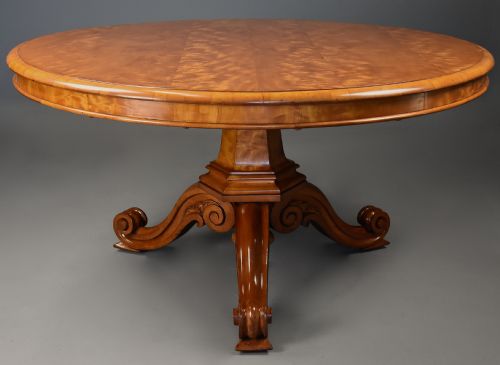
When you search for a round birch pedestal table, you are looking at nineteenth-century and early twentieth-century occasional, centre, and breakfast tables shaped by Scandinavian and Victorian makers. These pieces range from compact lamp tables to larger tilt-top breakfast tables supported by a central pillar.
The version you are most likely to meet on this page is a Swedish nineteenth-century occasional or centre table. They frequently appear in burr birch, satin birch, or plain birch, often displaying the warm, blonde figuring characteristic of northern European workshops.
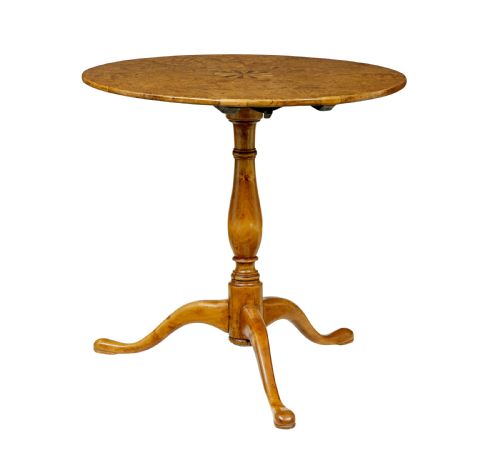
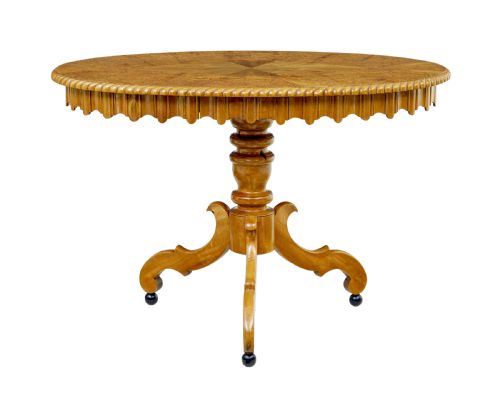
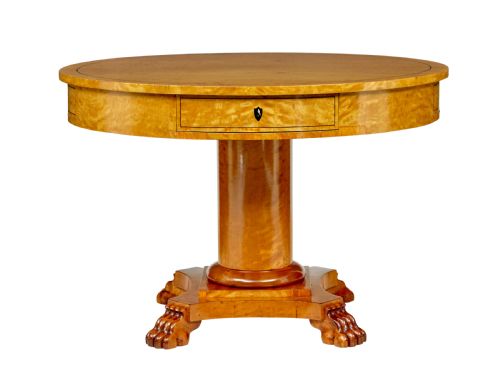
The forms encompass simple circular tops, oval occasional pieces, and clever tilting designs intended for easy storage. Alongside standard pedestal formats, you will find occasional drum tables and examples featuring contrasting ebony inlay or specimen marble inserts.
How they were made
Cabinetmakers built these tables using solid birch timbers and carefully selected veneers such as burr, flame, and satin birch to create lively movement across the circular surface. The underlying carcase work relied on stable secondary timbers to support the expansive top.
Details like ebony inlay and brass fittings provided sharp contrast against the pale blonde timber of the main body. Turning and shaping the central pedestals required skilled lathe work to balance the weight of the heavy wooden tops.
Round Birch Pedestal Table Retail Price Guide 2026
Typical asking prices for round birch pedestal table among the pieces listed under this phrase on Sellingantiques today, from the lower quarter to the upper quarter. They describe what is for sale here now, not the wider market.
The listings here span the nineteenth and early twentieth centuries, featuring Swedish Biedermeier, Victorian, and Scandinavian Art Deco design sensibilities.
What varies in quality
The distinction between ordinary and exceptional tables rests primarily on the choice of timber and the dexterity of the veneer work. Highly figured burr and satin birch surfaces display rich, natural patterning that elevates the visual weight of the piece.
Proportion and construction integrity also define the better examples, where the central pedestal harmonises naturally with the diameter of the top. Subtle decorative elements like precise ebony inlay demonstrate a higher level of workshop skill.
The Round Birch Pedestal Table Glossary
- Satin Birch
- A pale timber with a natural sheen that catches the light across the table surface. It was favoured by nineteenth-century makers for its smooth, luminous grain.
- Burr Birch
- Wood taken from the growth excrescences of a birch tree, resulting in swirling, highly decorative patterns. This veneer created rich visual texture on circular tabletops.
- Biedermeier
- A Central and Northern European design style from the nineteenth century prioritising clean lines and polished wood grains over heavy carving. It shapes many of the Swedish tables seen here.
- Tilt Top
- A hinged mechanism allowing the tabletop to fold into a vertical position when not in use. This clever design saved space in period rooms.
- Centre Table
- A freestanding table finished on all sides, designed to stand away from the walls in the middle of a room. They frequently feature prominent central pedestals.
Round Birch Pedestal Table: Frequently Asked Questions
How do I use a round birch pedestal table?
These pieces function well as central display surfaces in hallways or as lamp tables beside seating in a drawing room. Their pale timber brightens darker corners without overwhelming surrounding furniture.
The sturdy central pedestal allows chairs to tuck neatly underneath without legs getting in the way. Smaller circular versions also serve effectively as bedside tables or occasional stands for reading lamps.
How do I identify a Swedish period table?
Swedish pieces from the nineteenth century typically display a very pale, blonde birch finish combined with restrained, architectural proportions. Look for classic Biedermeier or Karl Johan styling, which relies on clean geometry rather than heavy ornamentation.
Many of these tables incorporate subtle details such as dark ebony stringing or rich burr veneers. The quality of the timber selection often points directly to Scandinavian cabinetmaking traditions of that era.
Are tilt top tables practical for daily use?
The tilting mechanism was originally designed to let tables stand flat against a wall when the room needed to be cleared. Today, this feature offers a clever way to inspect the underside construction or move the piece through tight doorways.
When locked in the horizontal position, a well-made pedestal mechanism holds the heavy top firmly without wobble. You can use them for everyday display just like a fixed table.