



Birch Tilt Top Table
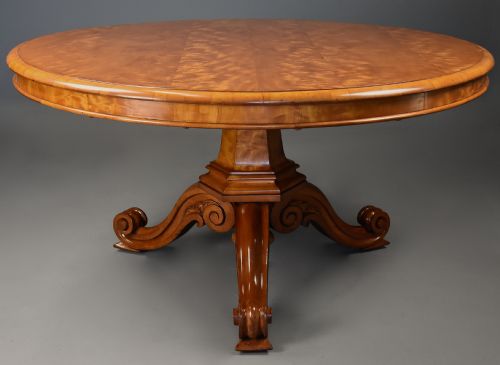
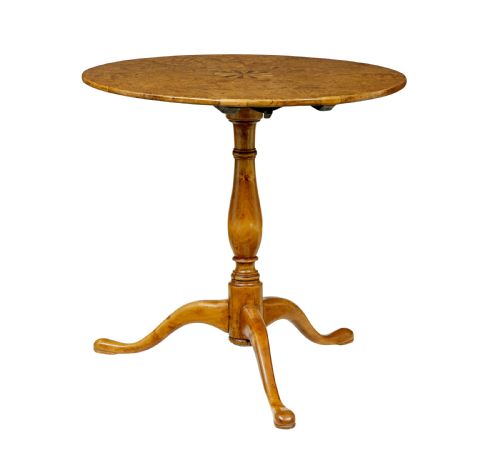
These birch tilt top table pieces bring figured timber and pivoting mechanisms into a room, offering practical display surfaces that fold away when space is tight.
Birch Tilt Top Table
A birch tilt top table brings versatile form and native timber grain into a domestic interior. The selection here centres primarily on nineteenth century Swedish Biedermeier, Regency, and Victorian pieces.
Forms range from occasional tables and tripod tables to larger breakfast tables, loo tables, and oval centre tables. These items serve as functional surfaces for lamps or breakfast settings while retaining the ability to tilt the top flat against a wall.
Origins span British Regency workshops alongside Scandinavian centres, particularly Sweden. Buyers encounter circular and oval formats resting on central pillars or tripod legs.
How they were made
Cabinet makers utilised solid birch, burr birch, and satin birch, often applying veneers over secondary woods to showcase dramatic grain patterns. Selected surfaces incorporate ebony inlay and brass details to frame the timber.
The tilting mechanism relies on a clever pivot block and catch fixed beneath the tabletop, allowing the surface to transition between horizontal use and vertical storage. Turning and joinery shape the central pedestals and tripod bases that support the pivoting tops.
Birch Tilt Top Table Retail Price Guide 2026
Typical asking prices for birch tilt top table among the pieces listed under this phrase on Sellingantiques today, from the lower quarter to the upper quarter. They describe what is for sale here now, not the wider market.
Some tables tilt up simply to hide clever little brass latches that secretly wished they were locks.
What varies in quality
The visual strength of the timber grain dictates the primary tier of quality, with highly figured burr birch and satin birch commanding attention over plain timber surfaces. Crispness in any ebony inlay and the precision of the brass fittings further separate finer examples from standard workshop output.
Structural integrity of the tilt mechanism and the stability of the tripod or pedestal base determine daily utility. A balanced pivot and tightly fitted joints ensure the top locks securely into position without wobble.
The Birch Tilt Top Table Glossary
- Tilt top table
- A table featuring a hinged mechanism that allows the surface to rotate into a vertical plane. This design saves floor space when the furniture is not in use.
- Burr birch
- Wood harvested from tree growths that produce complex, swirling grain patterns. Cabinet makers prize this material for decorative veneer work on tabletop surfaces.
- Satin birch
- A timber selection known for its pale, shimmering finish that catches ambient light. It appears frequently in nineteenth century Scandinavian furniture design.
- Tripod table
- A piece supported by three legs radiating from a central pillar. This configuration provides steady footing on uneven floors.
- Ebonised wood
- Timber treated to imitate ebony through staining or finishing. It provides dark contrast against pale birch veneers.
Birch Tilt Top Table: Frequently Asked Questions
How do you use a tilt top table?
These tables function as standard surfaces for lamps or breakfast items during daily routines. Releasing the internal catch allows the top to pivot flat against the wall when floor space is needed.
This dual nature made them adaptable furniture choices in nineteenth century parlours and sitting rooms. Today they serve similar practical purposes while displaying decorative wood grains.
What is Biedermeier style?
Biedermeier design emerged in Central Europe during the nineteenth century, prioritising clean lines and polished domestic comfort over heavy ornamentation. It highlights the natural beauty of native timbers like birch without excessive carving.
Swedish interpretations frequently pair pale birch surfaces with dark contrasting inlays. These pieces suit both traditional and modern interiors through their restrained geometry.
How do I identify satin birch?
Satin birch displays a distinct luminescent quality with a fine, silky sheen running through the grain. It presents a lighter, more uniform golden tone compared to the swirling patterns of burr birch.
Craftsmen selected this timber for formal tables where a refined, glowing surface was desired. The material responds well to traditional polishing techniques.