





Victorian Birch Pedestal Table
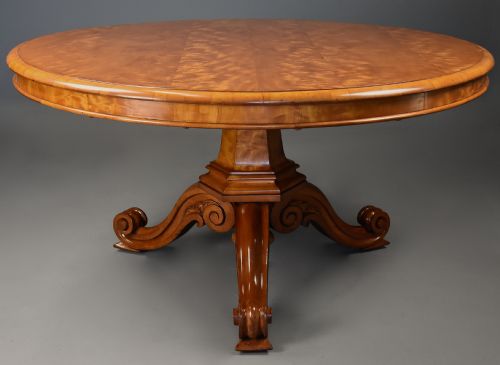
These Victorian birch pedestal table pieces bring warmth and refined grain to a room through solid timber and clever turning.
Victorian Birch Pedestal Table
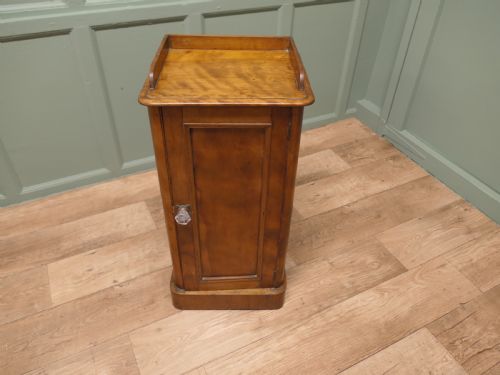
A Victorian birch pedestal table brings robust nineteenth-century utility together with pale, figured timber in forms ranging from compact bedside cabinets to generous breakfast tables. Most pieces encountered on this page date from the middle to late decades of the nineteenth century, reflecting the era's fondness for distinctive native woods.
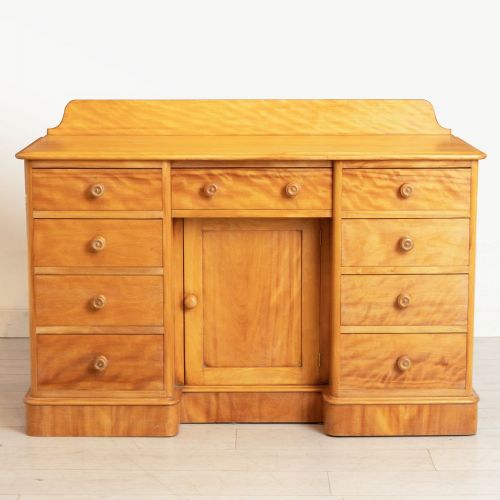
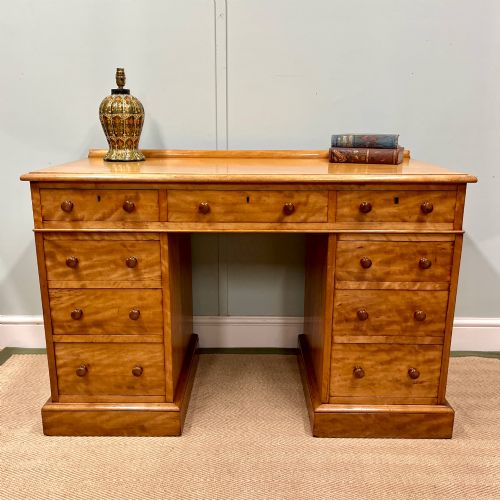
Makers of the period utilised these sturdy timbers for varied domestic functions, producing desks, occasional tables, and sewing tables alongside traditional pedestals. The wood displays a characteristic pale golden tone that distinguishes it from darker walnuts and mahoganies popular in the same decades.
Whether formed as a tilting occasional table or a fitted kneehole desk, each piece relies on a central pillar or pedestal support. This construction allows maximum legroom while anchoring the form with a solid, weighted base.
What varies in quality
Quality rests primarily in the choice of timber and the dexterity of the veneer work, where finely figured satin birch or birch root exhibits exceptional depth and movement. Superior examples display careful grain alignment across multiple drawers and table tops.
The sophistication of the turning on the central pedestal and the integrity of the original brass or ceramic details distinguish finer workshops from standard production. Construction methods, such as dovetailed drawer linings and stable pedestal joints, ensure the piece maintains its structural balance over time.
Victorian Birch Pedestal Table Retail Price Guide 2026
Typical asking prices for victorian birch pedestal table among the pieces listed under this phrase on Sellingantiques today, from the lower quarter to the upper quarter. They describe what is for sale here now, not the wider market.
One nineteenth-century sewing table thoughtfully arrived complete with its original contents, preserving a quiet moment of domestic handwork for the modern room.
Heal and Son
The Victorian Birch Pedestal Table Glossary
- Satin birch
- A timber derived from the birch tree featuring a natural sheen and light golden colour. It became particularly fashionable for high-end nineteenth-century cabinet work.
- Burr birch
- A growth formation on a birch tree that produces swirling, highly decorative grain patterns. Craftsmen sliced this wood into thin veneers for statement furniture tops.
- Pedestal table
- A freestanding table supported by a single central pillar rising from a stable base. This design maximises seating space around the perimeter.
- Tilt top
- A table mechanism allowing the surface to pivot to a vertical position when not in use. This clever feature saved valuable floor space in Victorian interiors.
- Kneehole desk
- A writing table featuring a central recess for the user's legs, flanked by pedestals of drawers. These items provided organised storage in nineteenth-century studies.
Victorian Birch Pedestal Table: Frequently Asked Questions
How do I care for satin birch?
Keep these items away from direct sunlight and excessive heat sources to prevent the timber from drying out. A light application of natural wax helps maintain the surface sheen.
Avoid using harsh chemical polishes or excessive water on the wood or any leather inserts. Gentle dusting with a soft cloth remains the best daily maintenance.
Where should I place a pedestal table?
A round occasional or breakfast table sits well in the centre of a room or as a focal point in a hallway. The central pillar design allows chairs to tuck underneath easily.
Ensure the floor beneath is reasonably level so the weighted base remains stable. Avoid damp spots that could affect the veneered surfaces over time.
How can I date a nineteenth-century birch desk?
Examine the construction of the drawers, paying attention to the hand-cut dovetails and secondary woods like pine. Mid-century examples often display simpler lines, while later Victorian pieces incorporate heavier mouldings.
Documentation or makers' stamps inside the drawers can offer precise clues. The evolution of brass hardware and locks also helps narrow down the decade of production.
What is the difference between birch and satinwood?
Birch is a native hardwood with a pale, creamy appearance and subtle grain variations, whereas satinwood comes from tropical species and exhibits a distinct yellowish sheen. Cabinet makers often used satin birch as an accessible alternative to rarer exotic timbers.
Both woods respond well to traditional polishing techniques. Examining the weight and grain structure usually reveals which timber the maker utilised.