



Biedermeier Birch Side Table
These Biedermeier birch side table examples bring sculptural Scandinavian warmth into a room through striking figured timber and clean nineteenth-century lines.
Biedermeier Birch Side Table
A Biedermeier birch side table represents a distinct nineteenth-century continental and Scandinavian domestic tradition focused on domestic comfort and refined wood grain. Pieces span the nineteenth century, including Empire Revival interpretations and Karl Johan influences, taking forms such as occasional, centre, sofa, console, and sewing tables.
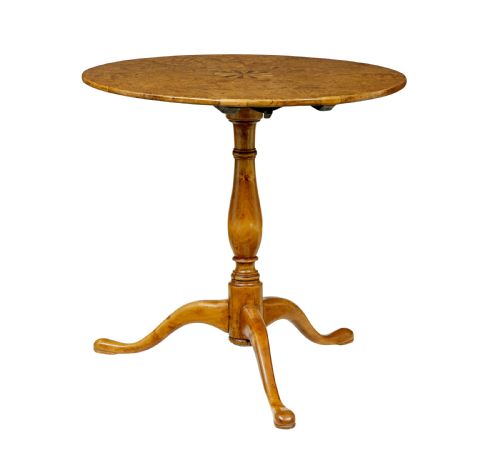
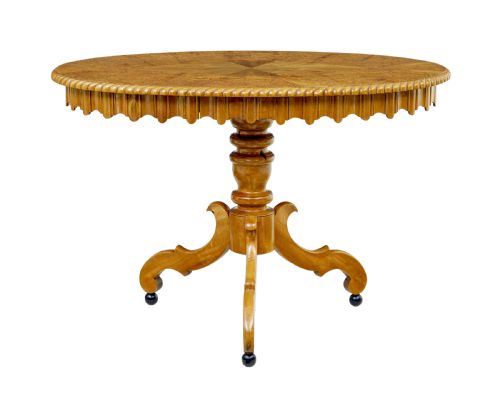
The version most commonly met on this page is the nineteenth-century Swedish occasional or side table. These examples typically feature circular, oval, or drum tops supported by pedestals, tripod bases, or lyre forms, often realised in richly figured burr birch or Karelian birch.
Assessing quality in these tables
Quality rests principally on the selection and matching of the wood veneer. Superior examples display intensely figured burr birch or Karelian birch matched symmetrically across the table top, whereas lesser pieces use plain timber or show careless grain alignment.
The integration of metal mounts, such as ormolu or brass, and the crispness of any inlay work distinguish finer craftsmanship. Proportional harmony between the top and the supporting pedestal or legs also marks the difference between standard production and superior workshop output.
Biedermeier Birch Side Table Retail Price Guide 2026
Typical asking prices for biedermeier birch side table among the pieces listed under this phrase on Sellingantiques today, from the lower quarter to the upper quarter. They describe what is for sale here now, not the wider market.
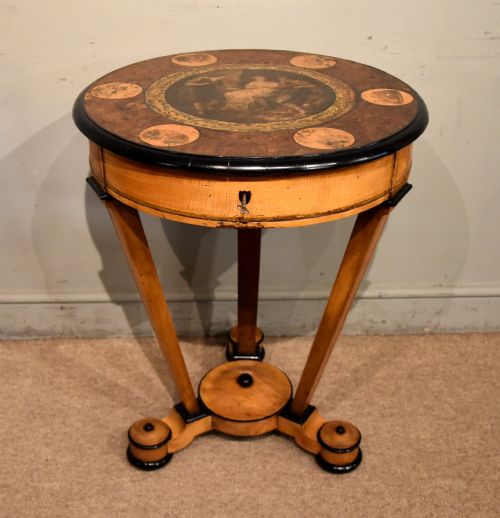
One nineteenth-century sewing table arrives complete with its original internal contents, preserving a quiet domestic capsule from the past.
The Biedermeier Birch Side Table Glossary
- Burr birch
- A growth on a birch tree that produces swirling, highly decorative grain patterns when sliced into veneer. Cabinet makers prized this wood for creating striking, figured table tops.
- Karelian birch
- A distinct variety of birch originating from the Karelian region, known for its dense, knotty, and mottled figure. It forms a luxurious surface on high-status nineteenth-century furniture.
- Ormolu
- Gilded bronze applied as decorative mounts and accents on furniture. The technique adds metallic contrast to the warm, pale tones of birch wood.
- Lyre form
- A table base shaped in the silhouette of a classical lyre instrument. This design motif appears frequently on nineteenth-century occasional and console tables.
- Drum table
- A circular table with a deep rim resembling a drum, often fitted with drawers around the circumference. These pieces serve as substantial centre or side tables.
Biedermeier Birch Side Table: Frequently Asked Questions
What is a Biedermeier side table?
A Biedermeier side table is a nineteenth-century domestic furnishing characterised by minimalist restraint, clean architectural lines, and an emphasis on the natural beauty of wood grain rather than heavy ornamentation.
Originating in Central Europe and widely adopted in Scandinavia, these tables prioritise functional utility while showcasing polished birch, burr birch, and contrasting ebonised details.
How do I style a birch side table?
These tables integrate easily into contemporary and traditional interiors due to their warm, honey-toned wood and understated geometry. Use an occasional or lamp table beside a sofa to introduce nineteenth-century warmth and organic grain patterns to a room.
Because many examples feature decorative surfaces like burr birch or inlaid details, placing them where natural light can catch the wood grain enhances their visual impact.
What is Karelian birch?
Karelian birch is a specialised timber featuring distinctive dark knots, swirls, and a deeply mottled grain structure. It is harvested from a specific northern European birch subspecies and was favoured by elite nineteenth-century cabinet makers.
Furniture utilising this wood exhibits a shimmering, three-dimensional depth that sets it apart from standard plain timber veneers.
How do I tell Swedish Biedermeier apart?
Swedish Biedermeier furniture often retains a lighter, airier palette and simpler neoclassical proportions compared to its heavier German counterparts. The heavy reliance on native pale birch and burr birch gives Scandinavian pieces a distinctively bright appearance.
Details such as tripod pedestals, subtle inlay, and Empire Revival influences frequently distinguish nineteenth-century Scandinavian workshop output.