




Rouge Marble Side Table
A rouge marble side table brings deep red stone and rich timber together to anchor a room with substance.
Rouge Marble Side Table
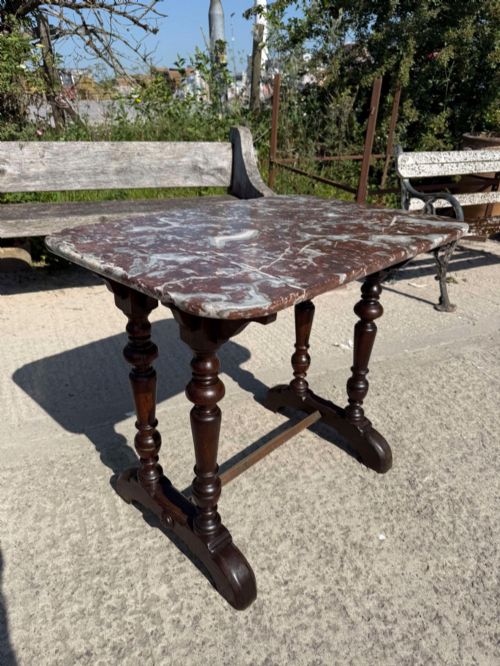
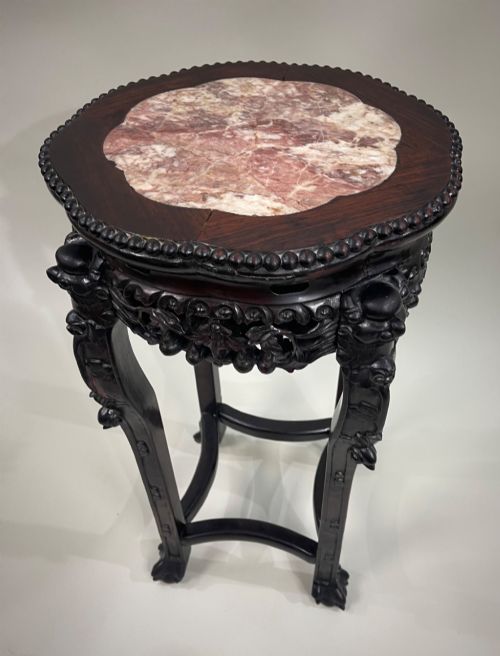
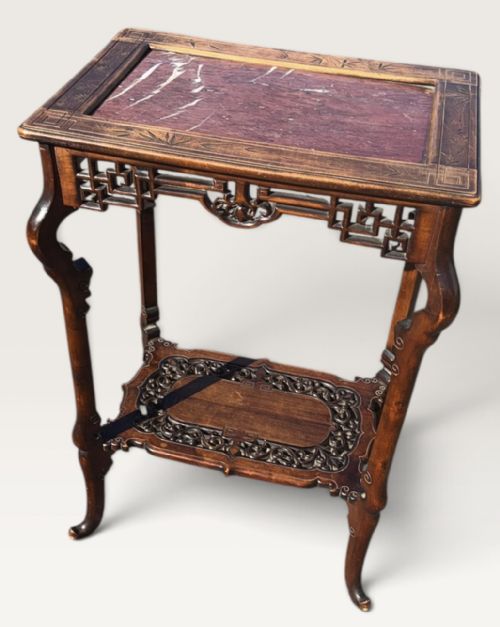
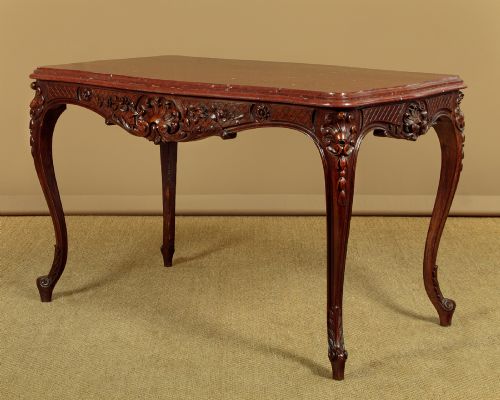
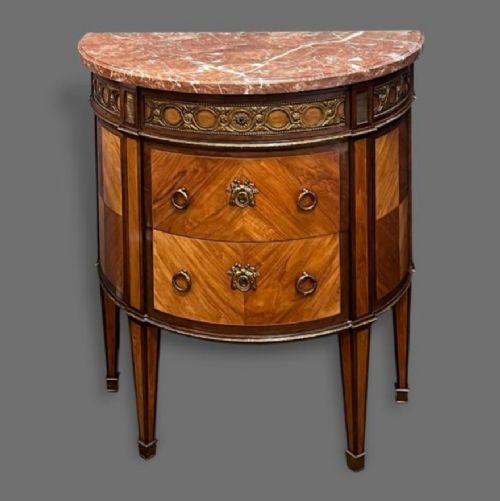
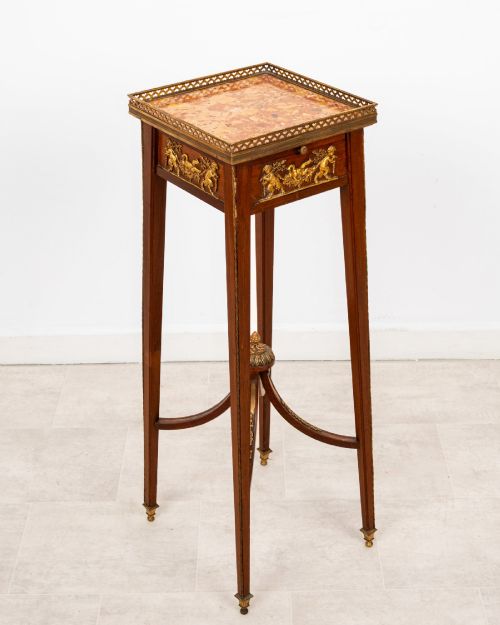
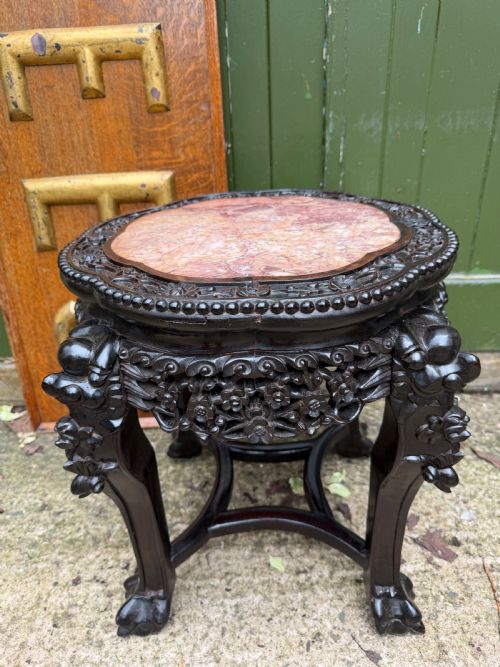
A rouge marble side table pairs a striking red stone top with frames ranging from Victorian mahogany to Chinese Qing Dynasty carved hardwood. These pieces serve as functional surfaces for plants, urns, or lamps while introducing strong mineral colour to an interior.
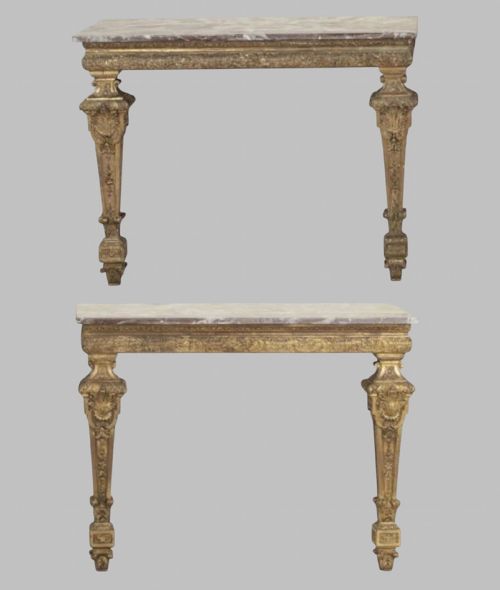
The versions most commonly met on this page include nineteenth-century Chinese export rosewood and hardwood jardiniere stands alongside European console and centre tables in giltwood, walnut, and mahogany. Styles stretch from Italian Neo-Classical and French Louis XVI to elaborate Chinoiserie.
Buyers choose these forms to add a distinct focal point through the combination of polished stone and intricately carved timber or gilded frames. Each table reflects the specific craftsmanship of its period, whether European revival or Chinese export.
Materials and construction
The primary material combination uniting these pieces is heavy rouge marble inset or laid upon dense woods such as rosewood, mahogany, walnut, and ebonised hardwood, or supported by carved giltwood and ormolu. Stonemasons cut and polished the variegated red marble panels to fit precisely within timber frames or serve as freestanding tabletops.
Joinery and carving methods reflect the origin of the piece, utilising traditional Chinese hardwood mortise and tenon construction alongside European cabinetmaking techniques for console and centre tables. Giltwood and ormolu mounts add decorative weight to French and Italian revival designs.
Rouge Marble Side Table Retail Price Guide 2026
Typical asking prices for rouge marble side table among the pieces listed under this phrase on Sellingantiques today, from the lower quarter to the upper quarter. They describe what is for sale here now, not the wider market.
Listings combine nineteenth-century Chinese Qing Dynasty hardwood stands with European walnut, mahogany, and giltwood console tables.
Markers of quality
Quality rests in the depth and intricacy of the timber carving, the richness of the grain in woods like rosewood and mahogany, and the integration of the rouge marble top within the frame. Pieces that display crisp hand-carving and substantial stone thickness command greater visual presence.
The harmony between the marble insert and the supporting structure defines the execution, particularly where giltwood mounts or complex Chinoiserie details are involved. Superior examples maintain structural integrity alongside well-preserved stone surfaces.
Gabriel Viardot·François Linke
The Rouge Marble Side Table Glossary
- Rouge marble
- A polished limestone or dolomite showing deep red, white, and grey veining. It provides a dense, colourful surface prized for decorative furniture tops.
- Jardiniere stand
- A tall, compact occasional table designed to hold plants or urns. These stands frequently feature inset marble panels to resist moisture from pots.
- Console table
- A table designed to stand against a wall, often supported by ornate brackets or legs. They frequently carry heavy stone tops and elaborate giltwood frames.
- Hongmu
- A traditional Chinese term for dense hardwoods used in fine furniture making. It includes woods such as rosewood and provides a heavy, durable frame.
- Ormolu
- Gilded bronze used for decorative mounts on furniture. It accents timber frames with metallic detail.
Rouge Marble Side Table: Frequently Asked Questions
What is a rouge marble side table used for?
These tables function as surface stands for lamps, decorative urns, and plants. The stone top resists moisture and wear from daily use.
Their compact footprints allow them to fit into hallways, corners, and reception rooms without dominating the floor space.
How do I care for the marble top?
Wipe the stone surface with a soft, damp cloth and mild soap to remove dust. Avoid acidic cleaners that can etch the polished finish.
Use coasters under glasses and saucers under pots to protect the mineral surface from moisture rings and stains.
How can I tell the period of the table?
Examine the timber construction, tool marks, and style influences such as Qing Dynasty carving or French Louis XVI revival. The method of securing the marble insert also offers clues to the date of manufacture.
Comparing the secondary woods and joinery helps distinguish nineteenth-century production from later revival pieces.