



French Chinoiserie Furniture
French chinoiserie furniture brings together European cabinet forms and decorative lacquer work inspired by East Asian motifs.
French Chinoiserie Furniture
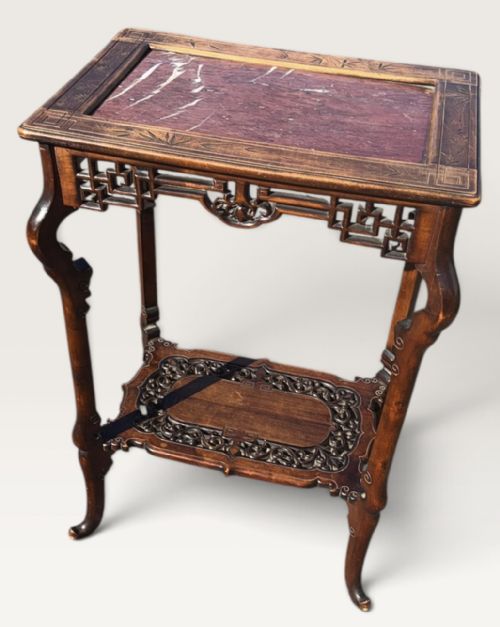
French chinoiserie furniture encompasses decorative items created across the nineteenth century and into the early twentieth century, drawing heavily on Eastern aesthetic traditions interpreted through European craftsmanship. Buyers seeking this aesthetic will find pieces that merge structural cabinetmaking with elaborate surface decoration, ranging from commodes and chests of drawers to occasional tables and mirrors.
The versions most frequently encountered on this page date from the nineteenth century, including Victorian pieces, alongside early twentieth-century examples from 1920. These objects often display overlapping stylistic influences, incorporating elements of Regency design, Japonisme, the Aesthetic Movement, and revival styles associated with the period.
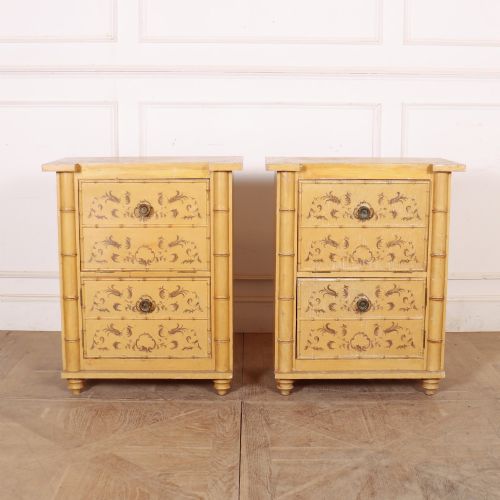
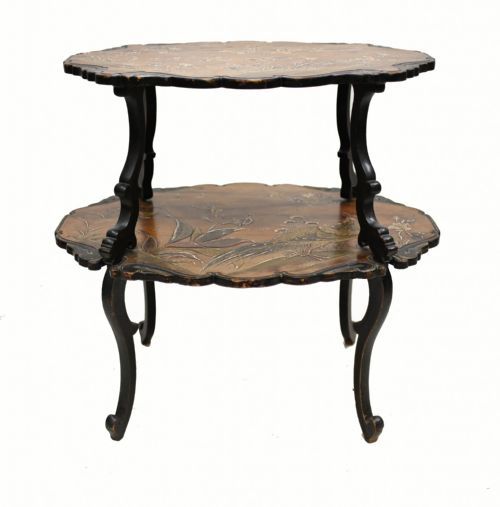
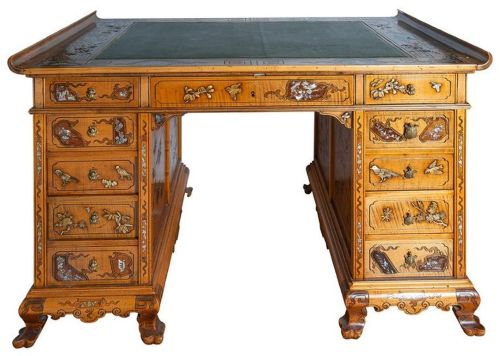
Forms span utilitarian storage and display items such as bedside tables, side tables, pedestal desks, and etagere tables, alongside seating like side chairs. Graphic works also appear, represented by watercolour design pieces for lacquer cabinets, offering insight into the planning behind these decorative items.
How they were made
Construction relies upon a foundation of timber, utilising materials such as hardwood, pine, and painted softwood to build the primary carcass of desks, commodes, and cabinets. Wood carved elements frequently appear on larger decorative pieces, shaping structural profiles and framing panels.
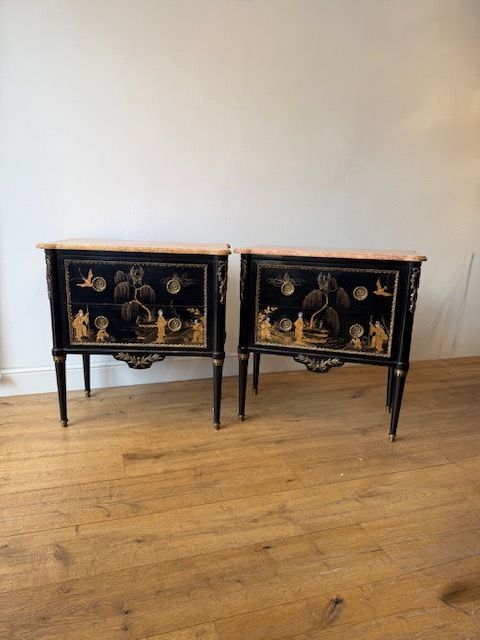
Surfaces are transformed through specialised decorative techniques including japanning, lacquer work, and painted finishes. These treatments build up layered depictions of scenes and motifs characteristic of chinoiserie and Japonisme styles.
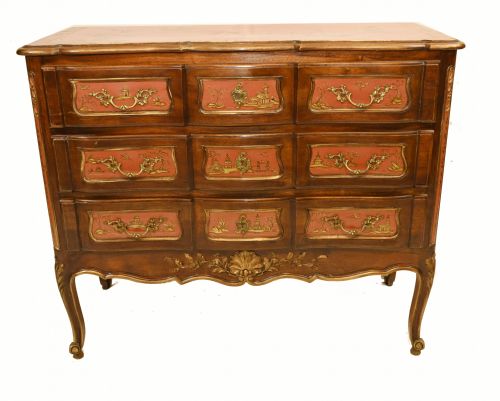
Metal mounts in gilt bronze and brass provide structural reinforcement and decorative accents, appearing alongside marble tops on specific cabinet and commode forms.
French Chinoiserie Furniture Retail Price Guide 2026
Typical asking prices for french chinoiserie furniture among the pieces listed under this phrase on Sellingantiques today, from the lower quarter to the upper quarter. They describe what is for sale here now, not the wider market.
Object forms on this site include chests of drawers, side tables, commodes, bedside cabinets, etagere tables, artwork, side chairs, and mirrors.
What varies in quality
Quality in these objects is determined by the depth and execution of the surface decoration, distinguishing standard decorative work from pieces featuring intricate lacquer and japanned detailing. The clarity of the painted scenes and the preservation of the layered finish dictate the visual strength of each item.
The standard of underlying carpentry and timber selection separates basic softwood and pine structures from finely carved hardwood furniture. The integration of auxiliary materials, such as fitted marble tops and cast gilt bronze or brass mounts, further distinguishes the construction standard of individual items.
Gabriel Viardot·Maison Krieger·Mercier Freres
The French Chinoiserie Furniture Glossary
- Chinoiserie
- European decorative style reflecting Chinese artistic influences, prominent in furniture and interior design across various periods. It employs motifs such as pavilions, figures, and landscapes rendered in lacquer or paint.
- Japanning
- European imitation of East Asian lacquerwork, created by applying layers of varnish and heating the surface to achieve a hard finish. This technique was widely utilised on nineteenth-century cabinets and desks.
- Commode
- Low French chest of drawers or cabinet designed for domestic interiors, frequently fitted with a marble top. These pieces often serve as the focal point for decorative lacquer work.
- Etagere
- Open tiered shelving unit designed for displaying small objects and ornaments. In French furniture, these tables combine display space with decorative framing.
- Japonisme
- Western artistic interest in Japanese art and design, influencing nineteenth-century decorative arts. It shares space with chinoiserie on many pieces from this era.
French Chinoiserie Furniture: Frequently Asked Questions
What is french chinoiserie furniture?
French chinoiserie furniture combines European cabinet forms with decorative lacquer and painted finishes inspired by East Asian art. These pieces range from commodes and chests of drawers to side tables and mirrors.
They reflect historical European interpretations of Eastern motifs, produced during periods such as the nineteenth century, the Victorian era, and the early twentieth century. The style often intersects with Japonisme and the Aesthetic Movement.
How do I identify a commode?
A commode is a low cabinet or chest of drawers designed for storage, typically featuring a flat top made of wood or marble. In French furniture, these forms often serve as a canvas for elaborate lacquer work.
They stand on legs or low supports and frequently incorporate decorative metal mounts in brass or gilt bronze. Their proportions distinguish them from taller chests or sideboards.
What materials were used?
Makers constructed these pieces using woods such as hardwood, pine, and painted softwood for the primary carcases and frames. Carved wood details often shape the structural edges of mirrors and tables.
Surfaces received specialised treatments including japanning and lacquer to build up decorative scenes. Additional components included marble tops and metallic mounts in brass and gilt bronze.
How do I care for lacquer surfaces?
Lacquer and japanned surfaces require gentle dusting with a soft, dry cloth to prevent abrasion. Avoid commercial polishes, moisture, and direct sunlight, which can damage the layered finish over time.
Maintaining stable room temperature and humidity helps protect the underlying timber carcase from movement. This preserves both the structural integrity and the decorative surface layer.