


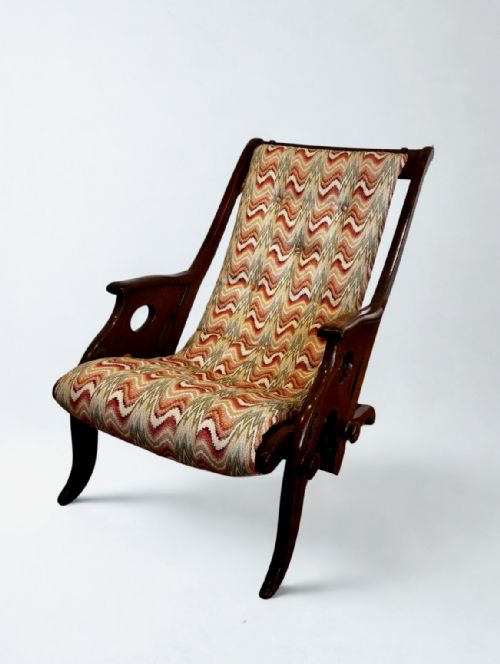


Rosewood Upholstered Armchair
A rosewood upholstered armchair brings rich timber grain and period comfort to a room.
Rosewood Upholstered Armchair
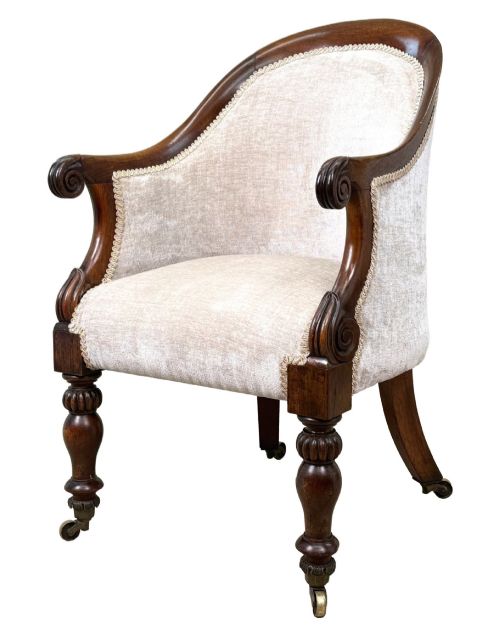
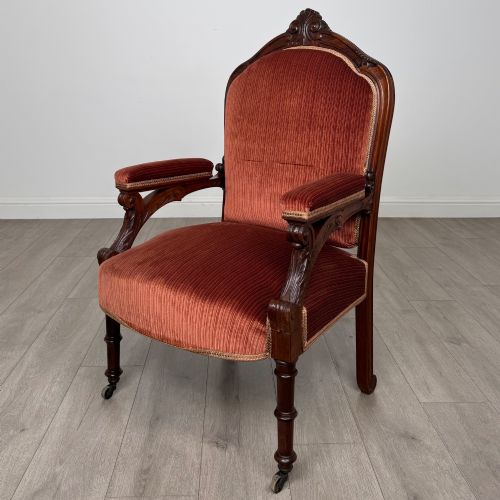
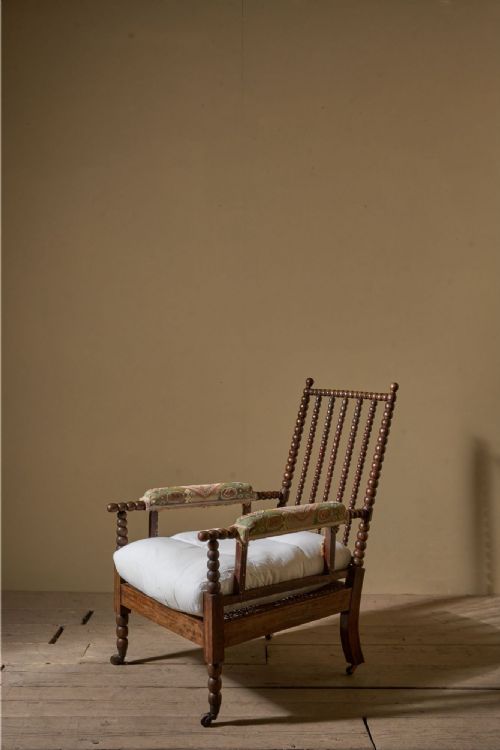
A rosewood upholstered armchair represents seating from the nineteenth century onwards, spanning Regency, Victorian and Edwardian eras. Pieces on this page range from library chairs and low nursing chairs to occasional and salon seating.
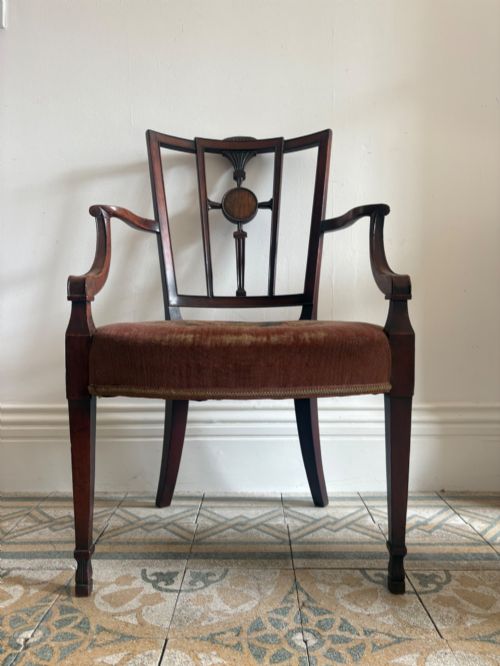
The nineteenth century examples form the majority of the selection, showing solid rosewood, simulated timber frames, or mahogany with rosewood details. Makers and makers' workshops span English, French and Danish origins.
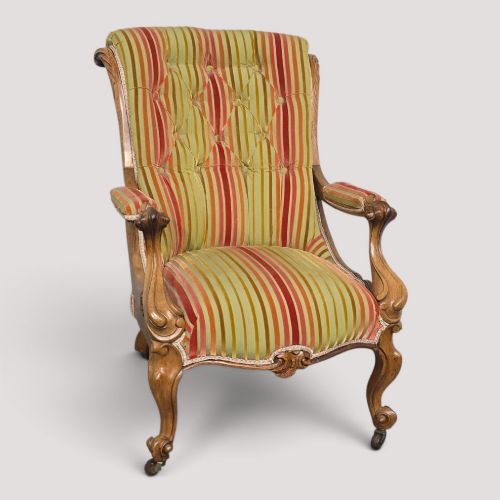
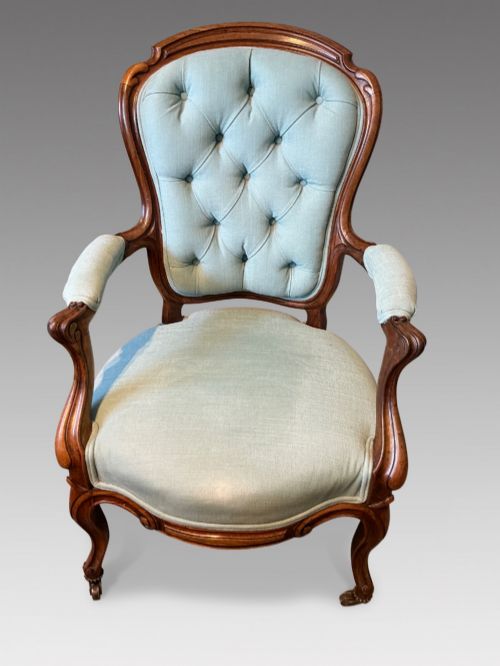
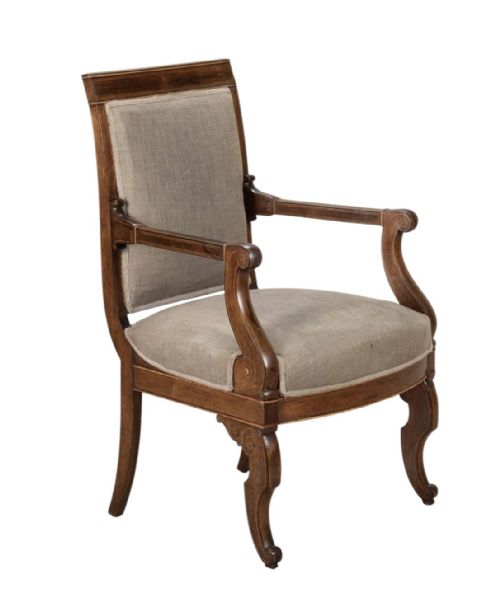
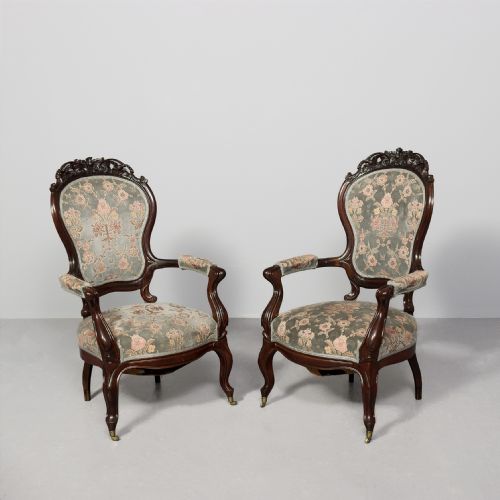
Victorian pieces often feature carved showwood frames, cabriole legs and buttoned upholstery. Regency and William IV iterations tend towards library armchairs with deep seats and scroll backs.
How they were made
Frames rely on dense tropical hardwoods, chiefly solid rosewood or mahogany with rosewood veneers and roundels, occasionally simulated on alternative timbers. Structural rigidity is provided by joinery suited to heavy library use and parlour armchairs.
Upholstery incorporates traditional textile coverings such as velvet, damask, fabric, and linen secured over padded foundations. Metal components like brass castors appear on legs, while parcel gilt accents highlight carved showwood details.
Rosewood Upholstered Armchair Retail Price Guide 2026
Typical asking prices for rosewood upholstered armchair among the pieces listed under this phrase on Sellingantiques today, from the lower quarter to the upper quarter. They describe what is for sale here now, not the wider market.
A sturdy campaign armchair proves that nineteenth-century travellers still insisted on proper rosewood comfort while marching across the empire.
What varies in quality
The refinement of the timber grain and the crispness of the hand-carved showwood details distinguish standard examples from finer commissions. Workshops known for high-grade cabinet work, such as Gillows or James Shoolbred, demonstrate superior framing and proportion.
Upholstery execution, from buttoning to fabric selection, impacts the overall integrity of the piece. Well-balanced proportions in scroll backs, arm supports and cabriole legs indicate careful design rather than mass production.
Gillows·J. Herbert McNair·James Shoolbred
The Rosewood Upholstered Armchair Glossary
- Showwood
- Timber frame elements left exposed around the upholstered padding. This allows the polished grain of the rosewood to remain visible.
- Tub armchair
- A seating form characterised by a continuous curved back and arms that enclose the sitter. These provide a compact and supportive shape.
- Nursing chair
- A low-seated chair originally designed for nurseries or domestic sitting rooms. They often feature high backs and generous upholstery.
- Parcel gilt
- A decorative technique applying thin gold leaf to specific carved portions of the wood. It highlights details against the dark rosewood grain.
- Marquetry
- Inlaid wood veneers forming decorative patterns or pictorial designs. This technique frequently decorates Edwardian and salon furniture panels.
Rosewood Upholstered Armchair: Frequently Asked Questions
How do I identify a Regency rosewood armchair?
Regency rosewood armchairs usually exhibit classical proportions, sabre or reeded legs, and architectural lines derived from Greek and Roman design. They often appear as deep library chairs with scroll arms and dark timber tones.
Later Victorian interpretations tend to feature heavier carving, serpentine fronts, and cabriole legs. Examining the underframe and turning helps separate early nineteenth century construction from later revivals.
Are simulated rosewood frames authentic period pieces?
Simulated rosewood frames are period pieces where secondary timbers like beech or birch are painted or grained to imitate exotic rosewood. This practice was common during the nineteenth century when solid tropical hardwoods were expensive.
These pieces share the same structural joinery and age as solid wood examples. The surface finishing represents an alternative aesthetic choice rather than a later alteration.
How should I care for antique rosewood upholstery?
Antique rosewood frames benefit from occasional waxing with traditional beeswax to maintain the lustre of the timber. Avoid placing the chair in direct sunlight to prevent fading of both the wood and the textile covering.
Upholstery requires gentle vacuuming with a soft attachment to remove dust from crevices and button tufting. Professional textile cleaning preserves delicate fabrics like damask, velvet, and historical linen.