
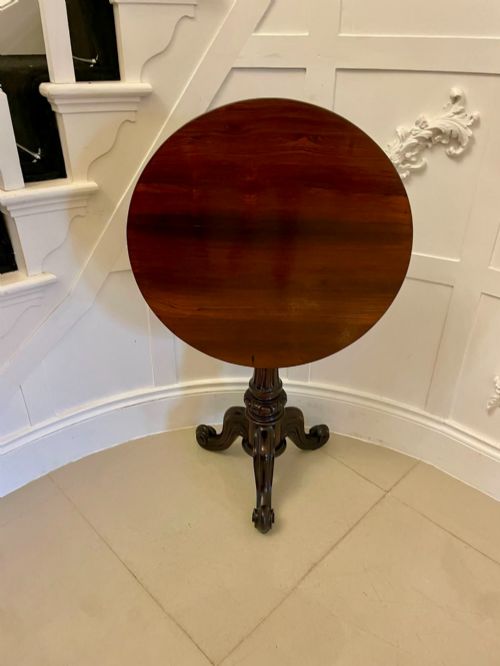


Rosewood Topped Table
A rosewood topped table brings rich grain and deep colour to a room, ranging from formal Regency card tables to sturdy Victorian dining pieces.
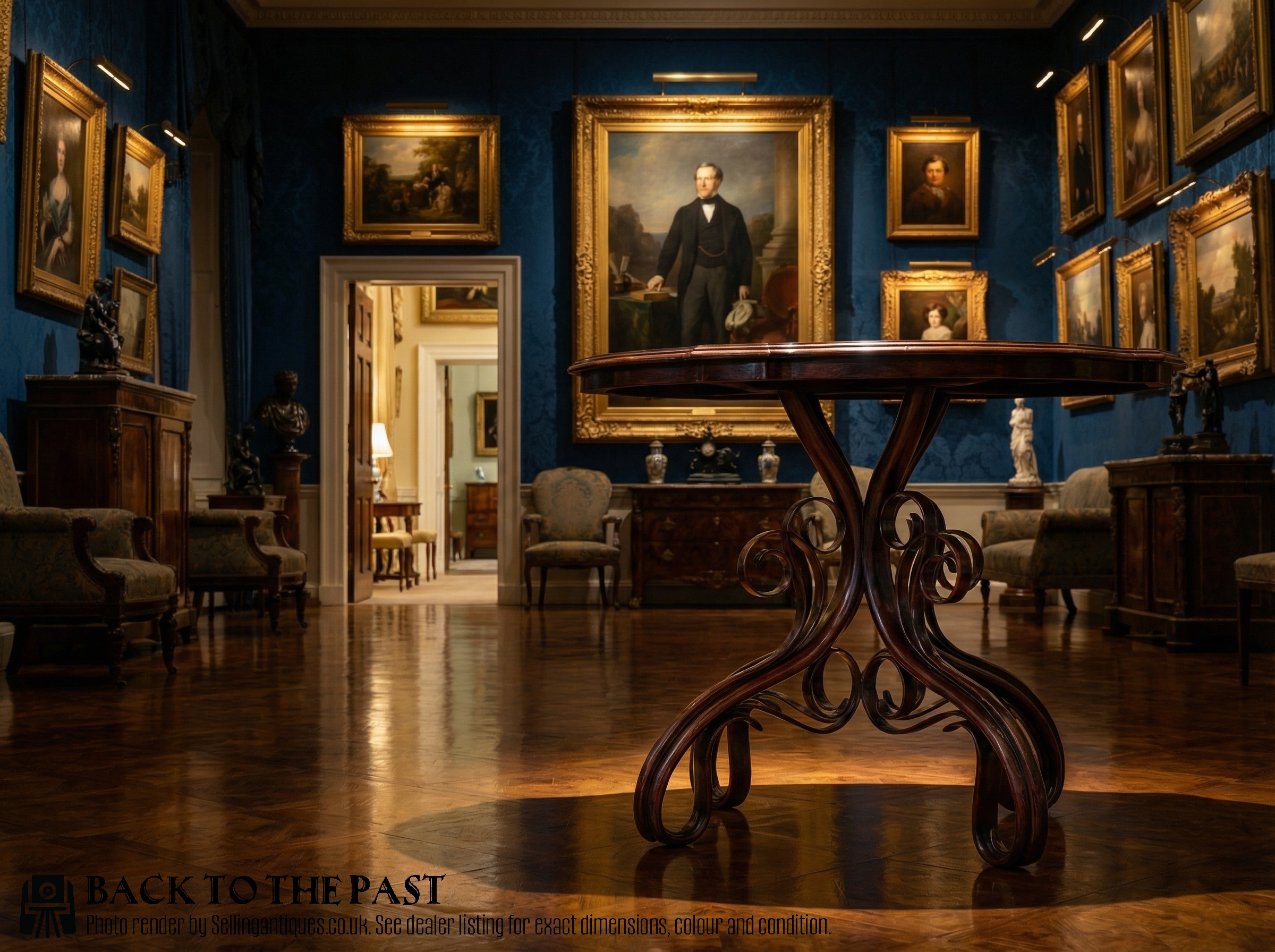
Rosewood Topped Table
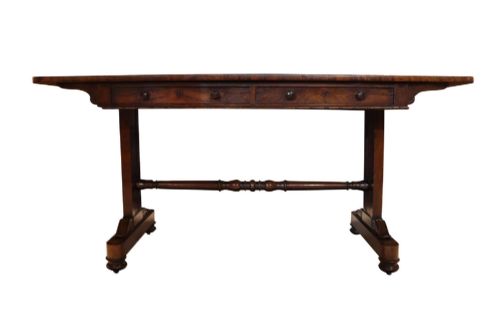
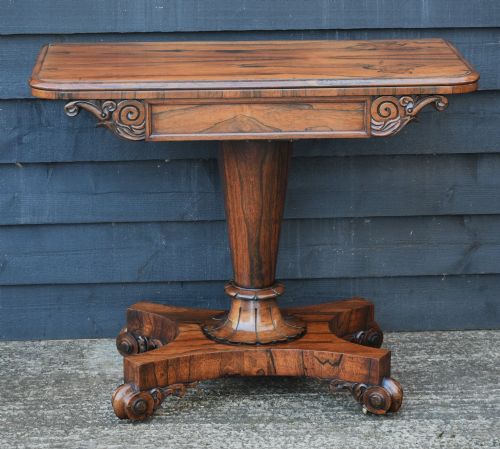
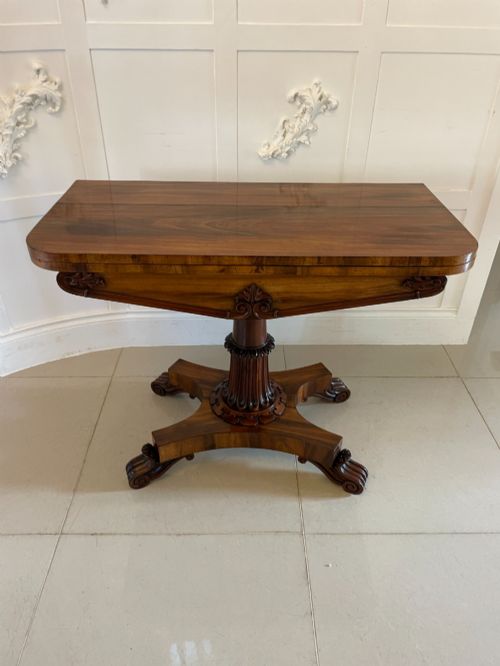
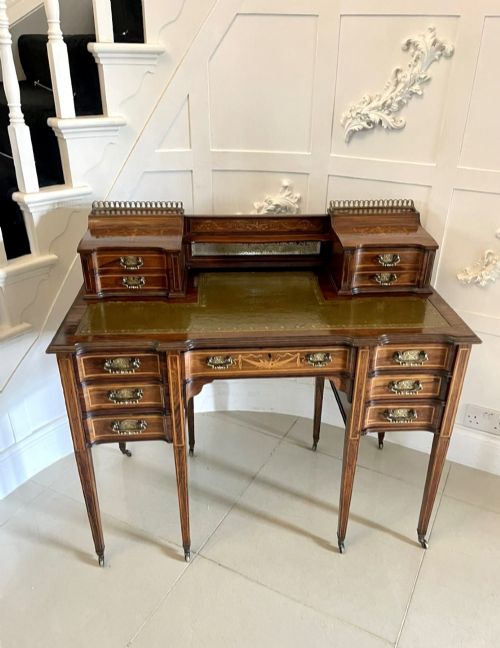
A rosewood topped table encompasses a wide variety of forms designed for domestic use, from large dining and centre tables to smaller side, card, and occasional tables. These pieces emerge predominantly from the Regency, William IV, and Victorian eras, alongside Chinese export and Anglo-Indian productions.
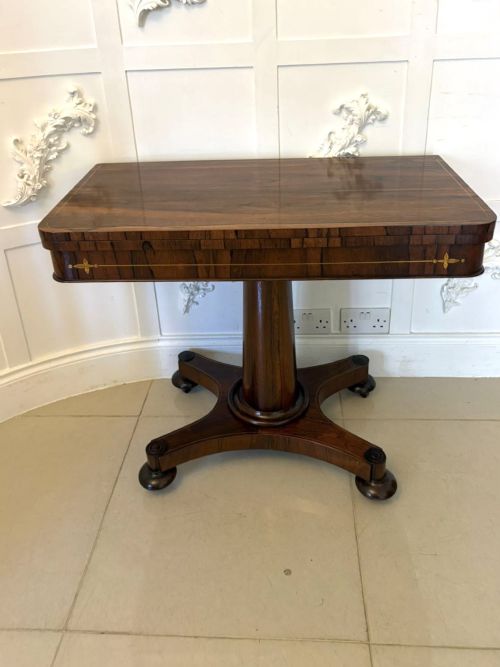
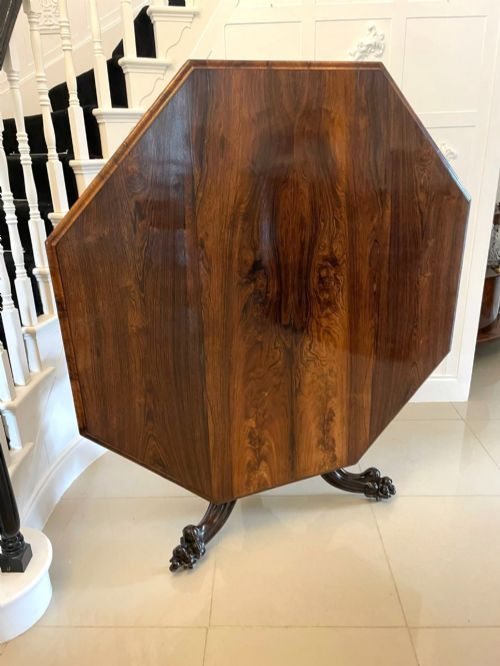
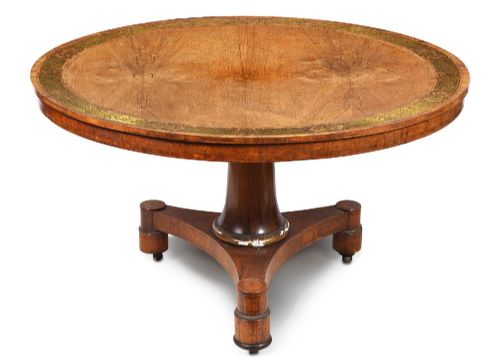
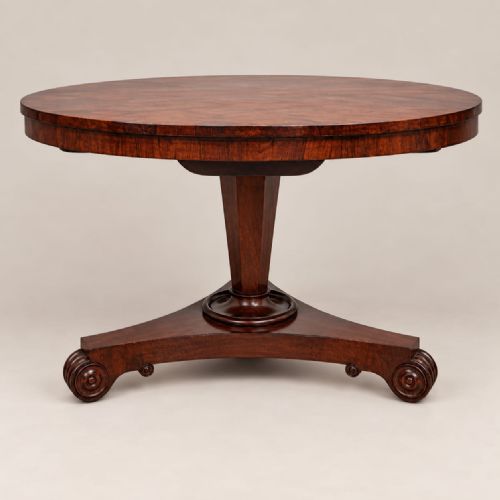
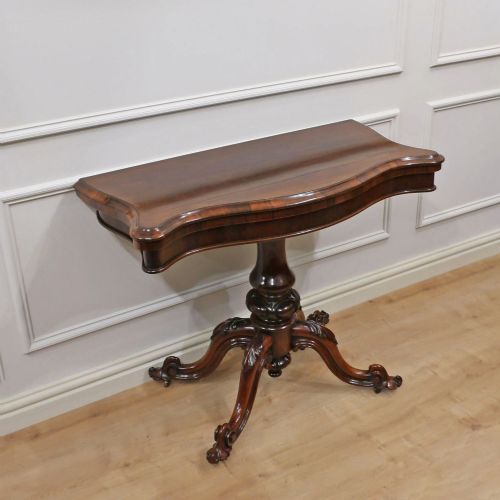
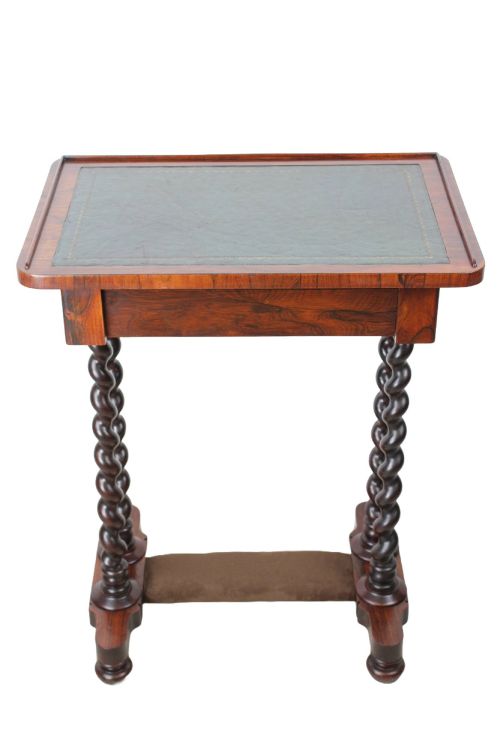
The most common formats met on this page are circular dining or centre tables, tilt-top breakfast tables, and fold-over card or games tables. Makers also produced specialised forms such as drum tables, work tables, lamp stands, and writing desks utilising this dense tropical timber.
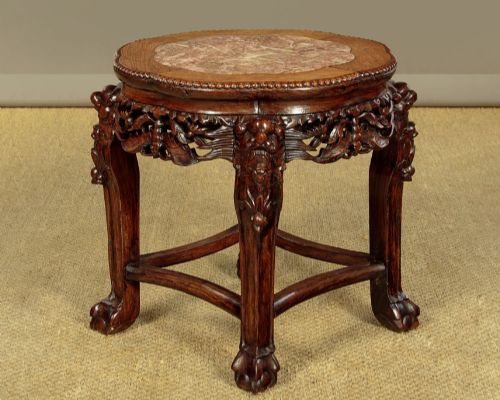
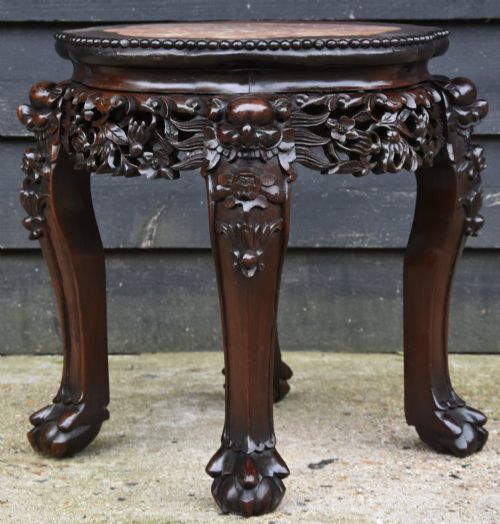
Origins stretch across English workshops, Irish makers, and Asian workshops creating low tables and plant stands with marble inserts. Buyers encounter everything from small occasional items to grand freestanding pieces intended for the principal rooms of a house.
How they were made
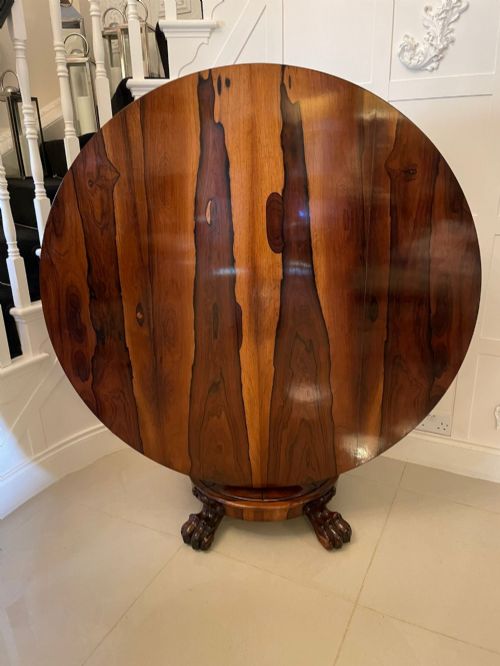
Joiners and cabinet makers utilised solid rosewood for structural elements, turned bases, and carved supports, while applying fine veneers to large table tops to display the complex grain. Workshops combined this heavy hardwood with secondary timbers like mahogany and hardwood frames.
Decoration often involved brass inlay, satinwood or boxwood stringing, mother of pearl inlay, and intricate hand carving on pedestals and legs. Marble inserts also appear frequently on console, lamp, and low tables, fitted securely into wooden frames.
Mechanisms for tilt-top breakfast tables, swivel-top games tables, and fold-over card tables required precise engineering from skilled artisans. Bases frequently featured solid turned columns resting on tripartite or quadrupartite platforms with carved scroll feet.
Some nineteenth century card tables hide secret compartments beneath their swivelling tops, perfect for losing winning cards.
What varies in quality
Quality rests significantly upon the choice of timber and the skill with which the rosewood veneer is matched and laid across the table top. Superior examples display striking natural figuring and grain patterns that remain balanced and harmonious across folding leaves and circular surfaces.
The crispness of hand carving on pedestals, legs, and friezes separates standard production from exceptional pieces attributed to notable makers. Robust construction of internal mechanisms and stable joints ensures that tilt-tops and swivel actions function smoothly over generations.
Integration of secondary materials such as brass inlay, marble tops, and satinwood crossbanding indicates a higher tier of craftsmanship. Pieces retaining their original structural integrity and rich surface polish command greater appreciation.
Maple and Co·Gillows·Peters of Genoa
The Rosewood Topped Table Glossary
- Tilt-top table
- A table with a hinged top that can be rotated to a vertical position when not in use. This mechanism saved space in domestic interiors.
- Card table
- A folding table designed for playing card games, featuring a hinged top that opens to reveal a baize-lined surface. Many examples date from the Regency and Victorian periods.
- Centre table
- A freestanding table intended to stand in the middle of a room rather than against a wall. These pieces typically feature finished detail on all sides.
- Crossbanding
- A border technique where thin strips of veneer are laid so that the grain runs at right angles to the main surface. It frequently frames the tops of Regency and Victorian tables.
- Drum table
- A circular library or occasional table with a deep frieze containing drawers, resembling the shape of a drum. They often rest on a central pillar and platform base.
- Marble top
- A solid stone surface inset into the wooden frame of a console, pier, or lamp table. This feature provides a cool, durable surface resistant to heat and liquid.
Rosewood Topped Table: Frequently Asked Questions
How do I use a rosewood topped table daily?
These tables function well as central display surfaces, dining areas, or writing desks depending on their specific form. Using coasters and mats protects the polished timber surface from moisture and heat.
Placing them away from direct sunlight preserves the deep natural colour of the rosewood. Regular dusting with a soft cloth maintains the finish without needing heavy polishes.
What is a tilt-top table used for?
A tilt-top table served as a versatile piece that could be folded flat and pushed against a wall when floor space was needed. In the evening, the top was lowered to hold candles, books, or tea.
This practical space-saving design was especially popular during the Regency and Victorian periods. The pivoting mechanism relies on a sturdy catch beneath the surface to lock the top securely.
Were marble topped tables used for dining?
Tables with marble tops were typically designed as console, pier, lamp, or low tables rather than for dining. The stone provided a stable, cool surface for lamps, ornaments, or serving dishes.
These pieces often stood against drawing room walls or in hallways. The weight of the marble required solid hardwood frames to support the top safely.