


Thonet Hall Furniture
Thonet hall furniture brings organic, steam-bent curves into the entranceway, offering robust support for coats and hats.
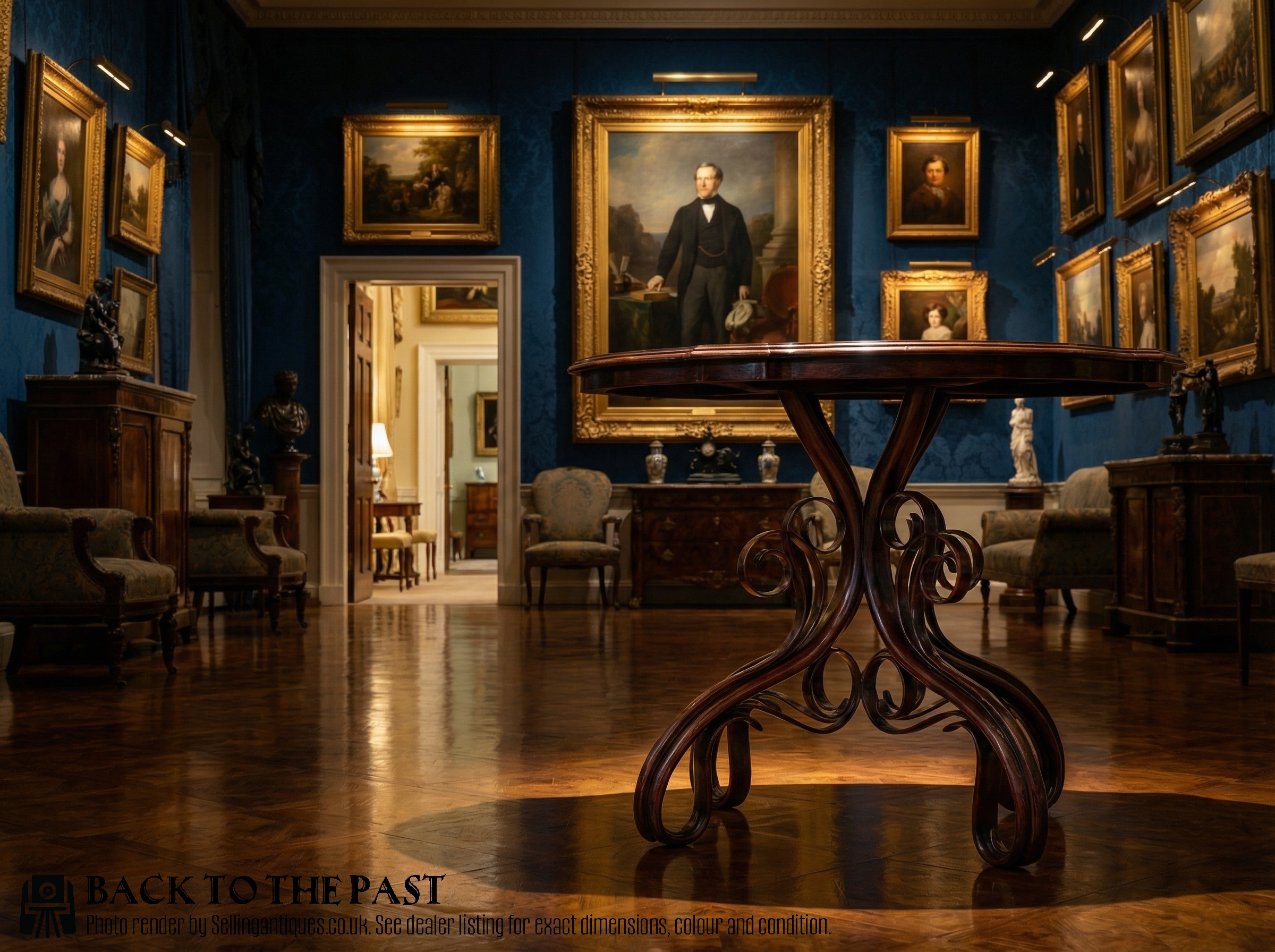
Thonet Hall Furniture
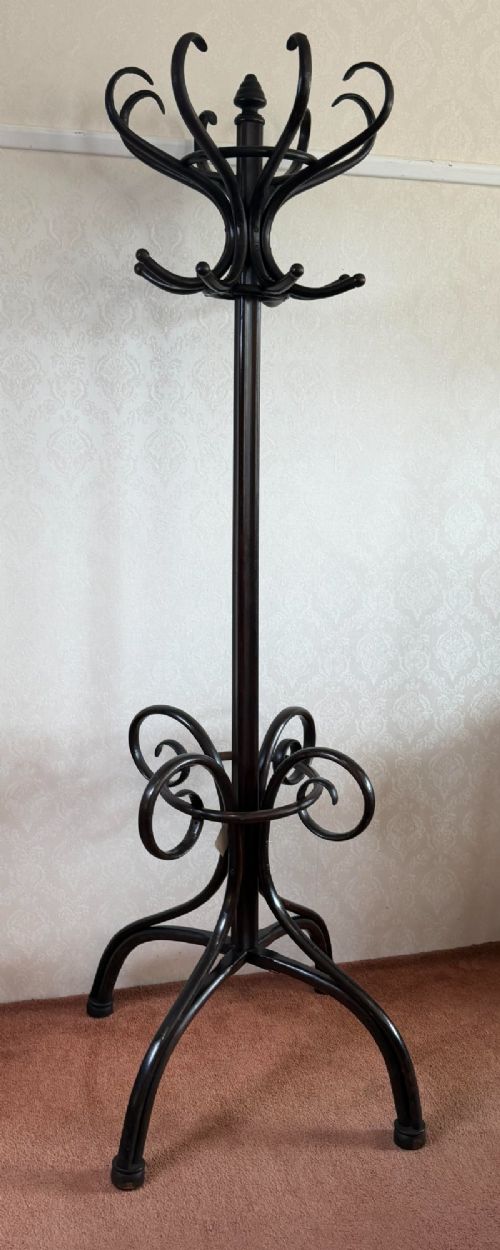
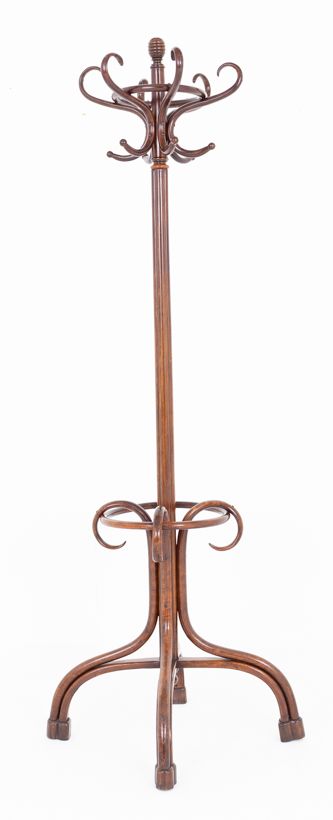
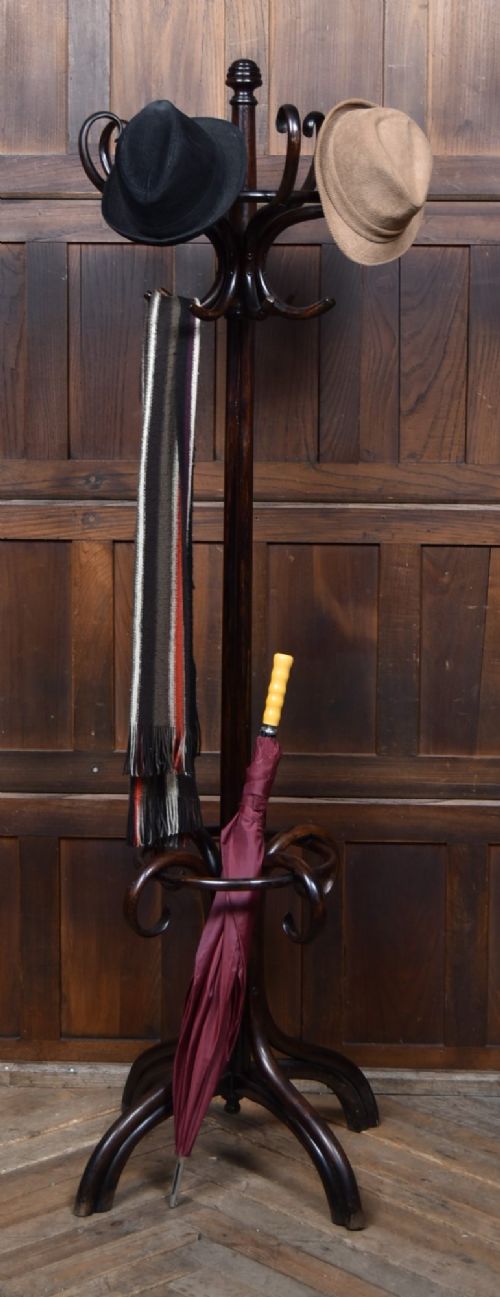
When you search for thonet hall furniture, you encounter tall coat stands, hat stands, and wall-standing designs created for the entranceway. The versions most commonly met on this page date from the Victorian, Edwardian, and early twentieth-century periods, spanning the 1890s to the 1920s.
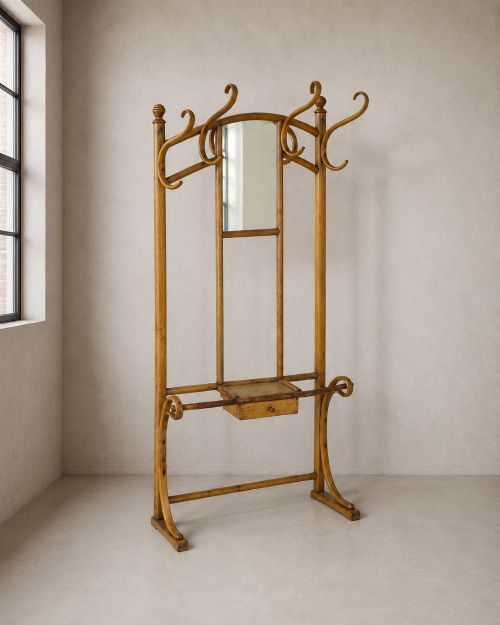
Forms range from simple upright coat stands with double tops to elaborate hall stands incorporating umbrella rings and console tables. Austrian bentwood styles dominate the selection, often bearing the characteristic lightness and fluid lines associated with the aesthetic.
Makers such as Fischel and Thonet itself appear in the records, producing pieces that combine practical utility with sculptural presence. The overarching focus remains functional furniture designed to organise entrance spaces efficiently.
Methods of construction
Construction relies heavily on steam-bent wood, predominantly beech and beechwood, which allows straight timber to be shaped into continuous graceful curves without losing structural integrity. Metal components occasionally appear to reinforce joints or provide integrated drip trays and hooks.
Glass elements sometimes feature in console tables, paired with stained wood and rosewood tops to create varied surface textures. The manipulation of steam-bent wood remains the defining technical achievement of these pieces, permitting complex looping frameworks that support heavy garments with minimal weight.
Some tall coat stands feature double top rings, seemingly designed to accommodate the impressively tall hats of bygone pedestrians.
Assessing quality in bentwood
Quality in these pieces rests upon the crispness of the steam-bent curves and the stability of the upright framework under load. Better examples display smooth, even finishes across the stained wood and beech, with tight joinery that resists wobbling.
The presence of maker labels, such as those from Fischel or Thonet, distinguishes standard production items from documented workshop pieces. Furthermore, more ambitious forms featuring double tops or combined console tables demonstrate greater craftsmanship than basic single-post designs.
Fischel·Thonet
The Thonet Hall Furniture Glossary
- Bentwood
- Wood shaped by exposure to steam and pressure, allowing makers to create sweeping curves. This technique forms the structural foundation of almost all items listed here.
- Beechwood
- A dense, pale hardwood prized for its uniform texture and ability to hold shape after steam-bending. It serves as the primary material for the frames.
- Console table
- A narrow table designed to stand against a wall, sometimes topped with rosewood or glass in these groupings. Such tables provide a convenient surface for everyday items in the hall.
- Hall stand
- A combined piece of furniture incorporating coat hooks, hat racks, and often umbrella storage for an entranceway. These tall structures anchor the spatial arrangement of the room.
Thonet Hall Furniture: Frequently Asked Questions
How do I care for bentwood hall stands?
Keep wooden surfaces clean using a dry cloth and avoid placing them in damp areas or direct sunlight. Consistent humidity levels prevent the steam-bent components from drying out or shifting.
Check joint fixings periodically to ensure stability remains high under the weight of heavy coats and hats. Gentle polishing maintains the finish on stained beech and rosewood elements.
Were these stands made for small hallways?
Many wall-standing designs and slim coat stands were specifically engineered to occupy minimal floor space while offering maximum hanging capacity. Their vertical orientation suits narrow Victorian and Edwardian corridors.
More elaborate hall stands combine console tables and umbrella holders, requiring slightly more generous entrance proportions. Choosing the right scale depends on the available wall space and clearance needed for doors.
How do I distinguish Thonet from Fischel pieces?
Attribution usually relies upon paper labels, branded stamps, or distinct structural motifs characteristic of each workshop's catalogue. Both makers utilised similar steam-bending techniques during the nineteenth and twentieth centuries.
Examining the underside of console tables or the central column of coat stands often reveals maker marks. Without stamps, pieces are typically classified under the broader Austrian bentwood or Thonet style.
What periods do these hall stands date from?
The pieces span the Victorian and Edwardian eras, stretching from the late nineteenth century through the 1920s. Standard dating relies upon construction traits, label types, and stylistic indicators.
Art Nouveau influences frequently appear in items from around nineteen hundred, showing more exuberant organic curves. Later examples from the nineteen-twenties tend toward cleaner, more restrained vertical lines.