

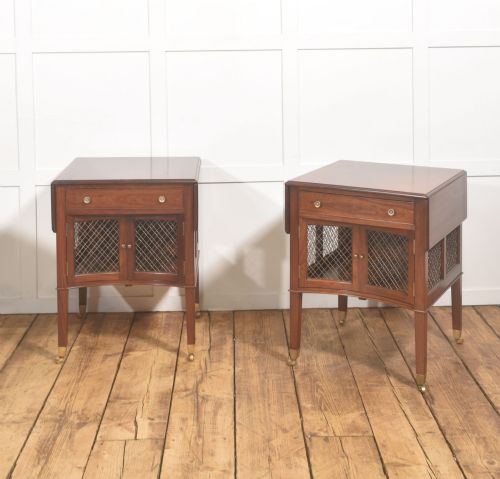
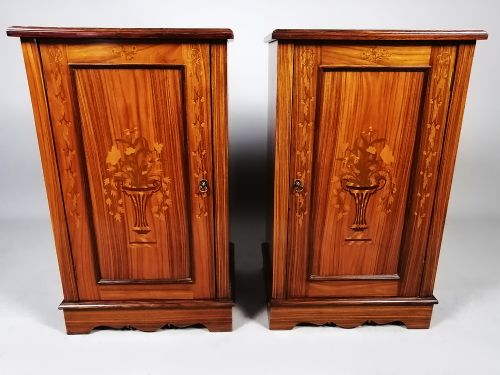
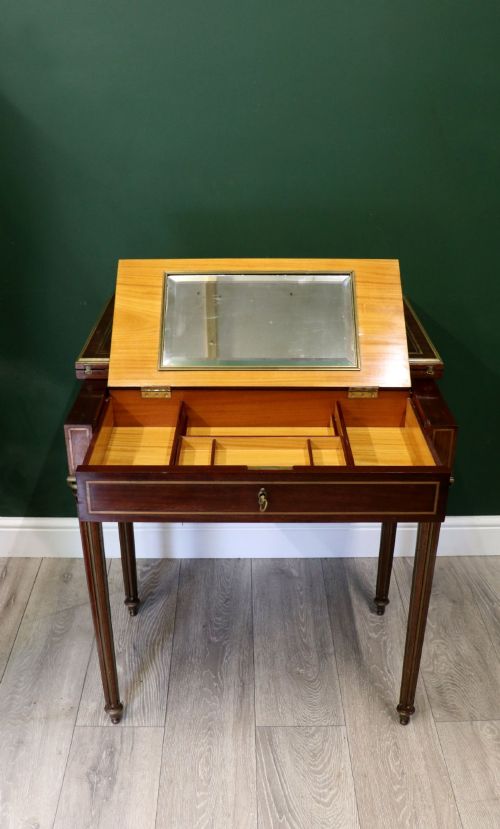
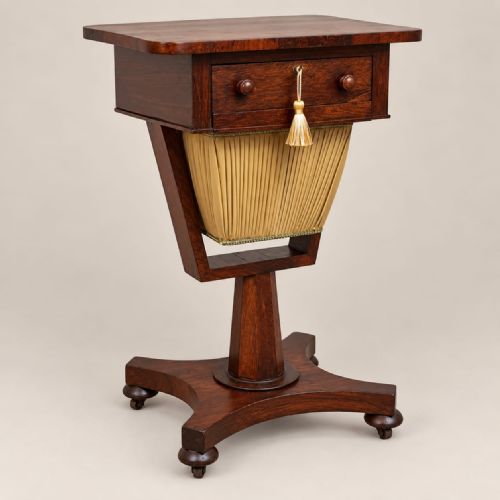





Rosewood Table Cabinet
A rosewood table cabinet brings dense timber and clever compartment design to a surface, holding letters or trinkets with a heavy, polished presence.
Rosewood Table Cabinet
A rosewood table cabinet sits on a larger surface rather than standing on the floor, designed to contain small valuables, writing materials, or sewing gear within compartmentalised drawers and hinged doors. These compact pieces date predominantly from the nineteenth century, spanning Regency, Victorian, and Edwardian periods.
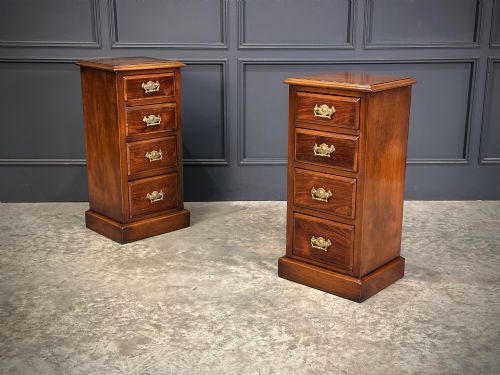
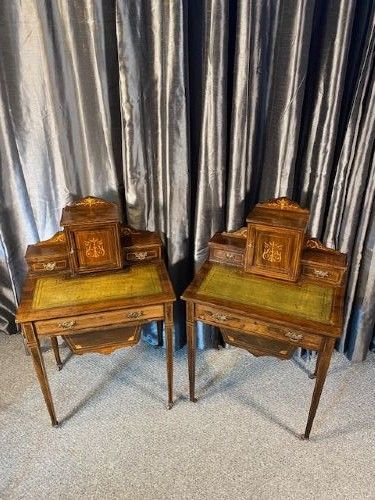
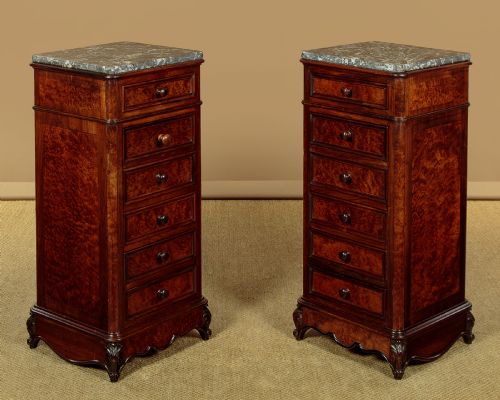
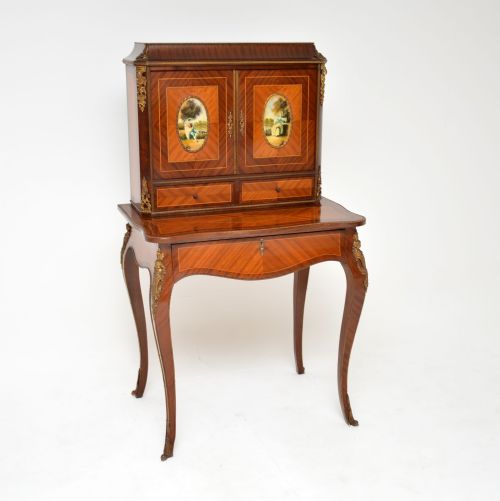
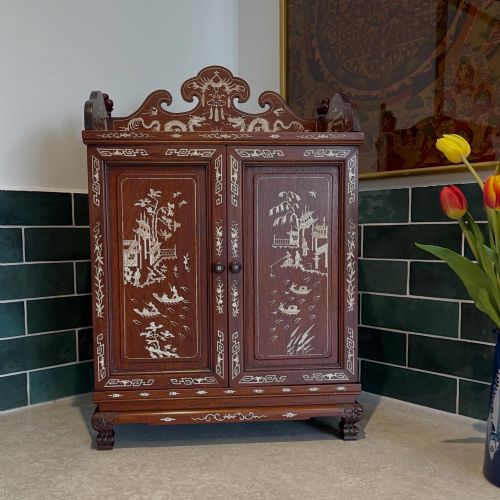
The versions most commonly met combine rich, dark grain with inlaid marquetry, brass handles, or mother of pearl details. While many share proportions with small desks, writing boxes, and bedside cupboards, the true table cabinet prioritises desktop storage and display over writing surfaces.
Origins range across English workshops and French ateliers, alongside occasional pieces drawing on Qing Dynasty forms. Buyers find them used as jewellery chests, stationery tidies, or decorative centrepieces on sideboards and tables.
Materials and construction
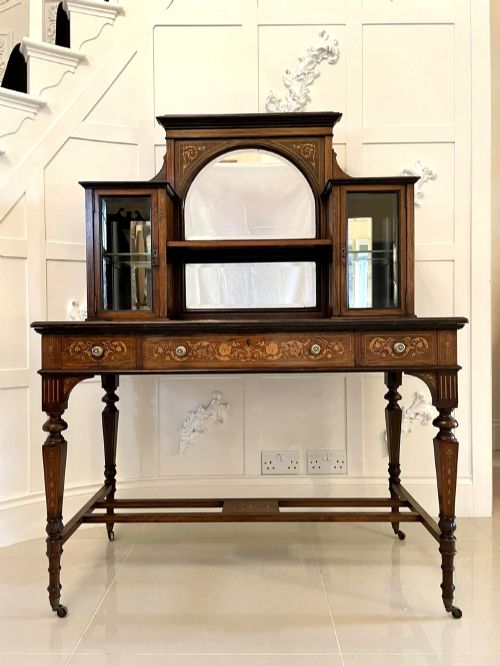
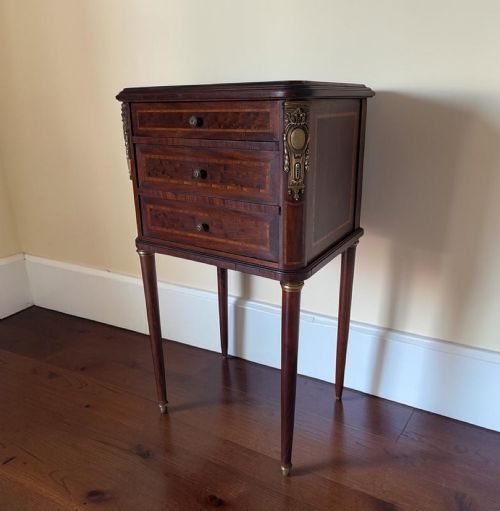
Cabinet makers constructed the primary carcase using dense tropical rosewood, frequently applying veneers over secondary hardwoods to display rich, dark grain patterns. Marquetry inlay employed contrasting light and dark timbers such as satinwood, kingwood, and amboyna to form floral or geometric panels.
Mounts and hardware relied on cast or gilt orrmolu, brass, and polished marble tops, particularly on French pieces influenced by Louis XV and Louis XVI revivals. Mother of pearl was shaped and set by hand into lids and drawer fronts to catch the light.
Joinery techniques prioritised tight dovetailing for internal drawers and solid panel construction to prevent warping in the heavy tropical timber.
Rosewood Table Cabinet Retail Price Guide 2026
Typical asking prices for rosewood table cabinet among the pieces listed under this phrase on Sellingantiques today, from the lower quarter to the upper quarter. They describe what is for sale here now, not the wider market.
Several Victorian examples hide tiny spring-loaded secret drawers behind pigeonholes, designed for letters no one else should read.
What separates the finest examples
Quality rests in the crispness of the marquetry and the tightness of the timber joints, where lesser pieces rely on painted decoration rather than contrasting wood veneers. The depth and clarity of the grain figure across the rosewood surfaces indicate the selection of the original log.
Interior fittings reveal the maker's hand through secret compartments, well-fitted drawers, and intact silk or velvet linings. Original cast brass handles, working locks with matching keys, and fire-gilded ormolu mounts elevate an example above standard production.
Morant and Co·Thomas King·William Trotter
The Rosewood Table Cabinet Glossary
- Marquetry
- The art of applying small pieces of veneer to a structure to form decorative patterns. Craftsmen cut contrasting timbers together to ensure tight, seamless joints.
- Ormolu
- Gilt bronze mounts applied to furniture edges and feet. The technique involves coating cast bronze with a mercury and gold amalgam before heating.
- Kingwood
- A dense, highly figured Brazilian timber with violet and dark brown stripes. It saw frequent use in high-end eighteenth and nineteenth-century cabinet work.
- Bonheur du jour
- A small lady's writing desk featuring an enclosed cabinet or superstructure on top. The form gained popularity in France during the mid-eighteenth century.
- Dovetail
- A joint formed by interlocking wedge-shaped fingers. It provides high tensile strength for drawer corners.
Rosewood Table Cabinet: Frequently Asked Questions
What fits inside a table cabinet?
These pieces house stationery, letters, sewing tools, and jewellery within small drawers and hidden compartments.
Their scaled-down interiors suit desk surfaces where keeping small items organised matters more than bulk storage.
Where should I place one?
A table cabinet sits securely on top of a sideboard, desk, or chest of drawers where its polished grain remains visible.
Keep the timber away from direct heat sources and strong sunlight to prevent the rosewood from fading or splitting.
How do I tell Regency from Victorian?
Regency pieces often display restrained classical lines with brass inlay and architectural mouldings dating from the early nineteenth century.
Victorian examples frequently introduce heavier marquetry, mother of pearl accents, and more elaborate revival styling.
Are keys usually included?
Many nineteenth-century cabinets retain their original working locks, though keys are sometimes replaced or absent.
Locks on better pieces incorporate brass escutcheons and small functional levers designed for security.