


Rosewood Picture Frames
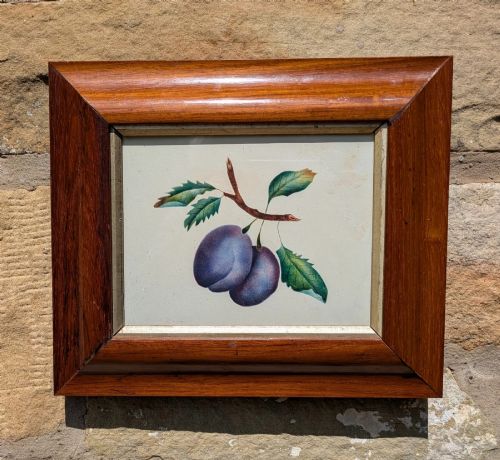
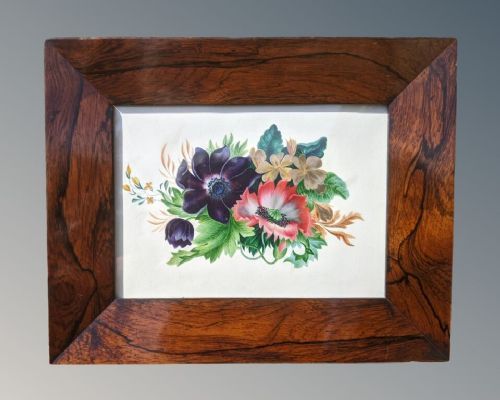
Rosewood picture frames hold your eye with their deep grain, housing everything from delicate botanical watercolours to needlework samplers.
Rosewood Picture Frames
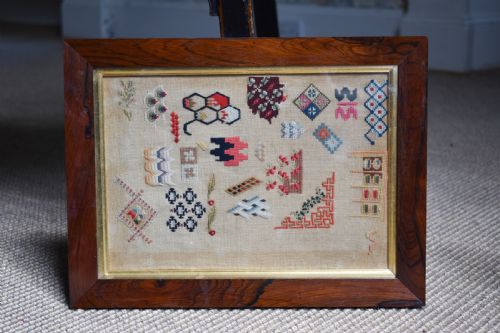
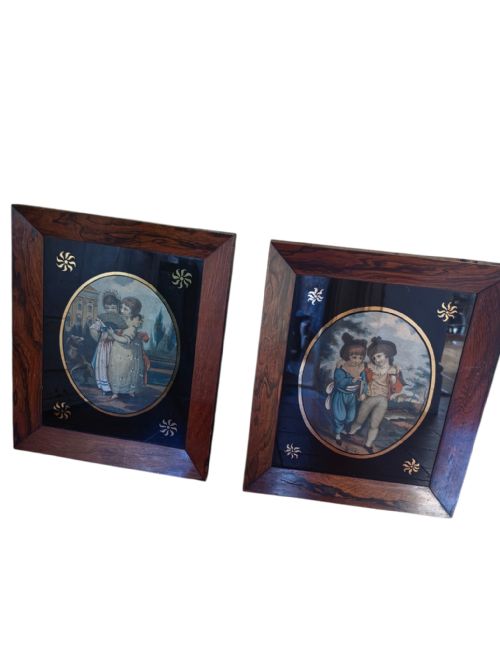
Rosewood picture frames house a diverse selection of nineteenth century wall art, including botanical watercolours, framed prints, textile art, and silhouettes. These items bring period character to a room through dark timber moulding and glazed protection.
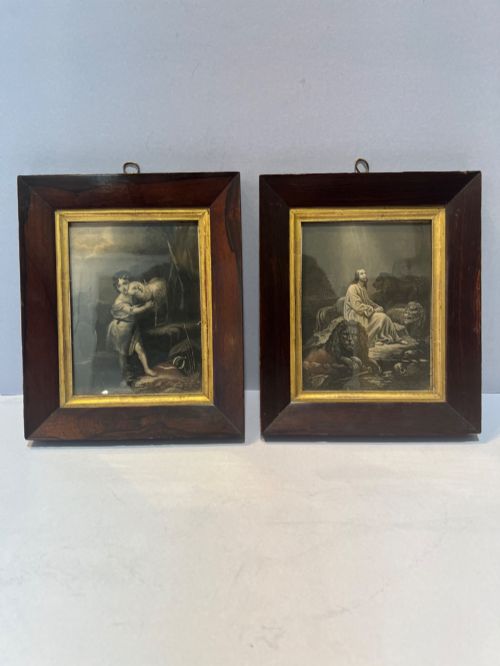
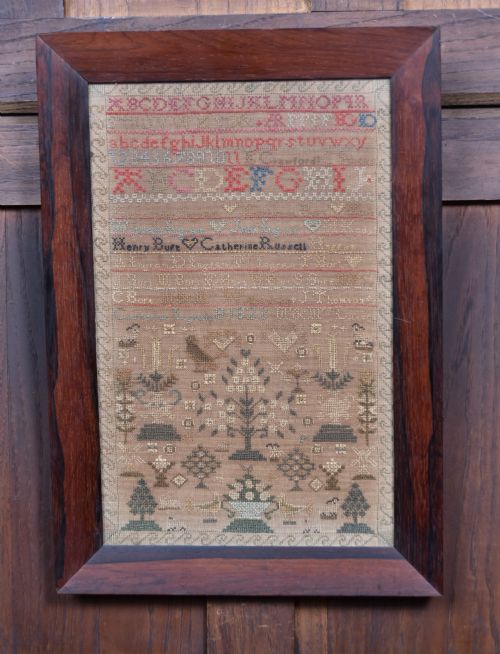
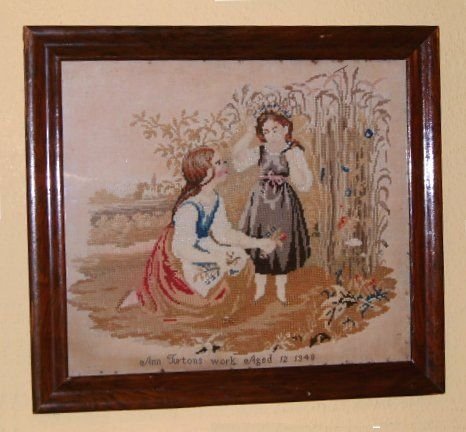
The versions most commonly met on this page span the Regency, Victorian, and Georgian eras. You will encounter them enclosing wool work, needlework samplers, engravings, and family portraits.
Makers utilised these dense timbers for distinct regional and stylistic expressions, ranging from traditional British silhouettes to intricate Anglo-Indian mirror frames and Chinese silk table screens.
How they were made
Makers constructed these objects using dense rosewood, often paired with gilded wood accents to highlight the inner edges of the moulding. Glass protected the delicate contents, which included paper watercolours, linen samplers, and wool work.
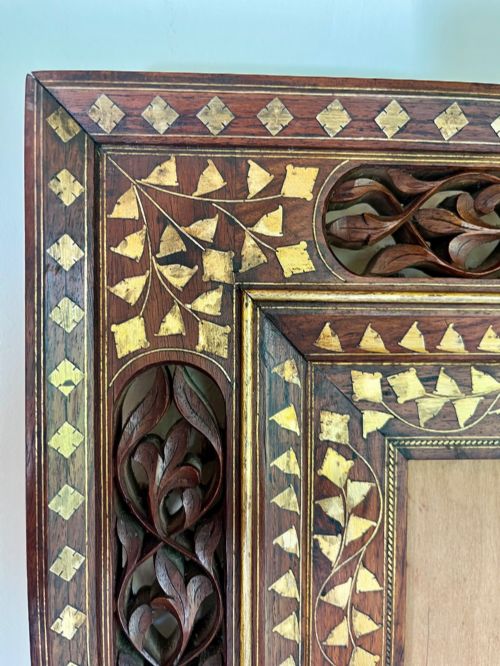
Specialised techniques such as Tunbridge ware involved intricate wood mosaic work applied to wooden plaques and frames. Carving also played a major role, seen clearly in pieces with elaborately worked stands and frames.
Listings feature nineteen-century materials including glass, rosewood, paper, wool, watercolour, linen, wood, and gilded wood.
What varies in quality
The richness of the rosewood grain and the depth of its polish set the finer examples apart from simpler mouldings. Grain patterns with strong natural figuring command greater visual interest.
The harmony between the frame and its contents determines the overall success of the piece. Frames that retain their original glass, backing, and contemporary artwork demonstrate higher integrity than those altered over time.
The Rosewood Picture Frames Glossary
- Regency
- A period spanning the early nineteenth century known for classical elegance and refined furniture design. Pieces from this era often feature restrained lines and sophisticated wood selection.
- Sampler
- A piece of needlework produced to demonstrate skill in various stitches and lettering. They frequently appear framed in dark wood to preserve the textile.
- Silhouettes
- Profile portraits cut from black paper or painted on card, popular during the Georgian and Victorian eras. They are typically set against a pale background within a slender frame.
- Tunbridge ware
- A form of decorative woodwork originating from Kent, characterised by tiny mosaic tiles forming pictorial or geometric patterns. It creates a distinctive patterned surface on plaques and frames.
- Gilded wood
- Wood treated with a thin layer of gold leaf or metallic powder to add a bright edge. This technique highlights decorative mouldings and frames.
Rosewood Picture Frames: Frequently Asked Questions
How do I date a rosewood frame?
Dating relies on construction methods, timber thickness, and the style of the artwork retained within. Earlier nineteenth century examples often display hand-finished joints and subtle variations in the moulding profile.
Examining the backing boards, fixings, and glass type provides further clues. Original components strongly indicate the period of manufacture.
Were these always used for pictures?
Not exclusively, as the evidence shows they house needlework samplers, wool work, tapestries, and mirrors. Textile art and embroidery were frequently mounted in these frames to protect delicate fabrics from dust.
Some specialised items functioned as table screens or wall plaques rather than conventional wall art. The deep moulding accommodated thicker textile pieces and glass successfully.
Can I replace the glass?
Replacing glass is sometimes necessary if it is cracked, but retaining original old glass preserves historical authenticity. Old glass often contains minor bubbles and wavy imperfections characteristic of the period.
Consult a professional framer if the original backing and seals need careful dismantling. Protecting the historic artwork inside remains the primary priority during any repair.