

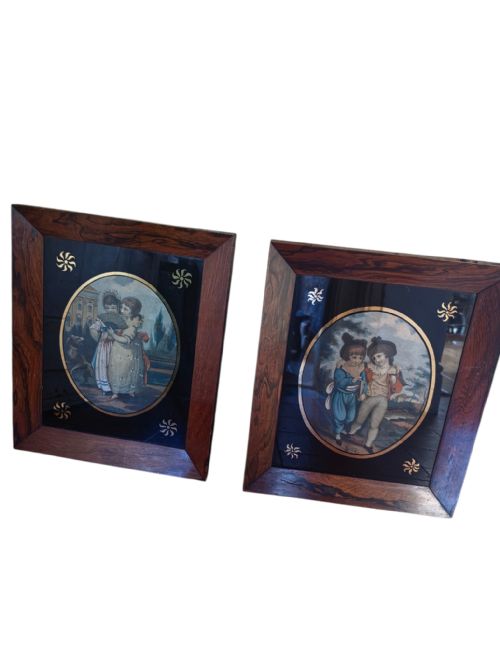
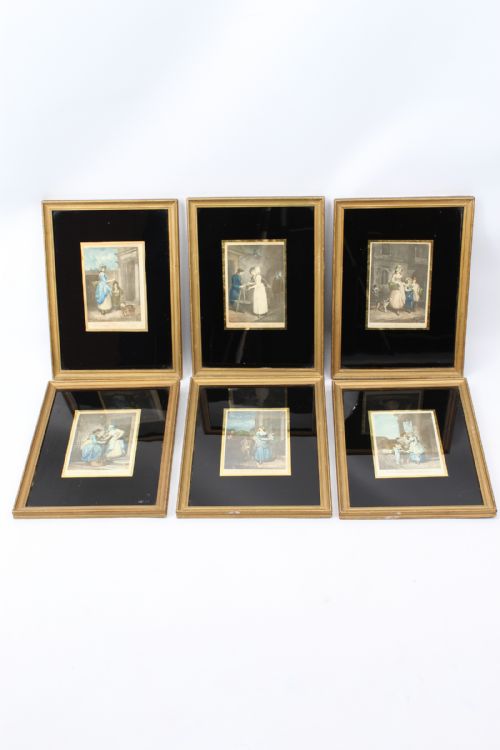


Black Eglomise Glass Frame
A black eglomise glass frame brings refined depth to portraits and prints, pairing dark glass borders with classical giltwork.
Black Eglomise Glass Frame
A black eglomise glass frame houses delicate works behind glass treated with metallic leaf or reverse painting, creating a deep, reflective border. The pieces on this page span Georgian, Regency, and Victorian periods, alongside later twentieth-century reproductions.
Most examples enclose silhouette portraits, equestrian scenes, silkwork embroideries, or classical prints rather than bare surrounds. These framed works originate from British and European workshops, utilising traditional techniques that accentuate the central imagery.
Buyers encounter a variety of formats, from single miniature portraits to pairs of silk embroideries and engraved series. The unifying element remains the dark glass mount, which frames the subject with a distinctive reflective sheen.
How they were made
Makers constructed these pieces using ebonised wood or giltwood to build the structural housing, often combining timber with brass accents. Artisans applied paint, paper, and silk within the composition to create portraits, prints, and embroidered pictures.
The defining eglomise technique involves painting or applying gold and silver leaf onto the reverse side of glass panels. This method produces a glossy, deep black border that frames the central artwork with permanent lustre.
Black Eglomise Glass Frame Retail Price Guide 2026
Typical asking prices for black eglomise glass frame among the pieces listed under this phrase on Sellingantiques today, from the lower quarter to the upper quarter. They describe what is for sale here now, not the wider market.
Listings feature works spanning the Georgian, Regency, and Victorian periods, alongside twentieth-century reproductions.
What varies in quality
Quality rests in the crispness of the reverse glass work and the integration of the frame with its contents. Finer examples display meticulous brushwork on the glass and precise gilding that has survived without heavy flaking or clouding.
The selection of materials also dictates standard, with original giltwood mouldings and authentic period textiles commanding greater regard than later replacements. The harmony between the dark glass border and the enclosed print or silhouette governs the overall visual impact.
John Miers
The Black Eglomise Glass Frame Glossary
- Eglomise
- A decorative technique involving the application of gold or silver leaf and paint to the reverse side of glass. This process creates a mirror-like, glossy finish prized for framing.
- Silhouettes
- Profile portraits cut from black paper or painted onto card or glass. They gained popularity during the Georgian and Regency periods before photography became widespread.
- Silkwork
- Embroidered pictures worked in silk threads on a silk or linen ground. These needlework pieces often depicted classical, pastoral, or sentimental subjects in period frames.
- Mezzotint
- A printmaking process of the intaglio family where the plate is roughened to achieve tones of grey and black. It allowed for rich, velvety dark areas suited to portraiture.
Black Eglomise Glass Frame: Frequently Asked Questions
What is eglomise glass?
Eglomise is a decorative technique where artists apply gold leaf, silver leaf, and paint to the reverse side of a glass panel. This creates a glossy, reflective border with deep black tones that frame the central artwork.
In antique pieces, this technique provides a rich contrast to paper prints, silhouettes, and textiles placed behind the glass.
How do I date these frames?
Dating relies on examining the construction of the timber, the style of the enclosed print or silhouette, and the ageing of the glass. Georgian and Regency examples often feature hand-beaten brass elements and older backing papers.
Later twentieth-century reproductions emulate these historical forms but typically show modern fixings, cleaner timber joints, and consistent gilding without period wear.
Where should I hang them?
These framed works suit intimate spaces such as studies, hallways, or drawing rooms where viewers can appreciate their fine detail close up. Because the glass and gilt borders reflect light, placing them near a natural light source enhances their depth.
Avoid hanging them in direct sunlight to protect silk embroideries, paper prints, and painted silhouettes from fading over time.
Are the silhouettes original?
Many listings feature period silhouettes painted directly onto glass or cut from paper during the Georgian and Regency eras. These portrait miniatures capture sitters with distinct profiles and sometimes include handwritten details or painted colour.
Some later pieces incorporate reproductions or prints styled to match nineteenth-century aesthetics, so checking the materials in the listing helps confirm age.