





19th Century Rosewood Artwork
These 19th century rosewood artwork pieces bring together period portraits, botanical watercolours and needlework samplers housed in rich timber frames.
19th Century Rosewood Artwork
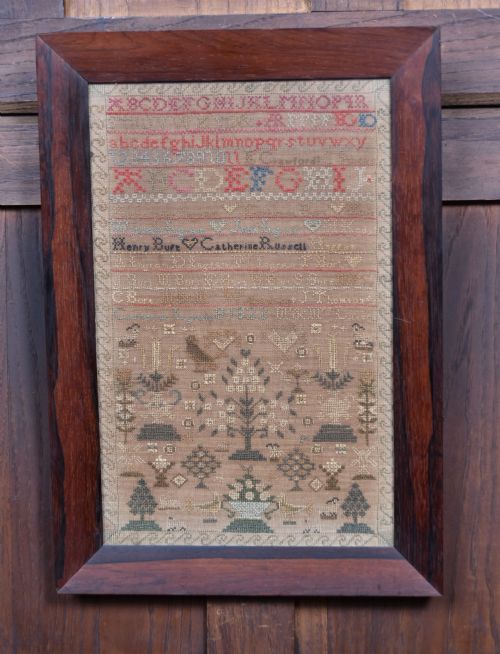
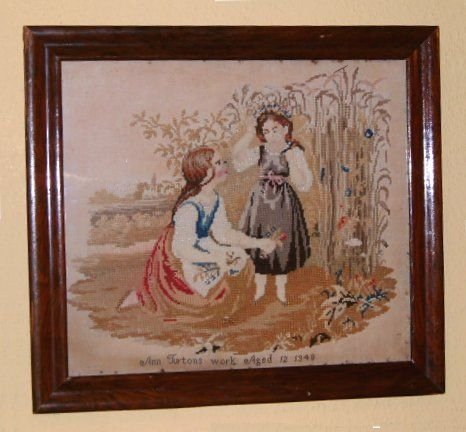
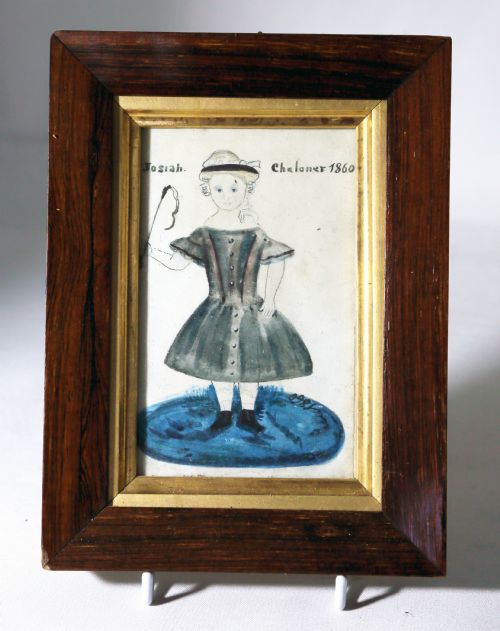
Buyers seeking 19th century rosewood artwork encounter a varied selection of wall art, framed prints, and textile pieces created during the Georgian, Regency, and Victorian eras. These works capture personal portraits, botanical studies, and traditional samplers.
The objects span watercolours, needlework, silhouettes, and tinsel prints, reflecting the domestic and artistic pursuits of the nineteenth century. Most examples preserve their original timber housings.
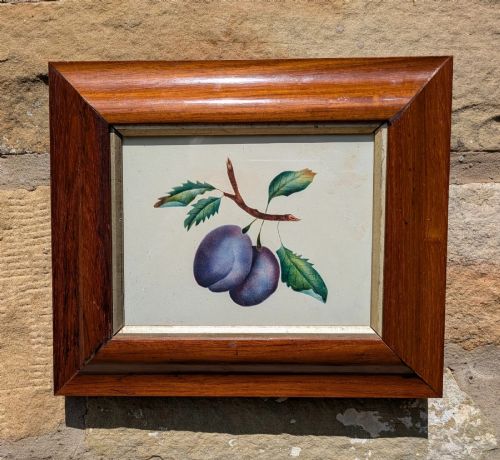
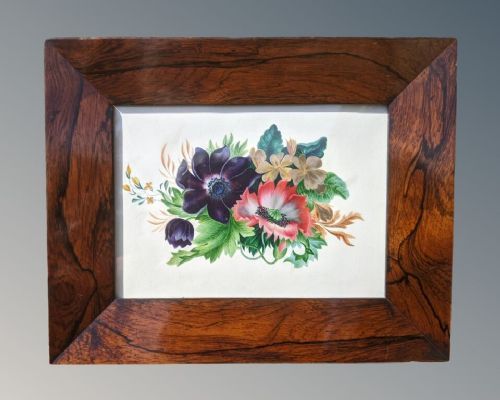
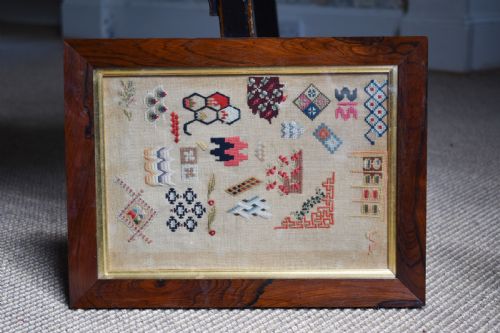
The selection ranges from early nineteenth-century Scottish needlework and botanical watercolours of plums to framed portraits dated from eighteen-twenty-five to eighteen-sixty.
How they were made
Makers utilised wood, paper, glass, linen, wool, and gold leaf to construct these framed pieces. Watercolour, pencil, and print techniques form the visual works, whilst textiles rely on needlework and tapestry stitching.
Frames are fashioned from rosewood, providing a dark grain that frames watercolours, silhouettes, and samplers. Gold leaf accents sometimes highlight the interior mouldings alongside protective glass panes.
19th Century Rosewood Artwork Retail Price Guide 2026
Typical asking prices for 19th century rosewood artwork among the pieces listed under this phrase on Sellingantiques today, from the lower quarter to the upper quarter. They describe what is for sale here now, not the wider market.
Materials documented across these listings include paper, glass, rosewood, watercolour, linen, wool, wood, and gold leaf.
What varies in quality
The condition of the rosewood frame and the integrity of the underlying paper or textile dictate the overall standard. Intact glass and well-preserved framing materials elevate the piece.
The 19th Century Rosewood Artwork Glossary
- Rosewood
- A dense, dark timber prized for its rich grain and utilised extensively for nineteenth-century picture frames. It provides a striking contrast to lighter interior artwork.
- Sampler
- A piece of needlework produced to demonstrate skill in various stitches, frequently featuring alphabets, numbers, and decorative motifs. These often include dates and maker names.
- Watercolour
- A painting method where the pigments are suspended in a water-based solution, applied to paper or linen. It was a primary medium for portraits and botanical studies.
- Silhouette
- A portrait profile filled in with a solid colour, typically black, cut from paper or painted. They were popular before the widespread adoption of photography.
19th Century Rosewood Artwork: Frequently Asked Questions
What periods do these pieces date from?
The items originate primarily from the nineteenth century, encompassing the Regency, Georgian, and Victorian periods. Specific dates span from the early eighteen-hundreds through to eighteen-sixty.
Craftsmanship reflects the shifting domestic tastes across these decades, moving from Regency botanical studies to mid-Victorian tapestries and portraits.
Are the frames original to the artwork?
Many pieces are housed in their original rosewood frames, which form an integral part of the overall object. These dark timber surrounds complement the watercolours and textiles they enclose.
Collectors look for matched framing that preserves the historical context of the paper or textile within.
How should I care for needlework and watercolours?
Protection from direct sunlight is essential to prevent the fading of watercolours, paper, and dyed wool or linen threads. Maintaining stable indoor humidity prevents warping in the wooden frames.
Keeping the glass clean and ensuring the backing boards remain secure helps preserve the textiles and paintings for the future.
What subjects appear in these artworks?
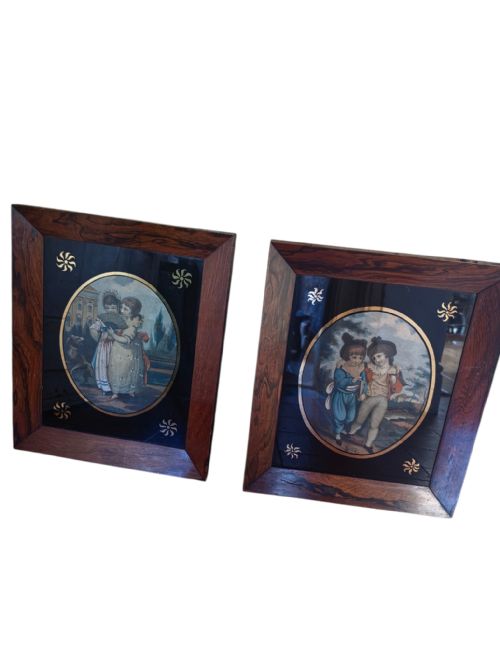
The subjects range from botanical watercolours of fruit, such as plums, to portraits of army officers, children, and ordinary individuals. Needlework samplers and theatrical tinsel prints also feature.
Such variety records both personal mementoes and decorative domestic pieces from the nineteenth century.