



Rosewood Needlework Table
A rosewood needlework table is a refined nineteenth-century furnishing designed for ladies' crafting, combining practical storage with elegant parlour display.

Rosewood Needlework Table
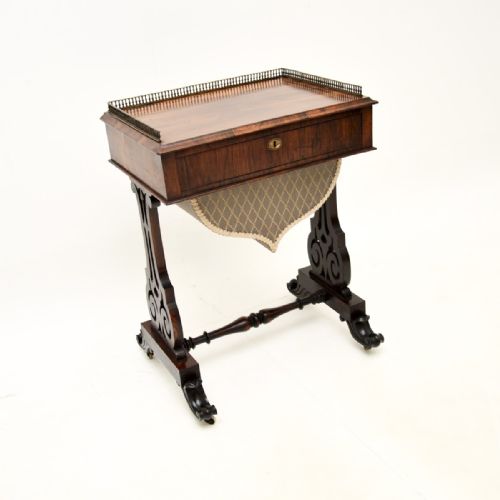
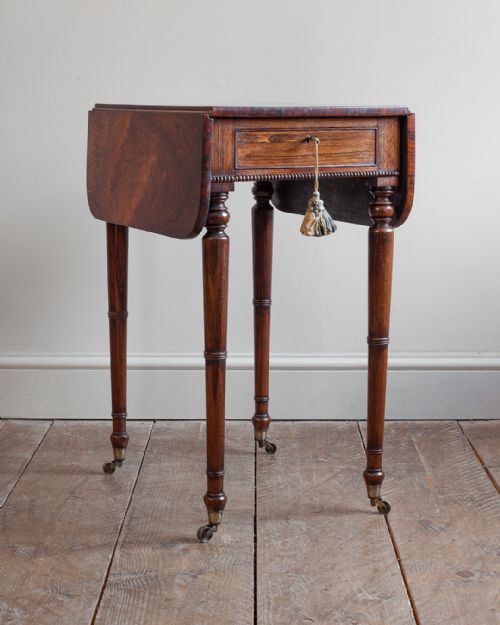
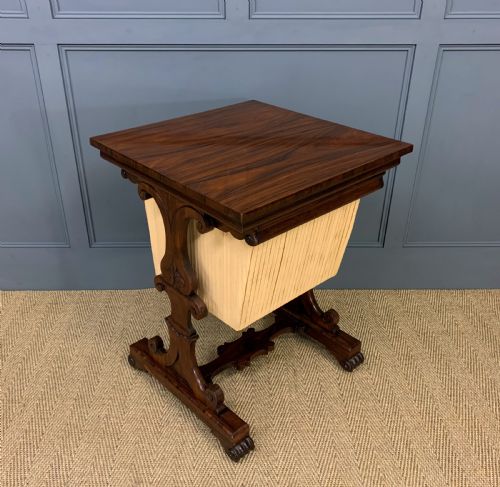
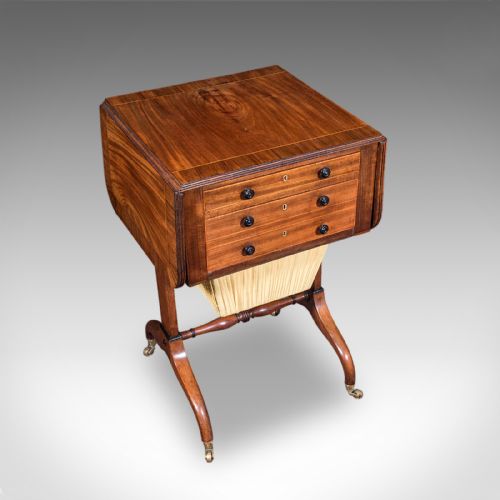
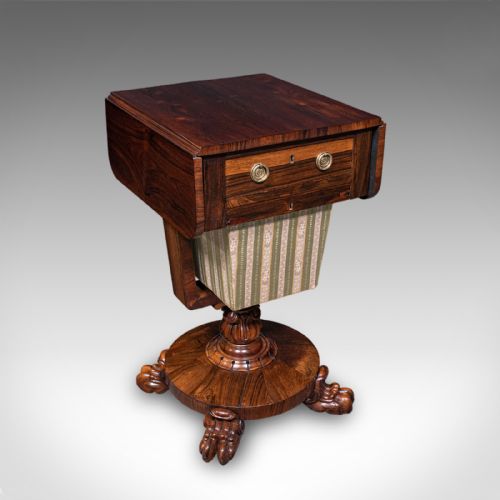
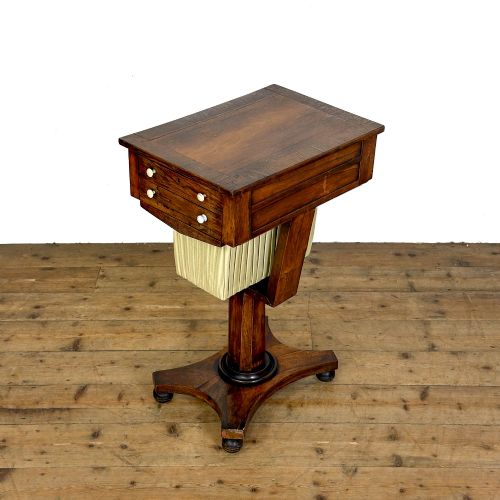
A rosewood needlework table serves multiple domestic functions, appearing frequently as a work table, sewing table, or drop-leaf occasional piece designed for the nineteenth-century parlour. The selection spans the Regency, William IV, and Victorian periods, showcasing forms that integrate storage compartments with top surfaces suited for writing or games.
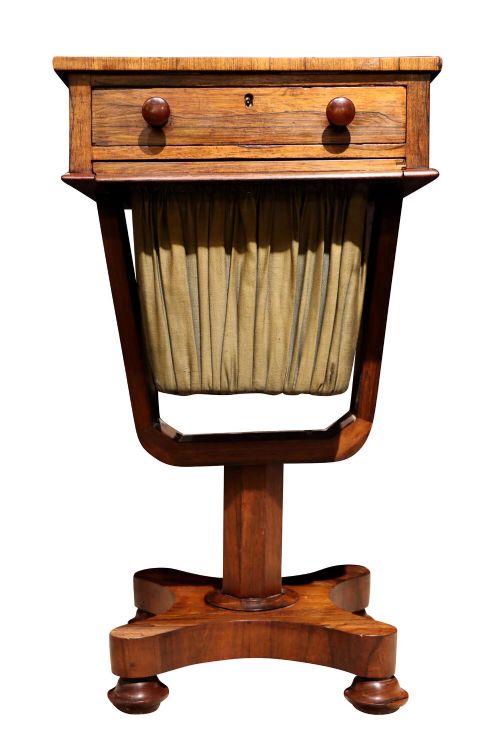
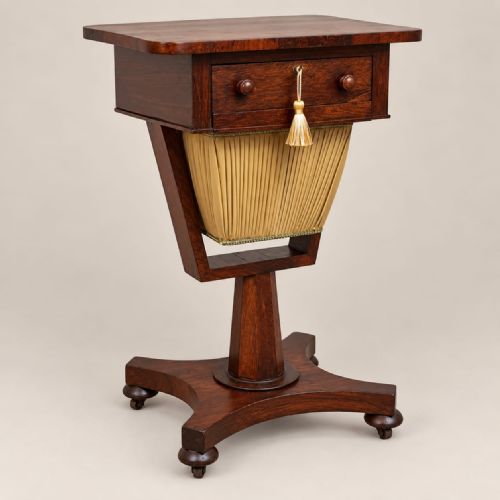
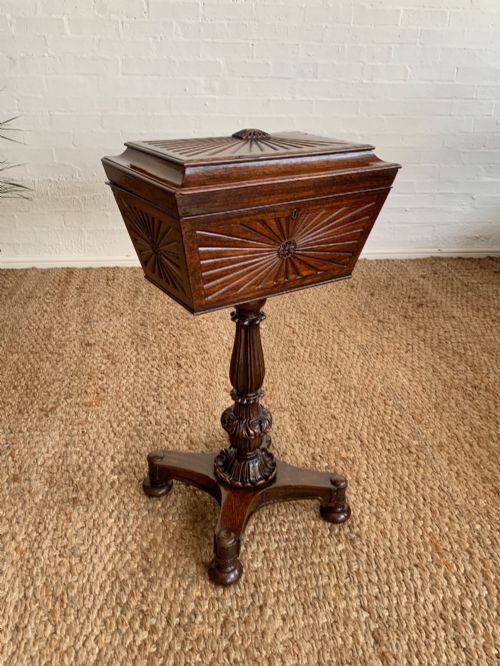
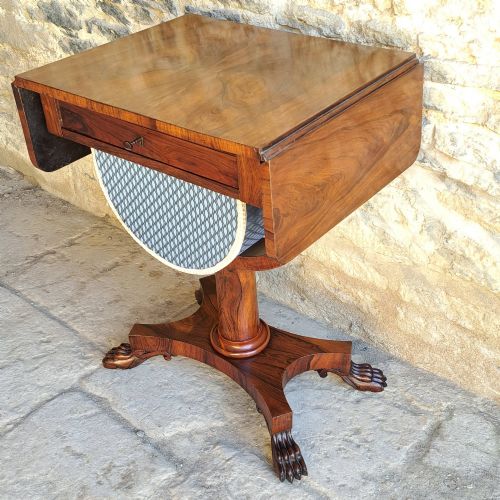
Most examples originate from nineteenth-century English workshops, adopting styles such as Regency, William IV, and Victorian. Buyers regularly encounter drop-leaf configurations, tripod bases, and trumpet-shaped bodies fitted with internal compartments for threads, fabrics, and crafting tools.
The phrase encompasses related functional forms including work boxes, sewing boxes, and table screens alongside traditional tables. Pieces often combine sewing provisions with auxiliary uses like lamp placement or chess playing.

Materials and construction
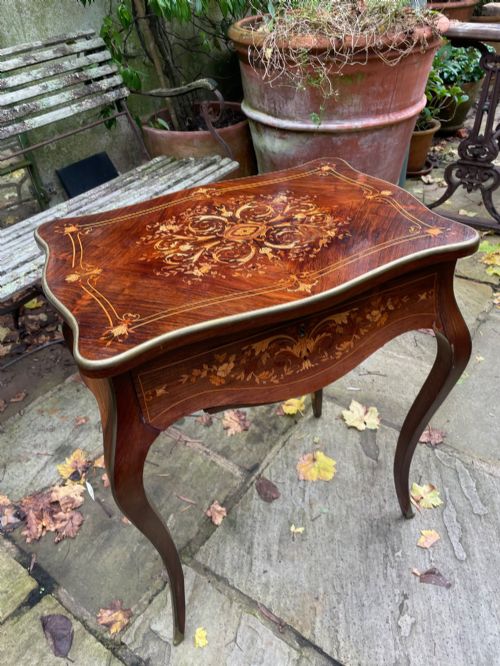
Craftsmen utilised figured rosewood as the primary timber, frequently enhancing surfaces with contrasting marquetry inlay, satinwood, ebony, and brass stringing. Structural elements occasionally incorporate mahogany beneath the decorative veneers.
Interiors and functional additions employ specialised materials including velvet, silk, fabric, and needlepoint tapestry to line compartments and work bags. Brass fittings secure drop leaves, pedestals, and caddy tops.
Rosewood Needlework Table Retail Price Guide 2026
Typical asking prices for rosewood needlework table among the pieces listed under this phrase on Sellingantiques today, from the lower quarter to the upper quarter. They describe what is for sale here now, not the wider market.
Listings feature rosewood, mahogany, satinwood, and brass alongside silk and velvet linings across Regency and Victorian periods.
Assessing craftsmanship and execution
Superior execution shows in the selection of heavily figured rosewood veneers and the precision of inlaid brass or marquetry details. Cabinetmakers achieved distinction through disciplined carving, such as sunburst motifs on caddy tops and balanced pedestal proportions.
Interior fittings dictate the standard of practical execution, where silk or velvet-lined compartments and original fitted work bags remain intact. The integration of dual-purpose elements, such as combined games boards and writing surfaces, reflects elevated workshop standards.
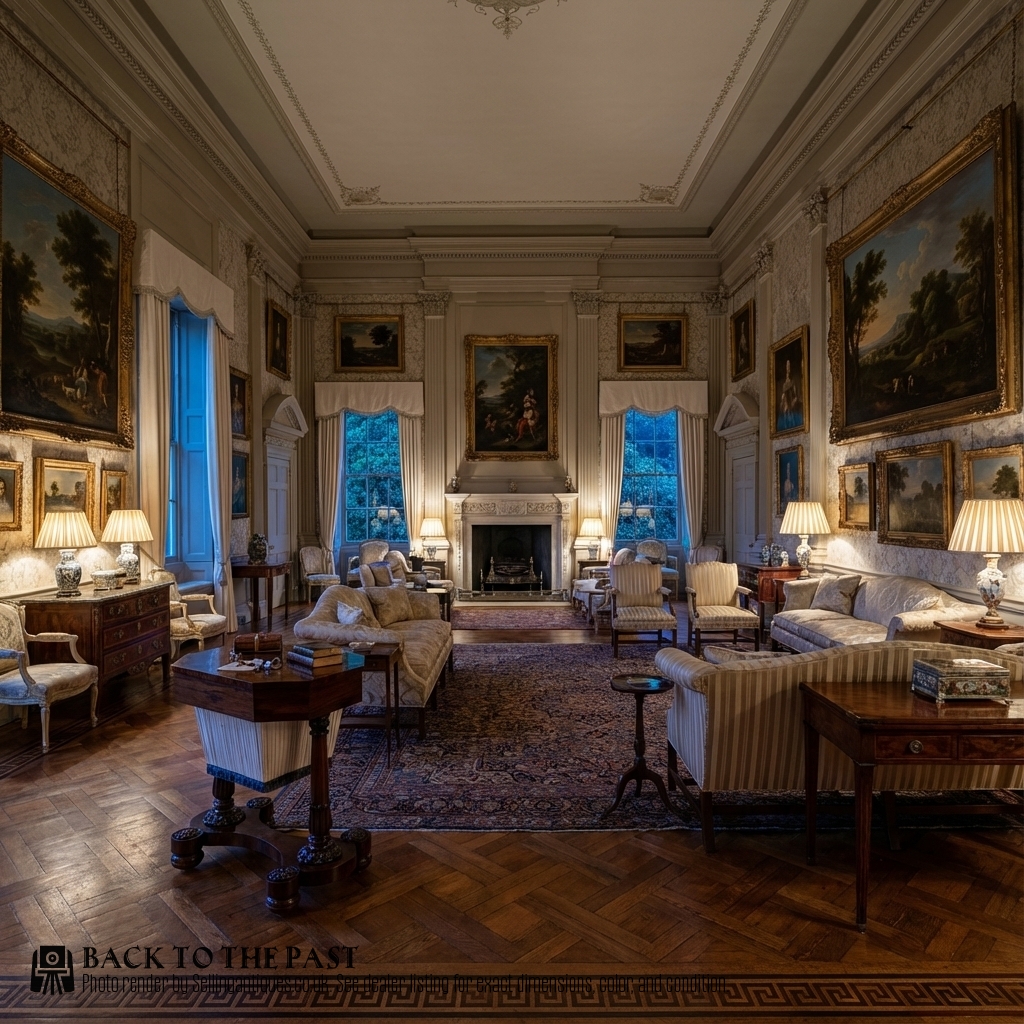
Gillows of Lancaster·John MaClean
The Rosewood Needlework Table Glossary
- Rosewood
- A dense, heavily figured timber valued for its rich dark grain and polished finish. It served as the primary material for high-status nineteenth-century occasional furniture.
- Drop-leaf
- A table design featuring hinged flaps on either side that lift to extend the surface area. This mechanism allowed furniture to adapt to smaller parlour spaces.
- Marquetry
- The art of applying decorative veneer pieces in wood, brass, or shell to form intricate patterns. It appeared on Victorian tops and panels.
- Tripod base
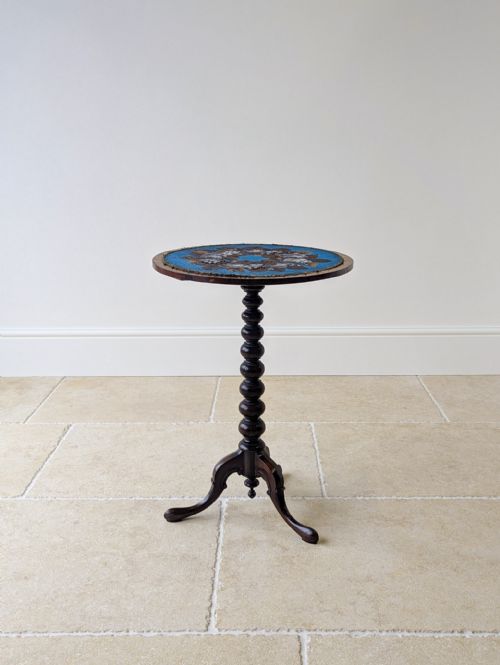
- A support structure comprising three legs radiating from a central pillar. This form provided stability for tilt-top and occasional tables.
- Caddy top
- A hinged lid design resembling a tea caddy, enclosing a shallow compartment. It frequently appeared on William IV work tables.
Rosewood Needlework Table: Frequently Asked Questions
What is a rosewood needlework table used for?
These pieces served nineteenth-century ladies as dedicated stations for sewing, needlepoint, and crafting, equipped with internal compartments and suspended fabric bags for materials.
Beyond handwork, their finished tops and occasional table designs allowed them to function as lamp stands, writing desks, or small games tables in the parlour.
How do I date a rosewood needlework table?
Dating relies on stylistic markers associated with specific nineteenth-century reigns, such as classical brass inlay for the Regency era or heavier carved pedestals for William IV and Victorian periods.
Construction details, timber selection, and specific leg configurations like tripod bases or octagonal trumpet bodies also help narrow the decade of manufacture.
Are these tables suitable for modern rooms?
Their compact proportions make them practical side tables or lamp stands beside modern seating, while the drop-leaf versions adjust easily to available space.
Internal compartments offer discrete storage for small contemporary items, combining nineteenth-century cabinetmaking with functional utility.