

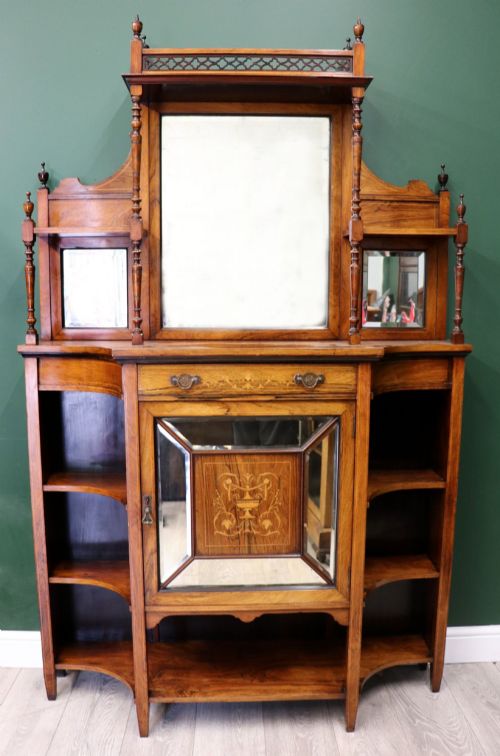
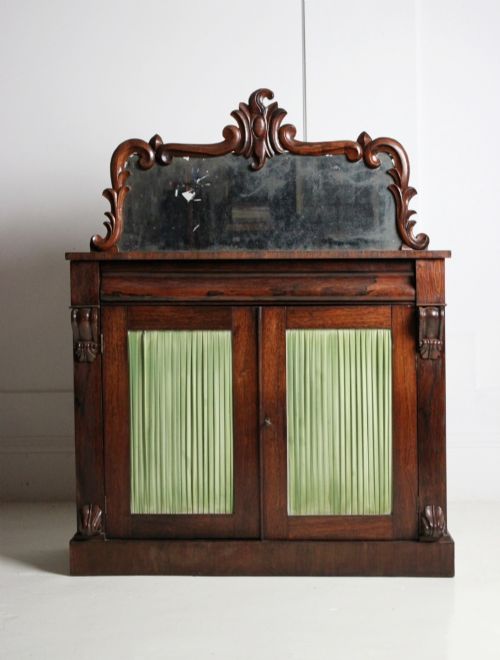
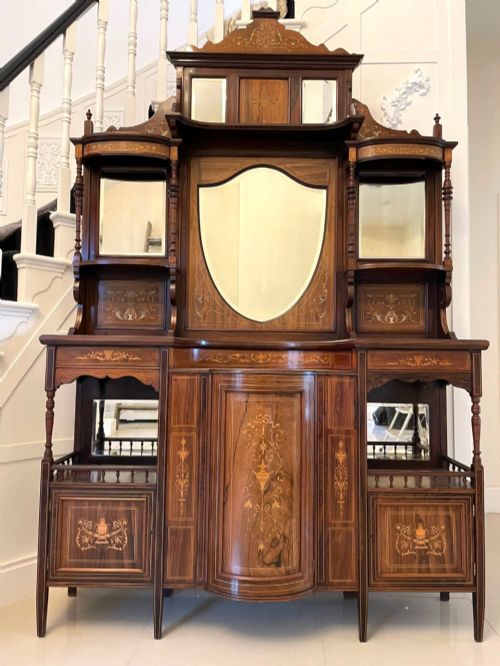
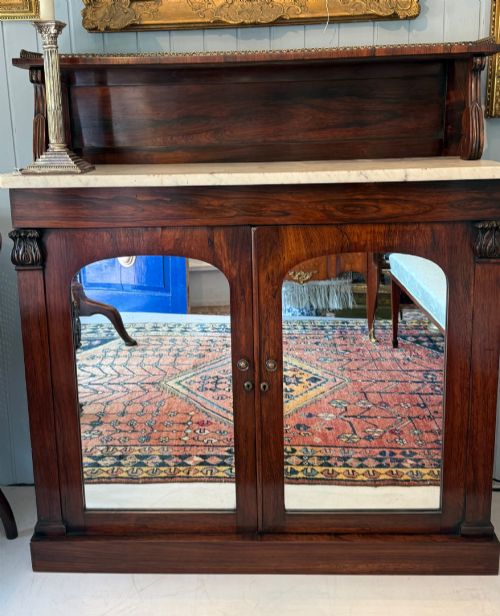




Rosewood Mirrored Credenza
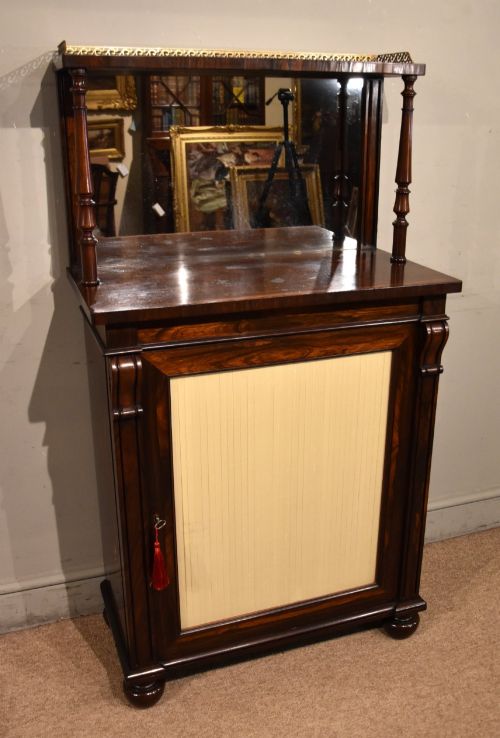
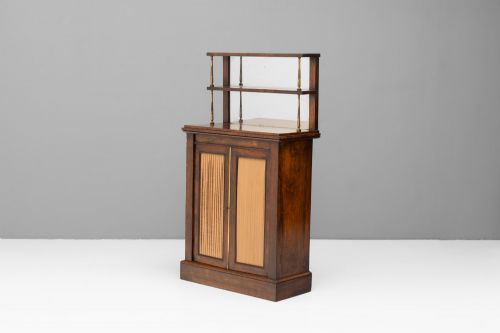
A rosewood mirrored credenza brings deep timber grain and reflected light into a room, offering both display space and concealed storage.
Rosewood Mirrored Credenza
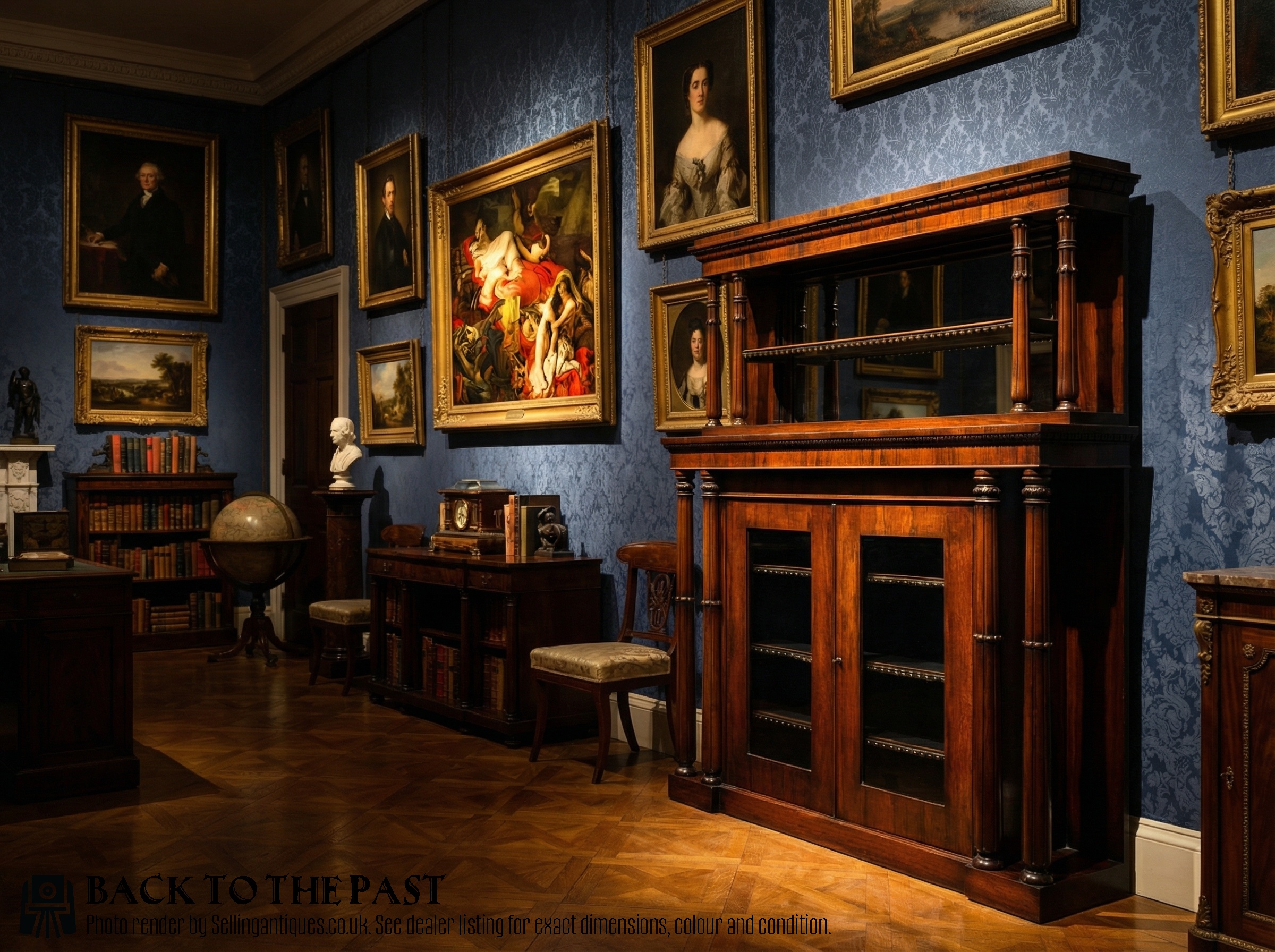
A rosewood mirrored credenza sits within a lineage of low timber storage forms, taking shape as chiffoniers, side cabinets, and display pieces. These items bridge surface utility and decorative presence.
The versions met most often on this page emerge from nineteenth-century workshops, spanning Regency, William IV, and Victorian periods. They combine timber carcases with glass panels and mirror backs.
Makers adapted these forms for parlours and dining rooms, incorporating shelves for books and porcelain alongside enclosed cupboards. The integration of mirror glass creates a sense of depth in tighter domestic spaces.
How they were made
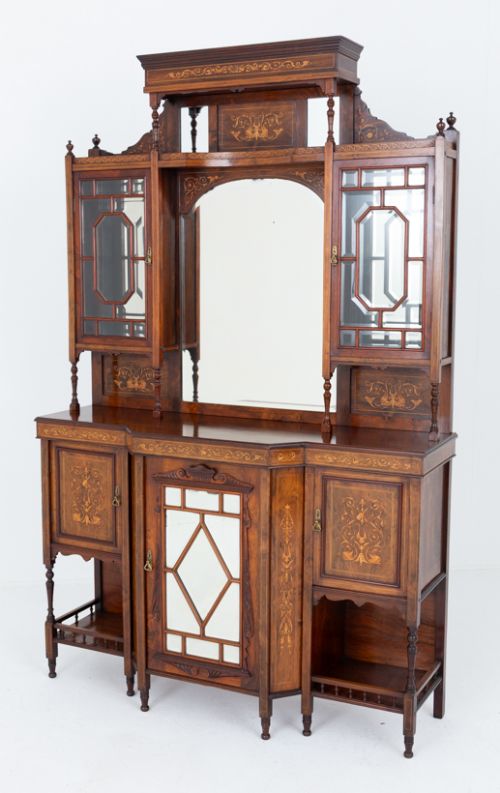
Craftsmen built these carcases using dense rosewood veneers laid over secondary timbers, often accentuating the dark grain with boxwood or satinwood inlay. Brass stringing and marquetry provide linear contrast across the flat door panels and friezes.
Glass integration required rebated frames to hold mirrored plates securely, while marble tops appear on specific sideboard and console variants. Ormolu mounts and porcelain plaques furnish decorative accents on select examples.
Rosewood Mirrored Credenza Retail Price Guide 2026
Typical asking prices for rosewood mirrored credenza among the pieces listed under this phrase on Sellingantiques today, from the lower quarter to the upper quarter. They describe what is for sale here now, not the wider market.
Materials recorded across these items include rosewood, glass, brass, marble, satinwood, and ormolu mounts.
What varies in quality
The standard of timber selection and veneer matching defines the visual impact of each piece, distinguishing uniform grain patterns from disjointed patches. Finely executed marquetry and crisp brass inlay demand advanced joinery skill.
Structural integrity rests on the stability of the carcase joints and the original condition of the mirror glass and interior lining. Workshop attribution to notable makers elevates the standing of specific examples.
Collinson and Lock·Holland and Sons·Gillows·Howard and Sons
The Rosewood Mirrored Credenza Glossary
- Credenza
- A low dining room cabinet or sideboard used for serving food and displaying plate. It typically lacks the tall superstructure of a traditional chiffonier.
- Chiffonier
- A compact sideboard with a shelf or mirrored back standing above the main surface. Nineteenth-century versions often include enclosed cupboards below.
- Marquetry
- Decorative veneer patterns formed by fitting together thin pieces of wood, shell, or metal. Craftsmen use this technique to create floral or geometric motifs.
- Ormolu
- Gilded bronze mounts applied to furniture for decorative effect. It provides metallic contrast against dark rosewood surfaces.
- Palisander
- A dense, dark timber variety belonging to the rosewood family. It yields a rich grain pattern prized in nineteenth-century cabinet making.
Rosewood Mirrored Credenza: Frequently Asked Questions
Where should I place a credenza?
These pieces suit living rooms, dining spaces, or wide hallways where low furniture anchors the wall. Their mirrored backs reflect natural light and open up darker corners.
Ensure the floor is level so the doors hang true and latch properly against the timber carcase.
How do I clean rosewood furniture?
Dust the timber regularly with a dry, soft cloth to prevent particle buildup on the veneer. Avoid silicone polishes that leave a film and attract dust over time.
Feed the wood periodically with a suitable wax to maintain the depth and lustre of the grain.
Can I store heavy books inside?
Most interior shelves are designed for porcelain, glassware, or moderate reading material rather than dense volumes. Check the support battens inside the cabinet before loading heavy items.
Distribute weight evenly across the fixed wooden shelves to prevent sagging over extended periods.
How do I identify Regency pieces?
Regency items often feature classical proportions, brass inlay, and restrained mahogany or rosewood veneers. The architectural lines reflect early nineteenth-century design influences.
Look for structural markers such as hand-cut dovetails and secondary timber linings beneath the primary wood.