

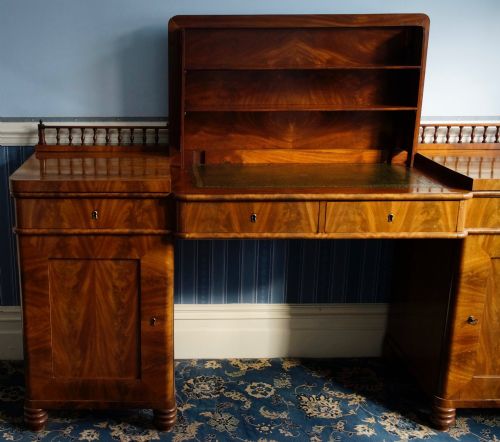
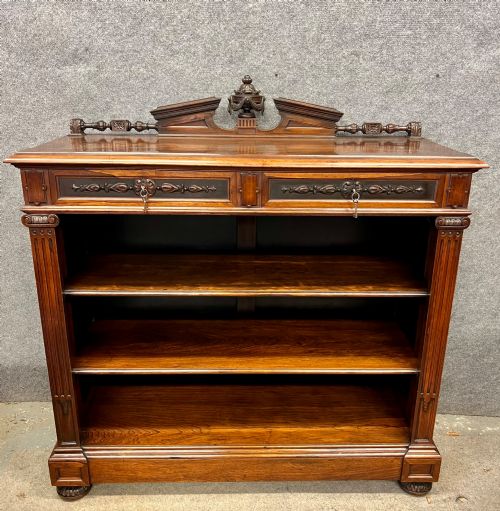


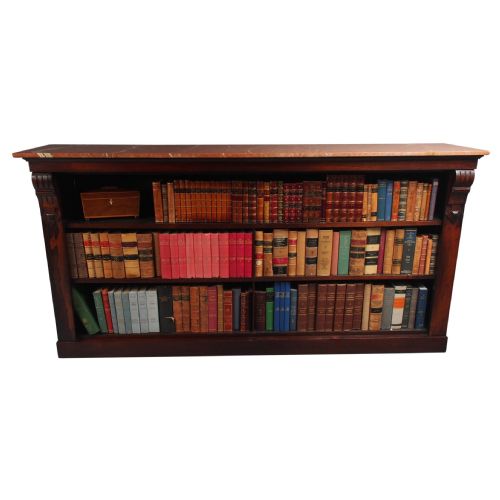


Antique Credenza Shelf Top
An antique credenza shelf top sits proudly on a fine cabinet, offering both display and architectural balance.
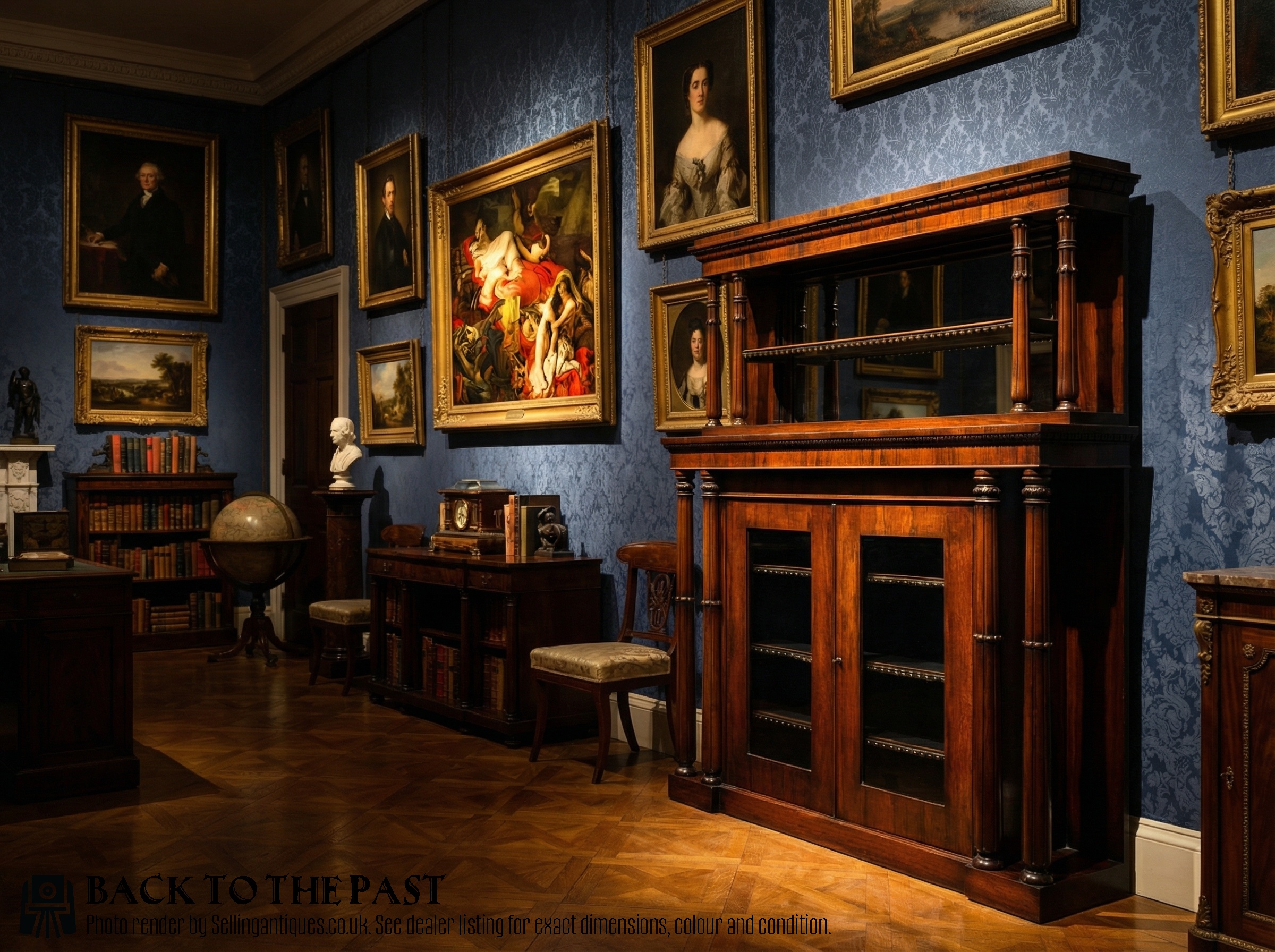
Antique Credenza Shelf Top
The antique credenza shelf top groups together superstructure additions and upper display tiers found on nineteenth century cabinets, bookcases, and chiffoniers. These pieces elevate low furniture to provide upright display space for books and decorative objects.
Most examples appearing in this category originate from the nineteenth century, spanning Regency, Victorian, and revival styles. They sit above sideboards, buffets, and open bookcases to complete the elevation of the furniture.
Materials and construction
Cabinet makers utilised dense hardwoods such as mahogany, rosewood, walnut, and pollard oak to build these supportive tiers and superstructures. Fine veneers and solid timbers formed the structural frames that attached securely to the lower base furniture.
Metal and stone elements frequently integrated into the design, including brass galleries, ormolu mounts, and inset marble slabs. Glass panels and mirrors also appeared in backing plates and upper doors to enhance light reflection.
Antique Credenza Shelf Top Retail Price Guide 2026
Typical asking prices for credenza shelf top among the pieces listed under this phrase on Sellingantiques today, from the lower quarter to the upper quarter. They describe what is for sale here now, not the wider market.
Assessing quality and craftsmanship
Quality separates standard joinery from exceptional cabinet work through the choice of timber and the precision of decorative mounts. Finely figured flame mahogany and richly grained rosewood indicate higher workshop standards.
The integration of chased ormolu, porcelain plaques, and carved wooden details shows the hand of skilled artisans. Superior construction ensures the upper shelf or vitrine securely matches the proportions of the host cabinet.
Krieger of Paris
The Antique Credenza Shelf Top Glossary
- Chiffonier
- A low cabinet with a raised shelf or superstructure on top, commonly used in nineteenth century reception rooms.
- Ormolu
- Gilded bronze mounts applied as decorative ornaments to furniture surfaces, frequently seen in French revival pieces.
- Palisander
- A dense, dark exotic timber akin to rosewood, prized for its rich grain and deep colour in nineteenth century cabinet work.
- Vitrine
- A glass-fronted display cabinet or upper shelf section designed to showcase porcelain and small valuables.
Antique Credenza Shelf Top: Frequently Asked Questions
What is an antique credenza shelf top?
An antique credenza shelf top refers to the upper display tiers, superstructures, or mirrored backs attached to nineteenth century low cabinets and sideboards.
These additions provided extra surface area for displaying decorative ceramics, books, and small ornaments in period reception rooms.
How do I date an antique shelf top?
Dating relies on identifying the underlying timber species, construction methods, and stylistic revival influences present in the woodwork.
Nineteenth century pieces often incorporate Regency, Victorian, or French aesthetic markers alongside traditional hand-cut joinery.
Can these shelf tops be separated?
Many upper shelves and superstructures formed an integral part of the main cabinet structure, while others secured with original fixing screws.
Separation depends entirely on the specific design of the chiffonier, bookcase, or sideboard it accompanies.
What woods were used for these pieces?
Cabinet makers built these structures using durable hardwoods such as mahogany, rosewood, walnut, and pollard oak.
Exotic veneers and parcel gilt details frequently highlighted the timber grain to match the lower furniture base.