



Rosewood Mirror Sideboard
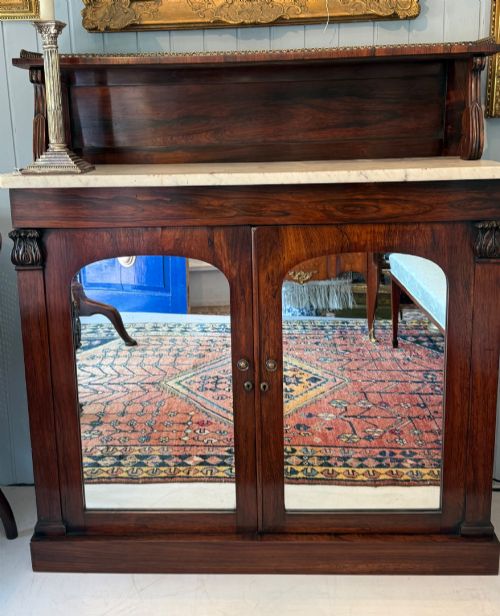
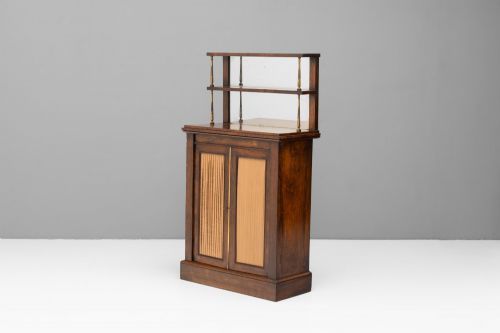
These rosewood mirror sideboards combine figured timber and reflective glass to anchor a room.
Rosewood Mirror Sideboard
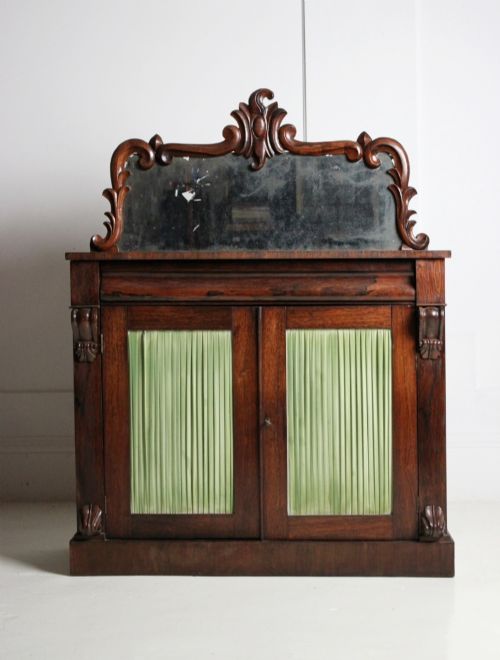
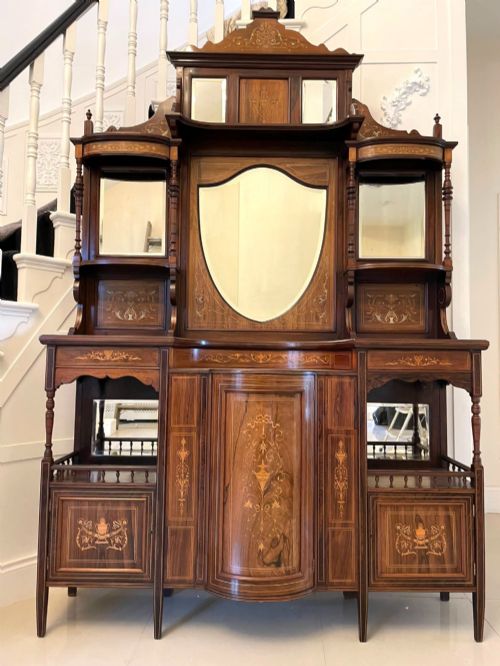
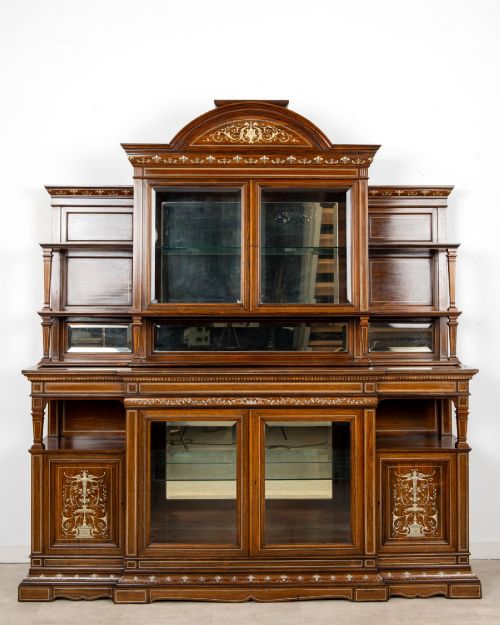
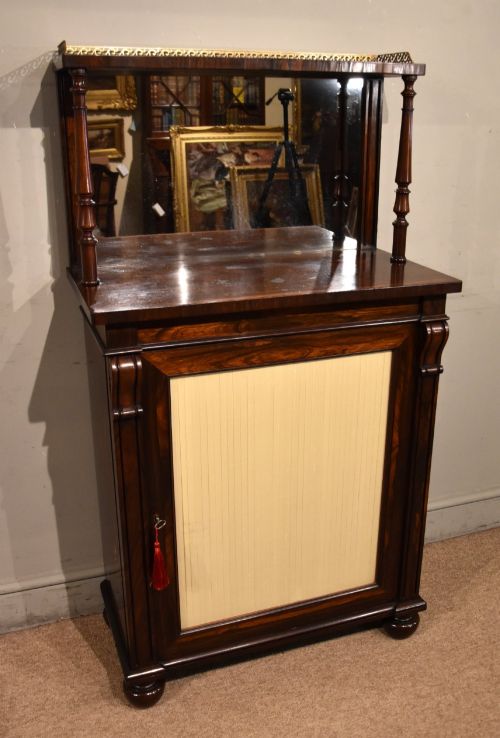
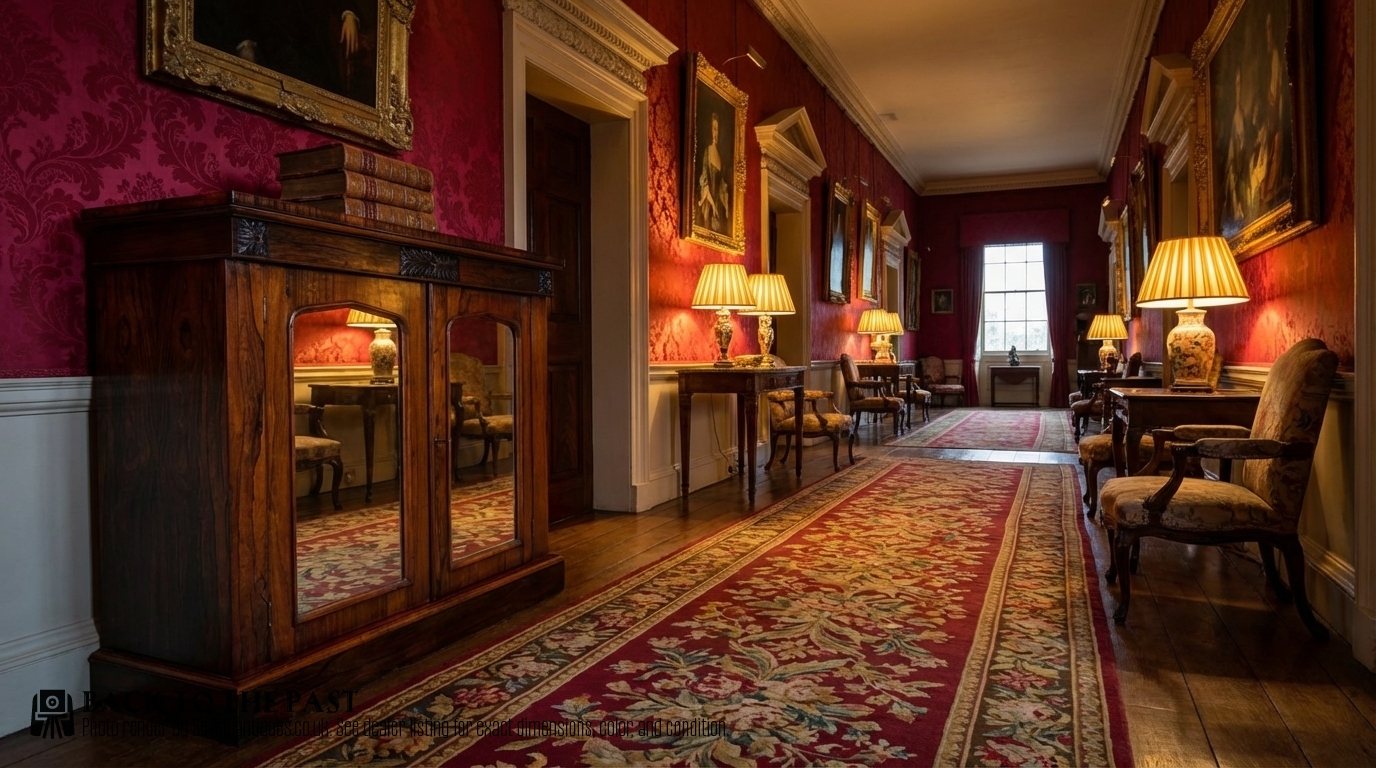
A rosewood mirror sideboard brings together display surface, cabinet storage and an integrated mirror back. When you search for a rosewood mirror sideboard, you encounter pieces spanning the Regency, Georgian, Victorian and Edwardian periods.
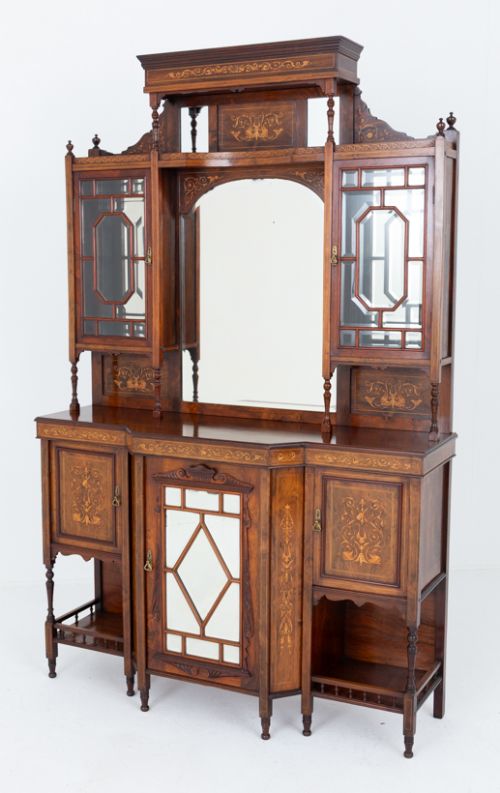
The form shifts through the nineteenth century from architectural Regency chiffoniers to elaborate late Victorian and Edwardian display cabinets with marquetry. Most examples meet on this page as side cabinets, chiffoniere variants or mirrored parlour cabinets.
Makers such as Gillows, Holland and Sons, and Collinson and Lock shaped these forms across the decades. The integration of mirror glass distinguishes them from standard sideboards, creating depth and reflecting light in reception rooms.
How they were made
Cabinet makers built these pieces using dense rosewood veneers applied to secondary woods, often complemented by satinwood and boxwood inlay. Brass details, including gallery rails and stringing, frequently accent the polished timber surfaces.
Mirror glass is fitted into architectural wooden frames above the main sideboard body, sometimes backed by fabric or enclosed by glazed display doors. Marquetry and delicate stringing embellish the cabinet doors and friezes on pieces from the later nineteenth century.
Listings feature rosewood, satinwood, boxwood inlay, brass and mirror glass across the nineteenth and early twentieth centuries.
What varies in quality
Quality rests in the selection of the rosewood veneer and the precision of the boxwood or brass inlay. Superior examples display continuous grain matching across the doors and drawers, alongside crisply carved mouldings and well-figured timber.
The integration of the mirror back and the structural integrity of the cabinet carcass define the upper tier of pieces. Attribution to respected workshops like Gillows or Howard and Sons elevates an item through documented craftsmanship and refined proportions.
Collinson and Lock·Holland and Sons·Gillows·Howard and Sons·Stephen Webb
The Rosewood Mirror Sideboard Glossary
- Chiffonier
- A low sideboard or cabinet, typically featuring a shelf or mirror back above enclosed lower cupboards. It evolved during the Regency period to hold plate and books in dining and drawing rooms.
- Marquetry
- Decorative patterns formed by inserting thin veneers of different coloured woods into a contrasting background. It appears frequently on late Victorian and Edwardian cabinets.
- Palisander
- A dense, dark timber trade name often applied to Brazilian rosewood. It is noted for its striking grain patterns and heavy weight in nineteenth-century furniture.
- Breakfront
- A cabinet design where the central section projects forward from the flanking sides. This architectural feature creates depth on larger sideboards and display cabinets.
- Stringing
- Thin inlay lines of contrasting wood, such as boxwood, used to outline panels and drawers. It highlights the geometric lines of Regency and Victorian casework.
Rosewood Mirror Sideboard: Frequently Asked Questions
How do I date a rosewood mirror sideboard?
Dating relies on stylistic markers, construction methods and timber characteristics. Regency and George IV pieces tend to show architectural lines with brass inlay, whereas Victorian and Edwardian examples often feature marquetry and elaborate mirror frames.
Examining the secondary woods, backboards and mirror glass silvering provides further clues. Earlier mirrors may display subtle bevels or slight distortions characteristic of nineteenth-century manufacture.
Where were these sideboards used in the home?
These pieces sat primarily in formal dining rooms, drawing rooms and parlours. The surface held serving dishes or decorative objects, while the lower cupboards stored linens, silver or books.
The addition of the mirror back served to brighten candlelit rooms by reflecting light and creating an illusion of space. They functioned as both practical storage and grand decorative focal points.
How should I care for rosewood furniture?
Rosewood benefits from stable environmental conditions away from direct sunlight and strong heat sources. Maintaining consistent humidity prevents the dense veneers from drying out or lifting over time.
Occasional dusting with a soft, dry cloth preserves the polished surface. Professional waxing should be applied sparingly to nourish the timber without clouding the grain.
What is the difference between a chiffonier and a sideboard?
A chiffonier is typically smaller and more compact than a traditional sideboard, often featuring a raised shelf or attached mirror back. It was designed for smaller drawing rooms rather than grand dining halls.
Sideboards generally offer broader proportions and extended storage capacity. However, the terms overlap frequently in nineteenth-century cabinetmaking and marketplace descriptions.