



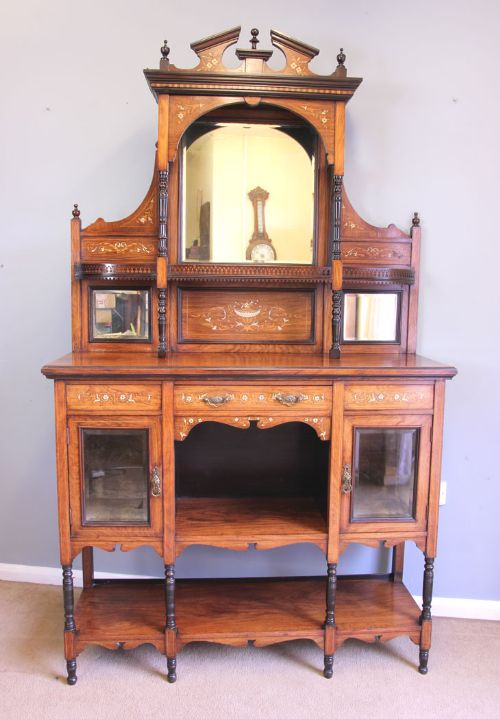
Rosewood Mirror Back Sideboard
These rosewood mirror back sideboards combine rich timber and reflective glass, offering both storage and display for the discerning interior.
Rosewood Mirror Back Sideboard
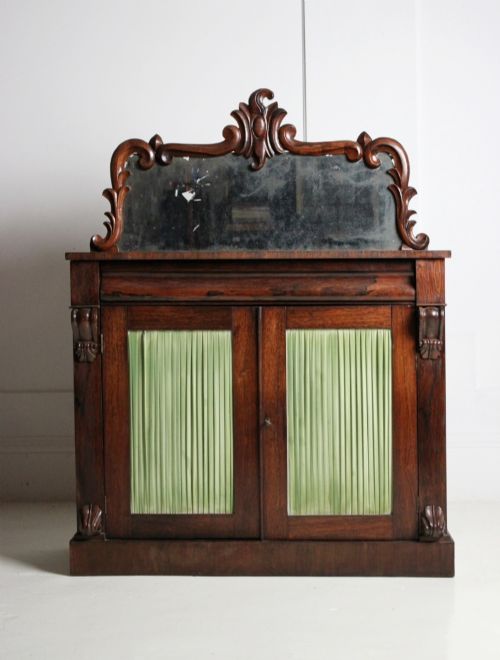
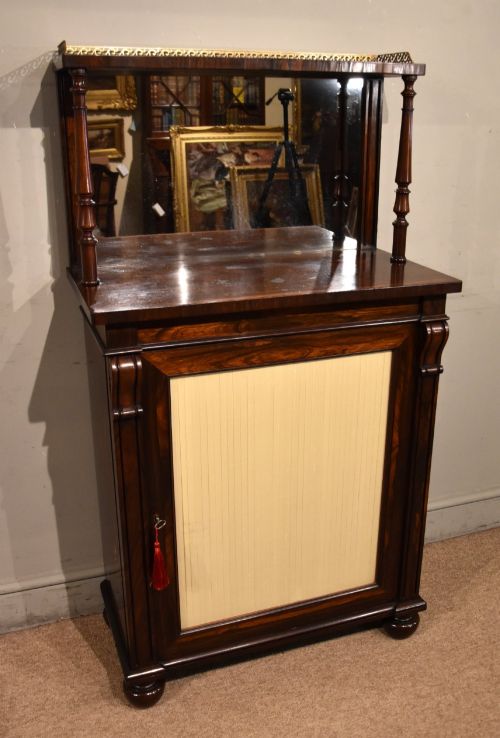
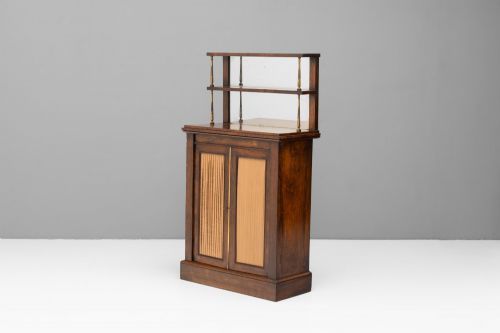
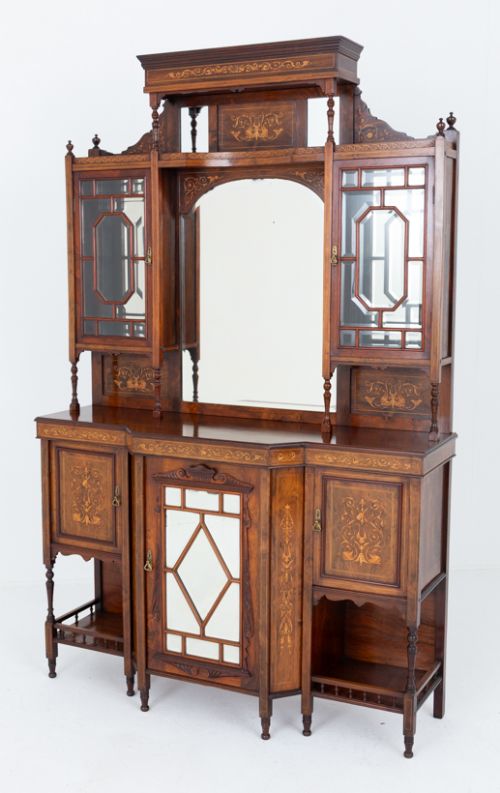
A rosewood mirror back sideboard serves as a substantial focal point for a dining room or parlour, combining a cabinet base with an integrated mirror superstructure. You will encounter these pieces across the Regency, Victorian, and Edwardian periods, manifesting in forms such as chiffoniers, breakfront cabinets, and display pieces.
The integration of a mirror back evolved through the nineteenth century, transforming simple serving surfaces into decorative stages for porcelain and silver. The design borrows from classical architectural motifs and later aesthetic movements, bringing deep grain patterns and reflective depth to domestic interiors.
Materials and construction methods
Cabinet makers utilised dense, richly figured rosewood veneers applied to solid carcases, frequently enhancing surfaces with delicate boxwood inlay and marquetry. Brass details, including gallery rails and intricate inlays, appear alongside glazed doors and silvered mirror glass within the superstructure.
Construction relies on traditional joinery techniques appropriate to the Georgian, Regency, and Victorian eras, accommodating the heavy weight of stone or timber tops and tall glass frames. The integration of mahogany linings and specialised turnings distinguishes the workshop practices of the period.
One exceptional nineteenth-century sideboard in the archive even incorporates carved samurai warriors alongside its traditional mirror back.
Distinguishing quality and craftsmanship
The refinement of the rosewood veneer and the precision of the boxwood inlay separate standard production from master craftsmanship. Superior pieces demonstrate exceptional figure matching across the doors and cabinet front, alongside crisp carving and well-proportioned mirror frames.
Makers known for exceptional joinery and design elevate the status of a piece, while secondary timbers and simpler hardware indicate more utilitarian workshops. The original condition of the mirror glass and the crispness of any brass mounts further define the upper tier of quality.
Gillows·Collinson and Lock·Holland and Sons·Stephen Webb
The Rosewood Mirror Back Sideboard Glossary
- Chiffonier
- A low sideboard or cabinet featuring a cupboard base, frequently surmounted by shelves or a mirror back. This form developed during the Regency period and remained popular throughout the Victorian era.
- Marquetry
- Decorative patterns formed by the insertion of contrasting veneers into a wood ground. Craftsmen utilised boxwood and other light timbers to create floral and geometric designs on rosewood surfaces.
- Breakfront
- A piece of furniture whose central section projects forward from the flanking sides. This architectural arrangement creates depth and visual rhythm in larger side cabinets and sideboards.
- Credenza
- An Italian-derived term for a dining room sideboard or side cabinet used for displaying plate and serving food. In nineteenth-century British furniture, it often refers to low, finely finished display cabinets.
Rosewood Mirror Back Sideboard: Frequently Asked Questions
What is a rosewood mirror back sideboard?
A rosewood mirror back sideboard is a large nineteenth-century cabinet piece featuring a wooden base with cupboards or drawers, topped by an upright mirror framed in timber.
These items were designed for principal rooms, combining functional storage with a reflective surface intended to brighten and visually expand the interior space.
How do I date a rosewood mirror back sideboard?
Dating relies on stylistic clues, ranging from the classical restraint of Regency designs to the ornate marquetry and aesthetic movement influences of the late Victorian era.
Construction methods, secondary timbers, and the character of the mirror glass also provide clear indicators of whether a piece originates from the early nineteenth century or the Edwardian period.
Where were these sideboards placed in a home?
These sideboards typically stood against the main wall of a dining room, drawing room, or grand parlour, serving as a surface for serving food or displaying ornamental objects.
The integrated mirror reflected candlelight and natural illumination, enhancing the ambience of formal reception rooms during the evening.
How do I care for antique rosewood furniture?
Care involves keeping the timber away from direct sunlight and maintaining stable room humidity to prevent the rosewood veneer from drying or cracking.
Periodic application of appropriate wax polish maintains the lustre of the grain, while glass cleaner used sparingly on the mirror plate preserves the silvering.