



Rosewood Lady Bureau
A rosewood lady bureau is a compact writing desk designed for private correspondence, prized for rich timber grain and refined proportions.
Rosewood Lady Bureau
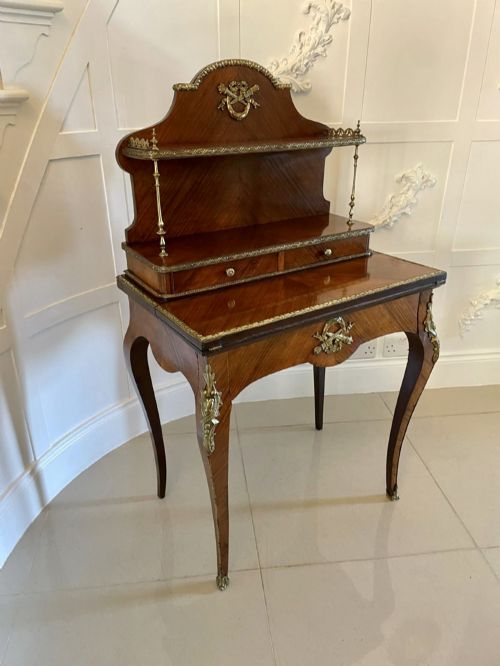
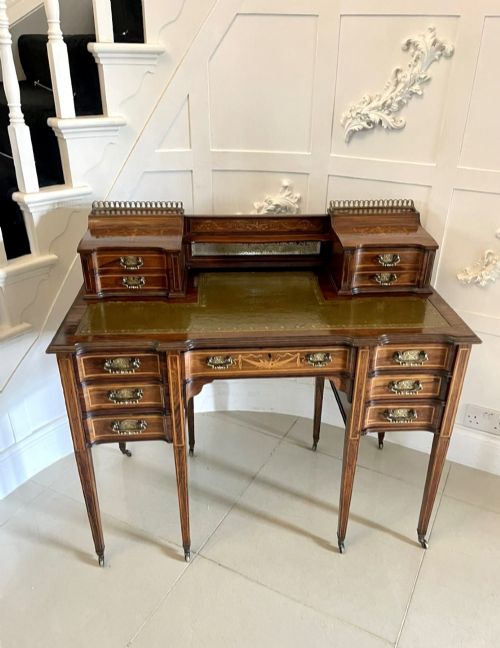
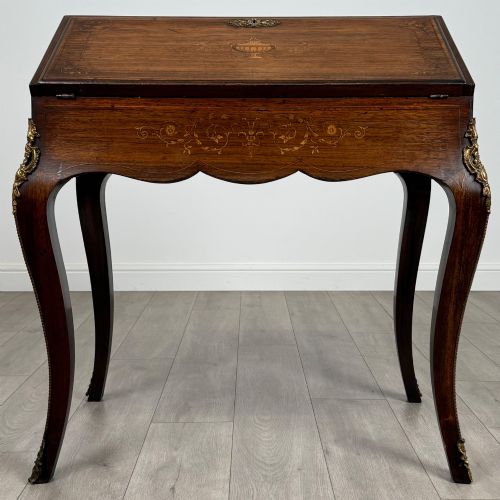
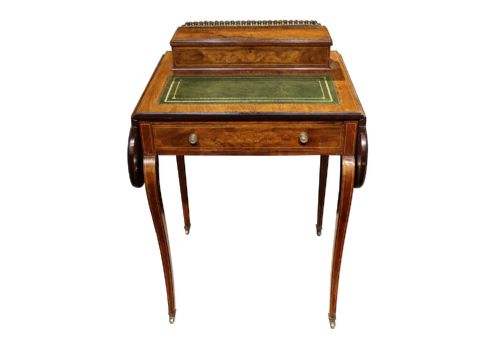
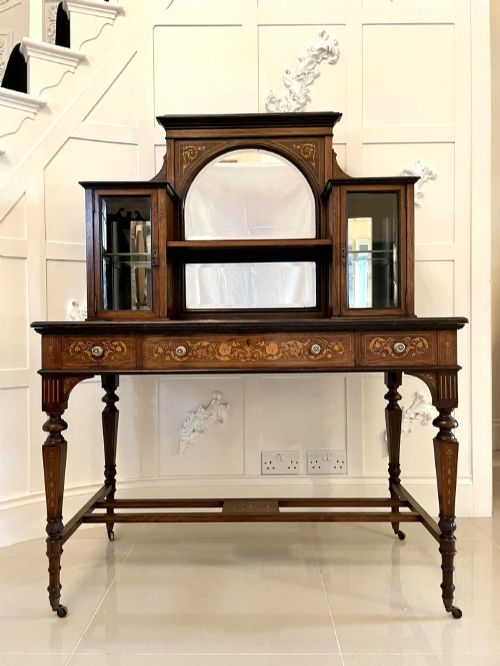
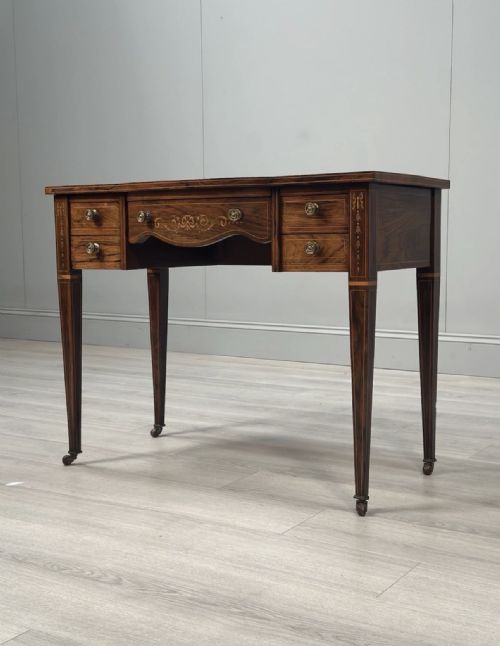
A rosewood lady bureau is a compact writing desk designed for personal correspondence, originating in smaller scales suited to private chambers or drawing rooms. These pieces encompass refined forms such as the bureau de dame, the bonheur du jour, and delicate writing tables constructed during the nineteenth and early twentieth centuries.
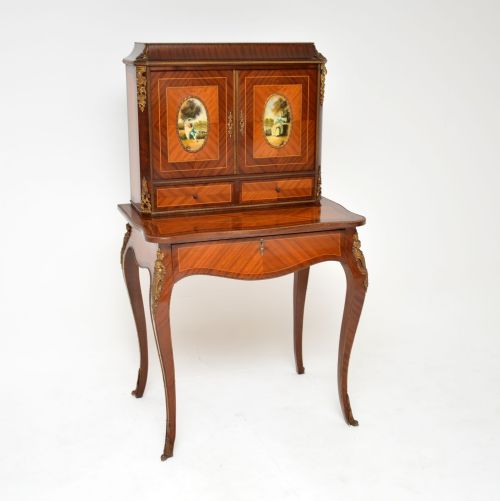
Buyers meet variations spanning Victorian and Edwardian periods, frequently showing influences from French Louis XV revival and Sheraton revival styles. The most common versions combine a sloped writing flap or fitted superstructure with intricate marquetry and delicate brass mounts.
Origin often dictates the specific nomenclature, with French examples frequently designated as bureau de dame or bonheur du jour, while English workshops produced comparable lady writing desks and pop up davenports. Walnut, satinwood, and kingwood frequently appear alongside the principal rosewood timber in these regional variations.
How They Were Made
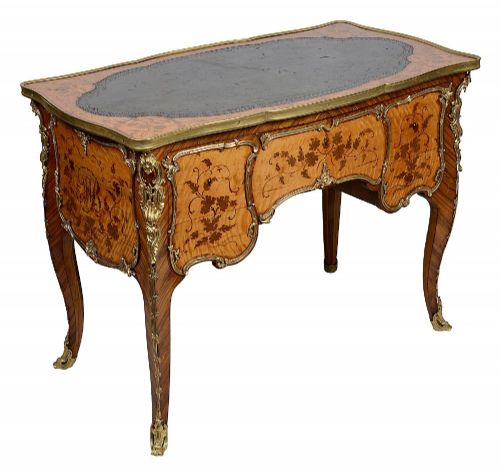
Cabinet makers utilised dense rosewood veneers applied to stable secondary timbers, often accentuating the surfaces with contrasting stringing in satinwood or maple. Marquetry panels incorporated floral and geometric motifs, demanding precise hand-cutting of diverse wood types to achieve pictorial depth.
Structural embellishment relied on cast or gilt ormolu mounts, brass gallery rails, and fitted interior compartments lined with leather writing surfaces. Structural joinery accommodated small secret drawers and pop-up mechanisms operated by hidden catches within the writing box.
The documented examples combine writing desks, secretaires, and bonheur du jour forms with Dutch and French marquetry techniques.
What Varies in Quality
Quality rests upon the crispness of the marquetry inlay and the depth of figure in the rosewood veneer selection. Superior pieces display seamless matching across complex curves and sustained precision in brass stringing and floral details.
Internal complexity and the integration of secondary timbers also separate standard production from exceptional cabinet work. Refined items integrate secret compartments, original leather inserts, and fire-gilt ormolu mounts that retain sharp definition.
Maple and Co.·Edwards and Roberts·Jas Shoolbred
The Rosewood Lady Bureau Glossary
- Rosewood
- A dense, heavily figured timber prized for dark brown and purple grain patterns. It polishes to a high gloss and forms the primary surface of these desks.
- Bonheur du Jour
- A small writing desk featuring a tiered superstructure with shelves, drawers, or a cabinet above the writing surface. This French form gained popularity during the nineteenth century.
- Bureau de Dame
- A ladies writing desk, typically featuring a sloping fall-front flap that conceals fitted pigeonholes and small drawers. Many examples incorporate intricate floral marquetry.
- Ormolu
- Gilded bronze used for decorative mounts, handles, and gallery rails. The best examples display hand-chased surface details after casting.
- Marquetry
- The art of applying thin veneers of various coloured woods to form decorative patterns or pictures. Craftsmen cut these pieces together to ensure tight joints.
Rosewood Lady Bureau: Frequently Asked Questions
What is a bonheur du jour?
A bonheur du jour is a light writing desk topped with a small cabinet or shelving superstructure. It serves primarily for correspondence and displaying small ornaments.
Cabinet makers developed the form in France before English workshops adopted the style during the nineteenth century. These desks suit smaller rooms where heavy furniture dominates.
How do I care for rosewood furniture?
Rosewood requires stable humidity and protection from direct sunlight to prevent the timber from fading or drying out. Gentle dusting with a soft cloth preserves the polish without chemical buildup.
Avoid placing these desks near direct heat sources which can cause veneers to lift. Natural wax applied sparingly maintains the lustre of the polished surface.
What is a bureau de dame?
A bureau de dame is a ladies writing desk characterised by a sloping lid that opens to reveal internal compartments. These pieces often feature serpentine fronts and delicate cabriole legs.
Originating in France, the form prioritised elegance and compact proportions for private boudoirs. Marquetry and ormolu mounts frequently adorn the exterior surfaces.
Are these desks suitable for daily writing?
These desks accommodate occasional correspondence and modern laptop use when scaled appropriately. The compact writing surfaces and fitted drawers organise small stationery items efficiently.
Care must be taken with antique leather inserts and delicate veneer surfaces during regular use. Using blotters protects the historic writing surface from ink or pressure marks.