

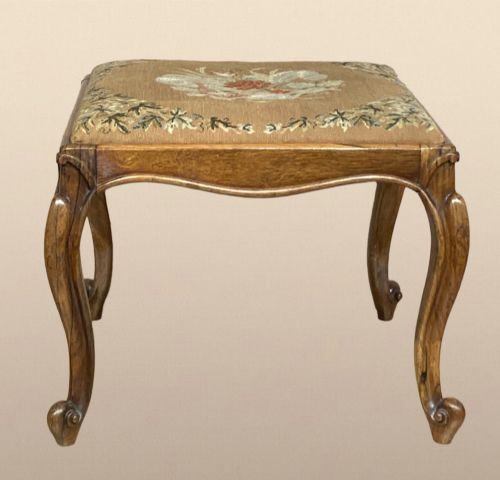


Rosewood Dressing Seat
A rosewood dressing seat brings solid warmth and fine turning to a bedroom corner, offering a sturdy perch for the daily routine.
Rosewood Dressing Seat
A rosewood dressing seat is a compact, portable stool designed primarily for use at a dressing table, piano, or vanity. Most examples met here date from the nineteenth century, spanning the Regency, Georgian, and Victorian periods.
Forms vary from simple oblong shapes to revolving piano stools and cross-frame designs. Makers also produced Anglo-Indian and Chinese Qing Dynasty variants in carved hardwoods alongside standard British models.
These items function equally well as low footstools, window seats, or occasional perches in a drawing room. Their relatively small footprint makes them versatile additions to both period and modern interiors.
How they were made
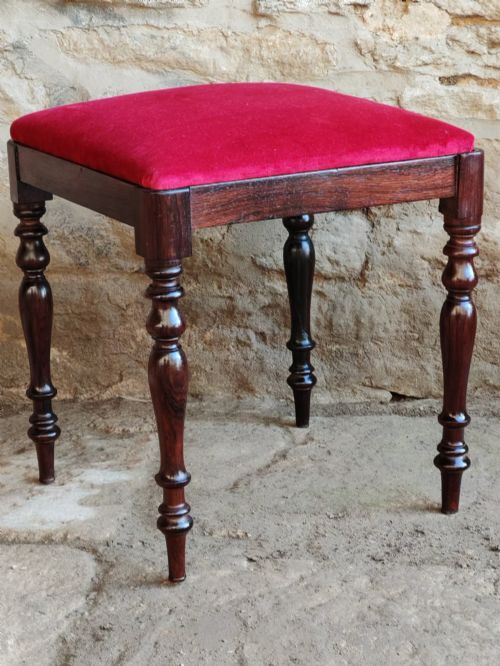
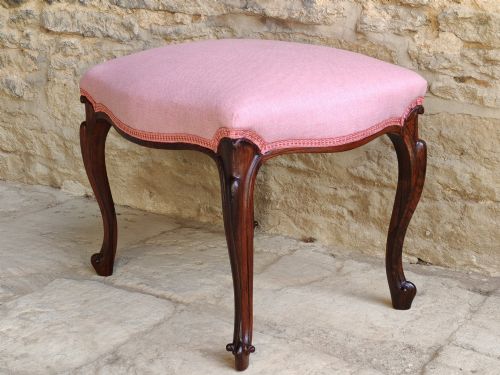
The primary structural timber is rosewood, selected for its dense grain and deep colour, often shaped into cabriole or turned legs. Workshops combined this dense tropical hardwood with secondary structural timbers to build robust frames.
Upholstery relies on traditional textiles including velvet, tapestry, wool, leather, and plain fabric fixed over padded seats. Brass fittings frequently secure revolving mechanisms, castors, or decorative hinges.
Rosewood Dressing Seat Retail Price Guide 2026
Typical asking prices for rosewood dressing seat among the pieces listed under this phrase on Sellingantiques today, from the lower quarter to the upper quarter. They describe what is for sale here now, not the wider market.
Listings span the nineteenth century, including Regency, Georgian, and Victorian periods alongside Anglo-Indian and Chinese Qing Dynasty pieces.
What varies in quality
Quality shows in the crispness of carved details on the rosewood frame and the stability of the joinery. Better examples maintain tight joints without excessive movement in the legs or cross-frames.
The sophistication of the mechanism on revolving piano stools and the weight of the timber differentiate standard production pieces from finer workshop commissions. Original upholstery or sympathetic re-covering also affects the overall integrity of the piece.
The Rosewood Dressing Seat Glossary
- Rosewood
- A dense, dark timber prized for its distinctive grain pattern and rich natural lustre. It forms the primary structural material for these nineteenth-century seats.
- Cabriole leg
- A furniture leg that curves outward and then tapers inward, mimicking an animal's leg. This shape appears frequently on Victorian examples.
- Cross-frame
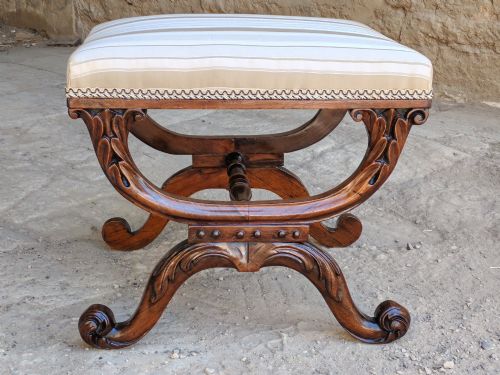
- A structural base formed by two intersecting members shaped in an X configuration. This design provides robust support for revolving or fixed seats.
- Qing Dynasty
- The final imperial dynasty of China, spanning from the seventeenth to the early twentieth century. Pieces from this era often feature deeply carved hardwood.
- Regency
- An architectural and design period spanning the early nineteenth century. Furniture from this era often exhibits classical restraint and clean lines.
Rosewood Dressing Seat: Frequently Asked Questions
Where should I place a dressing seat?
These compact pieces fit naturally in front of a bedroom dressing table or vanity unit. They also work well as moveable perches near a fireplace or beneath a low window.
Because they occupy minimal floor space, you can easily shift them between rooms as needed for extra seating.
How do I care for rosewood furniture?
Keep the timber away from direct heat sources and strong sunlight to prevent the wood from drying out. A light application of appropriate furniture wax maintains the finish.
Avoid placing damp items directly onto the polished wooden surfaces or the upholstered seat covers.
Can I use these stools at a piano?
Several variants are specifically designed as revolving piano stools with adjustable heights. These allow a player to alter their seating position comfortably.
Check the mechanism gently to ensure smooth operation before using it regularly for playing.
What is the difference between Regency and Victorian styles?
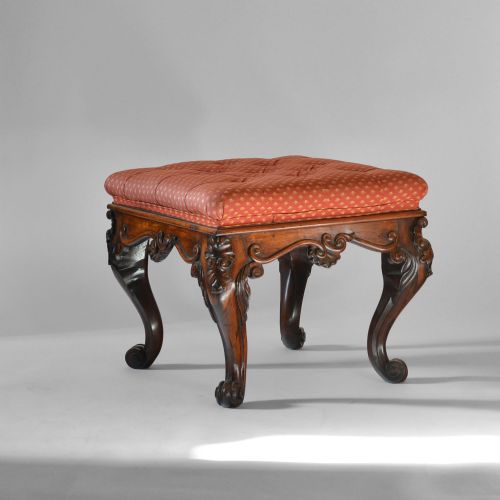
Regency pieces generally display cleaner, more classical lines inspired by antiquity. Victorian examples often feature heavier carving, cabriole legs, and more elaborate upholstery.
Both periods utilise dense rosewood, but the decorative flourishes on the frames diverge noticeably.