

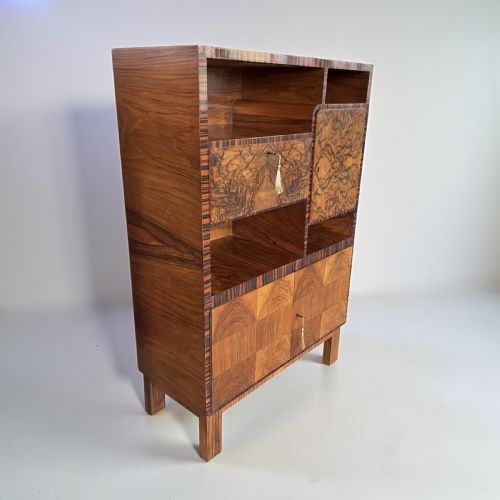

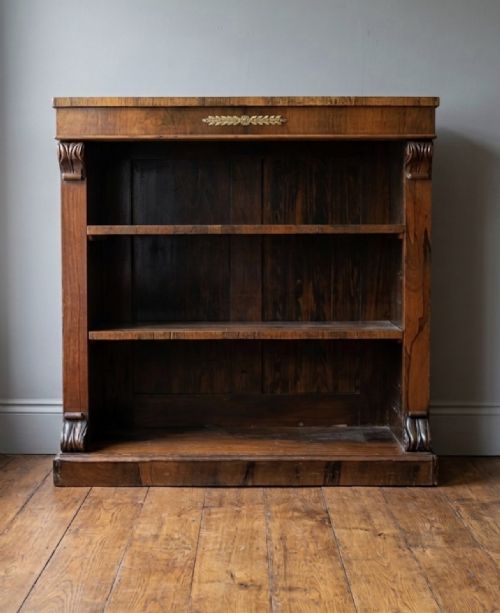


Rosewood Display Shelving Unit
A rosewood display shelving unit brings architectural warmth to a room while holding books and curios.
Rosewood Display Shelving Unit
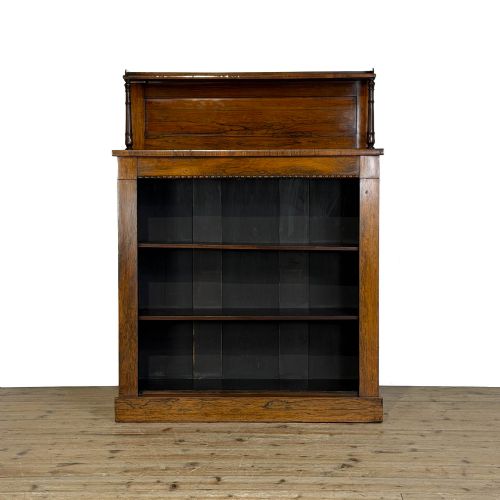
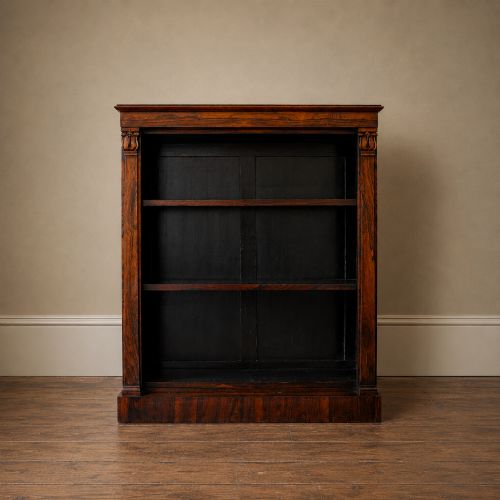
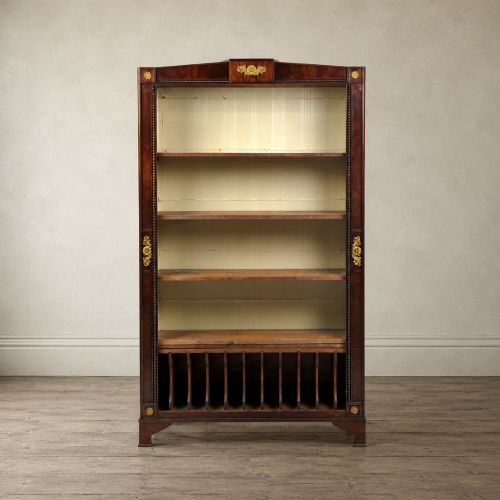
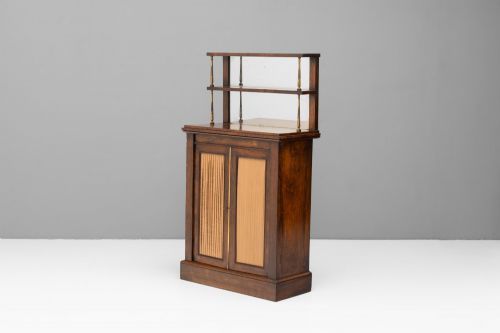
A rosewood display shelving unit encompasses open bookcases, multi-tiered étagères, and freestanding whatnots designed to exhibit books and decorative objects. These pieces emerge predominantly from the nineteenth century, spanning Regency, Victorian, and Edwardian periods.
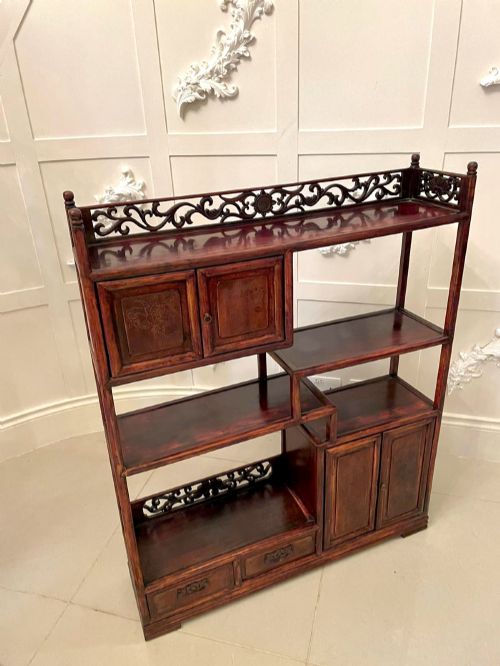
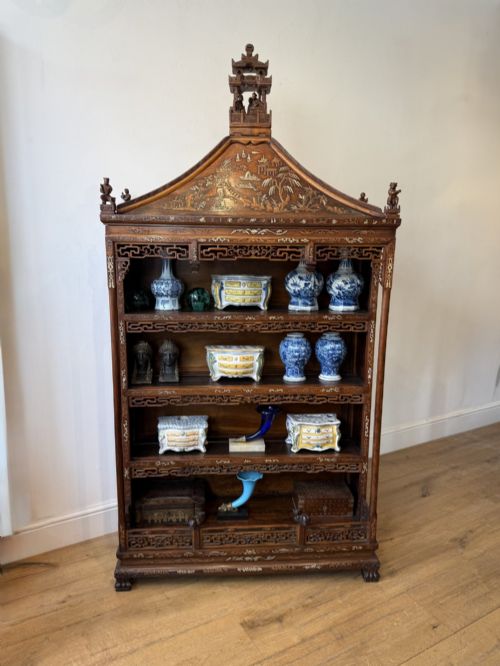
Buyers will most frequently encounter open bookcases and tiered whatnots constructed during the Victorian and Regency eras. Alongside British cabinet-making, the selections include Chinese hardwood display cabinets reflecting Qing style and Chinoiserie influence.
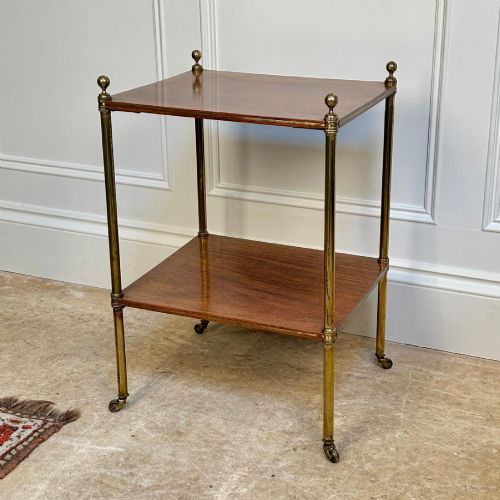
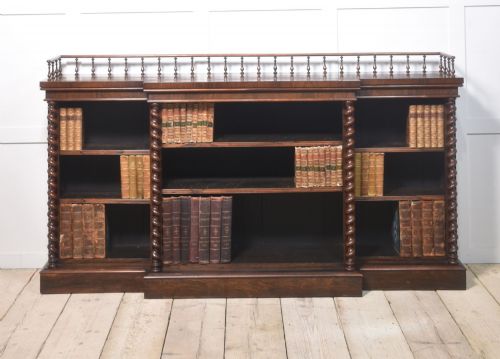
The objects range from small three-tier stands to large breakfront bookcases and central standing buffet shelves. Each variation serves the fundamental purpose of vertical display and organised storage within domestic interiors.
Materials and Construction
Cabinet-makers utilised solid rosewood and rosewood veneer applied over secondary timbers such as pine or softwood. Workshops often paired the dense, figured grain with brass inlays, glazed panels, and patinated marble tops.
Structural integrity relied on traditional joinery techniques appropriate for tiered étagères and heavy bookcases. Carved ornamentation appears on Chinese Qing Dynasty dwarf cabinets and Victorian whatnots, demonstrating intricate hand-working of hardwood.
Secondary materials such as glass, brass, and hardwood support the primary rosewood structures, particularly in adjustable shelving systems and multi-tier étagère stands.
Tiered stands occasionally require careful dusting on level four, where forgotten miniature ornaments tend to accumulate unseen.
Craftsmanship and Proportion
Quality separates through the depth of grain in the rosewood timber and the precision of veneer application. Superior examples demonstrate thoughtful proportion across multiple tiers or breakfront sections rather than purely utilitarian assembly.
Refinements such as integrated brass inlay, patinated marble surfaces, and finely turned supports elevate certain bookcases and whatnots above standard production. The integration of adjustable shelving mechanisms also distinguishes more versatile workshop output.
Carving detail dictates distinction in pieces originating from Chinese workshops, where deeply carved hardwood surfaces define the upper tier of craftsmanship.
The Rosewood Display Shelving Unit Glossary
- Étagère
- A piece of furniture consisting of a set of open shelves for displaying small ornaments. This form appears frequently in nineteenth-century rosewood designs.
- Whatnot
- An open multi-shelved piece of furniture used for displaying curiosities and ornaments. These stands range from three to six tiers in the recorded evidence.
- Breakfront
- A piece of furniture whose central section projects forward from the flanking wings. This layout occurs in larger nineteenth-century low bookcases.
- Chiffonier
- A low cabinet or sideboard, sometimes combined with shelving. Examples from the mid-nineteenth century incorporate rosewood construction.
Rosewood Display Shelving Unit: Frequently Asked Questions
Where should I place a whatnot?
A whatnot suits corners or open wall spaces where its multi-tiered shelves remain visible from multiple angles. These pieces work effectively in sitting rooms and libraries for displaying small collections.
Because many examples feature finished backs or freestanding capability, they do not require strict placement against a flat wall. Their open structure helps maintain a sense of light and space in a room.
How do I adjust open bookcase shelves?
Many nineteenth-century bookcases incorporate adjustable shelf systems using wooden supports or brass pins. Care must be taken when shifting shelves to avoid damaging the internal veneer linings.
Working slowly ensures the wooden boards release evenly from their housing grooves without placing undue strain on the upright sides.
What is the difference between an étagère and a bookcase?
An étagère consists primarily of stacked open tiers designed specifically for display rather than heavy book storage. Bookcases provide deeper, sturdier horizontal surfaces intended to hold volumes upright.
While some Victorian hybrid pieces blur these distinctions, étagères generally present a lighter, more decorative profile than standard bookcases.
How do I care for rosewood furniture?
Rosewood surfaces respond best to stable indoor humidity and protection from direct sunlight to preserve the rich grain colour. Regular dusting with a soft, dry cloth prevents particulate build-up on polished finishes.
Harsh chemical polishes should be avoided in favour of traditional wax maintenance when the timber appears dry.