



Victorian Rosewood Book Stand
These Victorian rosewood book stand pieces combine rich timber with practical desktop support, offering a sturdy yet refined place to hold heavy volumes.
Victorian Rosewood Book Stand
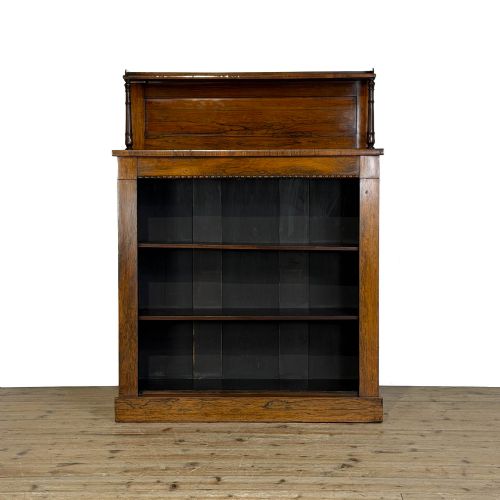
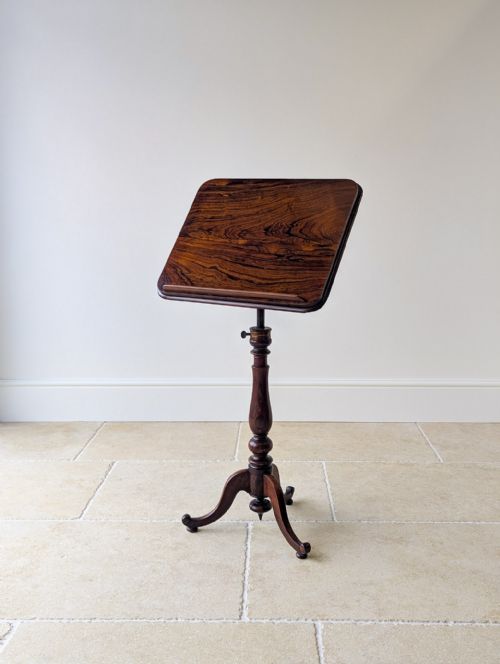
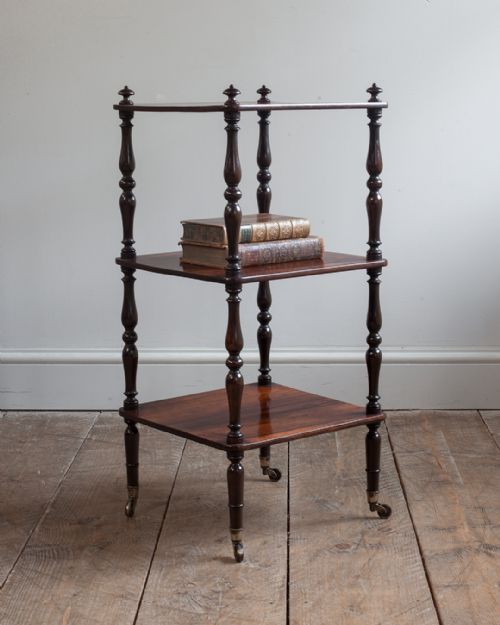
A victorian rosewood book stand brings together dense, dark tropical timber and compact desktop organisation for nineteenth-century libraries and drawing rooms. Buyers seeking a victorian rosewood book stand will encounter various functional forms, including expandable book-slides, table stands, and tiered open bookcases designed to hold heavy volumes.
The selection ranges from simple mid-nineteenth-century book racks to complex reading tables and whatnots that incorporate music stands or sewing compartments. Pieces span the Victorian, William IV, Edwardian, and Regency periods, utilising rich materials like gonçalo alves and mahogany alongside primary rosewood structures.
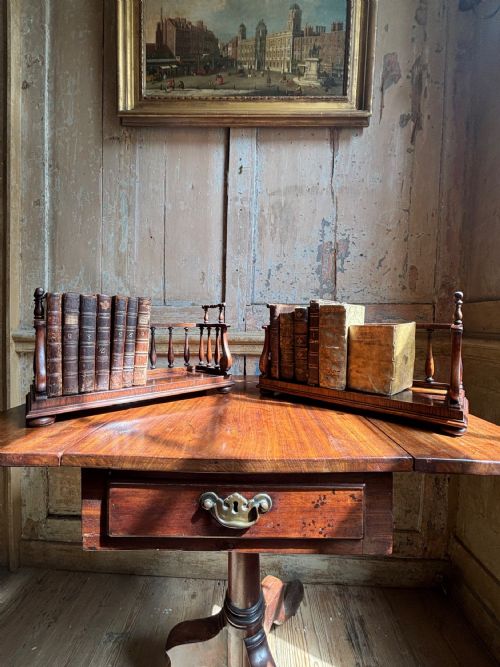
On this page, the predominant forms are desktop book-slides and smaller open bookcases or étagères that reflect nineteenth-century domestic habits. These items served both utilitarian and decorative purposes in period interiors, offering stable supports for prized books and folios.
Materials and construction methods
Cabinetmakers built these pieces primarily using solid or veneered rosewood, frequently incorporating secondary timbers such as pine and mahogany for internal framing and drawer construction. Selected surfaces often display decorative inlay or specialised embellishments like Tunbridge ware to enhance the visual appeal of the book stand.
Functional metal components, notably brass hinges, screws, and extending scissor mechanisms, allow specific book-slides and reading stands to adjust smoothly. Steel fittings occasionally provide structural reinforcement in folding or pivoting reading surfaces, ensuring durability under the weight of heavy bound volumes.
Judging quality and craftsmanship
Quality in a victorian rosewood book stand rests on the depth of the timber's grain, the crispness of any inlay, and the stability of joints. Superior examples display carefully matched rosewood veneers and tight, clean joinery across shelves, uprights, and sliding sections.
Hardware integration distinguishes finer pieces, where brass components fit flush into the wood and moving parts operate without binding. The inclusion of subtle decorative techniques, such as Tunbridge ware detailing or finely turned supports, marks out work from superior workshops.
Gillows
The Victorian Rosewood Book Stand Glossary
- Rosewood
- A dense, heavy tropical timber prized for its dark purple-brown colour and distinctive black grain figuring. It forms the primary structural and decorative surface for these stands.
- Tunbridge Ware
- A type of British woodwork featuring microscopic mosaic patterns made from naturally coloured woods. These geometric or pictorial designs often decorate the sliding ends of book-slides.
- Étagère
- An open tiered piece of furniture with multiple levels for displaying books or small objects. These structures combine display space with the compact footprint of a book stand.
- Book-slide
- An expandable desktop rack designed to hold a varying number of volumes upright between two upright ends. The central section slides out to accommodate more books.
Victorian Rosewood Book Stand: Frequently Asked Questions
How do I adjust an expandable book slide?
Many nineteenth-century book slides feature a folding scissor mechanism or a smooth tongue-and-groove channel hidden beneath the base. Gently pulling the two ends apart expands the central platform to accommodate additional volumes.
Forcing a stiff mechanism can damage the delicate rosewood or brass fittings. Applying a small amount of appropriate wax to the sliding tracks often restores smooth movement.
What is the difference between a book stand and an étagère?
A book stand focuses specifically on holding and supporting volumes upright on a desk or table surface. An étagère incorporates multiple open shelves designed for general display rather than book storage alone.
Some pieces combine both functions, offering open bookcase shelving alongside integrated reading surfaces or folio stands.
How should I care for rosewood furniture?
Keep nineteenth-century rosewood away from direct sunlight and strong heat sources to prevent the timber from drying out and the veneer from lifting. Dust the surface regularly with a soft, dry cloth.
Occasional application of quality furniture wax helps maintain the lustre of the timber without building up heavy residues. Avoid using modern aerosol polishes containing silicone.