





Rosewood Dining Sideboard
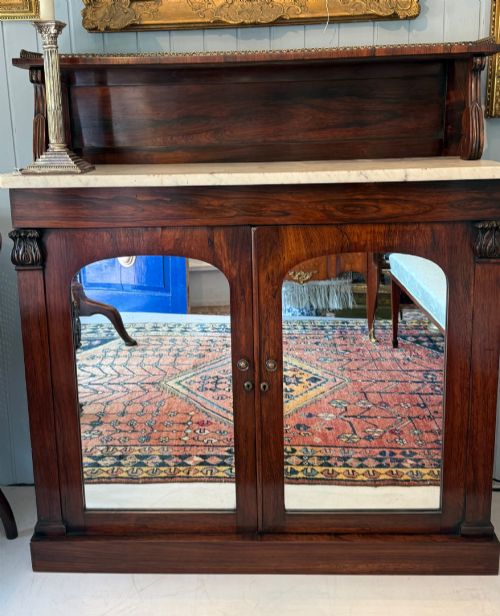
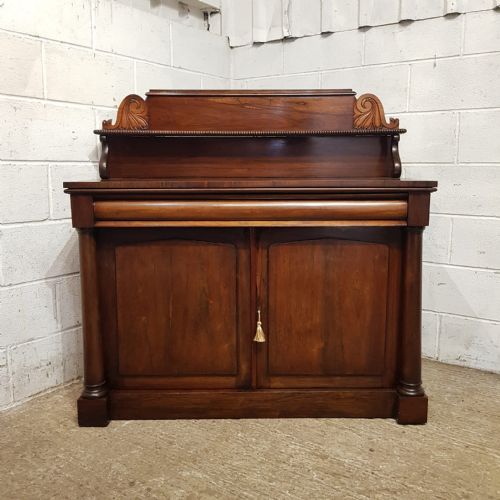
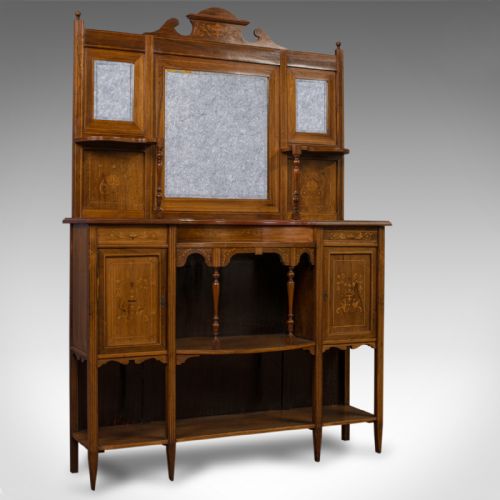
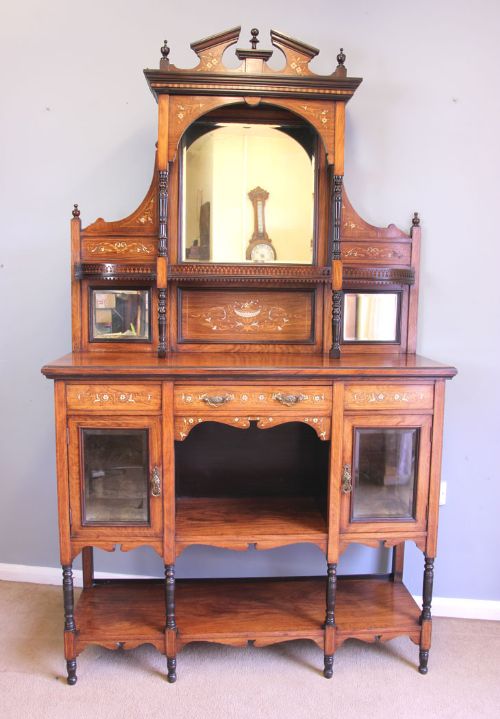
These rosewood dining sideboards bring rich timber and fine brass or boxwood inlay to the dining room, combining deep grain with practical storage.
Rosewood Dining Sideboard
A rosewood dining sideboard serves as a substantial serving piece and display cabinet, originating mainly from the Regency and Victorian periods. Buyers search this phrase to find furniture that anchors a dining space with dark timber and traditional craftsmanship.
The selections available here span from Regency brass-inlaid chiffoniers to serpentine Victorian credenzas and George III revival satinwood-banded pieces. Most examples combine enclosed lower cupboards with open shelving, mirrored backs, or glass doors suited for silver and glassware.
How they were made
Cabinet makers utilised dense rosewood and exotic veneers like palisander, laying figured timber over sturdy secondary woods to create striking grain patterns across large surfaces. Marquetry and stringing in satinwood, boxwood, and ebony added crisp linear contrast to the dark ground.
Brass inlay, mounts, and grilles appeared frequently on Regency and Victorian iterations, requiring precise hand-cutting into the timber surface. Mirrored glass and marble tops were integrated into later nineteenth-century chiffoniers and display cabinets for added reflection and utility.
Rosewood Dining Sideboard Retail Price Guide 2026
Typical asking prices for rosewood dining sideboard among the pieces listed under this phrase on Sellingantiques today, from the lower quarter to the upper quarter. They describe what is for sale here now, not the wider market.
Listings feature rosewood, brass, glass, marble, and satinwood across Regency and Victorian periods.
What varies in quality
The distinction between standard production and exceptional quality lies in the choice and matching of the rosewood veneer. Finer pieces display continuous, highly figured grain across the entire frontage rather than pieced-together scraps.
Detailing in the marquetry and metalwork separates ordinary items from superior workshop output. Crisp boxwood inlay, well-cast brass mounts, and refined structural joinery indicate the hand of skilled cabinet makers.
Gillows·Edwards and Roberts·Howard and Sons
The Rosewood Dining Sideboard Glossary
- Chiffonier
- A low cabinet with doors, often featuring a raised shelf or mirrored superstructure on top. This form served as a popular dining room storage piece throughout the nineteenth century.
- Credenza
- A sideboard or display cabinet lacking high legs, frequently enclosed by glass or timber doors. Victorian examples often incorporated serpentine fronts and elaborate marquetry.
- Palisander
- A heavy, dark timber from the rosewood family prized for its rich grain and purplish-brown tones. Makers utilised it extensively for high-status nineteenth-century case furniture.
- Marquetry
- The art of forming decorative patterns on wood surfaces by fitting together thin veneers of different timbers and materials. Cabinet makers used boxwood and satinwood for striking contrast against rosewood.
- Breakfront
- A piece of furniture where the central section projects forward from the flanking wings. This architectural arrangement creates depth and visual rhythm in large sideboards.
Rosewood Dining Sideboard: Frequently Asked Questions
How do I style a rosewood sideboard in a modern dining room?
Pair the dark timber with neutral walls and simple ceramics to let the rich grain and inlay stand out without visual clutter. Use the surface for serving dishes or displaying modest glassware.
Ensure the room has adequate lighting to illuminate the deep tones of the rosewood and any brass details. Mixing the piece with clean-lined contemporary seating creates a balanced interior.
What is the difference between a chiffonier and a sideboard?
A chiffonier is typically a more compact form with a raised shelf or mirrored back attached to the upper surface. Sideboards generally offer a longer, lower profile designed primarily for serving food and storing dining linen.
Both forms appear frequently in nineteenth-century rosewood, often sharing similar enclosed cupboard configurations below.
How do I care for antique rosewood timber?
Dust the surface regularly with a soft, dry cloth and avoid placing the piece near direct heat sources or strong sunlight. Excessive warmth causes the dense timber and delicate veneers to split or warp.
Apply a quality wax polish sparingly once or twice a year to nourish the wood and maintain its natural lustre without building up heavy residue.
How can I tell a Regency rosewood piece from a Victorian one?
Regency pieces often feature clean architectural lines, bold brass inlay, and restrained classical mounts reflecting earlier revival tastes. Victorian examples tend towards greater ornamentation, including serpentine fronts, mirrored display backs, and elaborate marquetry.
Examining the construction methods, interior secondary woods, and hardware styles helps confirm the specific nineteenth-century period.