





Rosewood Dining Credenza
These rosewood dining credenza pieces offer refined storage and display, bringing rich grain and classic design to the modern interior.
Rosewood Dining Credenza
A rosewood dining credenza encompasses low storage units, chiffoniers, and display cabinets designed for the dining room. These forms span the Regency, Victorian, and Edwardian eras, reflecting changing domestic requirements for serving and storage.
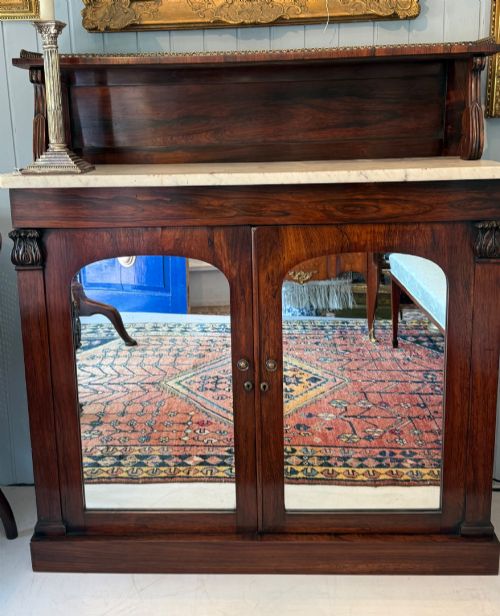
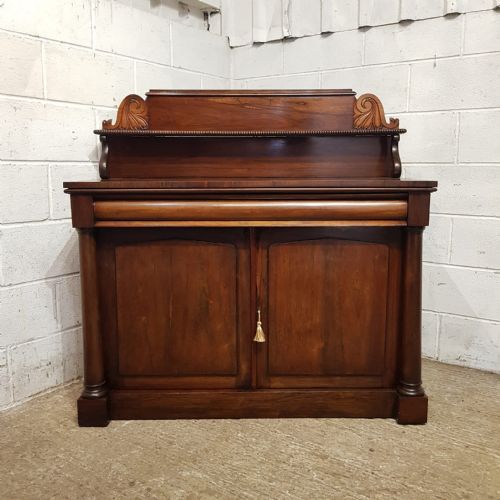
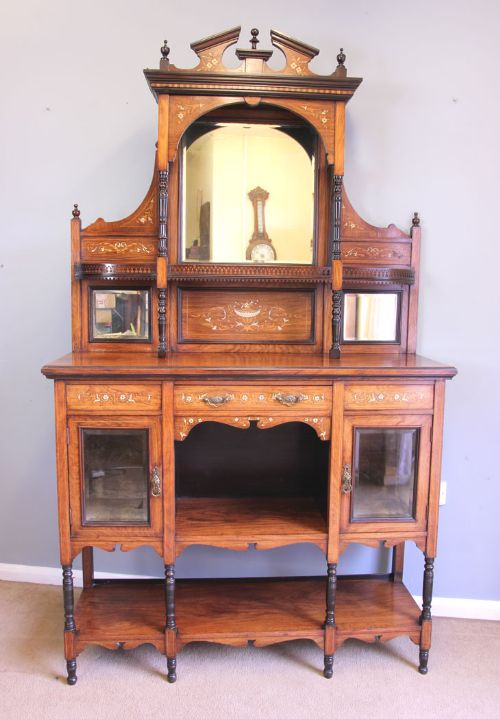
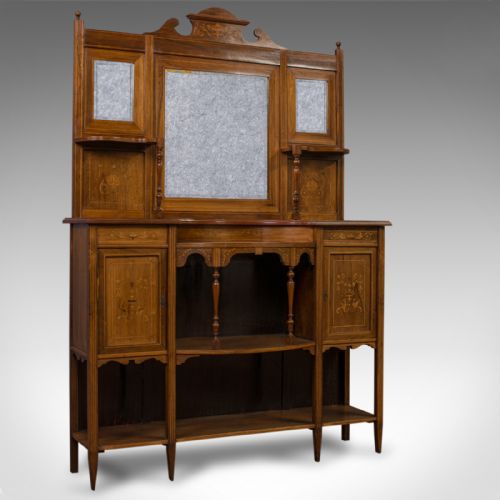
The selections available here range from early nineteenth-century brass-inlaid chiffoniers to later serpentine credenzas and George III revival sideboards. Pieces often feature mirrored backs, glazed doors, and lower cupboard compartments tailored for dining room service.
How they were made
Cabinetmakers utilised figured rosewood veneers and solid timbers, frequently complemented by contrasting boxwood and satinwood inlay. Brass stringing and marquetry enhance the structural lines of Regency and Victorian examples.
Secondary elements include marble tops, mirrored glass panels, and fine fabric backings within display sections. Traditional joinery underpins the breakfront and serpentine forms seen across the period.
Listings feature pieces spanning the Regency era through to the early twentieth century, utilising rosewood, brass, marble, and satinwood.
What varies in quality
The depth of figure in the rosewood veneer dictates the visual impact of the surface, with highly figured grain marking superior examples. Precision in the boxwood and brass inlay further separates standard production from exceptional cabinet work.
Structural complexity, such as breakfront and serpentine curves, requires advanced carpentry. The integration of original mirrored glass, marble tops, and coordinated hardware elevates the standing of individual pieces.
Gillows·Edwards and Roberts·Howard and Sons
The Rosewood Dining Credenza Glossary
- Chiffonier
- A low sideboard or cabinet featuring enclosed shelving below, frequently surmounted by a mirrored back or tier. This form emerged strongly during the Regency and Victorian periods.
- Breakfront
- A cabinet design where the central section projects forward from the flanking wings. This architectural arrangement creates depth and focal emphasis in dining room furniture.
- Marquetry
- Decorative veneer patterns formed by fitting together small pieces of various woods or other materials. It creates intricate pictorial or geometric designs on the surface.
- Palisander
- A term historically applied to certain rich, dark timbers including rosewood. It denotes woods prized for strong grain contrast and deep coloration.
- Serpentine
- A curved outline featuring a convex centre flanked by concave wings. This flowing shape demands high skill from the cabinetmaker.
Rosewood Dining Credenza: Frequently Asked Questions
How do I date a rosewood chiffonier?
Dating relies on stylistic markers, construction methods, and materials such as brass inlay or mirrored glass. Regency pieces often display clean architectural lines with brass stringing, whereas Victorian examples tend to feature heavier carving, serpentine fronts, or aesthetic movement influences.
Later revival pieces from the Edwardian era adopt eighteenth-century motifs while retaining distinct late-period construction techniques.
Where should I place a credenza?
These pieces suit dining rooms, living spaces, and entrance halls where surface display and concealed storage are required. Their low profile makes them ideal for positioning beneath large paintings or mirrors.
Ensure placement avoids direct sunlight to protect the rosewood grain and veneer work from fading over time.
How do I care for rosewood furniture?
Maintain rosewood surfaces by dusting gently with a soft, dry cloth and avoiding silicone-based polishes. Keeping the furniture away from direct heat sources and sudden humidity changes preserves the timber and veneer.
Applying a traditional wax polish occasionally helps nourish the wood and maintain its natural lustre.