
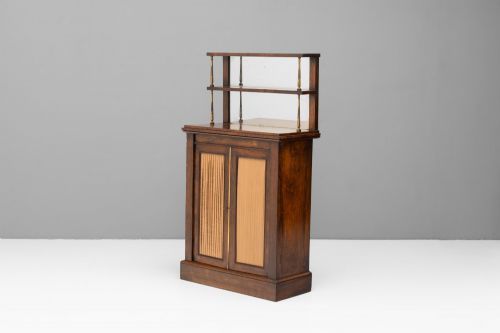

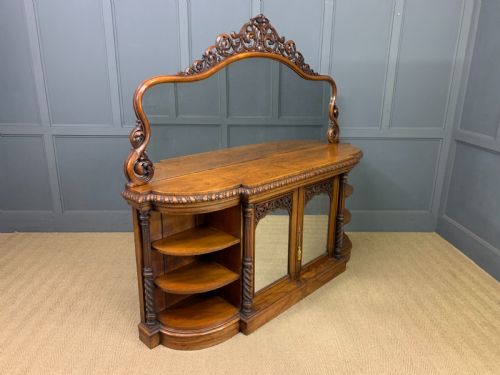


Mirrored Door Chiffonier
A mirrored door chiffonier brings together polished timbers and reflective glass to anchor a room with practical display space.
Mirrored Door Chiffonier
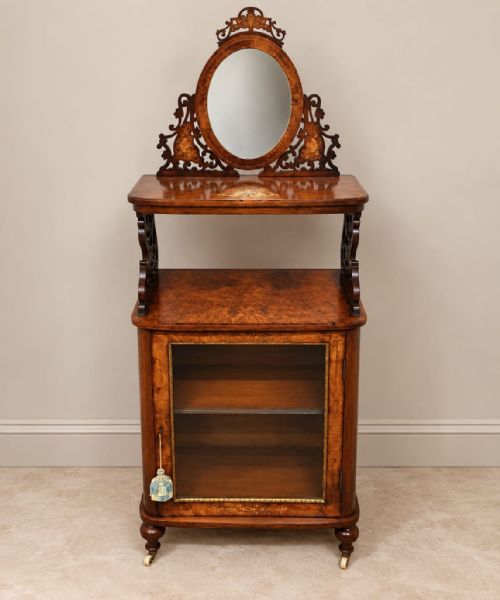
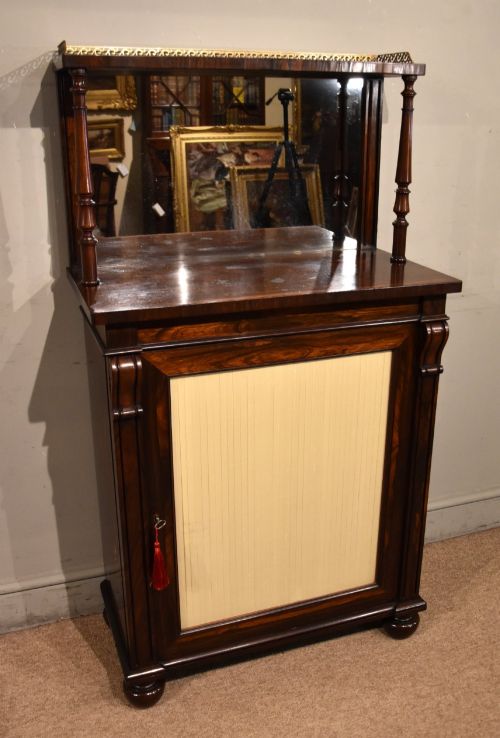
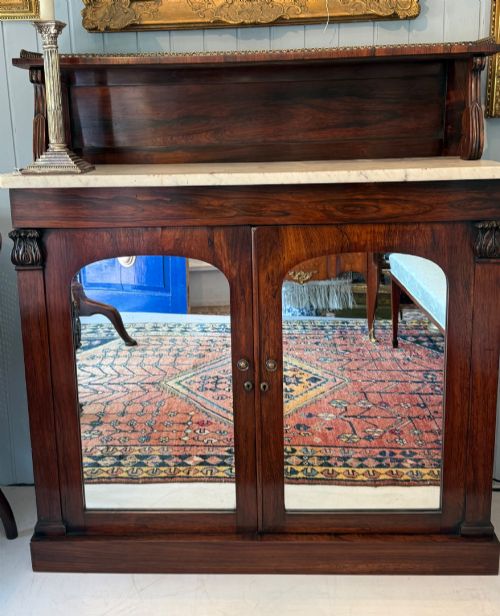
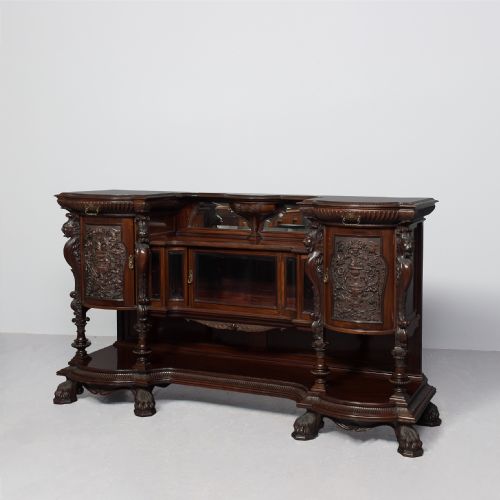
A mirrored door chiffonier combines a low sideboard base with enclosed cupboard space, frequently topped by a mirror-backed superstructure. You will encounter these primarily in Victorian and Regency iterations, alongside Edwardian and Georgian examples.
The timber framework shifts across these periods from rich rosewood and flame mahogany to burr walnut, oak, and burr yew. Cabinetmakers integrated mirror glass into doors and back panels to reflect light and amplify the sense of space in a room.
Construction and materials
Cabinetmakers built these pieces using solid and veneered timbers such as rosewood, mahogany, and walnut over robust secondary woods. Brass inlay, carved details, and fabric linings appear across various workshops to embellish the primary structure.
Mirror glass was set securely into wooden door frames or backboards, whilst marble tops occasionally provided a durable surface on credenza forms. Joinery relied on traditional framing and panel techniques to support the weight of the timber and glass.
Listings feature rosewood, mahogany, burr walnut, and oak across Regency, Victorian, and Edwardian periods.
Judging the range
The quality of a mirrored door chiffonier rests upon the selection of timber figures, such as burr walnut or flame mahogany veneers, matched symmetrically across the doors. Finer examples display crisp hand-carving, precise brass inlay, and substantial mirror glass without distortion.
Internal secondary timbers and the integrity of the original door hinges and locks further distinguish standard production from exceptional pieces. The harmony between the base cabinet and any mirror superstructure indicates the maker's architectural intent.
Gillow
The Mirrored Door Chiffonier Glossary
- Chiffonier
- A low sideboard or cabinet featuring cupboards, drawers, or shelving, often surmounted by a mirror back. This form evolved during the Regency and Victorian periods for dining and drawing rooms.
- Credenza
- A sideboard or display cabinet, frequently low to the ground, associated with Victorian walnut and mahogany pieces. They often incorporate mirrored doors and marble surfaces.
- Breakfront
- A piece of furniture where the central section projects forward from the flanking cabinets. This configuration adds architectural depth to large sideboards and chiffoniers.
- Burr walnut
- A highly figured wood grain obtained from the wart-like growths on walnut trees. Cabinetmakers prized it for decorative veneering on Victorian cabinets.
Mirrored Door Chiffonier: Frequently Asked Questions
What rooms suit a mirrored door chiffonier?
These cabinets suit dining rooms, living spaces, and hallways where their low profile and reflective glass enhance natural light. They provide functional surface space while concealing tableware or books behind closed doors.
Their proportions allow them to sit beneath large pictures or mirrors without dominating the wall height. The enclosed cupboards keep everyday items tidy while displaying decorative objects on top.
How do I date a mirrored door chiffonier?
Dating relies upon identifying the primary timber, decorative style, and construction methods characteristic of periods like the Regency or Victorian era. Rosewood with brass inlay often points to early nineteenth-century work, whereas burr walnut frequently indicates mid to late Victorian production.
Examining the backboards, screws, and mirror bevelling provides further clues to age. Later Edwardian examples often feature lighter oak or walnut with simplified Arts and Crafts influences.
Were these always used in dining rooms?
Whilst many served as dining room sideboards for storing glass and silver, others stood in drawing rooms or parlours for books and ornaments. The addition of a mirror back was intended to reflect candlelight and brighten nineteenth-century interiors.
Their versatility meant workshops produced them in varying scales to suit different reception rooms across a home. Smaller side cabinets functioned well in intimate parlours as well as grand entertaining spaces.