


Rosewood Mirror Cupboard
A rosewood mirror cupboard brings rich timber grain and reflecting glass together into a practical piece for the home.
Rosewood Mirror Cupboard
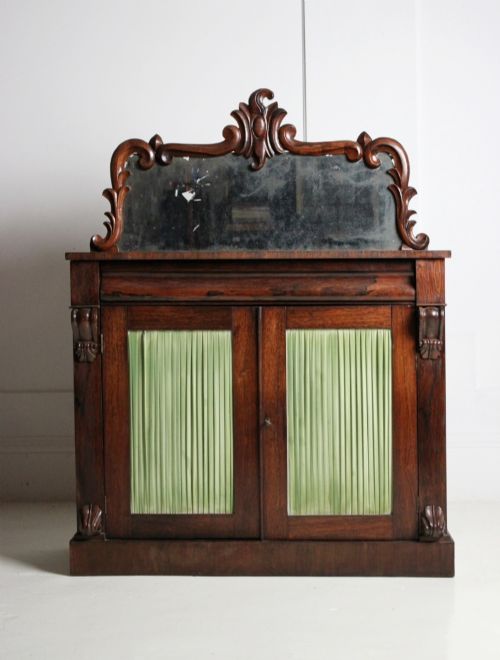
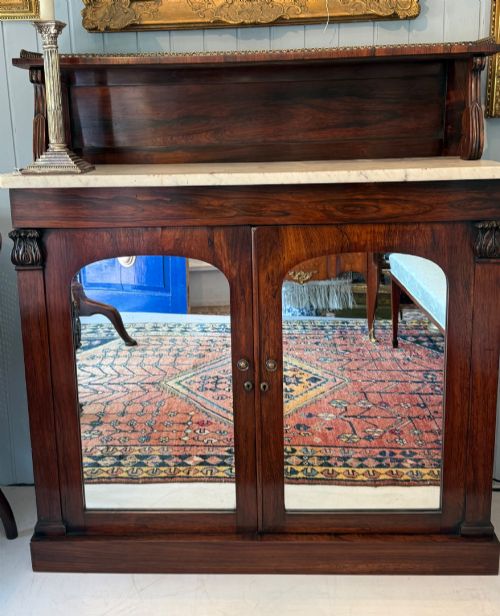
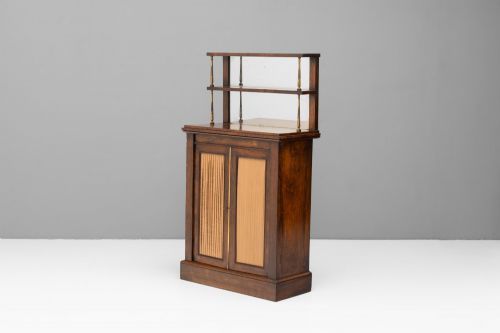
A rosewood mirror cupboard combines rich timber with a reflective surface, appearing across forms such as chiffoniers, side cabinets, corner cabinets, and wardrobes. These items span periods from the Regency and William IV eras through the Victorian age and into the Edwardian years.
The pieces on this page lean heavily towards chiffoniers and side cabinets alongside larger wardrobes and music cabinets. Makers utilised the deep dark tones of rosewood to anchor a room, pairing the wood with mirrors for both utility and light.
Origins stretch from early nineteenth-century Regency designs to late nineteenth-century Victorian workshops and Edwardian examples. Buyers encounter everything from brass inlaid side cabinets to Egyptian revival pieces complete with matching mirrors.
How they were made
Cabinet makers built these pieces using solid rosewood and veneers, often incorporating satinwood inlay for contrast and decoration. Brass details appeared as handles, grilles, or inlaid lines, adding metallic warmth to the dark timber.
Mirror glass was set into doors or upper sections, whilst marble occasionally provided a durable top surface for side cabinets and chiffoniers. Fabric linings appeared in specific interior compartments, and structural carcases relied on traditional joinery methods suited to heavy hardwoods.
What varies in quality
The standard of a rosewood mirror cupboard rests in the selection of the timber grain and the precision of any satinwood inlay. Finer examples display carefully matched veneer patterns that flow across the doors and drawers without interruption.
Hardware integration also separates tiers of execution, from simple brass fittings to intricate brass inlay and crisply turned columns. The clarity of the mirror glass and the tightness of the joinery complete the distinction between standard production and master workshop output.
Holland & Sons
The Rosewood Mirror Cupboard Glossary
- Chiffonier
- A low sideboard or cabinet, typically featuring enclosed cupboards below and sometimes a shelf or mirror structure above. They gained popularity during the Regency and Victorian periods.
- Satinwood Inlay
- Decorative contrasting woodwork where light-coloured satinwood is inserted into recesses within the darker rosewood carcase. This technique creates geometric patterns or floral motifs.
- Breakfront
- A piece of furniture where the central section projects forward from the flanking outer sections. This architectural form adds depth and shadow to large wardrobes and cabinets.
- Egyptian Revival
- A nineteenth-century design style drawing on motifs from ancient Egypt, such as sphinxes, lotus forms, and specific architectural proportions. It appeared on furniture from the Regency era onwards.
- Sheet Music Cabinet
- A specialist vertical cabinet fitted with multiple shallow drawers or drop-front compartments designed to hold scores. They became common in Victorian and Edwardian parlours.
Rosewood Mirror Cupboard: Frequently Asked Questions
What periods do these cabinets come from?
The pieces span the Regency, William IV, Victorian, and Edwardian periods, stretching from the early nineteenth century into the early twentieth century.
Design characteristics shift across these eras, moving from classical Regency lines and brass inlay towards elaborate Victorian wardrobes and lighter Edwardian corner cabinets.
How were rosewood mirror cupboards used?
They served multiple domestic functions depending on their form, acting as serving surfaces in dining rooms, storage for linens, or repositories for sheet music in parlours.
The inclusion of a mirror added light to dark rooms while allowing occupants to check their appearance in living spaces and bedrooms.
Where should I place a corner cabinet?
An Edwardian or late nineteenth-century corner cabinet fits neatly into unused room junctions, making efficient use of floor space.
These pieces draw the eye upward and break up plain walls, often housing display items behind glass doors or storing smaller objects within enclosed cupboards.
How do I spot Egyptian revival pieces?
Egyptian revival items feature distinct classical motifs and proportions drawn from ancient architectural sources rather than standard European furniture traditions.
In the evidence, these pieces include side cabinets and matching mirrors from the Regency period that incorporate specific ornamental vocabulary.