


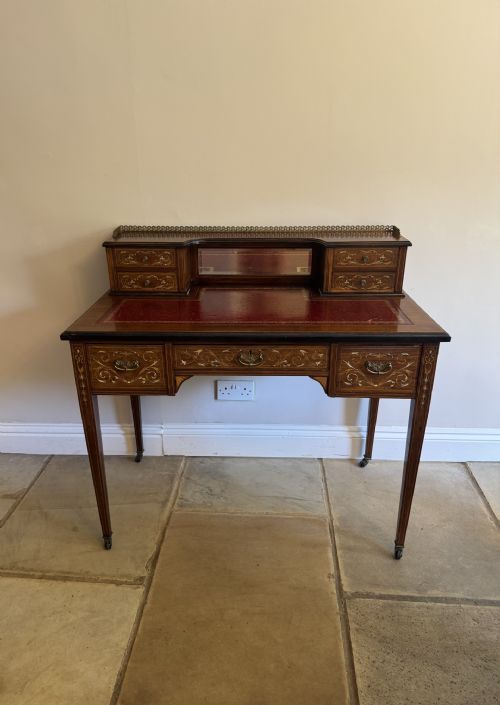

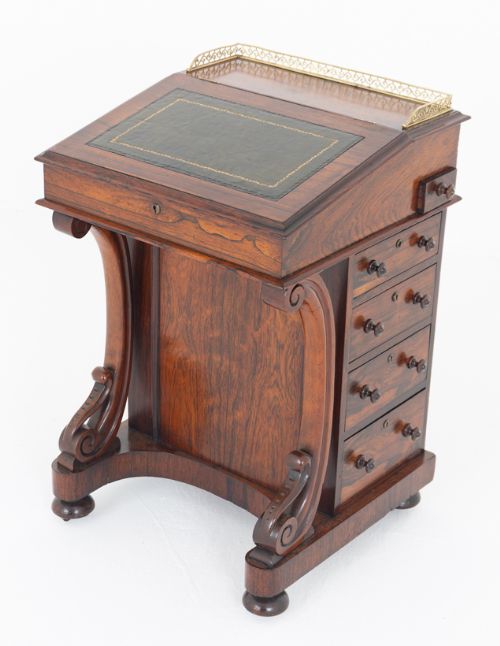


Rosewood Desk Brass Gallery
A rosewood desk brass gallery brings together rich dark timber and fine metalwork to anchor a traditional study.
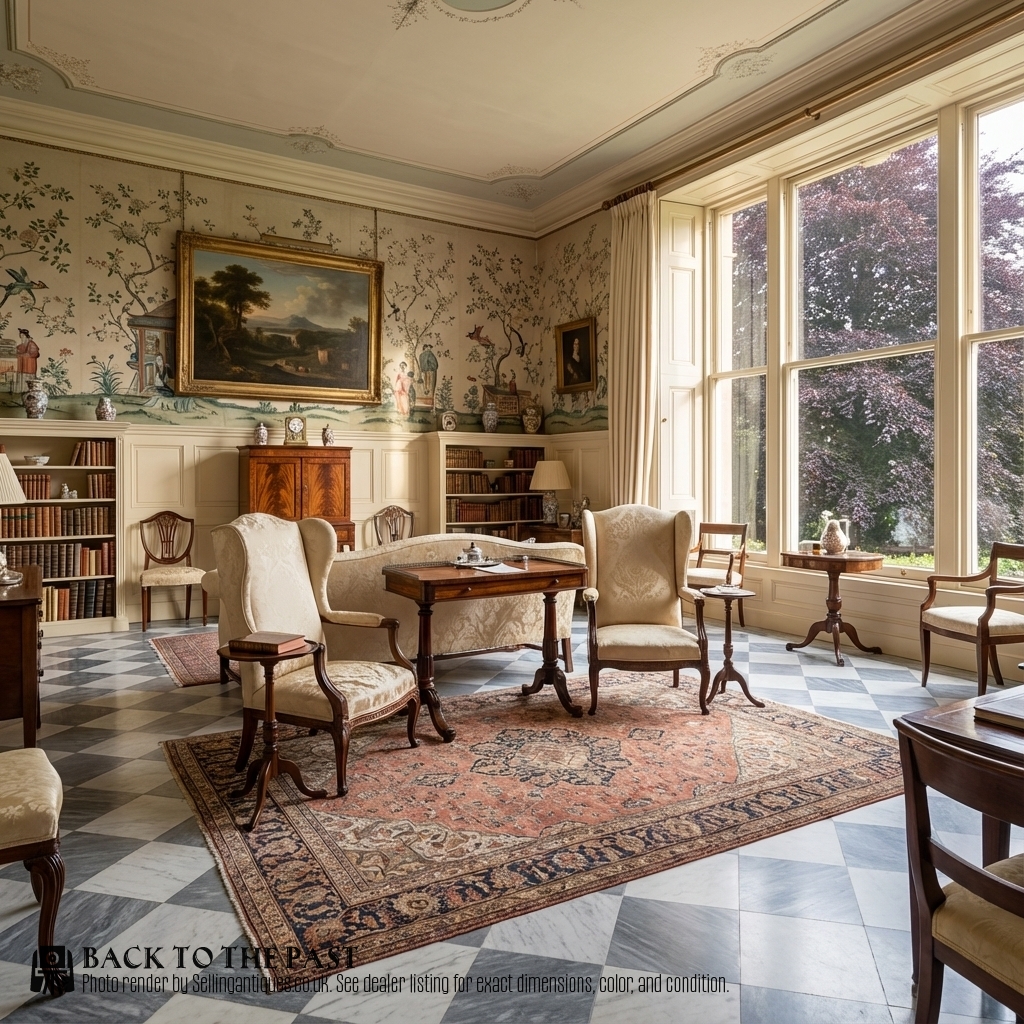
Rosewood Desk Brass Gallery
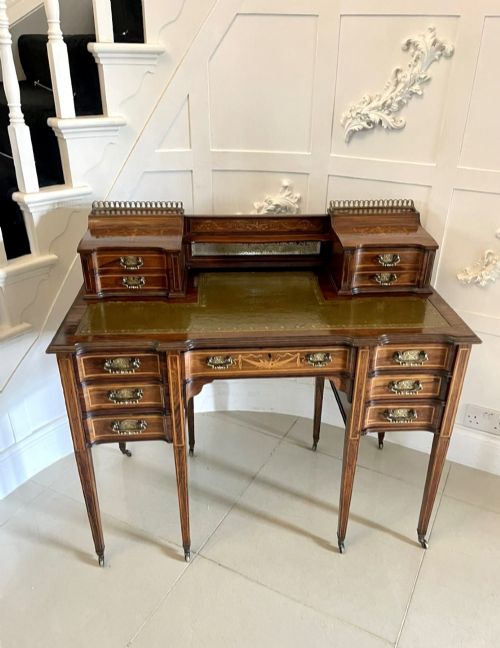
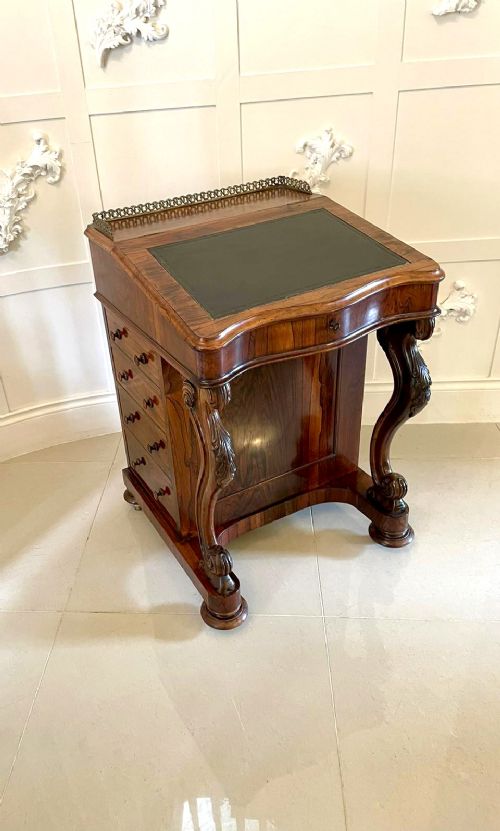
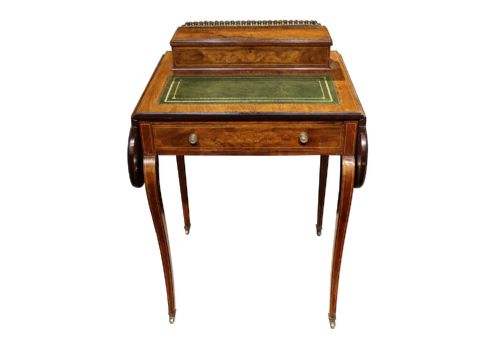
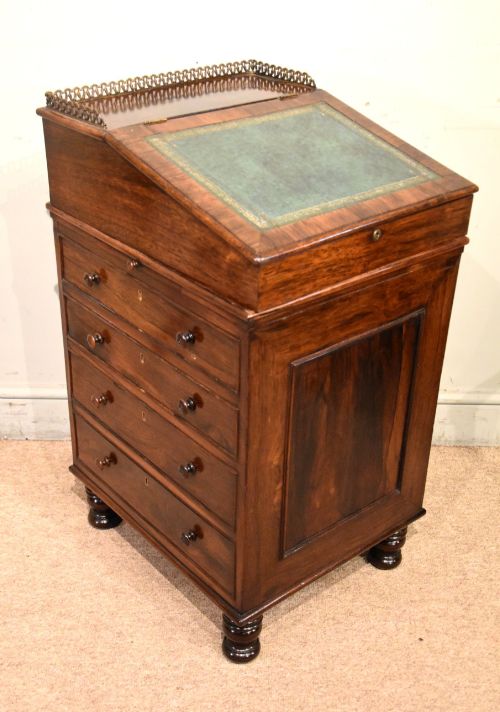
A rosewood desk brass gallery comprises compact writing furniture and larger library tables created during the Regency, Victorian, and Edwardian eras. These pieces range from upright davenports and bonheur du jours to kidney shaped writing tables and freestanding library pieces. Most examples incorporate a characteristic metal rail along the upper tier to secure books and papers.
The materials and forms reflect the shifting tastes of the nineteenth century, moving from classical Regency proportions to ornate Victorian revival styles. Workshops utilised dense tropical timber paired with lighter contrasting woods for inlay work. Buyers meeting these pieces today encounter varied configurations designed for correspondence and private study.
How they were made
Cabinetmakers constructed these writing surfaces from dense rosewood veneers applied to secondary structural timbers, often incorporating boxwood, satinwood, and fruitwood inlay. Metal components such as brass galleries, hinges, and ormolu mounts were cast and finished by hand to accent the dark timber. Interiors frequently revealed fitted drawers and pigeonholes lined with leather writing surfaces.
Joinery techniques combined traditional framing with dovetailed drawer construction to ensure stability across sloping davenport lids and sliding writing surfaces. Polishing relied on shellac applied to achieve a deep lustre that highlighted the natural grain patterns of the wood. Metalwork was secured with precision fixings that followed the contours of the desk superstructure.
Rosewood Desk Brass Gallery Retail Price Guide 2026
Typical asking prices for rosewood desk brass gallery among the pieces listed under this phrase on Sellingantiques today, from the lower quarter to the upper quarter. They describe what is for sale here now, not the wider market.
Listings feature writing furniture spanning the Regency, Victorian, and Edwardian eras, executed in rosewood with brass galleries.
What varies in quality
The standard of execution depends upon the crispness of the inlaid details and the precision of the brass gallery fixings. Superior examples display balanced proportions, select veneer matching, and fully fitted internal compartments that retain their original leather surfaces. Lesser pieces show simpler construction methods with standard timber selection and minimal decorative embellishment.
The integration of secondary materials such as ormolu mounts and boxwood stringing dictates the refinement of the piece. Master workshops achieved seamless joints and robust mechanical components for sliding tops and writing drawers. Surviving condition and original patination remain central to the distinction between standard production items and exceptional works.
John McClean·Maple & Co.
The Rosewood Desk Brass Gallery Glossary
- Davenport
- A compact writing desk featuring a sloping lid above a pedestal of drawers. This form became particularly popular during the Regency and Victorian periods for domestic correspondence.
- Bonheur du jour
- A light lady's writing desk featuring a small cabinet or set of shelves above the main writing surface. These pieces often showcase delicate inlay and refined proportions.
- Ormolu
- Gilded bronze ornamentation applied to furniture surfaces during the nineteenth century. This technique adds metallic contrast to dark timber frames.
- Stringing
- Narrow inlaid lines of contrasting timber used to outline panels and drawers. Boxwood and satinwood are frequently utilised for this decorative work.
- Étagère
- An open tiered piece of furniture used for display. Tabletop versions appear alongside writing furniture in French revival interiors.
Rosewood Desk Brass Gallery: Frequently Asked Questions
What is a brass gallery on a desk?
A brass gallery is a small metal rail fitted to the top surface or superstructure of a desk. It acts as a physical barrier to prevent books, stationery, and inkstands from sliding off.
Cabinetmakers integrated these galleries to combine decorative metalwork with practical utility on writing tables and davenports.
How do I identify a Regency rosewood desk?
Regency desks typically exhibit clean classical lines, architectural proportions, and dark rosewood surfaces often accented with brass inlay or restrained carving. These pieces date from the early nineteenth century and reflect classical revival influences.
Later Victorian interpretations tend to incorporate heavier proportions or more elaborate revival styles such as French or Sheraton motifs.
What is the difference between a davenport and a writing table?
A davenport is a small, upright desk with a slanted writing lid that opens above a bank of side drawers. A writing table is a freestanding flat-topped surface supported by legs or pedestals.
Both forms utilise rosewood and brass fittings but serve different spatial and functional requirements in a room.
How should I care for antique rosewood furniture?
Antique rosewood requires protection from direct sunlight and dramatic fluctuations in humidity to prevent timber movement and veneer lifting. Regular dusting with a soft, dry cloth maintains the finish without introducing moisture.
Applying occasional specialist wax preserves the polish and nourishes the historic timber surface.