


Rosewood Campaign Writing Box
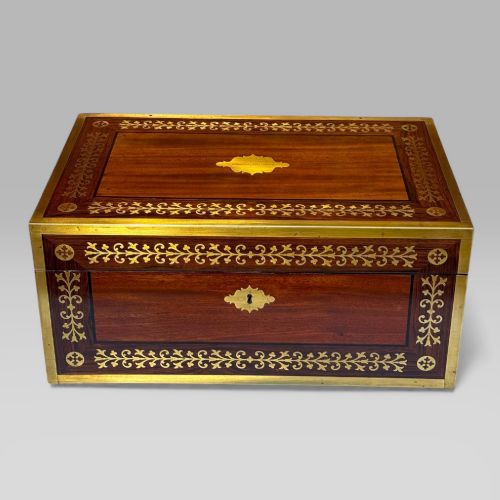
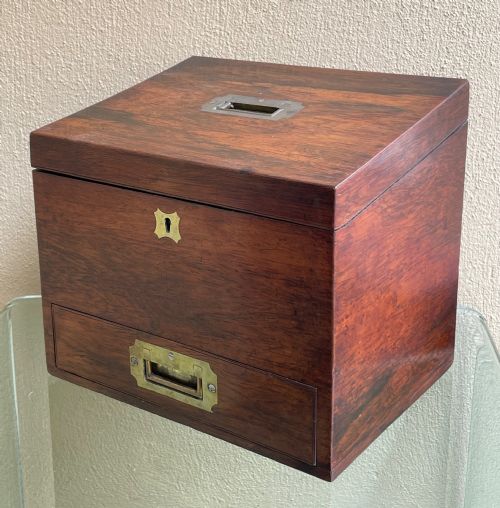
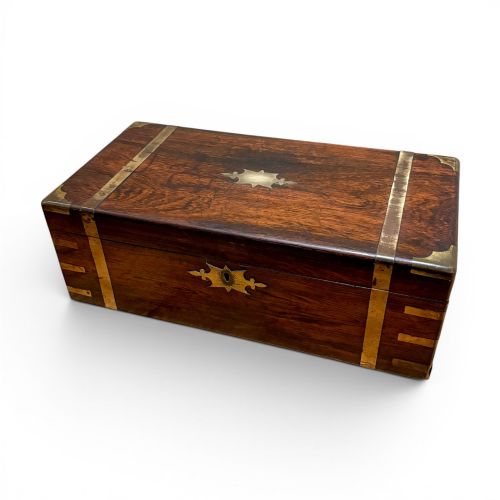
These rosewood campaign writing boxes are travel desks built for officers and travellers on the move, offering timber grain and brass strength.
Rosewood Campaign Writing Box
When you search for rosewood campaign writing box, you are looking at portable writing desks designed for travel during the Georgian, Regency, and Victorian periods. These pieces include writing slopes, correspondence boxes, and stationery boxes constructed for military officers and colonial travellers.
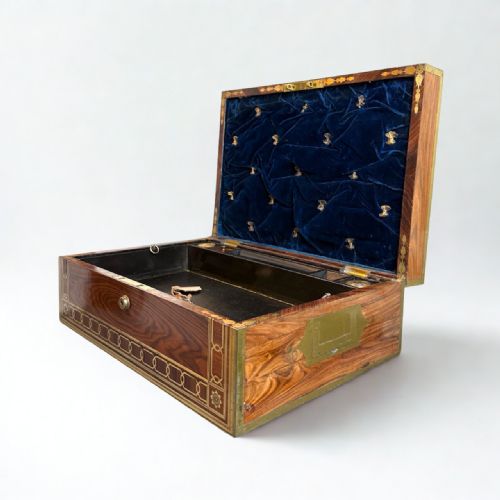
You are most likely to meet mid-nineteenth-century Victorian examples and Regency pieces on this page. They typically feature hinged folding lids, fitted interiors for writing implements, and protective brass binding to withstand rough journeys.
The selection spans various regional interpretations, including Anglo Indian and Chinese Huanghuali variations alongside standard British forms. Each piece reflects the functional requirements of nineteenth-century desk work away from a permanent home.
How They Were Made
Cabinet makers utilised dense rosewood as the primary carcass timber, often complemented by secondary woods like mahogany. Surfaces were frequently embellished with contrasting boxwood inlay or bone inlay to define the edges and escutcheons.
Metalworkers reinforced vulnerable corners and edges with brass mounts and heavy brass binding secured by small pins. Inside, carpenters fitted secret drawers, pen trays, and slant compartments designed to fold flat for transit.
Secret drawers often require pressing a hidden wooden spring to release, proving that Victorian officers loved a tiny puzzle before breakfast.
What Varies in Quality
The distinction between ordinary utility items and superior examples lies in the precision of the brass work and the selection of the timber. Finer boxes display tightly fitted corner joints, flush brass inlays, and carefully matched rosewood grain across the folding surfaces.
Internal complexity also separates grades, with better pieces incorporating concealed locking mechanisms and secret drawers operated by hidden releases. The presence of original working keys and well-preserved internal leather writing surfaces further distinguishes the finer specimens.
The Rosewood Campaign Writing Box Glossary
- Campaign writing slope
- A portable desk with a slanted top that folds flat, designed for military officers on active service. These boxes house compartments for inkwells, pens, and paper.
- Brass bound
- The method of reinforcing box corners and edges with countersunk brass strips and corner pieces. This protected the timber from the knocks of military transport.
- Secret drawers
- Hidden compartments tucked behind false partitions or released by internal wooden pins. They provided secure storage for currency and sensitive correspondence.
- Escutcheon
- A decorative brass plate surrounding a keyhole that strengthens the timber around the lock. On campaign boxes, these are typically countersunk flush with the wood.
- Huanghuali
- A fragrant tropical hardwood used in Chinese furniture production. Pieces utilising this timber display distinctive grain patterns and warm colouration.
Rosewood Campaign Writing Box: Frequently Asked Questions
What is a campaign writing box?
A campaign writing box is a portable desk made to travel with military officers and officials during the nineteenth century. They fold down into compact, durable blocks that protect writing materials during transit.
These boxes contain sloped writing surfaces, inkwells, and compartments for paper and pens. They served as mobile offices for people stationed away from permanent administrative centres.
How do I date a rosewood box?
Dating relies on construction methods, hardware styles, and the specific mix of timbers. Georgian and Regency boxes often feature sharper brass corners and simpler internal layouts, while Victorian versions incorporate more elaborate stationery compartments.
Examining the hinges, locks, and secondary woods helps place the piece within the nineteenth century. Regional variations, such as Anglo Indian or Chinese pieces, also carry distinctive decorative traits tied to their specific eras.
Were these used in the military?
Many of these boxes were commissioned or purchased by officers serving in the British military during campaigns abroad. The brass binding and sturdy rosewood construction were specifically chosen to withstand rough handling on ships and horseback.
Some pieces also served civilian administrators, diplomats, and colonial travellers who needed a secure place to write letters while moving between locations.
How do I care for rosewood furniture?
Rosewood benefits from stable indoor humidity and protection from direct sunlight to prevent the timber from drying out. Dusting with a soft cloth keeps the surface clean without requiring heavy polishes.
Leather writing inserts inside the slopes should be kept dry and treated gently. Metal brass mounts can be cleaned lightly if tarnished, though many collectors prefer to leave the aged patina undisturbed.