

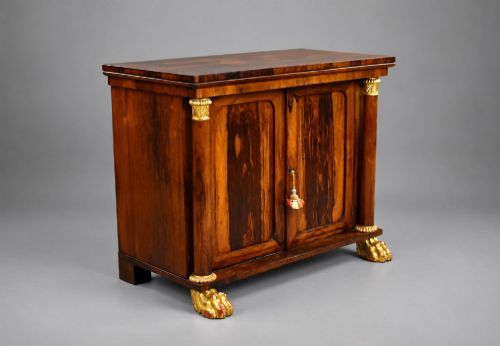
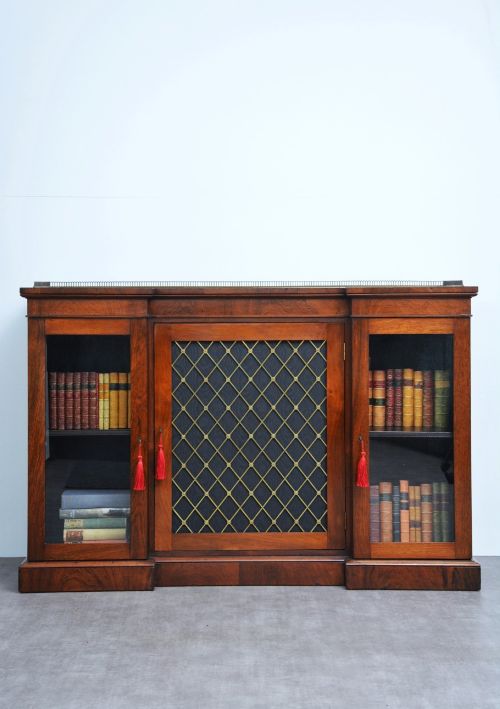
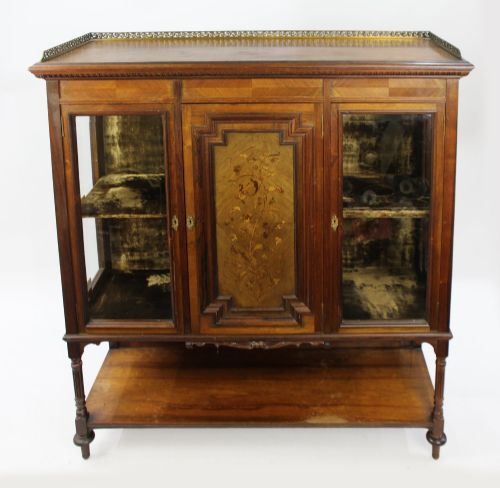
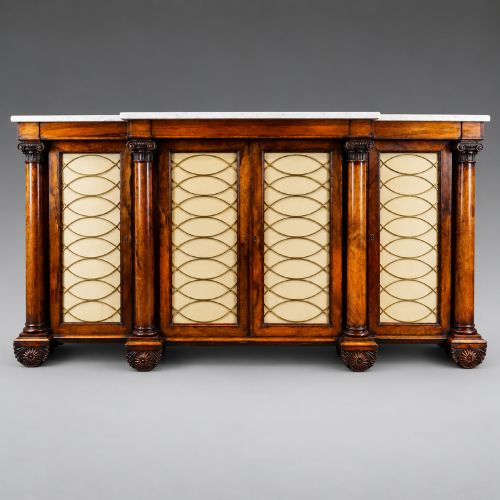
Rosewood Cabinet with Doors
A rosewood cabinet with doors is a dense, figured piece of brown furniture built to hold books, linen or china.
Rosewood Cabinet with Doors
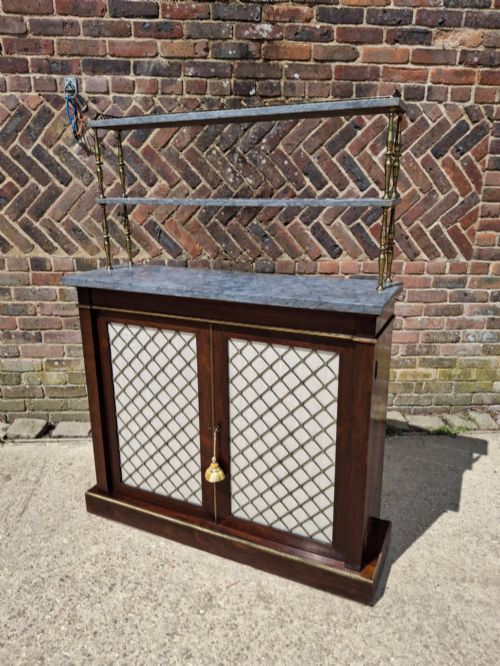
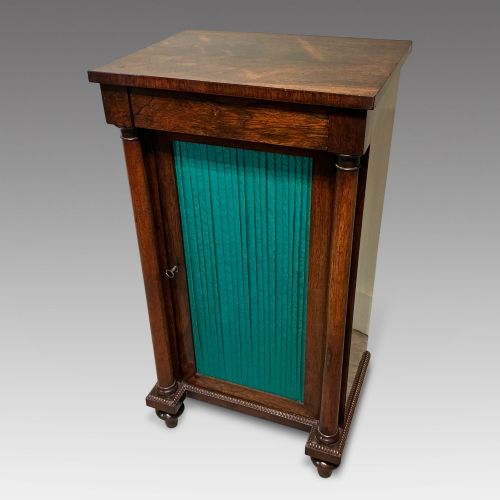
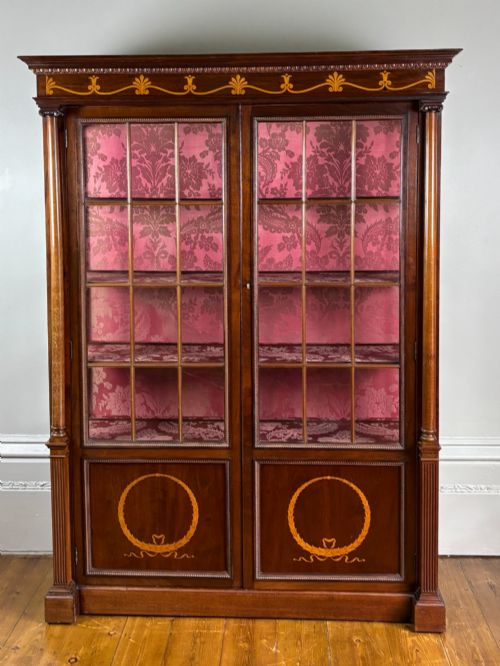
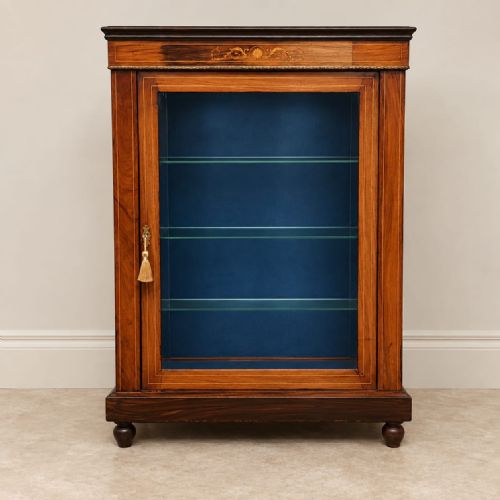
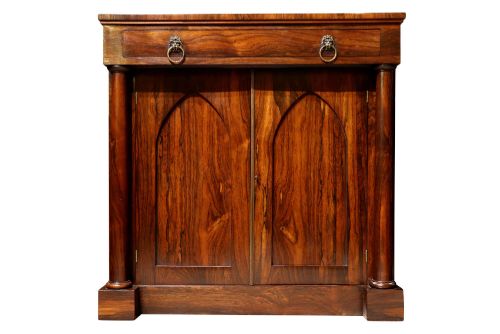
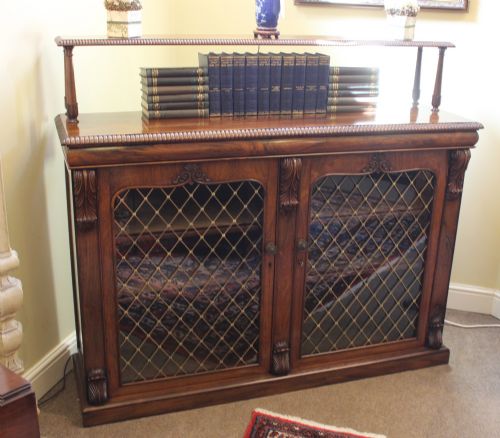
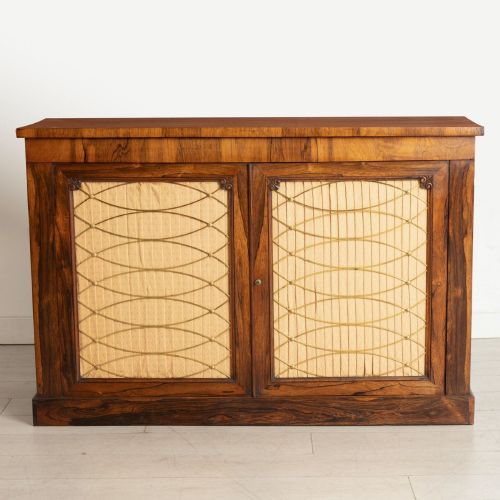
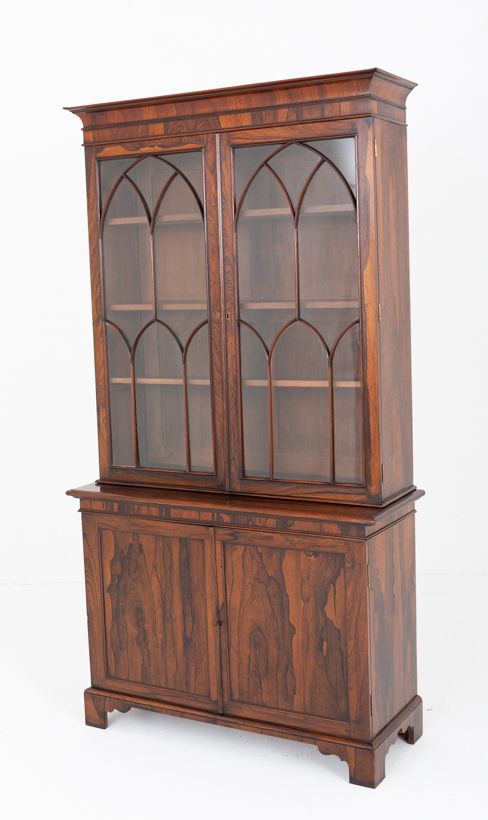
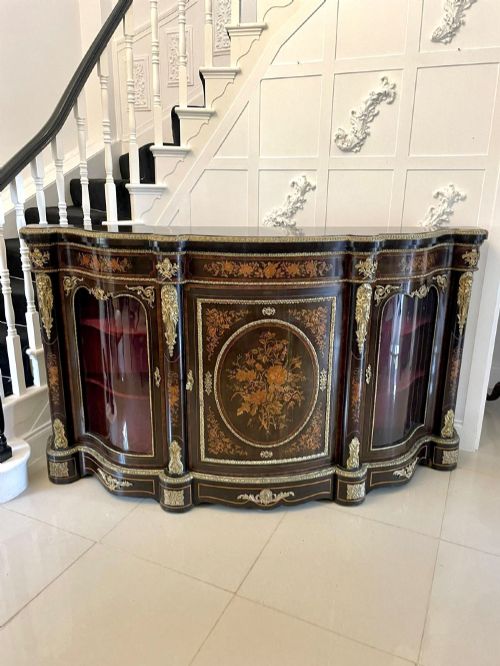
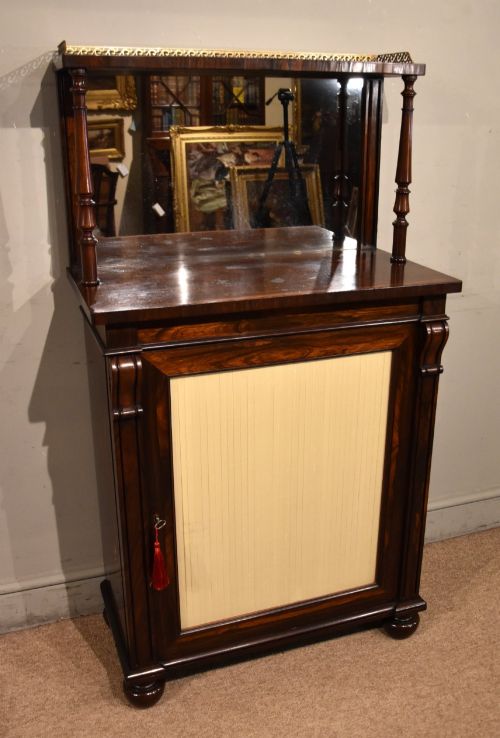
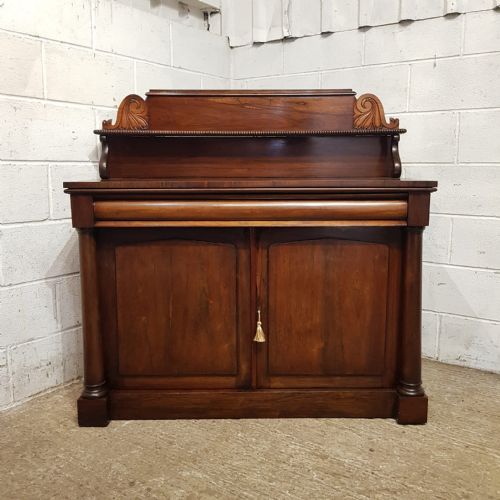
A rosewood cabinet with doors spans several periods from the Georgian and Regency eras through the Victorian decades to the Edwardian years. The selection runs from simple cupboards and chiffoniers to breakfront side cabinets, credenzas and glazed display cases.
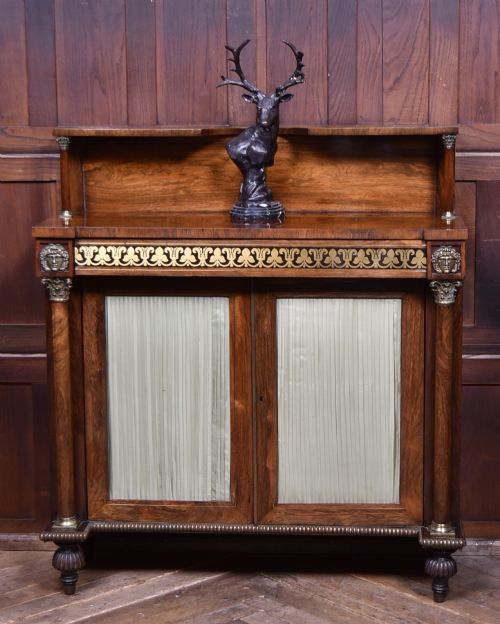
Chiffoniers dominate the forms on this page, offering low enclosed storage often topped with shelves or a mirror. Side cabinets and breakfront pieces provide wider proportions and more complex internal compartments for the dining room or drawing room.
Origins stretch from the early nineteenth century into the late nineteenth century. Makers applied dense tropical timbers to functional domestic carcases with varying degrees of architectural ornament.
How they were made
Makers utilised solid rosewood and veneers applied over secondary carcase timbers, sometimes substituting simulated grain finishes on simpler Regency carcases. Timber selection prioritised rich dark figures and contrasting lighter wood tones.
Brass inlay, boxwood stringing and mirror glass enhance the door panels and friezes. Internal components feature fabric linings, adjustable timber shelves and brass grille inserts set into wooden frames.
Rosewood Cabinet with Doors Retail Price Guide 2026
Typical asking prices for rosewood cabinet with doors among the pieces listed under this phrase on Sellingantiques today, from the lower quarter to the upper quarter. They describe what is for sale here now, not the wider market.
Listings feature Regency, Victorian and Edwardian periods, utilising rosewood, goncalo Alves, brass inlay and mirror glass.
What varies in quality
The refinement of the timber figure and the precision of the boxwood or brass inlay set one piece apart from another. Grain matching across multiple cabinet doors shows the care taken in the initial workshop.
Architectural details such as barley twist columns, Gothic panelled doors and breakfront proportions indicate ambition in design. The integration of original brass grilles and bevelled mirror glass elevates the piece further.
The Rosewood Cabinet with Doors Glossary
- Chiffonier
- A low sideboard or cabinet with doors below, frequently fitted with a shelf or superstructure on top. It served as convenient storage in nineteenth-century parlours.
- Breakfront
- A cabinet design where the central section projects forward from the flanking sides. This creates depth and visual rhythm across the piece.
- Goncalo Alves
- A dense exotic hardwood with striking dark brown and pale yellow figuring, often used in high-status Regency furniture. It shares visual similarities with rosewood.
- Boxwood Inlay
- Fine lines or geometric patterns of pale boxwood set flush into the dark rosewood surface. This technique creates crisp contrast and border definition.
- Credenza
- A decorative side cabinet, typically low to the ground and enclosed by doors, often featuring mirror glass or glazed panels. Victorian iterations were display-oriented.
Rosewood Cabinet with Doors: Frequently Asked Questions
What is a rosewood chiffonier?
A chiffonier is a specific type of low cabinet featuring enclosed doors at the base and often a raised shelf or mirror above. It became a staple domestic form during the Regency and Victorian periods.
These pieces sat against drawing room or dining room walls to store linens, silver or books while displaying decorative objects on top.
How do I date a rosewood cabinet?
Dating relies on architectural styles, timber treatments and construction methods visible in the frame and doors. Regency and Georgian pieces show classical restraint or Gothic revival panels, while Victorian examples introduce heavy columns and profuse inlay.
Simulated grain finishes often point to early nineteenth-century Regency production, whereas Edwardian items incorporate lighter mahogany pairings and refined stringing.
Where should I place a side cabinet?
These cabinets suit dining rooms, hallways and drawing rooms where low horizontal furniture balances vertical wall space. Their enclosed doors conceal storage while the top surface holds lamps, books or ceramics.
Keep them away from direct sunlight and strong heat sources to protect the rosewood veneer and polishes from drying out.
What is simulated rosewood?
Simulated rosewood is a decorative finish where a craftsman paints or stains a common timber to mimic the dark grain and warm tones of genuine rosewood. This technique appeared on Regency furniture when exotic woods were expensive.
Close inspection reveals brushwork or underlying grain patterns that differ from tropical hardwoods.