



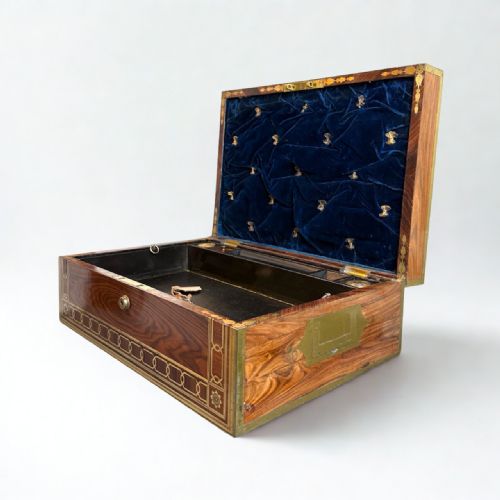
Rosewood Brass Box
A rosewood brass box brings together dense tropical timber and bright metal strapwork, offering a durable and decorative home for letters, writing implements and personal valuables.

Rosewood Brass Box
When searching for a rosewood brass box, a buyer encounters a diverse range of portable containers designed for writing, correspondence and safekeeping during the Georgian, Regency and Victorian eras.
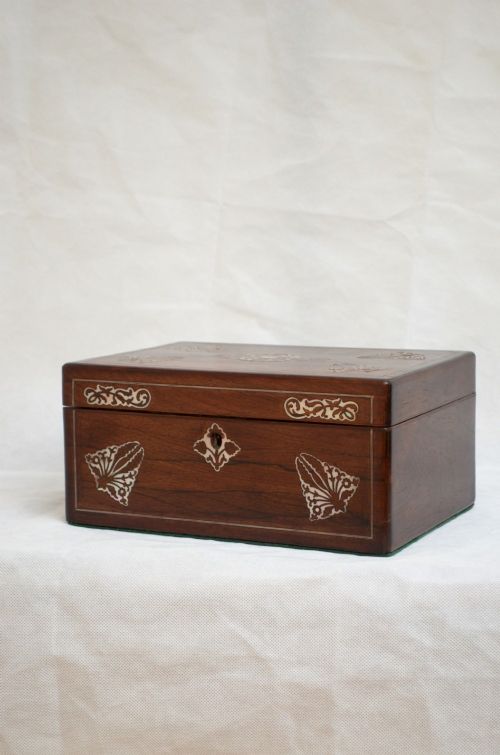
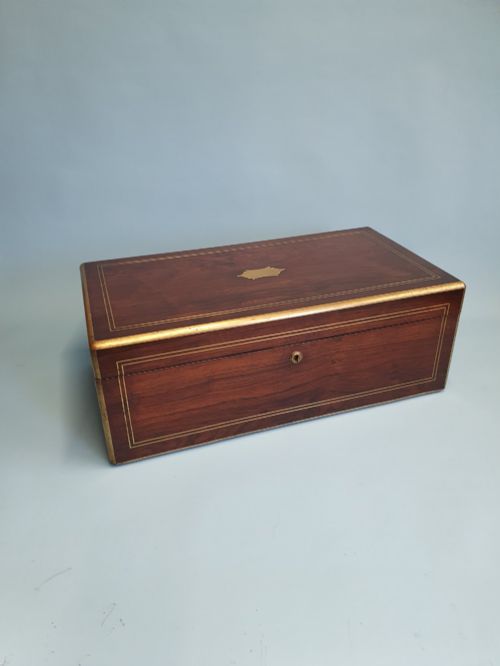
The most common examples on this page are writing slopes, jewellery boxes and tea caddies, which combine rich, dark timber with geometric brass inlay or protective corner straps.
These pieces originated as functional possessions for travellers and affluent households, spanning periods from the mid-eighteenth century through to late-nineteenth-century manifestations.
Materials and construction methods
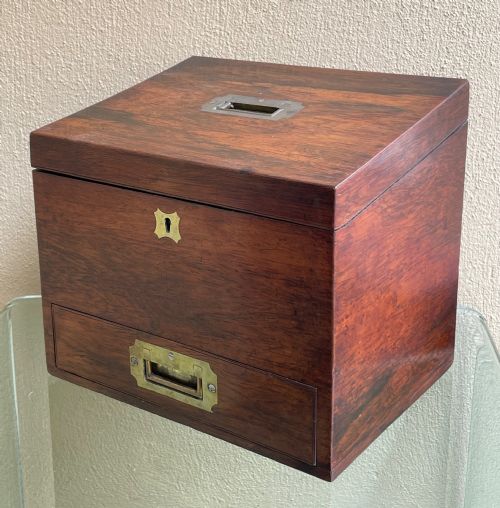
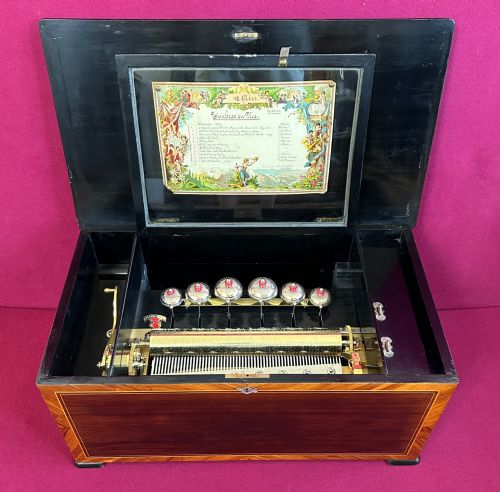
Cabinet makers utilised dense, richly figured rosewood as the primary carcass timber, often incorporating secondary woods such as boxwood and mahogany for internal partitions and contrasting stringing.
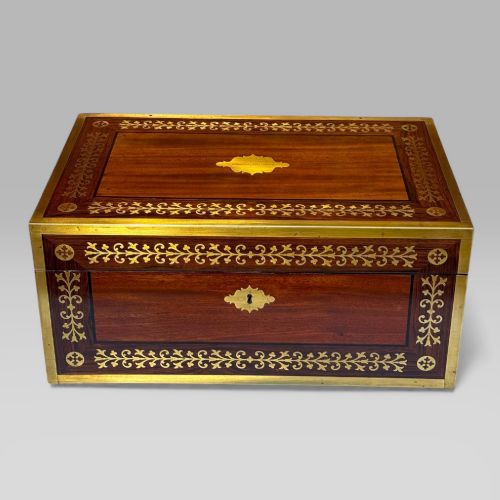
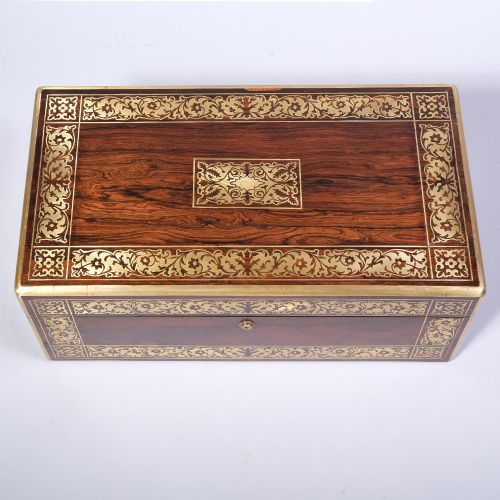
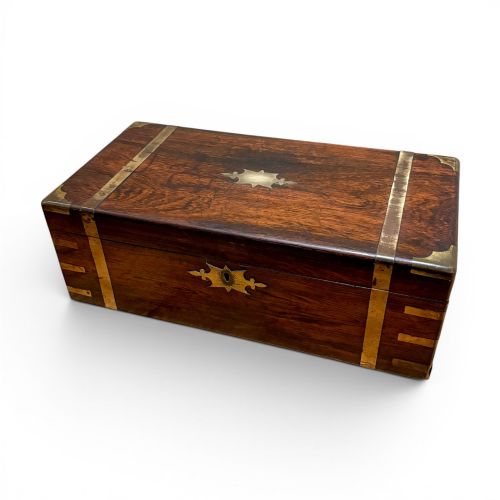
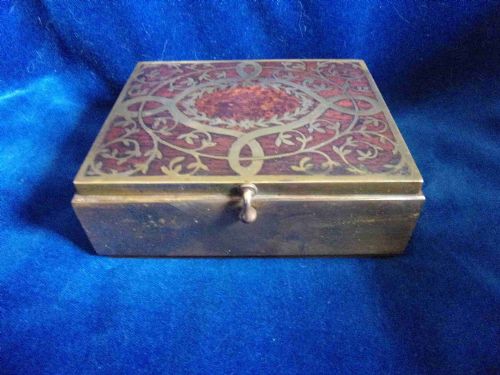
Brass was employed either as flat plate inlay cut into precise geometric motifs or as heavy edge binding and corner mounts designed to withstand the rigours of travel.
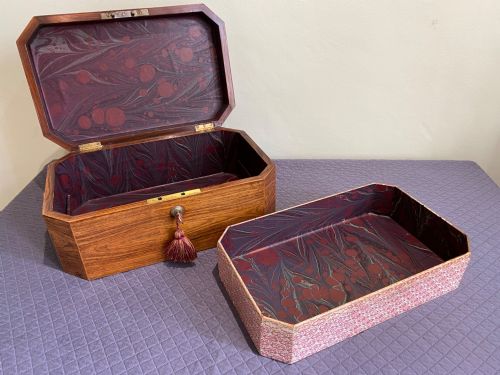
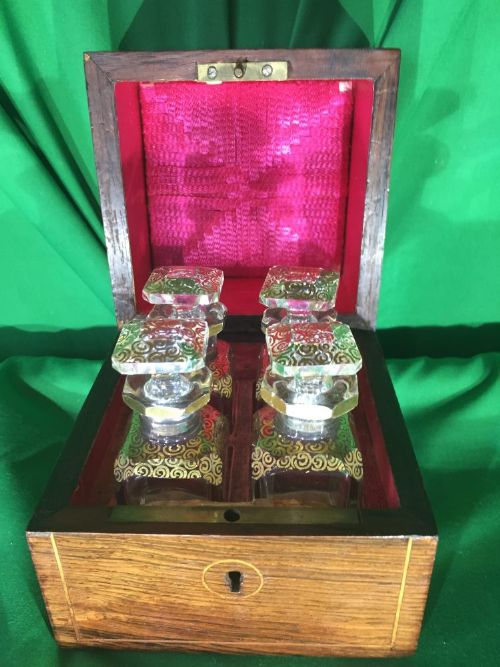
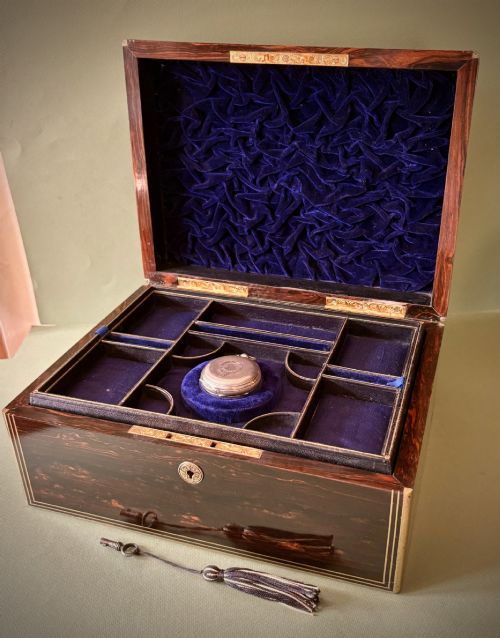
Interiors frequently featured fitted compartments lined in velvet or fabric, alongside specialised glass bottles, steel implements and secret drawers concealed behind sliding panels.
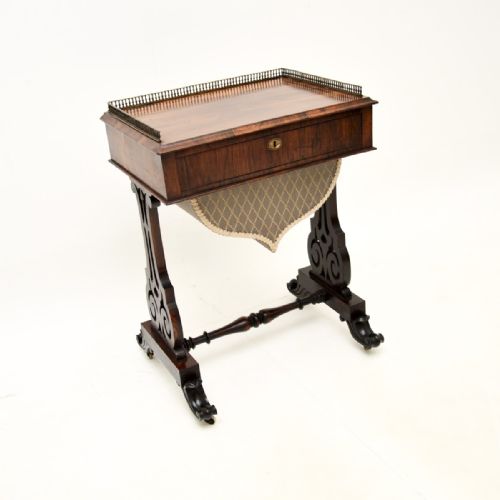
Listings demonstrate that rosewood boxes span multiple centuries, appearing frequently in Regency and Victorian styles alongside specialised forms such as tea caddies and campaign chests.
Distinctions in execution and design
The calibre of a piece rests upon the precision of the brass inlay work and the harmonious grain matching of the rosewood veneers across the lid and sides.
Superior examples exhibit fully intact internal fittings, original working locks with keys, and complex secret compartments rather than later replacement elements.
Proportion and restraint separate masterwork items from standard utilitarian containers, where the placement of brass straps accentuates the natural beauty of the wood rather than overwhelming it.
Erhard and Sohne·Thomas Briggs
The Rosewood Brass Box Glossary
- Writing slope
- A portable desk with a hinged, slanted surface that opens to reveal a storage compartment for paper and stationery.
- Campaign box
- A sturdy container reinforced with brass corners and flush handles, built for transport by military officers on active service.
- Tea caddy
- A small lidded chest designed to store loose tea leaves securely, often featuring internal compartments and a lock.
- Sarcophagus
- A box shape featuring a domed lid and flared base, reminiscent of classical monumental tombs popular during the Regency period.
- Escutcheon
- A protective metal plate surrounding a keyhole, frequently cast in brass to match the exterior strapping of the box.
Rosewood Brass Box: Frequently Asked Questions
What is inside a writing slope?
A writing slope typically contains a folding baize-lined writing surface, small compartments for inkwells, pens and stamps, and often hidden secret drawers behind removable partitions.
These internal spaces were engineered to keep correspondence organised and secure during transit.
How do I care for rosewood?
Rosewood requires stable humidity levels and protection from direct sunlight to prevent the dense timber from drying out or splitting.
An occasional light application of appropriate wax helps maintain the natural lustre of the polished surface without damaging the wood.
How do I date these boxes?
Dating relies on observing construction techniques, hardware styles, and the specific Regency or Victorian design motifs present in the brass inlay and internal layout.
Earlier Georgian examples tend to feature simpler brass mounts, whereas elaborate boullework and complex mechanisms often point toward the mid-to-late nineteenth century.
Were these used for travel?
Many of these pieces served as portable desks or dressing cases for wealthy travellers moving between residences or across colonies.
Heavy brass binding and recessed handles were specifically added to protect the corners and edges during rough journeys.