




Rosewood Bedroom Chair
A rosewood bedroom chair brings rich timber and refined carving into a private space, connecting modern rooms directly to nineteenth-century design.
Rosewood Bedroom Chair
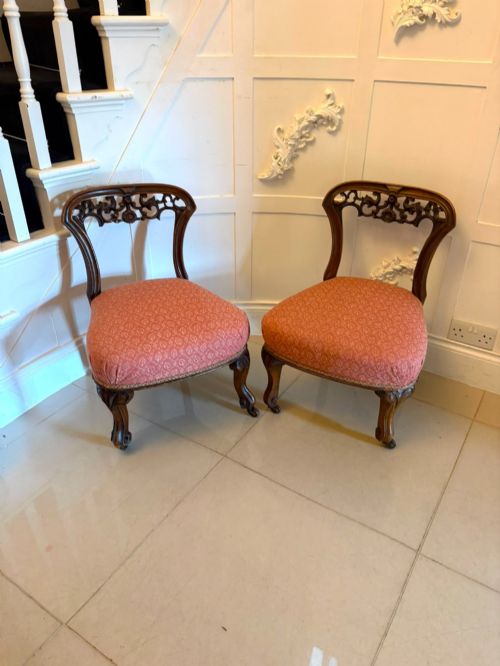
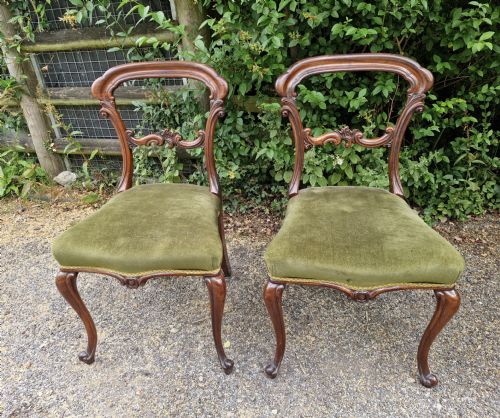
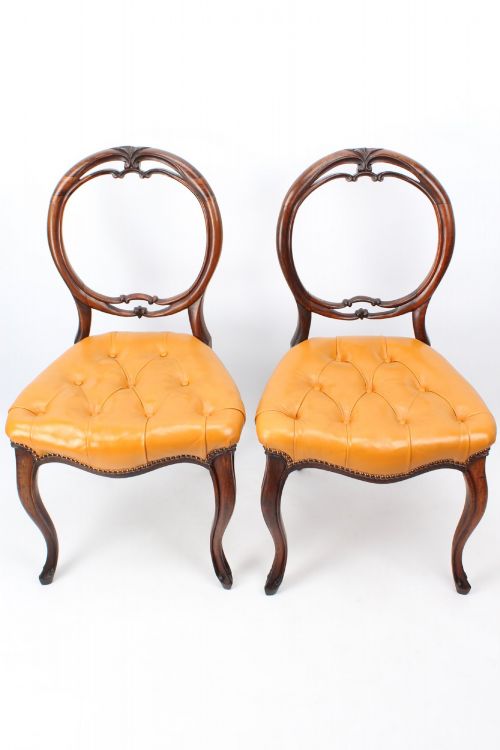
A rosewood bedroom chair combines domestic utility with decorative presence, appearing across Victorian, Edwardian, and Regency periods. These seating pieces take forms such as nursing chairs, slipper chairs, balloon back chairs, and low occasional chairs designed for intimate rooms.
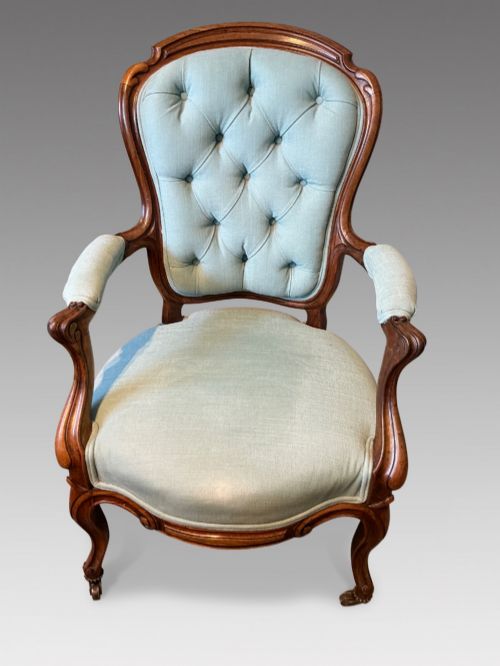
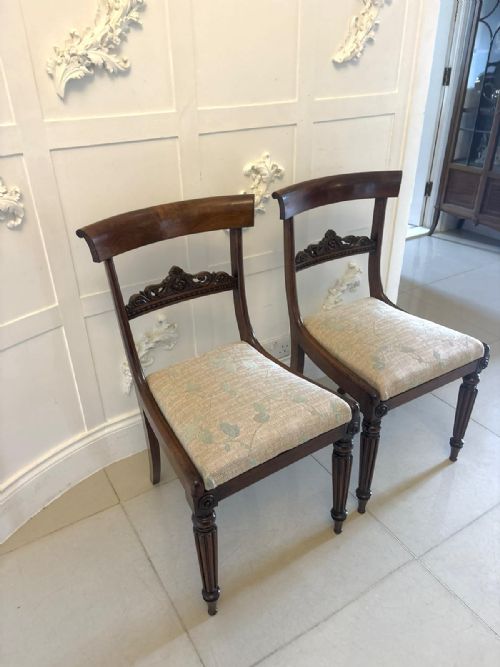
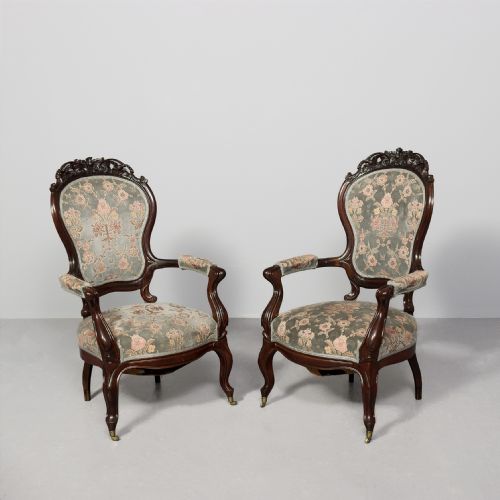
The pieces on this page lean heavily towards Victorian and Edwardian examples, alongside Regency and William IV iterations. Buyers frequently encounter side chairs, armchairs, and specialised low seating intended for bedrooms and dressing rooms.
Makers such as Marsh, Jones and Cribb produced pieces that survive alongside anonymous workshop output from the mid to late nineteenth century. The selection ranges from plain turned frames to elaborate inlaid salon and corner chairs.
Materials and construction methods
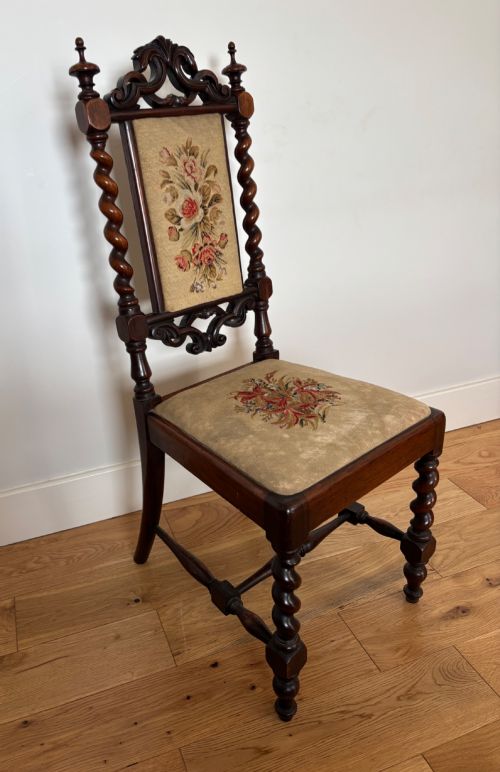
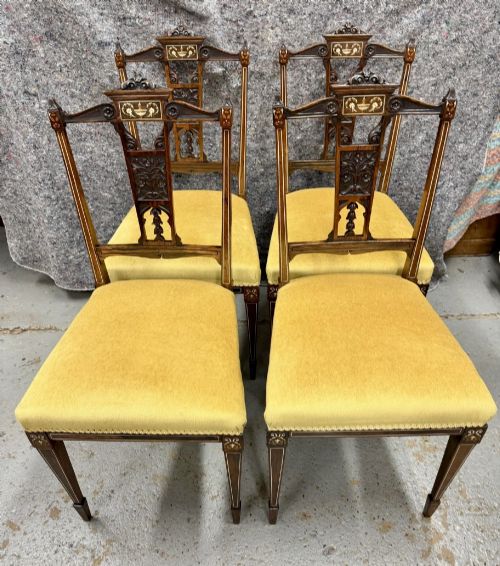
Constructed primarily from solid rosewood or utilising simulated rosewood finishes, these chairs often incorporate contrasting boxwood inlay, marquetry, and brass elements. Frames employ traditional joinery to support delicate cabriole legs, barley twist turnings, and carved balloon backs.
Upholstery relies on traditional stuffing methods finished with fabrics, velvet, red leather, or tapestry seats. Secondary woods and cane panels occasionally support the primary rosewood structure, depending on the specific period and regional workshop practice.
Some nineteenth-century chairs include tiny prayer desks attached to the back for morning devotions.
Assessing quality in rosewood seating
Quality rests in the crispness of the woodcarving, the depth of the rosewood grain, and the precision of any boxwood inlay or marquetry. Superior examples display harmonious proportions, substantial solid timber framing rather than superficial veneering, and intact period upholstery materials.
Subtle differences distinguish standard production pieces from finer cabinetmaker output, particularly regarding the fluidity of cabriole legs and the tightness of structural joinery.
Marsh, Jones and Cribb
The Rosewood Bedroom Chair Glossary
- Rosewood
- A dense, dark timber prized for its distinctive grain patterns and deep colour. It forms the primary structural and visual medium for these chairs.
- Balloon back
- A rounded, oval-shaped chair back resembling a balloon silhouette. This form gained immense popularity during the Victorian era.
- Nursing chair
- A low-seated chair historically designed for comfortable feeding or nursing infants. Their compact height suits bedroom and dressing room placement.
- Prie Dieu
- A devotional prayer chair featuring a high back often topped with a rest shelf. These pieces frequently appear in nineteenth-century domestic interiors.
- Marquetry
- Decorative patterns formed by fitted veneers applied to a wood surface. Edwardian makers utilised this technique extensively on salon furniture.
Rosewood Bedroom Chair: Frequently Asked Questions
Are rosewood bedroom chairs sturdy enough for daily use?
Most rosewood bedroom chairs are structurally sound for light daily seating, though certain low nursing chairs and delicate inlaid salon pieces function best as accent furniture.
Buyers should consider the original domestic purpose of these chairs when planning their placement in modern rooms.
How do I distinguish a Victorian rosewood chair from an Edwardian one?
Victorian chairs tend to feature heavier carved rosewood frames, balloon backs, and deep buttoned upholstery or needlework. Edwardian examples often incorporate lighter proportions with bright marquetry and inlaid boxwood detailing.
Examining the turning style and overall weight usually clarifies the period of manufacture.
What is simulated rosewood?
Simulated rosewood is a secondary timber, such as beech, painted or stained by craftsmen to mimic the distinct grain and rich tones of genuine rosewood.
This technique provided an accessible alternative during the Regency and Victorian periods while maintaining a uniform aesthetic.
Where were these chairs used in a historic home?
These chairs were typically placed in bedrooms, dressing rooms, and private sitting parlours rather than formal dining rooms. Low profiles made them suitable for private quarters and personal grooming spaces.
Their decorative forms allowed them to double as occasional seating in reception rooms.
Can I mix different styles of rosewood chairs together?
Mixing various nineteenth-century styles, such as pairing a balloon back side chair with an occasional chair, creates a collected interior. Shared rosewood tones provide a visual anchor across different chair forms.
Matching pairs offer symmetry, while single examples introduce individual character to a room.