




Rose Still Life Artwork
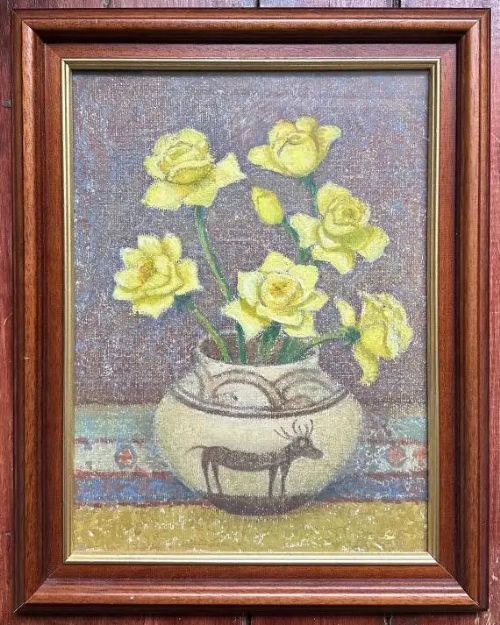
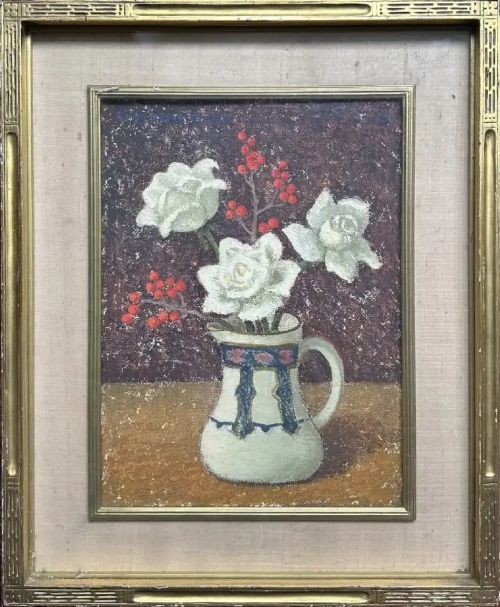
Rose still life artwork brings floral subjects indoors through oil, watercolour and pastel on canvas, board and paper.
Rose Still Life Artwork
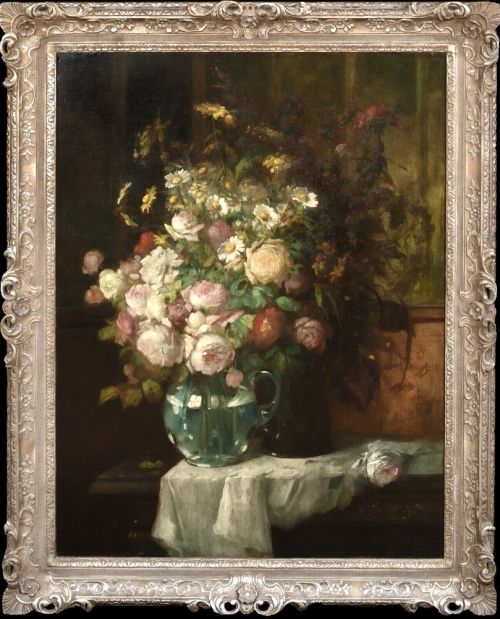
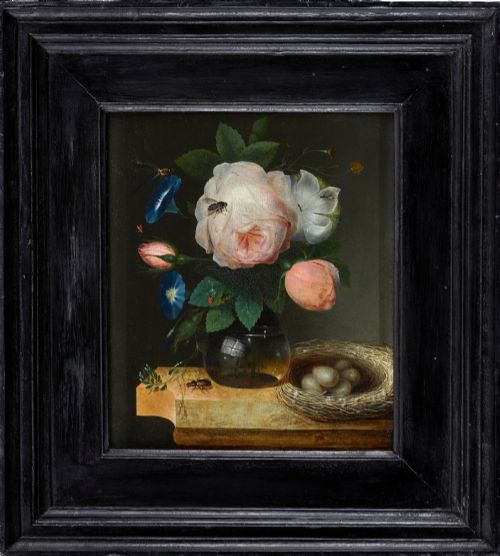
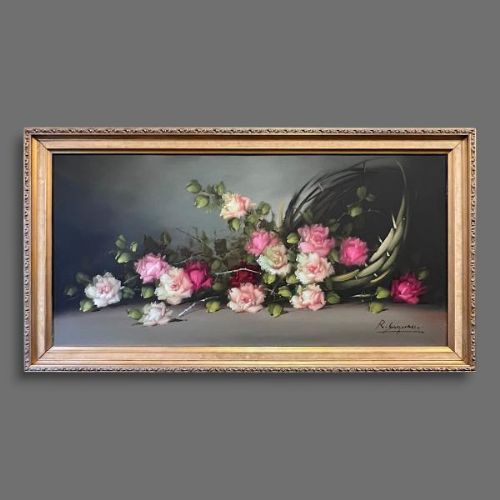
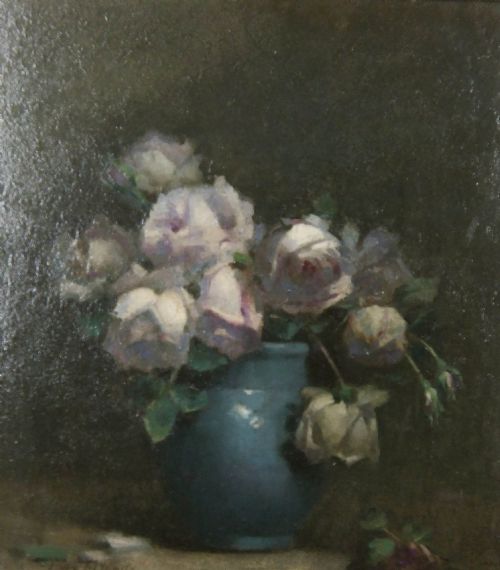
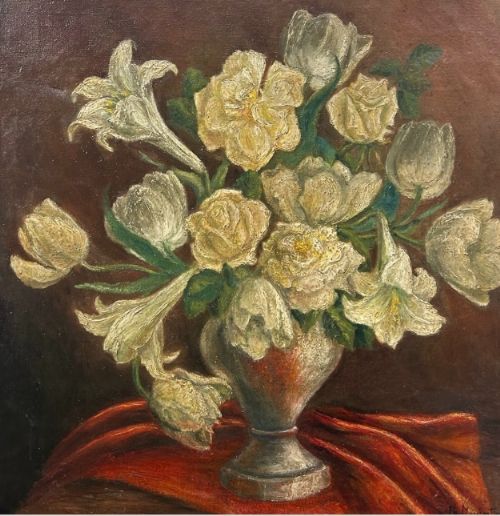
A rose still life artwork captures floral subjects arranged in vases, baskets or upon draped cloth, rendered primarily through oil paint on canvas and board. These pieces emerge from periods spanning the Victorian era through the mid-twentieth century, including British and American Impressionism alongside Art Nouveau.
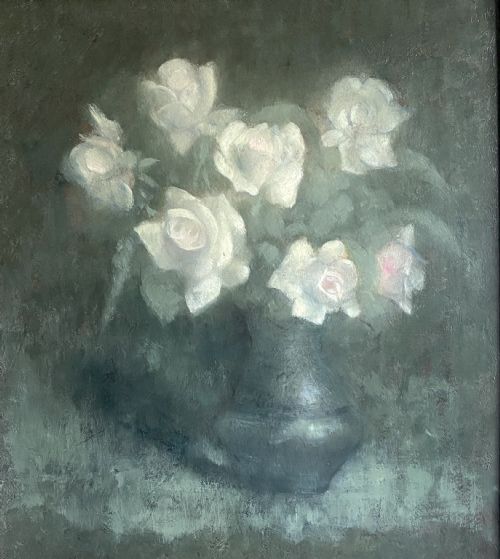
Buyers frequently encounter nineteenth-century works and mid-century modern interpretations featuring yellow, red and white roses. Painters apply traditional mediums to construct compositions that range from simple botanical studies to complex arrangements incorporating fruit and glassware.
Materials and Techniques
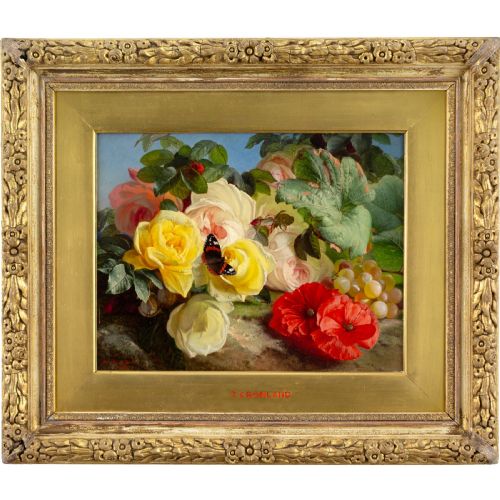
Painters utilise oil paint and occasionally watercolour or pastel, applying pigment to stretched canvas, wooden board or heavy paper supports. Works often sit within wood frames, sometimes finished with gold leaf or gilding.
Artists build texture through layered brushwork on canvas or delicate washes on paper, capturing the ephemeral quality of petals. Supports range from sturdy wood panels to woven canvas primed for oil application.
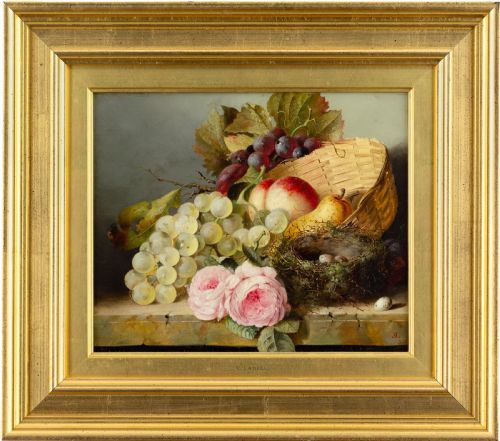
Several floral arrangements share table space with unexpected visitors like butterflies and wicker baskets filled with peaches and grapes.
Judging Quality
Distinctions in quality rest upon the handling of light, shadow and spatial depth within the floral arrangement. Skilled painters render the translucency of petals and the varied textures of foliage with assured brushwork rather than rigid outlines.
The sophistication of the composition and the stability of the support material also set works apart. Well-preserved surfaces on canvas or board retain vibrant pigment without excessive cracking or canvas sagging.
Theude Gronland·Konstantin Stoitzner·Edward Ladell·Emma Fordyce MacRae·Gaspar Peeter Verbruggen·William Thomas Wood·Stuart Armfield·James Stuart Park·Ernest Higgins Rigg·Owen Bowen·Jules Felix Ragot
The Rose Still Life Artwork Glossary
- Oil on canvas
- Pigment mixed with drying oil applied to a woven fabric support stretched over a wooden frame. This combination allows for rich colour blending and textured impasto work.
- Oil on board
- Pigment applied to a rigid wooden panel or fibreboard base. This firm support prevents the flexing often associated with canvas.
- Impressionism
- A style focused on capturing transient effects of light and atmosphere through visible brushstrokes. Artists working in this manner prioritize overall visual impression over meticulous detail.
- Art Nouveau
- A decorative style characterised by flowing, organic lines and floral motifs popular around the turn of the twentieth century. Works from this period often emphasise natural asymmetry.
- Watercolour
- A paint consisting of water-soluble pigment applied to paper supports. It yields transparent washes that rely on the white of the paper for luminosity.
Rose Still Life Artwork: Frequently Asked Questions
What periods do these paintings come from?
The selection spans from the seventeenth century through the Victorian era and into the mid-twentieth century. Mid-century modern and impressionist examples appear alongside earlier Victorian works.
Dates are determined by stylistic evidence, artist signatures and the physical composition of the canvas and frame.
How should I hang and display an oil painting?
Keep paintings away from direct sunlight and sources of extreme heat or humidity to protect the canvas and oil paint. Ensure the wall fixings match the weight of the wooden frame.
Allow air circulation behind the canvas and avoid damp interior walls.
What is the difference between canvas and board?
Canvas consists of woven fabric stretched across a wooden stretcher frame, providing a slightly flexible surface. Board is a rigid wooden or composite panel that offers a completely firm foundation for the paint.
Both materials support oil applications but age with different structural characteristics.
How do I identify a watercolour from an oil painting?
Waterworks typically display transparent washes on paper and require glass protection in the frame. Oil paintings feature thicker, opaque pigment on canvas or board with a textured surface.
Examining the support under close light reveals whether the medium sits on paper or woven fabric.