


Room Size Oriental Rug
A room size oriental rug anchors a large interior with centuries of woven tradition, bringing generous scale and intricate regional patterns directly to your floor.
Room Size Oriental Rug
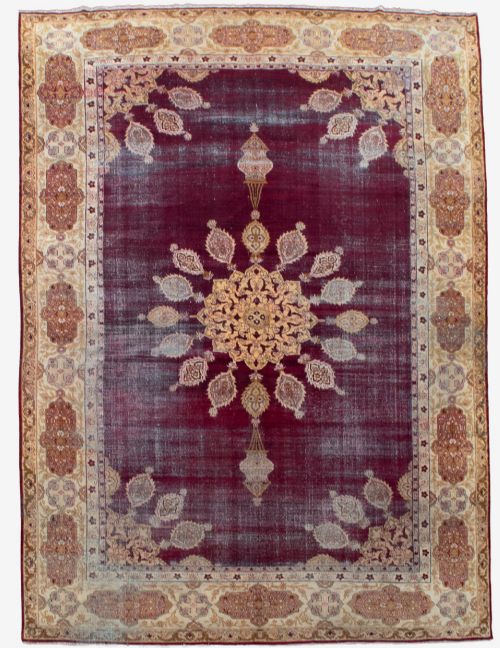
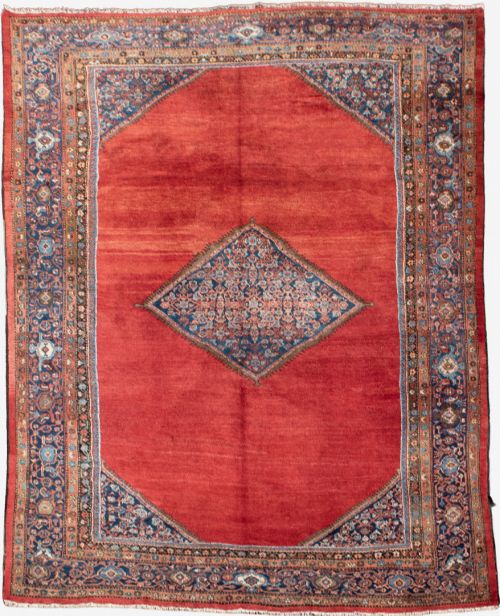
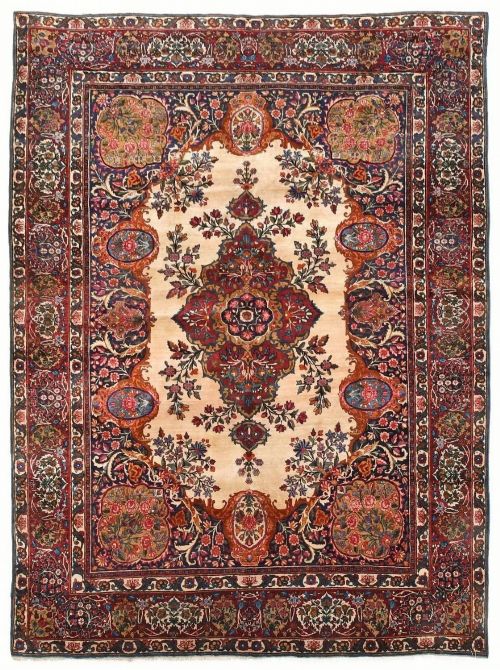
A room size oriental rug provides substantial floor coverage designed for principal living spaces and country houses, frequently measuring over three metres in length. These pieces originate from major weaving centres across Persia, Turkey, India, and China, spanning from the nineteenth century into the twentieth century.
The selection on this page relies heavily on Persian regional designs, notably Heriz, Kirman, Tabriz, and Ferahan carpets, alongside Turkish Oushak and Indian Amritsar productions. Buyers encounter large-scale formats that serve as central floor decorations, often categorised simply as carpets, rugs, or kilims.
Production dates across the listed items concentrate heavily around the late nineteenth century and the early decades of the twentieth century, providing established historical depth. These large floor coverings reflect the specific aesthetic and structural traditions of their distinct geographical origins.
Materials and construction
Construction relies upon a foundation of durable cotton warp and weft threads, which support a dense pile hand-knotted from sheep wool. Certain flatweave variants such as kilims utilise interlocking weft techniques without a raised pile.
Natural dye components and traditional hand-knotting methods create the foundation of these textiles, yielding deep colour saturation across large surfaces. Artisans work on upright looms, tying precise knots to form complex traditional motifs and field patterns.
The listings feature traditional wool and cotton carpets originating from Persia, Turkey, India, and China across the nineteenth and twentieth centuries.
Variations in quality
Quality varies according to the fineness of the knotting density and the precision with which intricate medallion or floral designs are executed across a large surface. Finer examples display superior handling of curvilinear or geometric drawing, reflecting the skill of the original workshop weavers.
The condition of the wool pile and the integrity of the cotton foundation determine the durability and visual impact of each carpet. Original edge bindings and balanced proportions also distinguish superior country house carpets from standard domestic pieces.
Ziegler and Co·Hajji Jalili
The Room Size Oriental Rug Glossary
- Kilim
- A flatwoven carpet or rug made without a pile, produced by tightly interweaving warp and weft threads to create flat geometric patterns.
- Medallion
- A large central ornamental design motif placed in the middle of the carpet field, frequently seen in Persian traditional weaving.
- Warp
- The stationary vertical threads stretched onto a loom that form the structural backbone of a woven carpet.
- Weft
- The horizontal threads passed through the warp threads to bind the knots and secure the structure of the rug.
- Field
- The central background area of a carpet enclosed by the outer decorative borders.
Room Size Oriental Rug: Frequently Asked Questions
How do I clean a room size oriental rug?
Maintenance requires regular gentle vacuuming without rotating brush bars to protect the wool pile and cotton foundation. Professional specialist cleaning remains necessary for deep restoration.
Harsh chemical treatments and excessive water immersion damage natural dyes and historic fibres. Prompt attention to spills prevents staining while preserving the structural integrity of large carpets.
What rooms suit a room size oriental rug?
These large floor coverings suit principal reception spaces, dining rooms, and extensive hallways where generous dimensions balance substantial furniture. Their scale allows them to anchor seating groups effectively.
Placing a quality underlay beneath the carpet prevents slippage and reduces friction against wooden or stone floors. This protective layer cushions the heavy wool and cotton structure during daily use.
How do I identify a Heriz carpet?
Heriz carpets typically feature bold geometric medallions and robust corner spandrels woven with sturdy wool pile. Their designs originate from the Azerbaijan region in northwest Persia.
The drawing tends to be more architectural and angular compared to the fluid floral patterns found in Kirman or Tabriz productions. They are known for exceptional durability in large room formats.
What does room size mean for antique rugs?
Room size designates carpets built for substantial domestic spaces, generally measuring three metres or more in length. These formats were commissioned for nineteenth and early twentieth-century drawing rooms.
Such dimensions require significant labour and time on the loom, often involving multiple weavers working simultaneously. They represent the primary decorative investments of their original period.