
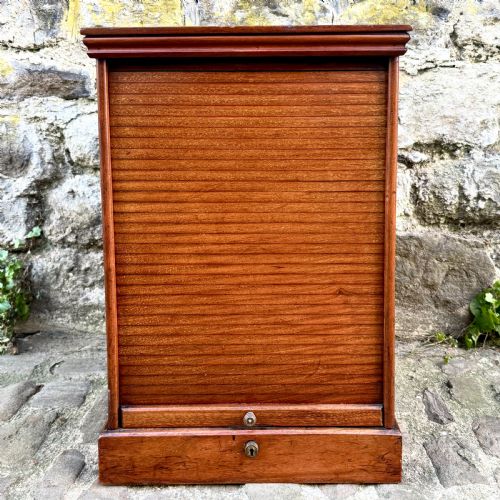
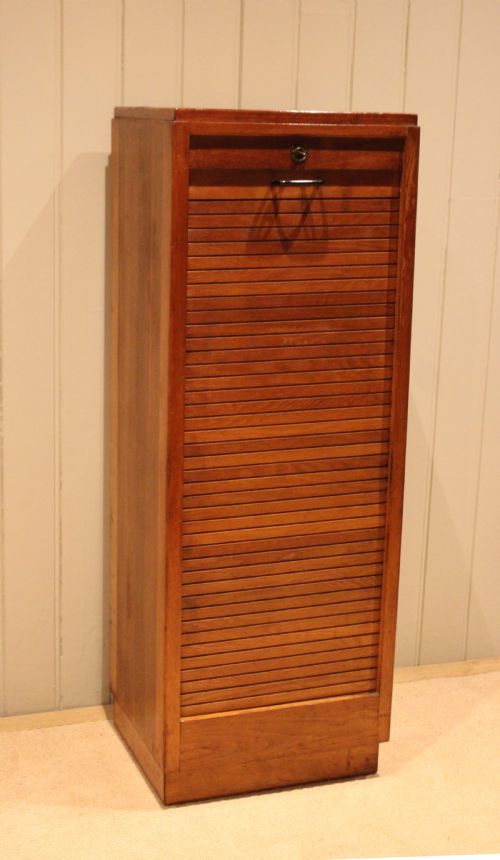
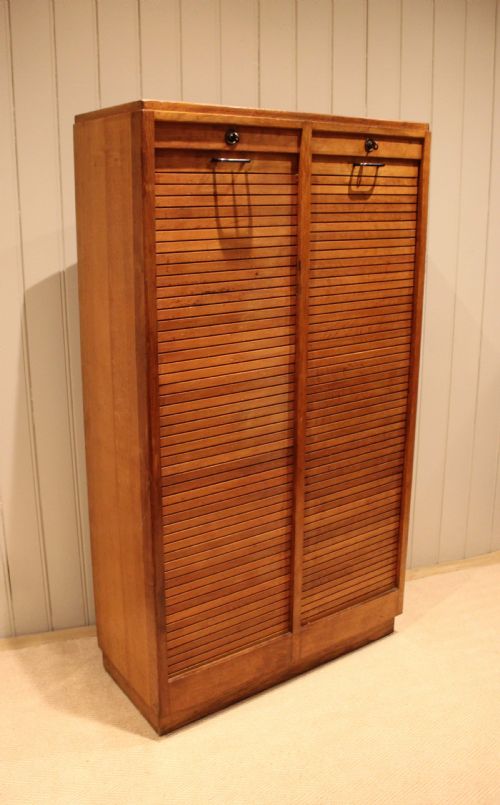
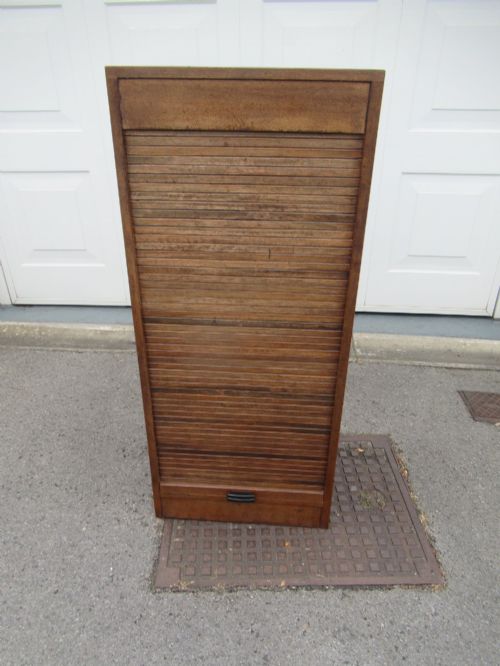
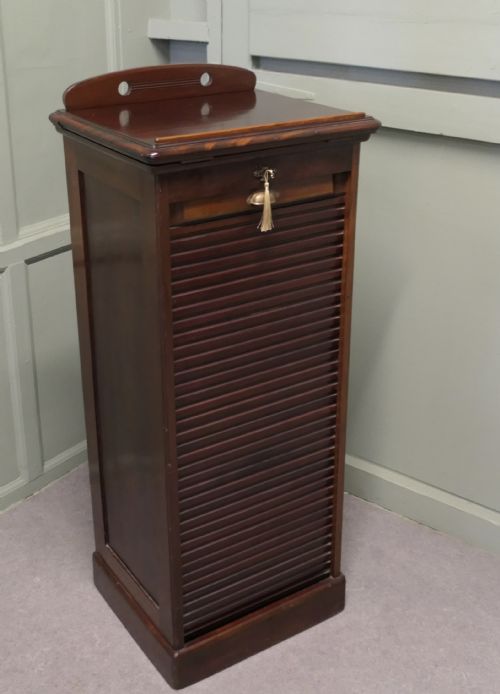


Roll Front Office Cabinet
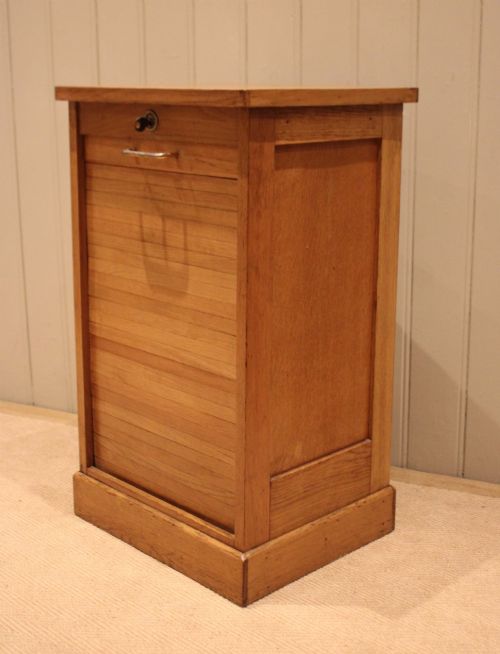
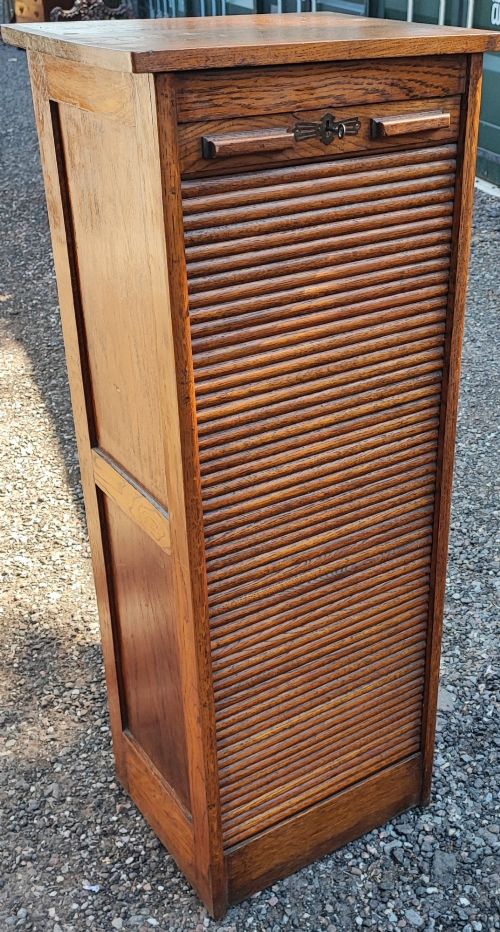
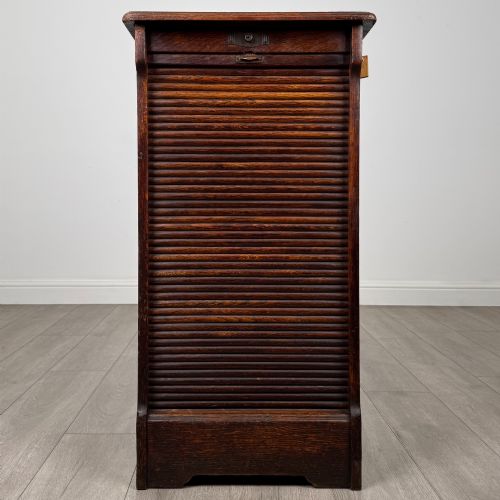
A roll front office cabinet is a practical piece of workspace furniture, built with flexible wooden slats that slide smoothly out of sight.
Roll Front Office Cabinet
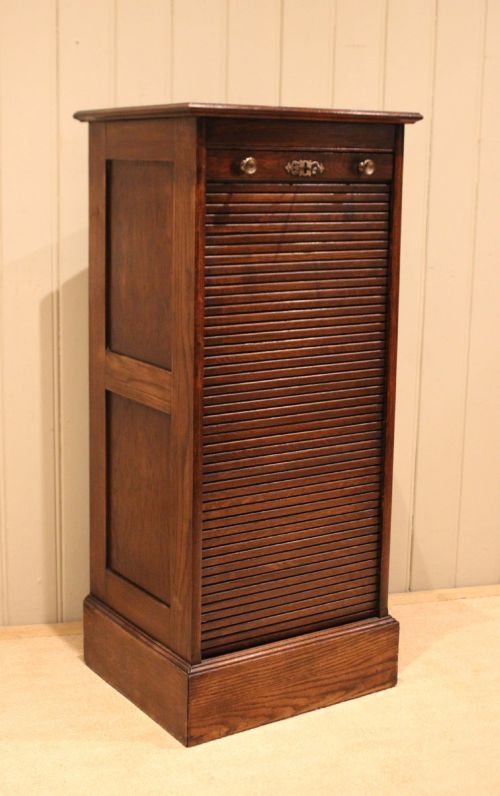
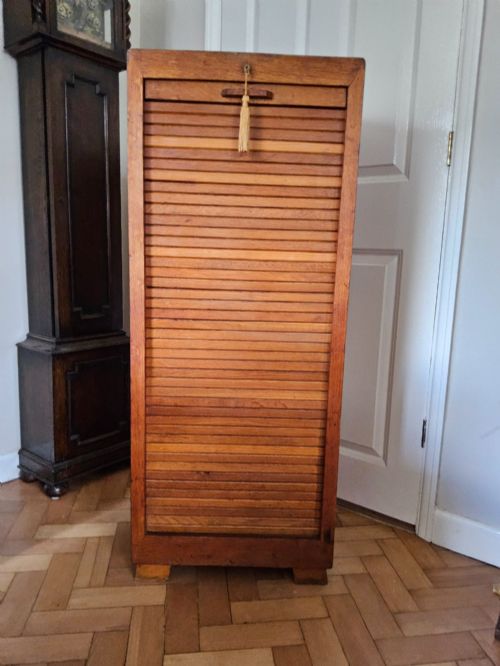
When you search for a roll front office cabinet, you encounter a specialised piece of administrative furniture designed to keep documents secure and organised. These items utilise a slatted cover, often called a tambour, which tracks around a curved path to enclose the interior shelves or drawers.
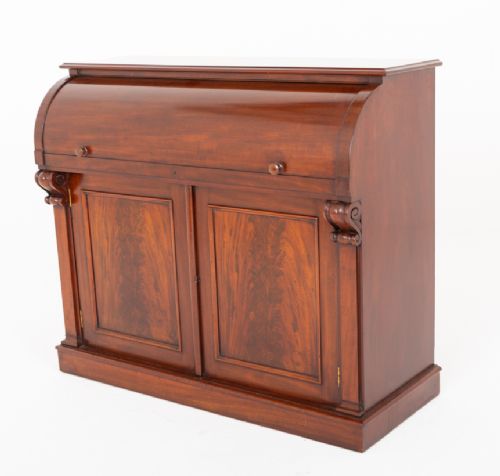
The versions most frequently met on this page span the Edwardian period, the 1920s, and the 1930s, alongside pieces from the Victorian era and the 1940s. They appear predominantly in oak or mahogany, frequently taking the form of dedicated filing cabinets or desks.
Originating as essential tools for busy Victorian and Edwardian clerks, these cabinets prioritised utility and space-saving efficiency in commercial environments. Today, they serve a similar organisational purpose in modern studies, offering concealed storage with a distinctive architectural profile.
How they were made
Makers constructed the flexible roll front, or tambour, by gluing narrow strips of wood onto a sturdy canvas or fabric backing. This assembly allowed the wooden curtain to bend around tight corners within internal tracks without jamming or separating.
The primary structural timber is typically solid oak or mahogany, occasionally finished with flame mahogany veneer or rosewood on finer examples. Brass handles, escutcheons, and locking mechanisms provide durable metal hardware that secures the sliding door.
Some Edwardian clerks relied on these cabinets so heavily that the repetitive pull of the wooden curtain wore distinct polish patterns into the brass knobs.
What varies in quality
The smoothness of the tambour mechanism distinguishes a superior cabinet from a basic commercial model. When the slats glide along their tracks with minimal resistance and align perfectly when closed, the precision of the original joinery becomes evident.
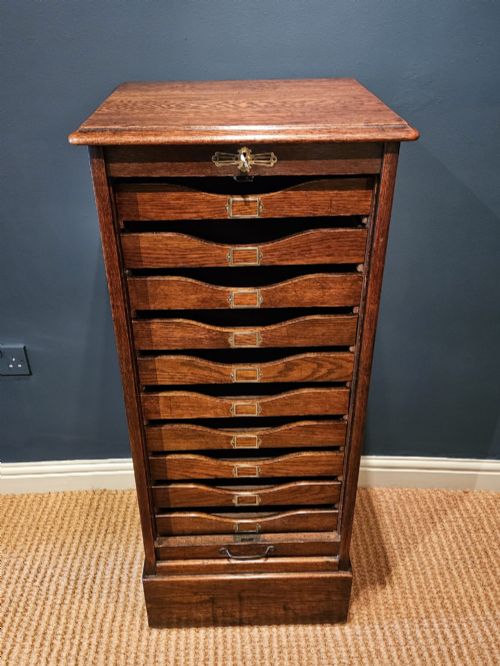
Selection of timber significantly impacts the character of the piece, as denser growths of oak and figured mahogany retain their structural integrity better over decades of daily office use. Finer iterations often feature internal dividers and well-fitted drawer banks that match the exterior wood quality.
The Roll Front Office Cabinet Glossary
- Tambour
- A flexible shutter or door composed of narrow wooden strips attached to canvas, allowing it to slide around a curved track. This ingenious mechanism conceals the interior contents without requiring clearance for swinging doors.
- Escutcheon
- A protective metal plate surrounding a keyhole, usually fashioned from brass. It prevents the surrounding wood from wearing down through repeated use of the key.
- Flame mahogany veneer
- A thin slice of mahogany timber cut from the branch junction where the grain creates a distinctive flickering flame pattern. Cabinet makers applied this to prominent exterior surfaces for decorative impact.
- Pedestal desk
- A heavy office desk supported by two banks of drawers or filing compartments rather than simple legs. These units provide substantial workspace combined with integrated storage.
Roll Front Office Cabinet: Frequently Asked Questions
How does a tambour door actually work?
The door consists of individual wooden laths glued side by side onto a strong canvas backing. This construction gives the panel lateral flexibility so it can bend around curved grooves cut into the sides of the cabinet.
When pushed open, the entire curtain slides backward into the body of the cabinet, resting out of sight behind the internal compartments or along the base.
What is the difference between a tambour and a rolltop?
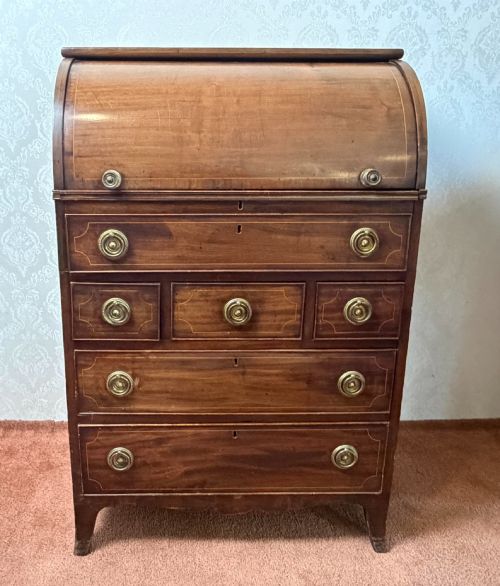
While both terms describe slatted sliding covers, a rolltop typically refers to a desk where the tambour encloses a writing surface and small pigeonholes. A tambour cabinet generally denotes a vertical storage unit or filing cabinet enclosed by the same flexible mechanism.
Both styles share the same underlying carpentry principles and canvas-backed slat construction.
How do I maintain the sliding mechanism?
The wooden tracks require very little intervention beyond occasional cleaning to remove dust and debris that can impede movement. Keeping the office environment at a stable humidity prevents the wood from swelling within its channels.
Applying a minimal amount of appropriate lubricant to the tracks helps the slats glide without sticking.
Can these cabinets hold modern paper files?
Older filing interiors were designed for historical document dimensions, so internal configurations vary between individual pieces. Many single and double configurations accommodate standard folders, though some vintage interior layouts suit specific historical paper sizes better than others.
Examining the internal depth and shelf or drawer spacing clarifies compatibility with contemporary storage needs.