

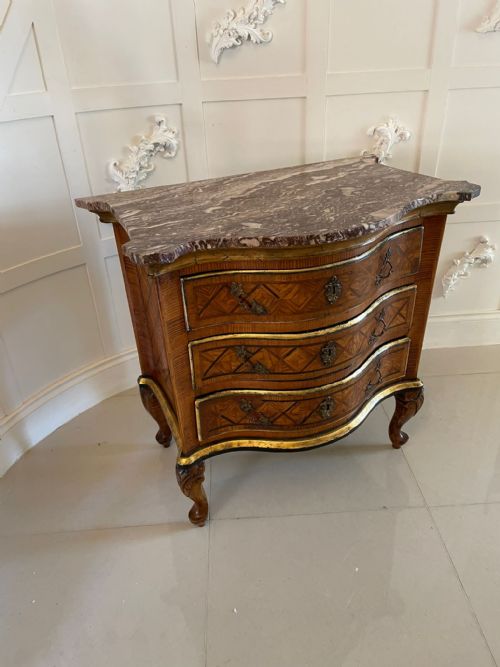

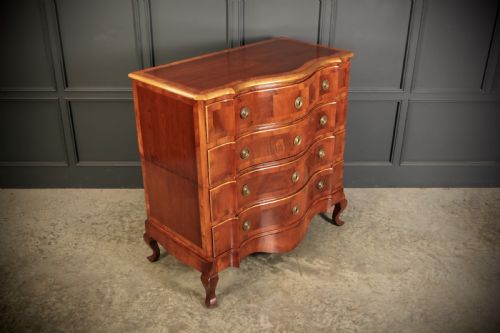
Rococo Walnut Commode
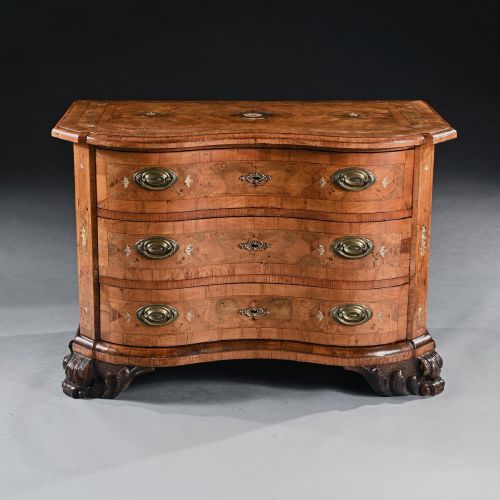
A rococo walnut commode brings sculptural elegance to a room, offering serpentine drawer fronts and rich timber grain.
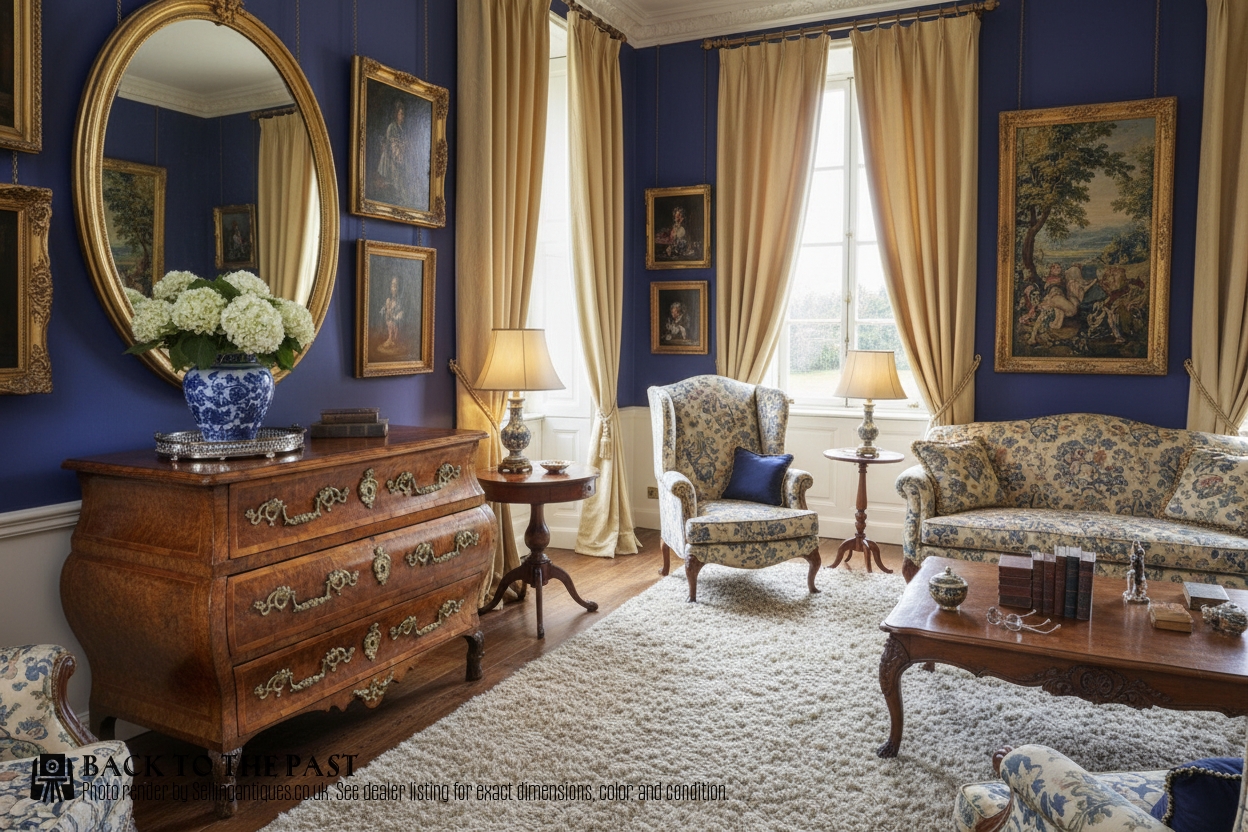
Rococo Walnut Commode
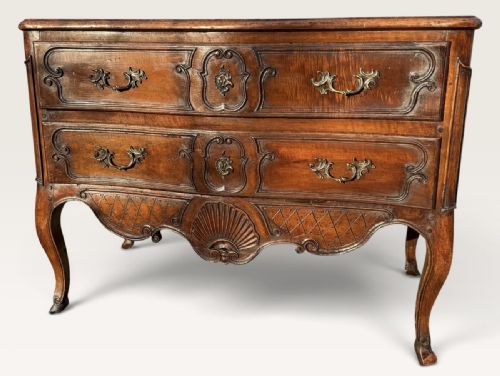
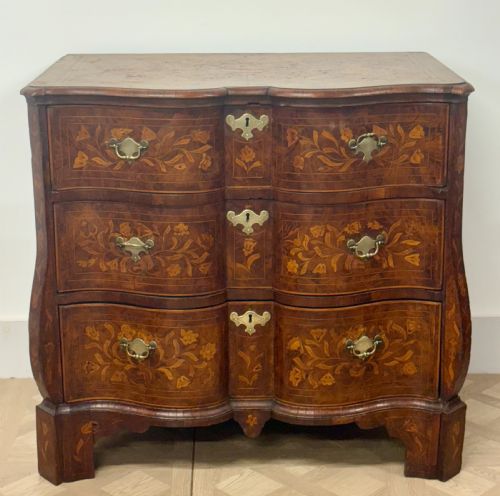
A rococo walnut commode is a low storage chest designed with sweeping serpentine or bombe contours, originating from continental workshops during the eighteenth century and later revived in the nineteenth and twentieth centuries. When searching this phrase, a buyer encounters pieces ranging from authentic eighteenth-century Dutch, German, French, and Italian examples to later revival models from the nineteenth and twentieth centuries.
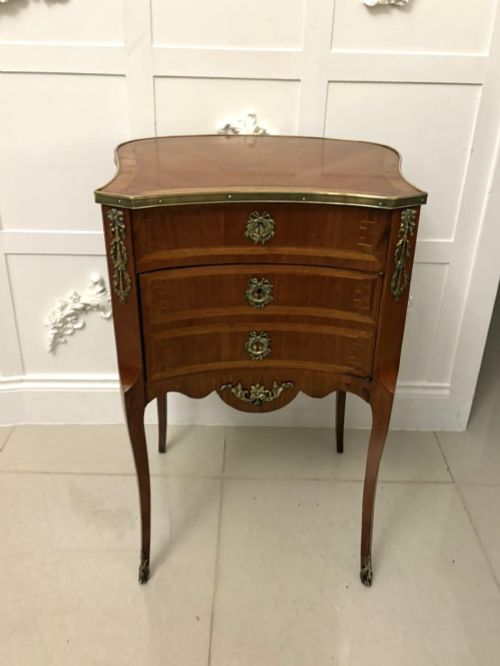
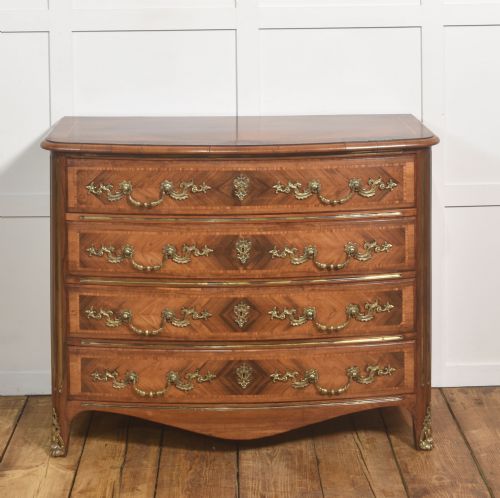
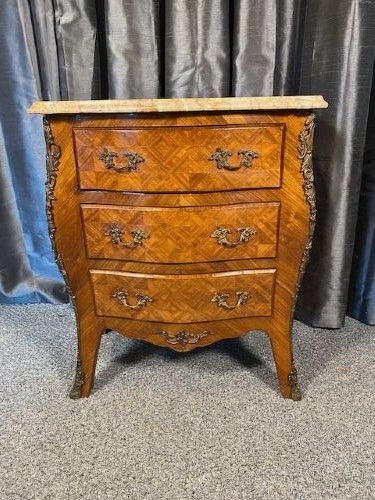
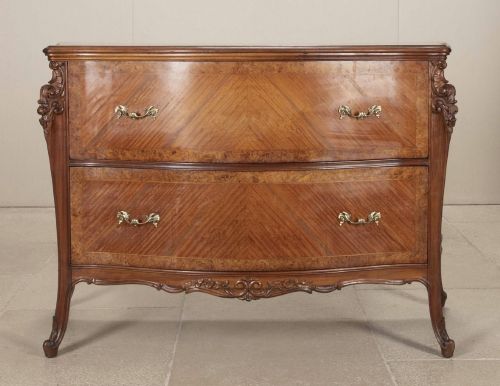
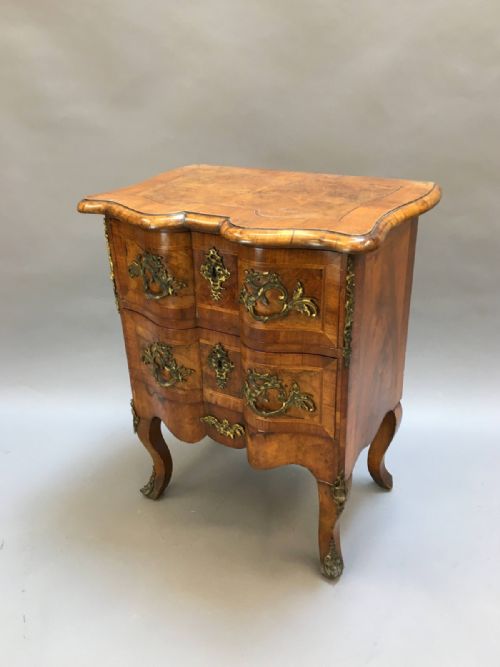
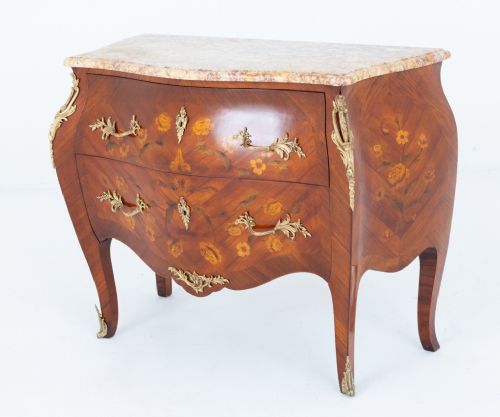
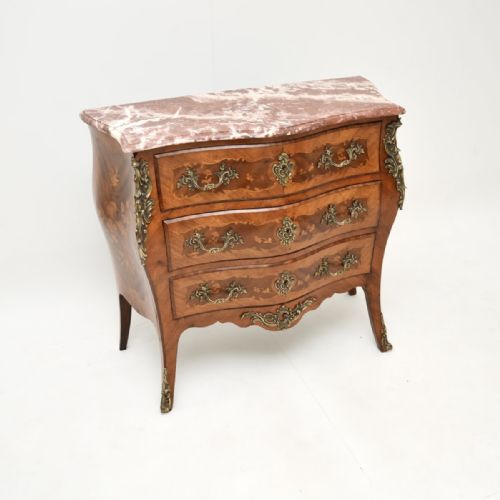
The primary forms on this page include serpentine chests of drawers, bombe commodes, and smaller bedside cabinets or lamp tables. Walnut and burr walnut dominate the timber choices, frequently embellished with marquetry, parquetry, or contrasting fruitwood inlay.
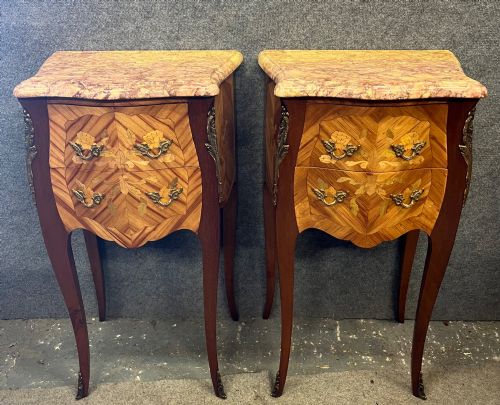
Origin details vary across the selection, with French Louis XV styles and Italian provincial pieces appearing alongside German and Swedish craftwork. Buyers will find full-scale bedroom storage alongside matched pairs of bedside tables sharing the same characteristic curvature.
Assessing Quality and Execution
Quality rests in the fluidity of the serpentine contour and the precision of the timber matching across the drawer fronts. Superior pieces display continuous grain alignment and meticulous marquetry that follows the carcass curves without distortion.
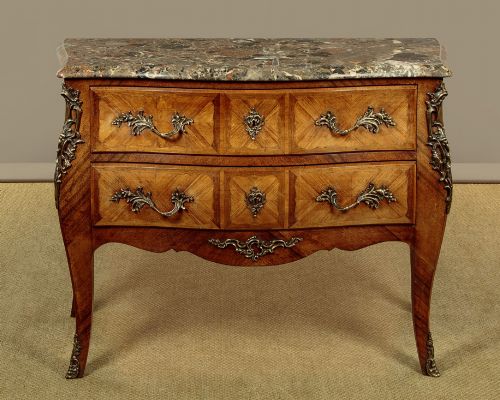
The integration of mountings and the selection of secondary materials further separate examples, distinguished by heavy cast ormolu mounts and thick, correctly profiled marble tops fitted precisely to the wooden frame.
Listings feature eighteenth-century pieces alongside revival works from the nineteenth and twentieth centuries, constructed in walnut, burr walnut, and kingwood.
The Rococo Walnut Commode Glossary
- Bombe
- A bulging, outward-curving chest profile swelling on the sides and front. This convex shaping requires advanced cabinet-making skill to execute in solid timber and veneer.
- Serpentine
- A wave-like front contour curving convexly in the centre and concavely at the ends. It defines the silhouette of many eighteenth-century pieces.
- Marquetry
- Decorative veneer patterns formed from different coloured woods, ivory, or metal assembled into pictorial designs. These are inlaid into the surface of the commode.
- Ormolu
- Gilt-bronze mounts applied to the corners, feet, and aprons of furniture. They protect vulnerable edges and accentuate the sculptural lines.
- Parquetry
- Geometric wood inlay forming repetitive patterns such as cubes or chequers. It creates texture across the flat or curved surfaces of the cabinet.
Rococo Walnut Commode: Frequently Asked Questions
How do I spot an 18th-century piece?
Eighteenth-century examples show hand-cut dovetails, timber shrinkage appropriate to age, and traditional construction methods beneath the veneers. The patination on the walnut develops a deep lustre that modern staining cannot replicate.
Examination of the drawer linings and internal carcass timbers reveals regional construction traits specific to French, Italian, or German workshops of the period.
Where should I place a commode?
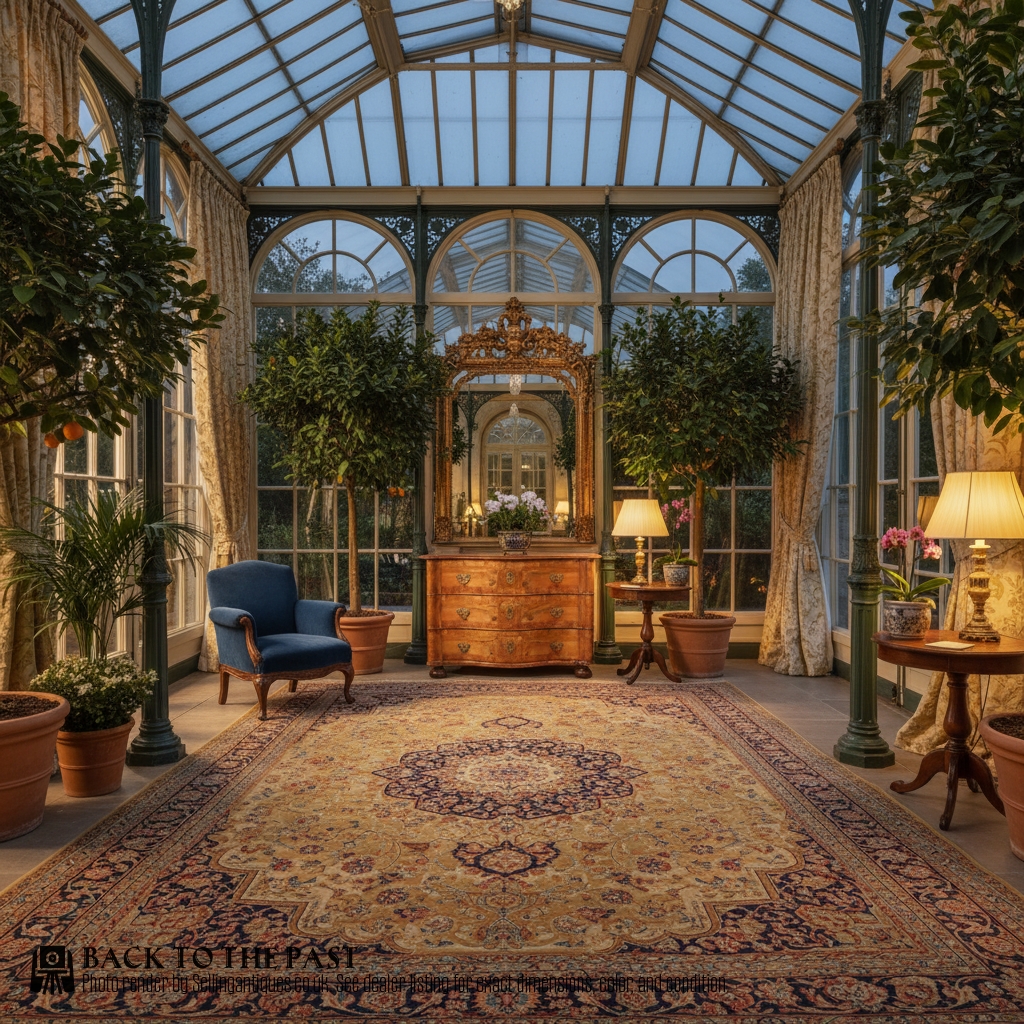
These chests function well in hallways, living rooms, or bedrooms as statement storage pieces. Their finished backs and sides often allow them to sit away from walls in spacious interiors.
Pairs of smaller bedside commodes serve effectively beside a bed or as lamp tables in a drawing room, echoing the curves of the main chest.
Are marble tops original?
Many commodes feature shaped marble tops that follow the serpentine or bombe outline of the wooden carcass. Original marble typically shows appropriate surface wear and fits flush to the rebate.
Replacement marble slabs appear on some pieces, identifiable by cleaner edges or differing stone composition compared to the period of the base.
How do I care for walnut veneer?
Walnut veneer requires stable indoor humidity away from direct sunlight and heat sources to prevent lifting or splitting. Regular dusting with a dry, soft cloth maintains the finish without needing heavy polishes.
Occasional application of appropriate wax feeds the timber and preserves the depth of the grain without building up a sticky residue.