





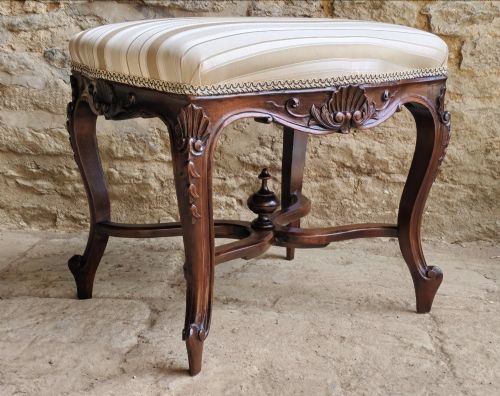


Rococo Upholstered Bench
A rococo upholstered bench brings sinuous curves and rich textiles into a room, offering both seating and undeniable presence.
Rococo Upholstered Bench
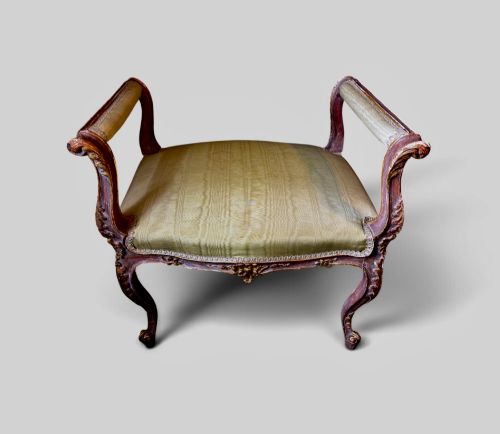
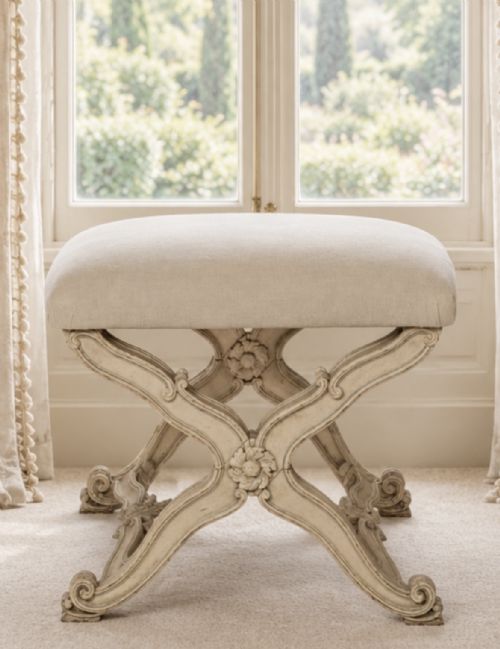
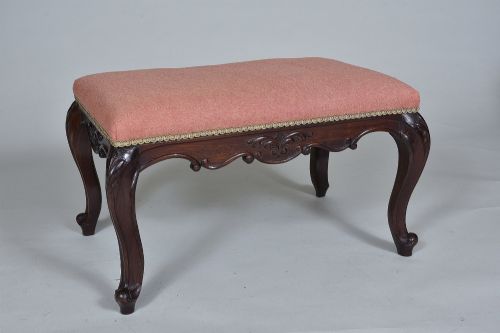
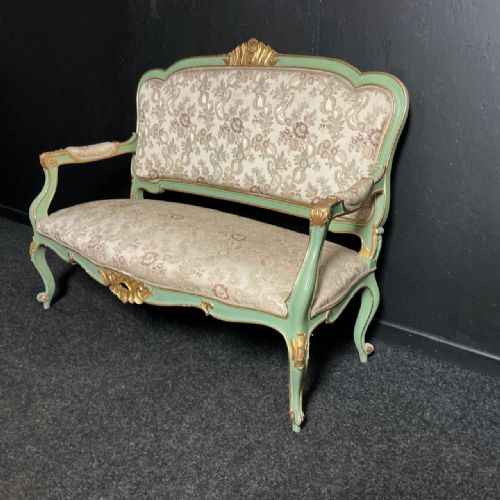
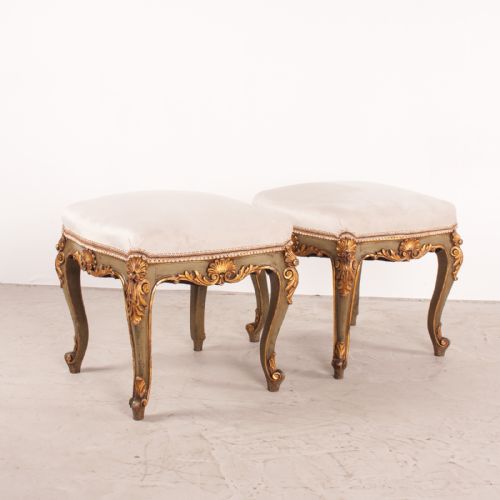
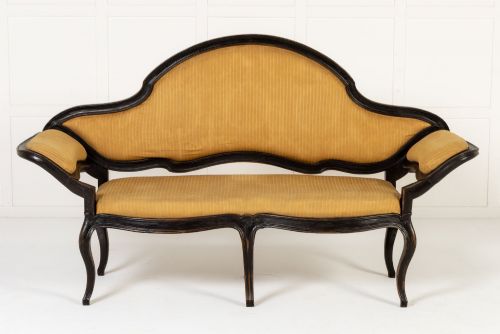
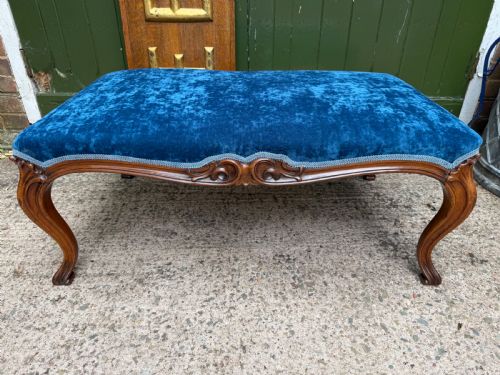
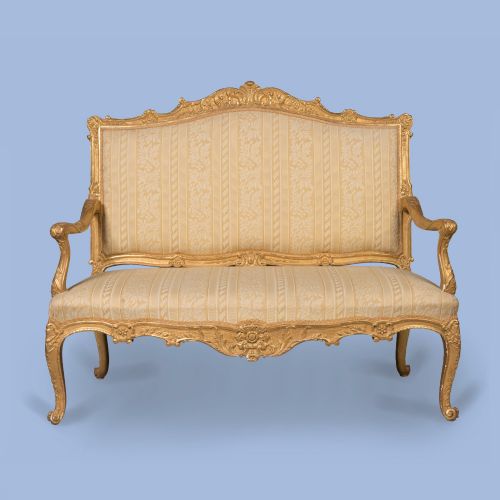
A rococo upholstered bench encompasses a range of seating forms including long stools, window seats, and canapés created across the eighteenth, nineteenth, and early twentieth centuries. These pieces display the characteristic asymmetric scrolls, flowing outlines, and botanical carving associated with the rococo revival and its continental antecedents. Buyers encounter English and continental examples, from compact footstools to multi-seater couches covered in varied textiles.
The materials span native and exotic woods paired with formal upholstery, reflecting both nineteenth-century revivals and earlier craftsmanship. Walnut, mahogany, and rosewood frame many of the stools and settees, while giltwood and painted surfaces appear on grander French and Italian pieces. Upholstery ranges from simple modern fabrics to silk and historic coverings.
Materials and construction
Frames are constructed from solid timbers such as walnut, mahogany, and rosewood, carved by hand with deep relief foliage, shells, and C-scrolls. Giltwood and painted finishes utilise gesso and pigment applied over wood bases, sometimes incorporating parcel gilt highlights. Artisans shaped cabriole legs to support the structural weight while maintaining the fluid profile demanded by the style.
Upholstery techniques secure textile coverings over padded foundations, utilising traditional webbing and stuffing methods suited to stools, settees, and day beds. Silk, patterned fabrics, and cane panels provide the functional surfaces, fastened with traditional tacks or decorative gimp braids. The integration of textile and carved frame defines the finished seat.
Rococo Upholstered Bench Retail Price Guide 2026
Typical asking prices for rococo upholstered bench among the pieces listed under this phrase on Sellingantiques today, from the lower quarter to the upper quarter. They describe what is for sale here now, not the wider market.
The documented forms range from compact footstools and window seats to multi-seater settees and day beds.
Distinctions in quality
The crispness of the hand carving separates standard production from finer work, as skilled carvers achieve deep, undercut foliage and balanced symmetry. Timber selection also dictates grade, with dense, figured walnut or finely grained mahogany showing superior patination compared to plain secondary woods. Giltwood examples rely on the finesse of the gilding layer and the preservation of the underlying gesso work.
Structural integrity depends on the joinery within the frame, particularly where cabriole legs meet the seat rails. Pieces retaining original or sympathetic period upholstery maintain greater historical coherence than those altered repeatedly over time. Proportions and the fluidity of the scrollwork ultimately govern the visual success of each bench.
The Rococo Upholstered Bench Glossary
- Canapé
- An upholstered sofa or settee, frequently designed in the French taste with an exposed wooden frame. These pieces often feature padded backs and arms supported by cabriole legs.
- Cabriole leg
- A furniture leg that curves outward at the knee and inward at the ankle, ending in a pad, scroll, or foot. This form draws inspiration from animal legs and defines much rococo seating.
- Giltwood
- Wood that has been coated with gold leaf or metal leaf over a prepared gesso surface. It appears frequently on grand French and Italian revival seating.
- Bergere settee
- An enclosed upholstered sofa featuring wooden arms and sides filled with upholstery or cane. The design originates in France and provides comfortable enclosed seating.
- Window seat
- A long, narrow bench designed specifically to fit within a window recess. These seats often lack backs and feature upholstered tops on carved wooden frames.
Rococo Upholstered Bench: Frequently Asked Questions
How do I date a rococo bench?
Dating relies on timber characteristics, tool marks, and stylistic markers that distinguish eighteenth-century originals from nineteenth-century revivals. Eighteenth-century pieces display hand-cut joinery and period wear, whereas Victorian and later revival pieces often use standardised machine-sawn components.
Examination of the frame construction and finish underneath reveals the manufacturing era. Revival pieces from the eighteen-fifties onward frequently adopt heavier proportions and different secondary woods compared to their earlier counterparts.
What is the difference between a stool and a settee?
Stools provide backless seating designed for single occupants or multiple users in the case of long salon stools and window seats. Settees incorporate backs and frequently arms, functioning as small sofas for two or three people.
Both forms share the same decorative vocabulary of cabriole legs and carved rails. The choice between them depends entirely on the intended room placement and seating capacity required.
Where should I place a giltwood bench?
Giltwood benches suit formal reception rooms, drawing rooms, or hallways where their reflective surfaces and carved frames act as focal points. Their ornate appearance pairs well with traditional architectural details and neutral walls.
Placing them away from direct sunlight protects the delicate gilt finish and fragile silk or textile upholstery. They function effectively as standalone decorative statements or paired with matching chairs.
Are painted finishes original on these benches?
Painted and gilded surfaces on continental pieces can be original, though many nineteenth-century revival items received subsequent decorative paint layers. Examining the pigment adhesion and underlying wear helps determine whether the finish dates to the creation of the piece.
French and Venetian pieces frequently utilised painted finishes originally, ranging from monochrome tones to polychrome floral decorations. Conservation history often accounts for multiple layers of paint over the centuries.