
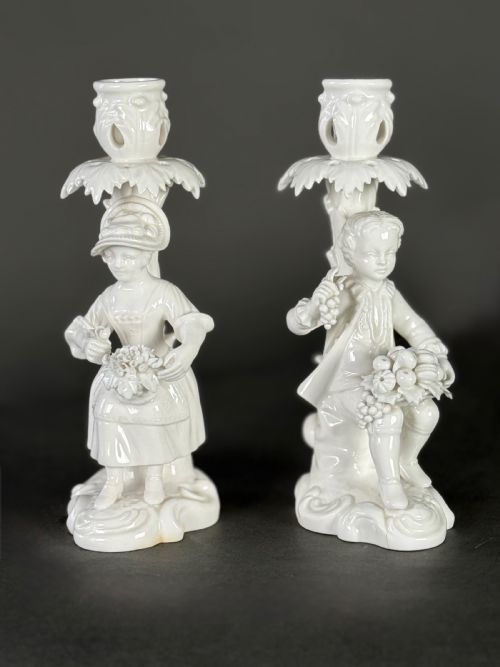
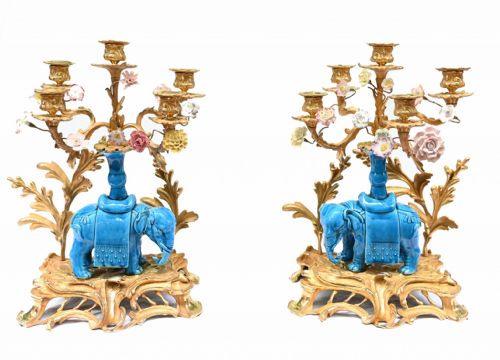


Rococo Style Porcelain Pair
These rococo style porcelain pair selections bring matched symmetry and curving forms to a mantelpiece or side table.
Rococo Style Porcelain Pair
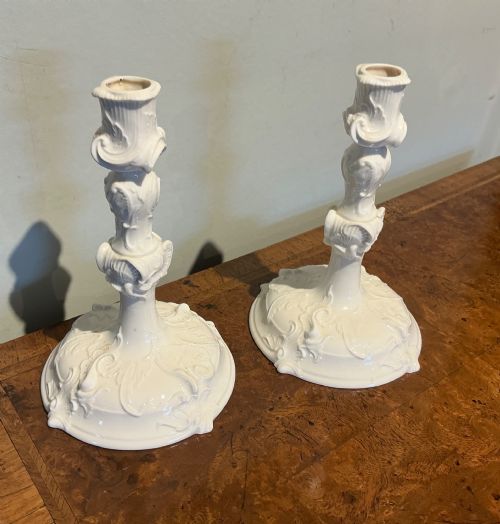
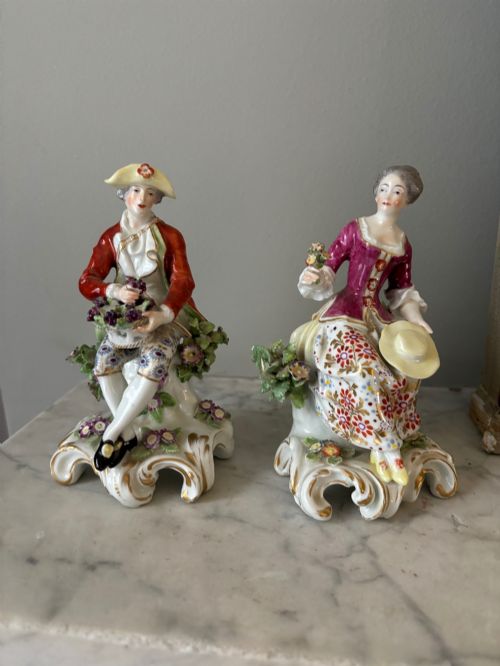
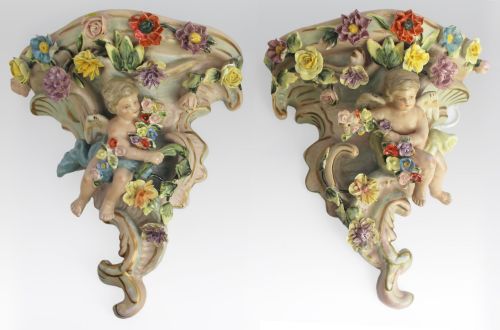
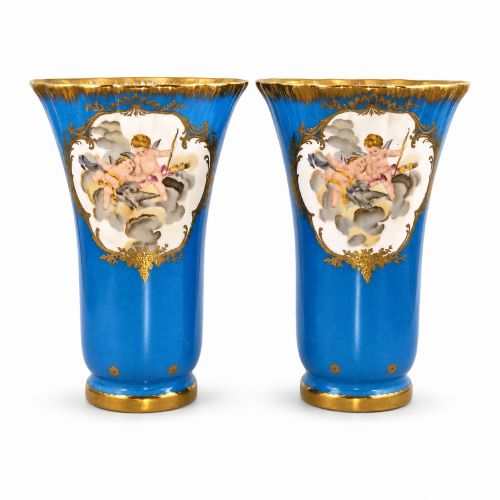
A rococo style porcelain pair typically comprises matched figures, candelabra, or vases designed for symmetrical placement. These dual pieces reflect the ornate, asymmetrical scrolling curves characteristic of the eighteenth-century movement.
Most examples encountered date from the nineteenth century, drawing direct inspiration from earlier German and French workshops. Figures of cherubs, musicians, and allegorical characters dominate the available forms.
Makers often utilised hard-paste porcelain to create these decorative objects, integrating gilt bronze and ormolu mounts. The combination of painted ceramics and metallic stands defines the visual weight of these matched sets.
Materials and construction methods
Craftsmen shaped hard-paste porcelain using detailed moulds before applying hand-painted enamels and gold leaf highlights. Firing at high temperatures ensured durability and a fine, vitreous finish.
Many pairs incorporate structural elements of ormolu, gilt bronze, or cast metal. These metallic mounts support porcelain vases and candle holders, secured with pins or screws.
Listings feature hard-paste porcelain and gilt bronze from the eighteenth and nineteenth centuries.
Indicators of refinement and skill
Painting precision separates standard output from superior items, particularly in facial expressions and delicate floral encrustations. Fine brushwork and subtle colour gradients indicate higher atelier standards.
The crispness of the moulded details and the integration of ormolu bases dictate overall execution. Heavier, more articulate metal casting complements superior ceramic forms.
Edme Samson·Meissen·Volkstedt·Sitzendorf·Carl Thieme Dresden
The Rococo Style Porcelain Pair Glossary
- Ormolu
- A gilded bronze finish applied to decorative mounts and candelabra bases. This technique provides a rich metallic contrast to painted porcelain.
- Hard-Paste Porcelain
- A durable ceramic composition fired at high temperatures. It forms a dense body that accepts detailed overglaze enamel painting.
- Bleu Céleste
- A bright turquoise blue ground colour associated with French porcelain production. It frequently appears on decorative vases and urns.
- Bocage
- An intricate background of applied leaves and flowers framing ceramic figures. This decorative foliage adds depth and texture to figural groups.
- Blanc-de-Chine
- A pure white porcelain glaze originating in China and replicated by European factories. It highlights sculptural contours without relying on enamel colours.
Rococo Style Porcelain Pair: Frequently Asked Questions
How were porcelain candelabra used?
These pieces served as functional lighting and decorative ornamentation on dining tables and mantelpieces. Candlelight reflected off the glazed surfaces and metallic ormolu mounts during evening gatherings.
Over time, many pairs transitioned into purely decorative objects as alternative lighting methods replaced wax candles in domestic interiors.
What defines nineteenth-century revival pieces?
Nineteenth-century works adopted the curving lines and playful subjects of earlier eighteenth-century aesthetics. Factories across France and Germany reinterpreted historic forms for Victorian tastes.
These later items often display brighter enamel palettes and heavier metallic mounts compared to their eighteenth-century prototypes.
How do you display a matched pair?
Matched pieces look best placed symmetrically on either side of a central mirror, clock, or fireplace. This balanced arrangement mirrors the decorative principles of period interior design.
Maintaining equal distance between the two items preserves the intended visual harmony of the set.
What is the difference between figures and vases?
Figurines and figural groups depict human characters, animals, or allegorical scenes such as musicians and seasonal representations. Vases focus on vessel forms, often featuring painted panels and floral encrustations.
Both categories frequently share similar rococo scrollwork and gilt highlights despite their different functional origins.