


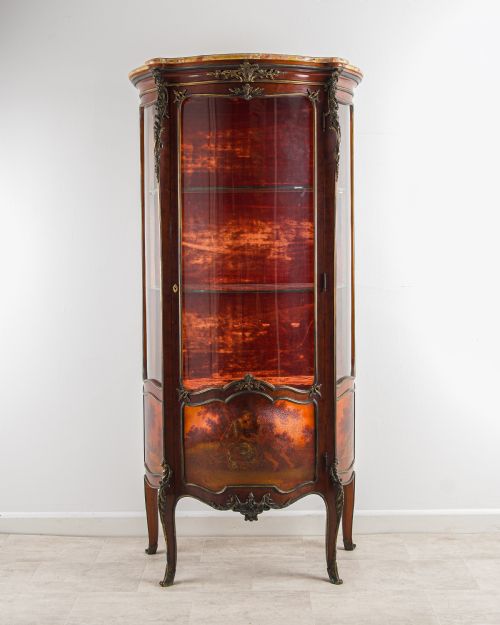


Rococo Style Painted Cabinet
A rococo style painted cabinet brings curvilinear grace and hand-painted artistry to a room, offering both display and storage through fluid lines.
Rococo Style Painted Cabinet
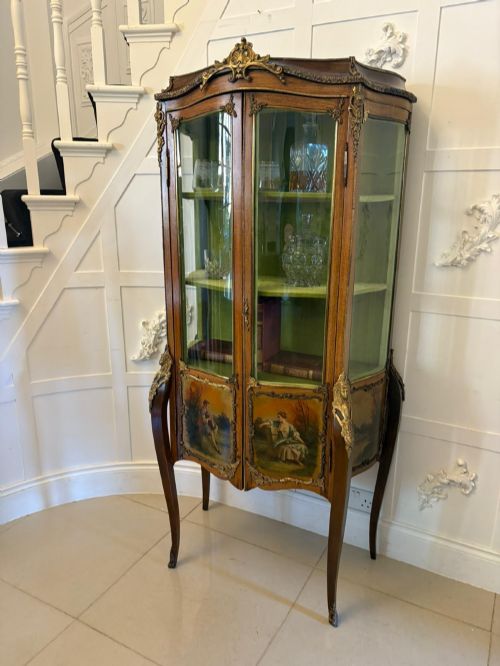
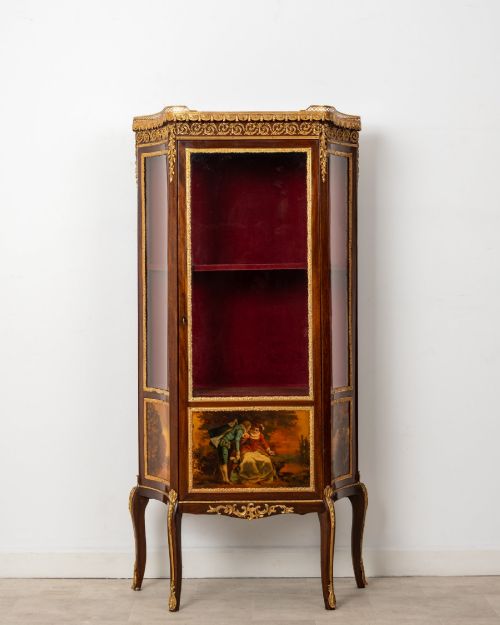
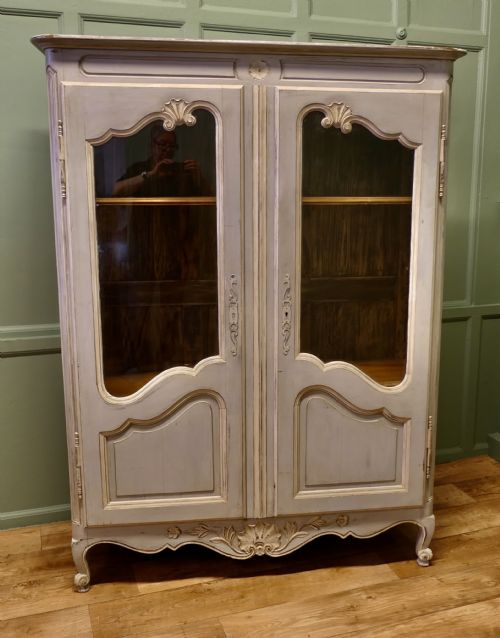
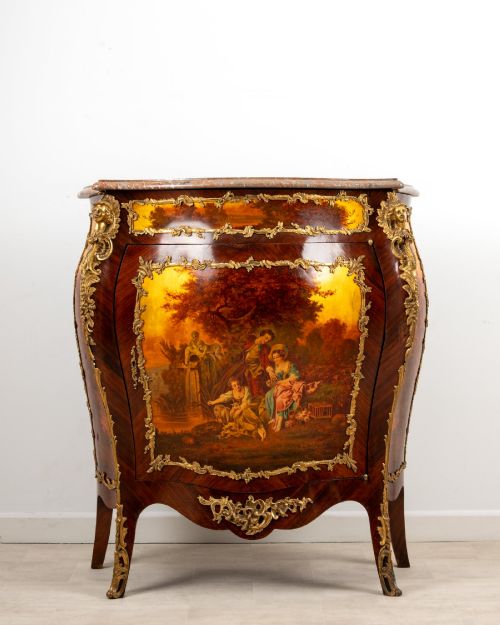
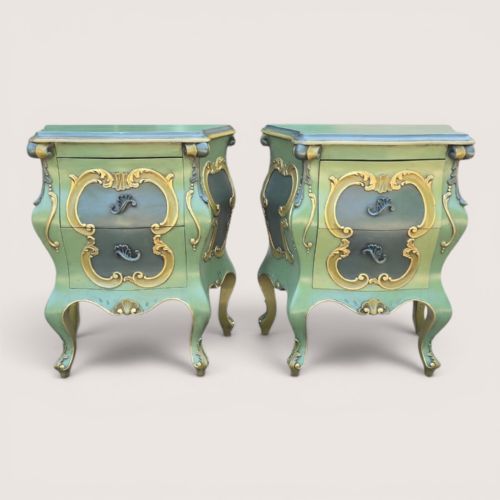
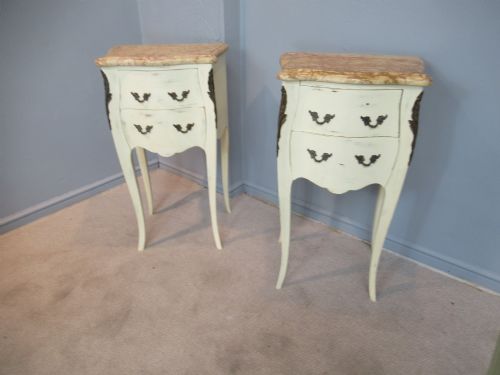
A rococo style painted cabinet is a storage or display piece defined by asymmetrical curves, painted panels, and ornate mounts. When searching for a rococo style painted cabinet, buyers encounter forms ranging from towering vitrines and double-door bookcases to compact bedside chests and writing cabinets.
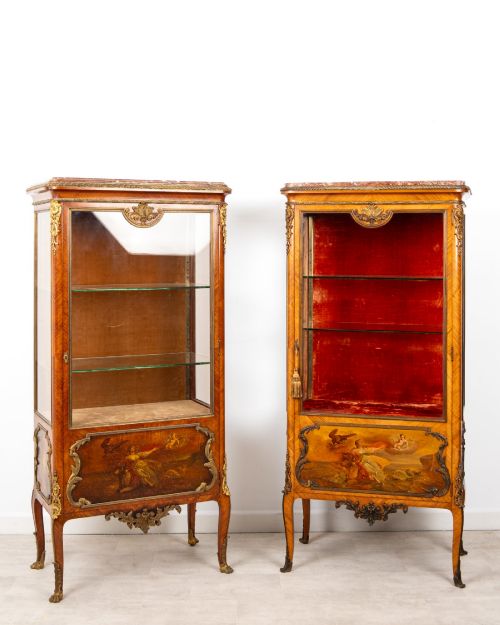
The pieces appearing here span several periods, predominantly originating in the nineteenth century alongside Edwardian and later interpretations. Surviving examples often channel French taste, appearing as Vernis Martin vitrines, bombé cabinets, and side cupboards finished with painted scenes or delicate gilt details.
Materials and construction methods
Cabinet makers utilised foundational timbers such as mahogany, kingwood, rosewood, and oak to build carcass structures, frequently shaping them into serpentine or bombé contours. Exterior surfaces received decorative treatments including lacquer, painted panels, and parcel gilt finishes, set off by applied ormolu mounts and gilt bronze hardware.
Many iterations incorporate inset marble tops and glazed glass panels to display porcelain or precious objects within the interior. Specialised finishing techniques like Vernis Martin provide the characteristic glossy, translucent painted panels that emulate Japanese lacquerwork.
Some nineteenth-century makers cleverly hid small writing desks inside elaborate display vitrines, perfect for secret poetry between tea services.
Distinguishing quality in craftsmanship
Quality reveals itself in the fluidity of the carved wooden carcass and the precision with which the bombé or serpentine curves are executed. Superior examples demonstrate expert cabinetmaking through seamless joints, well-fitted doors, and stable structural integrity despite complex shapes.
The refinement of the painted decoration and the casting quality of the ormolu mounts separate standard items from exceptional ones. Finer pieces display hand-painted panels with depth and detail, complemented by heavy, crisply chased gilt bronze hardware rather than mass-produced metalwork.
François Linke·Helena Wolfsohn·Sevres
The Rococo Style Painted Cabinet Glossary
- Vernis Martin
- A simulated Japanese lacquer technique developed by the Martin brothers in eighteenth-century France. It involves applying multiple layers of varnish over painted scenes to achieve a luminous, durable finish.
- Vitrine
- A glass-fronted display cabinet designed for showing porcelain, figurines, or curiosities. These pieces often feature glazed sides and mirrored backs to maximise light reflection.
- Bombé
- A swelling, outward-curving furniture shape that bulges on the front and sides. This technique requires advanced woodworking skill to achieve balanced proportions.
- Ormolu
- Gilt bronze mounts applied to furniture for decorative accent. The term describes finely cast and mercury-gilded bronze elements that highlight the contours of the cabinet.
- Serpentine
- A furniture front or top shaped with a double curve, undulating inward at the centre and outward at the ends. This contour is characteristic of rococo and revival designs.
Rococo Style Painted Cabinet: Frequently Asked Questions
Where should I place a vitrine?
A vitrine suits drawing rooms, dining spaces, or hallways where natural light can pass through the glass panels. Placing the cabinet away from direct sunlight protects both the painted panels and the interior contents.
Ensure the floor is level so the doors and glass remain properly aligned within the curved frame.
How do I care for painted cabinets?
Dust painted and gilded surfaces gently with a soft, dry cloth rather than using chemical polishes. Avoid placing damp items or heavy liquids directly onto marble tops to prevent staining.
Maintain a stable room temperature to protect the underlying timber and prevent cracking in the lacquer or paint layers.
Are these pieces French or English?
The majority of these cabinets follow French design traditions, particularly the Louis XV and Louis XVI revival styles. Many were produced in France or England during the nineteenth century by makers influenced by continental aesthetics.
Italian and Dutch workshops also produced painted cabinets featuring similar serpentine forms and floral motifs.