





Rococo Style Oval Mirror
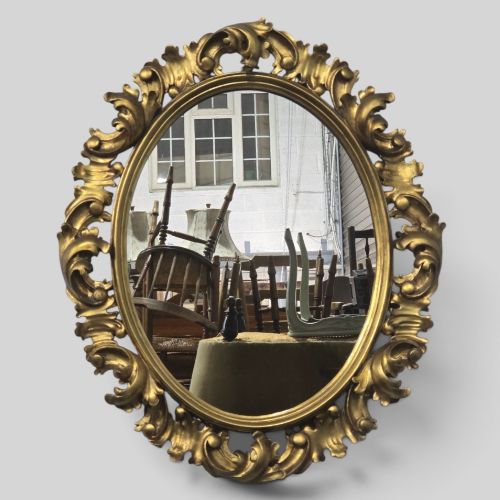
A rococo style oval mirror brings dynamic C-scrolls and asymmetrical foliage to a room, catching the light in a way few other shapes manage.
Rococo Style Oval Mirror
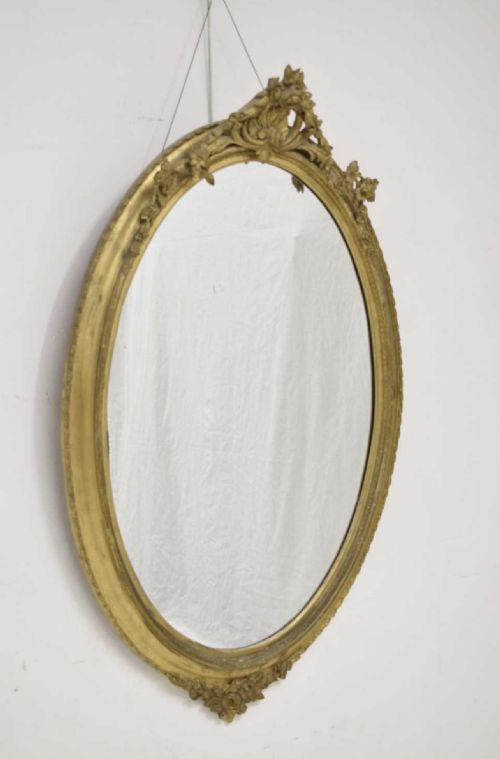
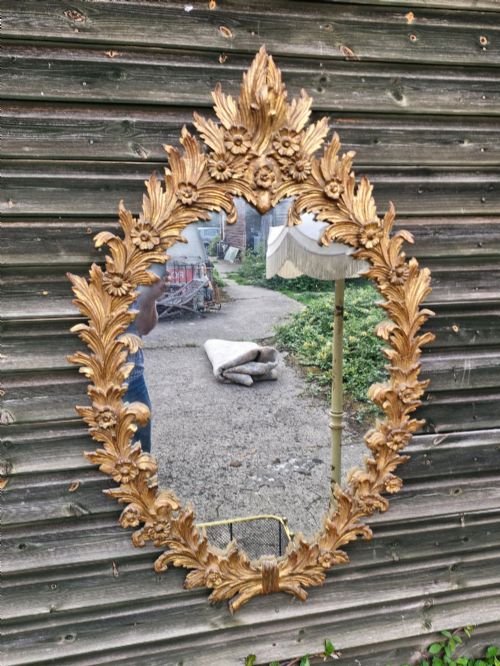
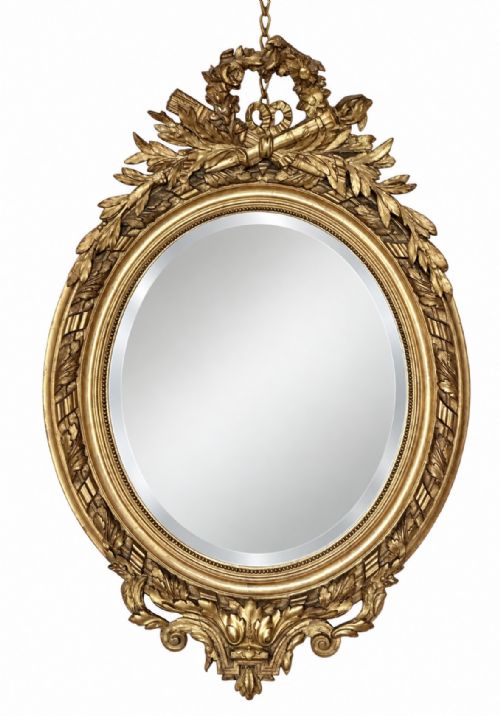
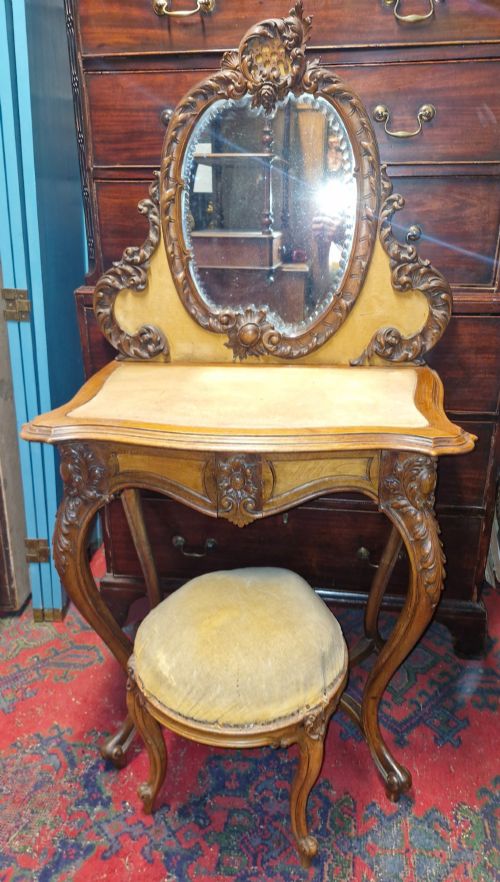
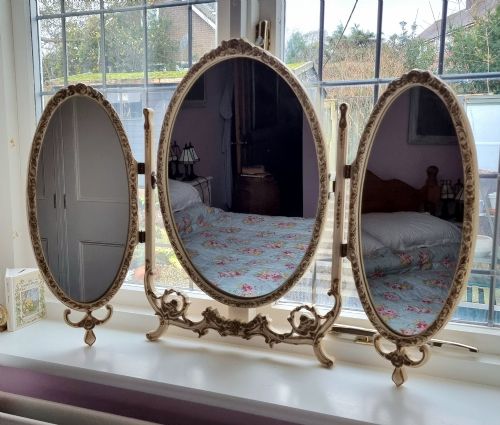
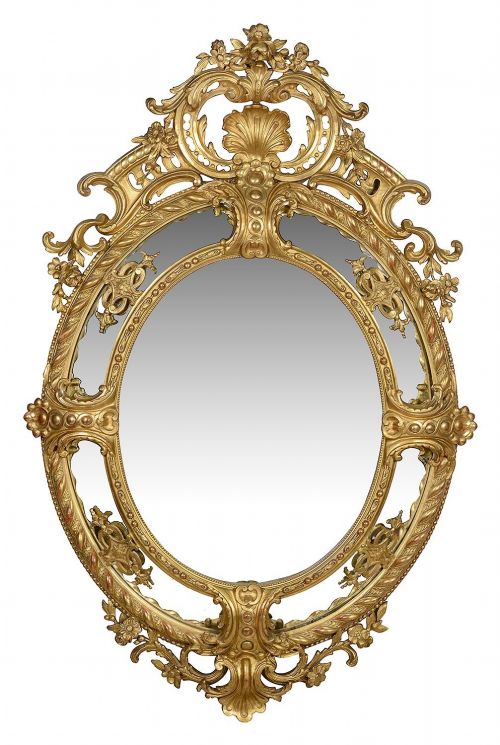
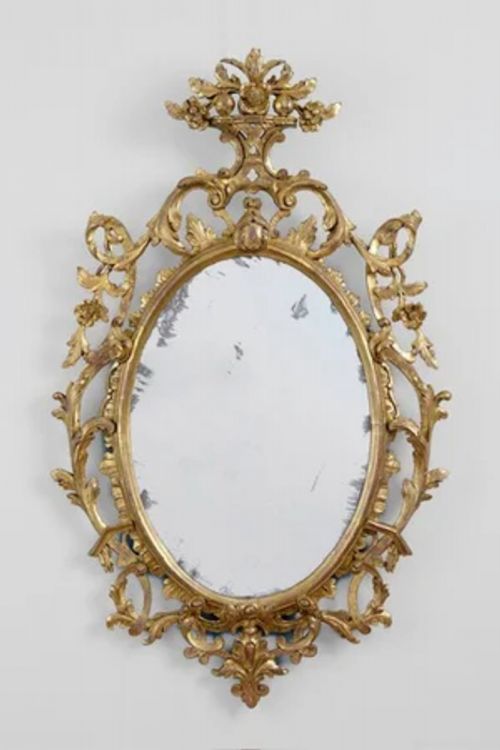
A rococo style oval mirror draws on C-scrolls, asymmetric curves, and organic plant motifs derived from mid-eighteenth-century design. When searching this phrase, buyers encounter wall-hanging examples alongside dressing table and toilet mirrors.
The pieces appearing on this page stretch from the Georgian period through the nineteenth century into the early twentieth century. Victorian Rococo Revival and Louis XV style pieces dominate the selection, often produced in France, Italy, or Britain.
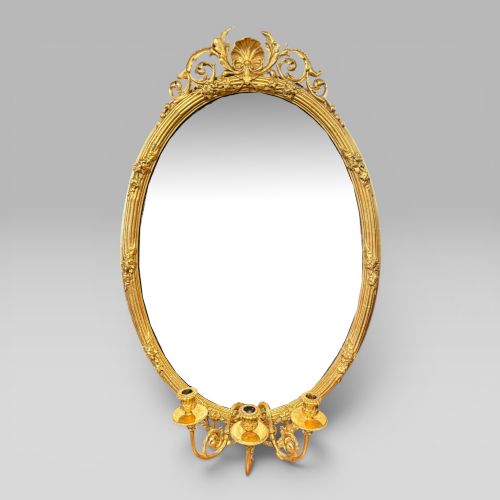
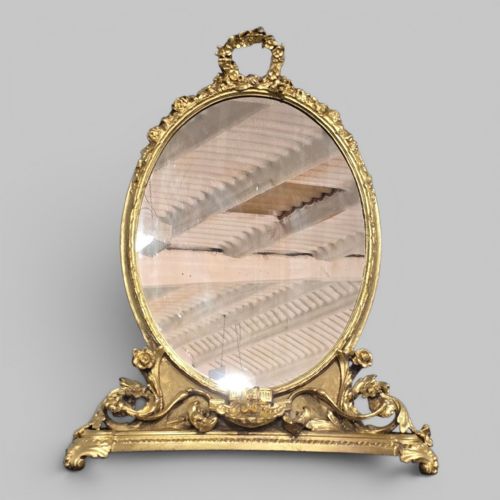
Formats range from compact table-top dressing mirrors to large overmantel frames and deep carved wall mirrors. Makers occasionally adapted the classic oval shape into girandole designs fitted with candle sconces.
How they were made
Carved wood provides the structural framework for the finest examples, utilising timbers such as walnut, mahogany, and softwoods. Woodcarvers shaped intricate foliage and scrolls by hand before applying surface finishes.
Gesso and composition mouldings were frequently applied over wooden bases to build up high-relief ornamentation. Gilders then coated these prepared surfaces in gold leaf or metallic paint to achieve a brilliant reflective sheen.
Mirrors utilise traditional silvered glass plates, sometimes held by backing boards secured within rebate channels. Gilt brass, bronze, and continental porcelain also appear as primary or secondary framing materials.
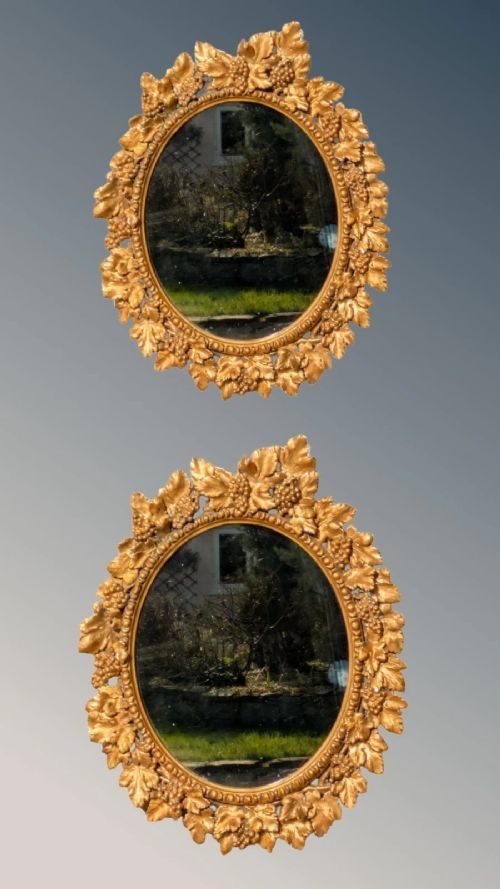
Vine leaves and trailing floral tendrils twist around several frames, letting nature sneak indoors to permanently tangle with the gilt.
What varies in quality
Depth and crispness of hand-carving separate superior frames from mass-produced alternatives. High-grade pieces show sharp undercut foliage and deliberate asymmetry rather than flat, repetitive moulding.
The integrity of the gilded or painted surface dictates visual presence. Original gold leaf patinates with a soft, warm glow, whereas unsympathetic later repainting can obscure delicate gesso detail underneath.
Proportion and scale affect the architectural harmony of the mirror. Master craftsmen balanced the ornate scrollwork so the frame complements rather than overwhelms the central glass plate.
The Rococo Style Oval Mirror Glossary
- Giltwood
- Wood that has been coated with a thin layer of gold leaf. This technique was standard for high-status European mirror frames.
- Gesso
- A plaster-like mixture applied to wood frames to create a smooth surface for gilding or deep relief moulding. It allows intricate scrolls and flora to be shaped easily.
- Girandole
- A decorative wall mirror fitted with attached candle sconces. The candle flames reflect in the glass to multiply the available light in a room.
- Composition
- A moulded mixture of whiting, resin, glue, and oil pressed into shape. It was used as a cost-effective alternative to hand-carved wood for repeating ornaments.
- Overmantel mirror
- A large horizontal or vertical mirror designed to hang directly above a fireplace mantelpiece. They often share stylistic traits with smaller wall mirrors.
Rococo Style Oval Mirror: Frequently Asked Questions
How do I date a rococo style oval mirror?
Dating relies on examining the construction methods of the wooden frame and the composition of the mirror glass behind it. Hand-cut backboards, older screw types, and subtle oxidation on the glass plate point towards nineteenth-century production.
Stylistic cues also help narrow down the era. Pieces made during the Victorian Rococo Revival tend to feature heavier, deeper carving than their lighter Georgian predecessors.
Where should I hang an oval mirror?
An oval mirror suits narrow wall spaces, hallways, or above dressing tables where its curved silhouette softens linear architecture. Positioning it opposite a window maximises natural light distribution.
Ensure the wall fixings match the weight of the piece, particularly for large giltwood and gesso frames. Heavy overmantel examples require secure anchoring into solid masonry or wall studs.
What is the difference between giltwood and gilt brass?
Giltwood consists of a carved wooden base covered in gold leaf or metallic size. It offers a warm, textured finish typical of traditional frame-making.
Gilt brass or bronze involves cast metal treated with a golden finish. These metal frames appear more frequently in smaller table-top dressing mirrors and early twentieth-century pieces.