

Rococo Style Drawers
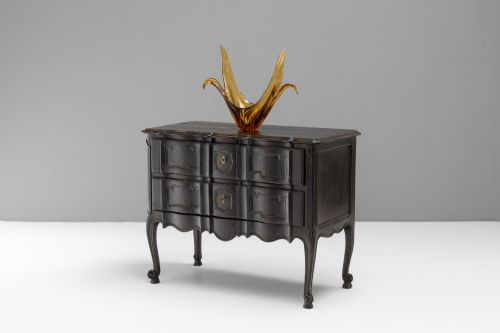
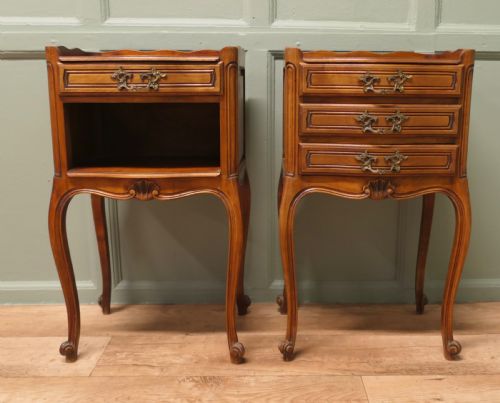
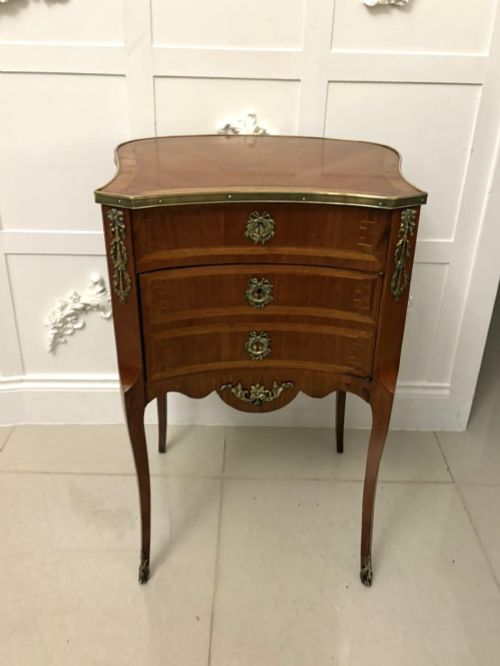
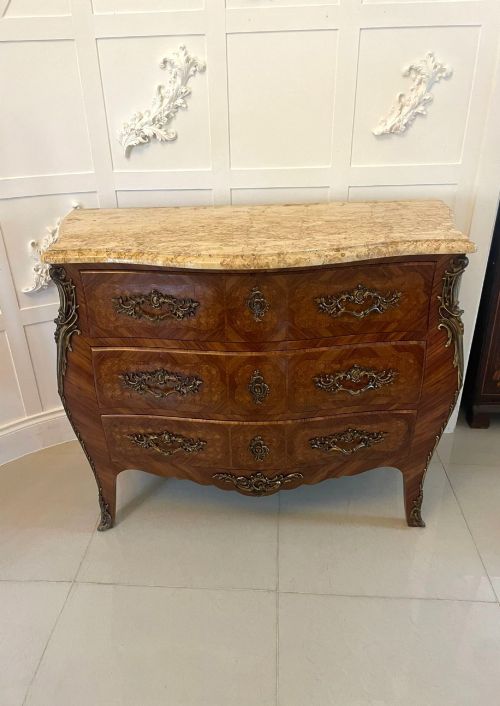
These rococo style drawers bring fluid serpentine lines and ornate mounts to an interior, drawn largely from French and Italian revival periods.
Rococo Style Drawers
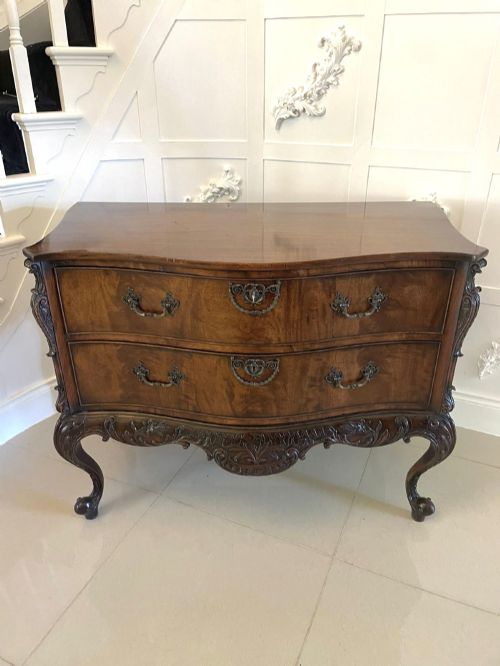
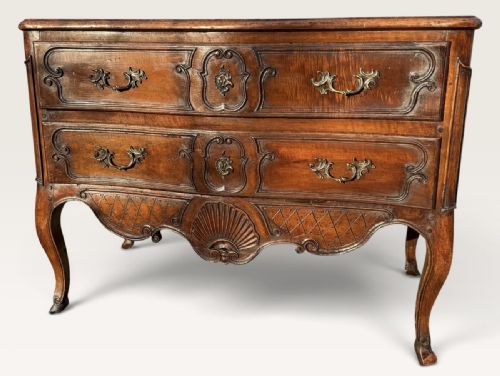
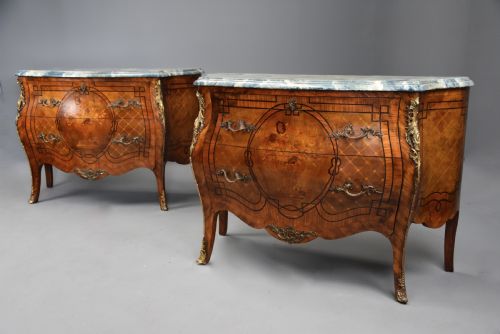
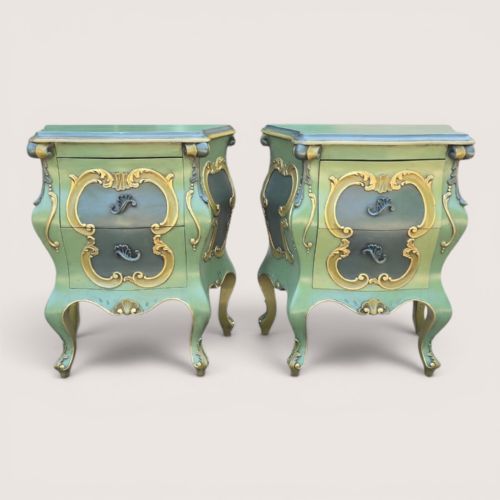
When you search for rococo style drawers, you encounter commodes, bedside chests, and side cabinets shaped by serpentine fronts and bombé profiles. These pieces emerge predominantly in 19th-century revivals of Louis XV design, alongside genuine 18th-century examples spanning French, Italian, Dutch, and Swedish origins.
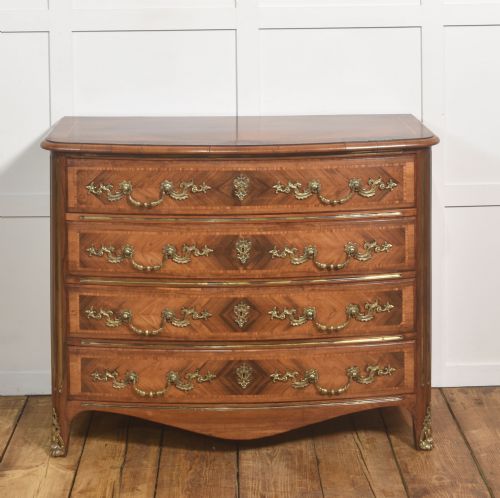
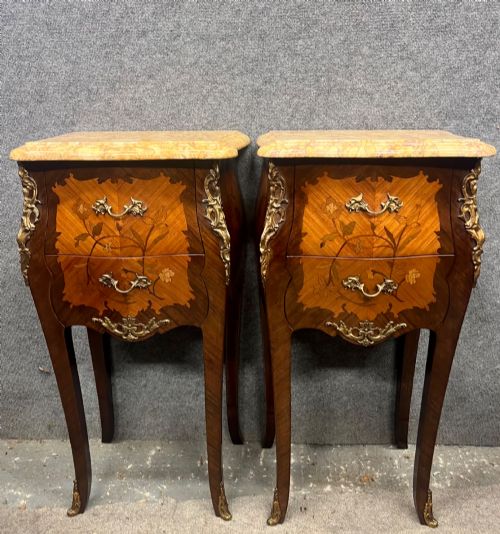
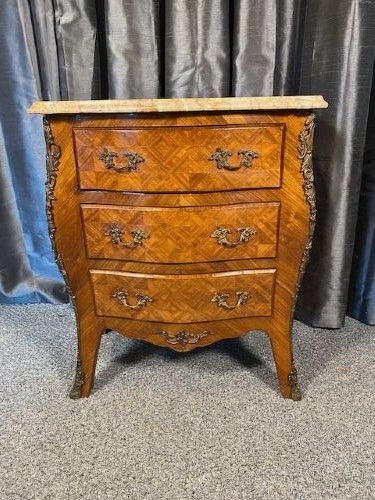
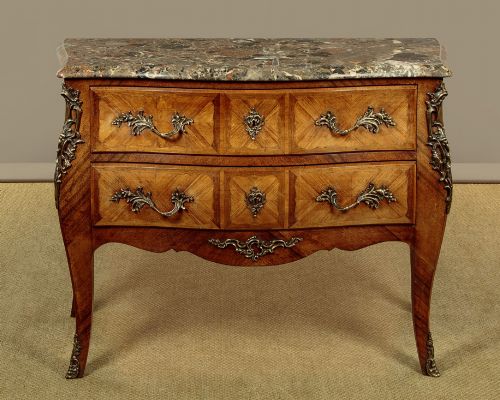
The most common formats on this page are marble-topped commodes and compact bedside tables, often decorated with intricate marquetry or parquetry patterns. Walnut, mahogany, and kingwood form the structural backbone of these pieces, complemented by painted finishes and japanned lacquer.
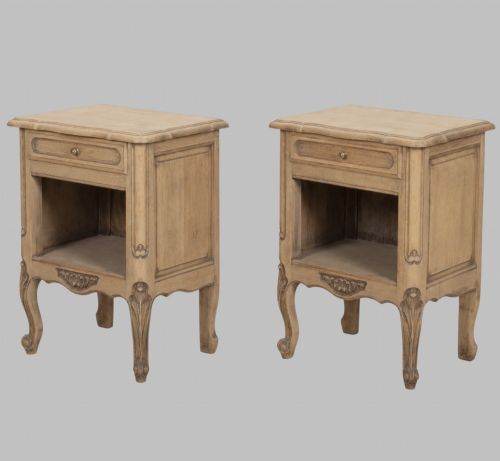
Makers and cabinetmakers drew heavily upon asymmetrical scrollwork and botanical motifs characteristic of the rococo movement, adapting them for domestic storage. Surviving examples range from substantial bedroom commodes to pairs of lamp tables designed for flanking a bed.
Materials and construction methods
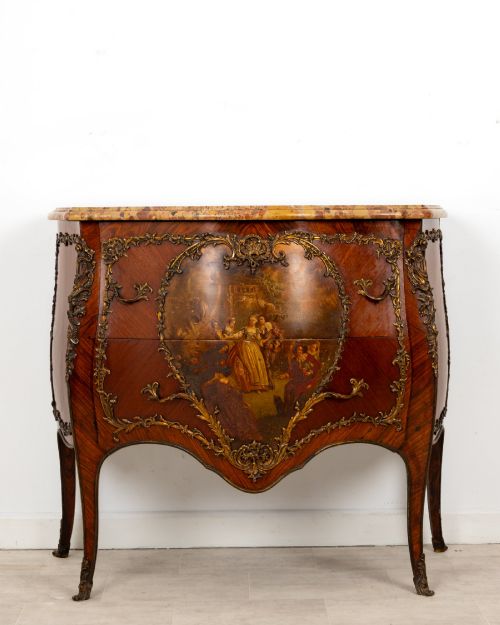
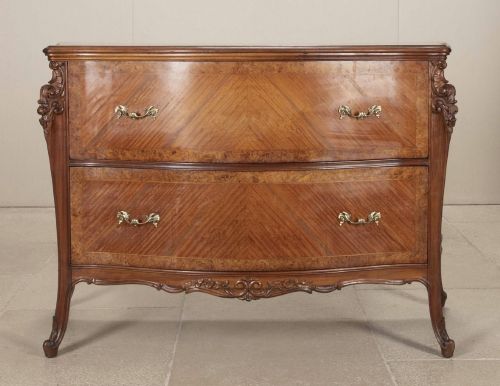
Cabinetmakers constructed carcases using hardwoods like oak, walnut, and mahogany, then applied fine veneers of kingwood, satinwood, and burr walnut in geometric parquetry or pictorial marquetry layouts. Selected pieces utilise painted wood surfaces or Vernis Martin finishes to achieve decorative depth.
Gilt-bronze and ormolu mounts accentuate the curved contours and corners of the commodes, fixed with precision to complement the swelling bombé forms. Heavy marble slabs, often shaped to follow the serpentine or undulating outlines of the wooden tops, complete the assembly.
Some commodes feature hidden drawers tucked neatly beneath the marble top, designed to outsmart prying eyes.
Factors separating standards of craftsmanship
The precision of the marquetry inlay and the depth of the timber figuring dictate the visual hierarchy of these items, distinguishing meticulous workshops from standard production. Cabinetmakers who matched veneer grains across multiple drawers achieved a unified flow that elevates the piece.
The quality of the cast ormolu and gilt-bronze mounts plays a decisive role, where crisp chasing and heavy metalwork signify superior execution compared to lighter, plain brass fittings. Furthermore, the integration of heavy marble tops, fitted cleanly to complex serpentine or bombé outlines, marks the upper tier of production.
The Rococo Style Drawers Glossary
- Bombe
- A bulging, outward-curving chest or commode shape that swells on the sides and front. This profile requires advanced carpentry to construct from curved timbers.
- Marquetry
- The art of applying small pieces of veneer to a structure to form decorative patterns or pictures. Craftsmen cut contrasting timbers like kingwood and satinwood to fit together precisely.
- Ormolu
- Gilded bronze used for decorative mounts and handles on furniture. The technique involves applying a mercury and gold amalgam to cast bronze.
- Serpentine
- A furniture front or top shaped with a central convex curve flanked by two concave curves. This undulating line defines many rococo revival pieces.
- Parquetry
- Geometric wood inlay patterns resembling mosaics. Artisans arrange wood veneers in repeating shapes such as cubes, chequers, or triangles.
Rococo Style Drawers: Frequently Asked Questions
What rooms suit rococo style drawers?
These commodes and chests function effectively as statement storage in bedrooms, hallways, or living spaces. Their decorative fronts and marble surfaces allow them to serve as focal points rather than purely utilitarian furniture.
Smaller bedside chests and lamp tables pair well beside low beds or adjacent to seating areas, providing surface space while maintaining the visual weight of period design.
How do I identify a revival piece?
Revival items, particularly those from the 19th century or early 20th century, exhibit machine-sawn timber marks and standardised hardware fixings on the interior framework. Cabinetmakers of this era frequently copied 18th-century Louis XV aesthetics using contemporary machinery.
Examining the secondary woods inside the drawers helps clarify the period of production, as 19th-century workshops often utilised pine or oak carcases distinct from older regional practices.
Are marble tops original to these chests?
Many commodes and bedside cabinets left the workshop with fitted marble slabs designed to protect the veneered wood surfaces underneath. These stones generally match the exact serpentine or bombé contour of the wooden carcase.
Replacements do occur over time, so looking at the seating rebate beneath the stone reveals whether the marble has rested in its original bed.
How do I care for inlaid wood surfaces?
Inlaid surfaces require protection from direct sunlight and extreme humidity fluctuations to prevent the delicate veneers from lifting or splitting. Regular dusting with a soft, dry cloth preserves the finish without wearing down the wood.
Applying occasional microcrystalline wax helps nourish the timber and maintain the sheen on both the marquetry and the surrounding ormolu mounts.