
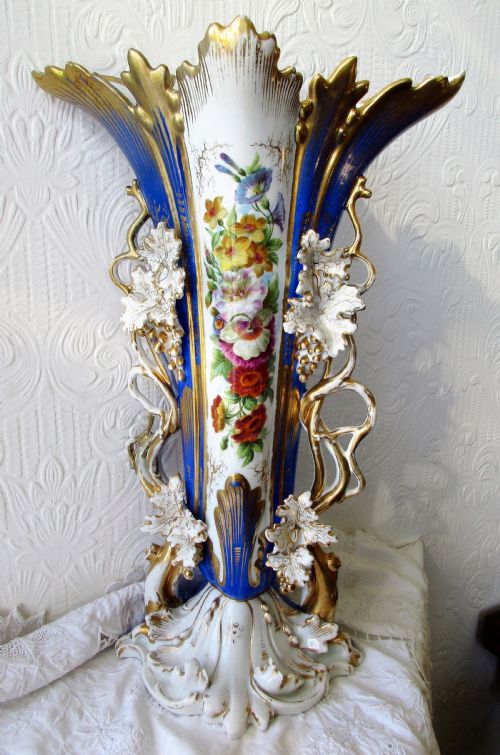
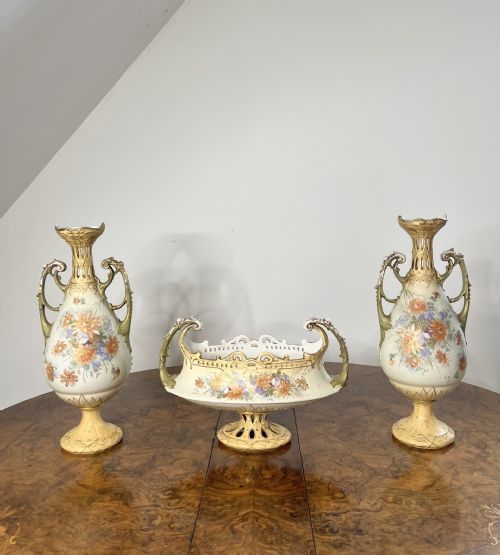


Rococo Style Ceramic Vase
A rococo style ceramic vase brings exuberant nineteenth-century curves and elaborate gilt bronze mounts to a room.
Rococo Style Ceramic Vase
A rococo style ceramic vase draws on nineteenth-century revivals of eighteenth-century French and continental design. Buyers encounter forms ranging from lidded ginger jars and decorative ewers to tall centrepiece urns and table lamps.
The selection here spans pieces from the 1850s to the 1920s, rooted heavily in Victorian and French taste. Makers across England, France, Germany, and the Netherlands produced these vessels to echo royal porcelain manufactories.
How they were made
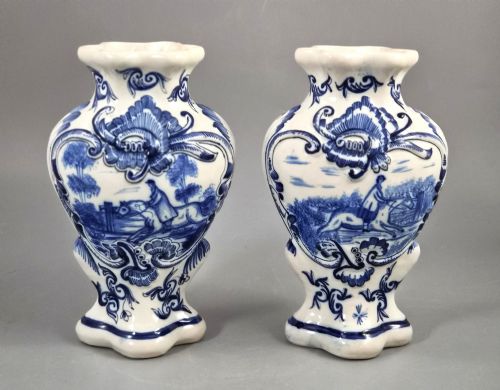
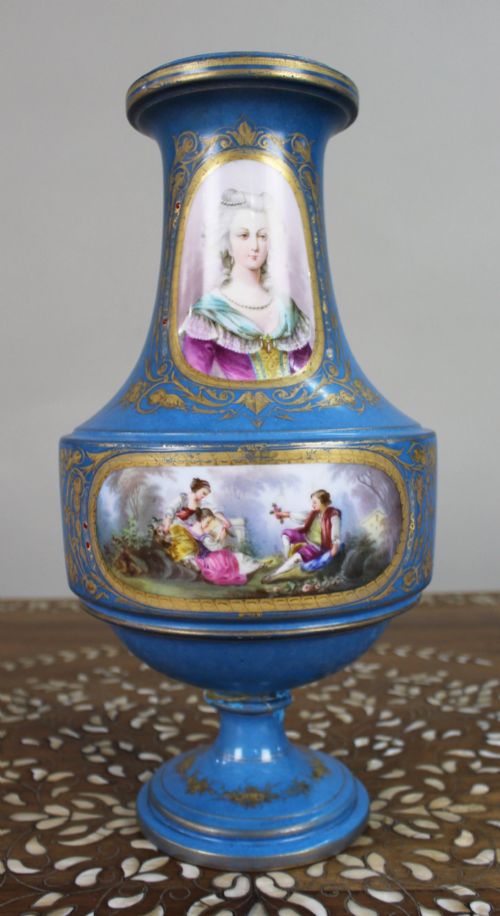
Potters shaped these vessels using porcelain, earthenware, tin-glaze, and bisque ceramic, often applying hand-painted floral scenes, Watteau motifs, or bleu céleste grounds. Many examples incorporate intricate enamel work and cobalt blue pigments under glaze.
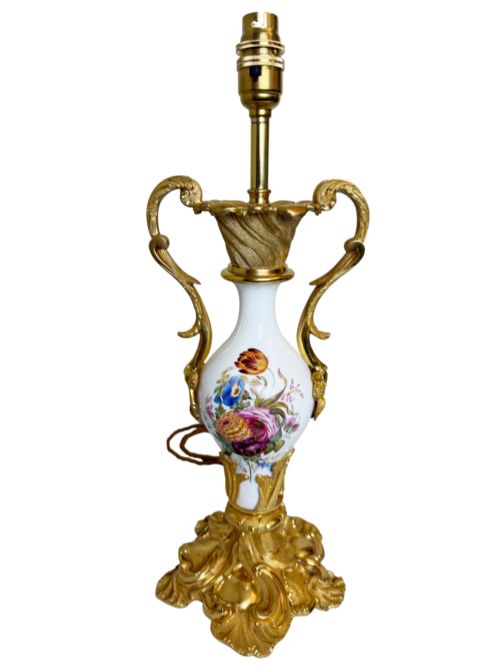
Foundries combined these ceramic bodies with gilt bronze, ormolu, and gold leaf mounts, framing the asymmetrical scrolls characteristic of the revival. Craftspeople cast and chased these metal fittings to secure handles, bases, and lids.
Victorians placed cherubs inside vases so nobody could accuse the mantelpiece of lacking romance.
What varies in quality
The distinction rests in the crispness of the hand-painted details and the weight of the metal mounts. Finer pieces display carefully articulated facial expressions on figures and precise brushwork on floral panels rather than mechanical stencilling.
Quality also shows in the integration between the ceramic body and the ormolu or gilt bronze framework. Superior examples feature mounts cast specifically to the contours of the vessel rather than generic fittings.
Fourmaintraux-Courquin·Samson Paris·Royal Vienna·Helena Wolfsohn·Vion et Baury·Sitzendorf
The Rococo Style Ceramic Vase Glossary
- Ormolu
- Gilded bronze used for mounts and decorative accents. It provides a bright golden surface that frames the ceramic body.
- Bisque
- Unglazed white porcelain that has been fired once. It presents a matte, marble-like texture favoured for figurative elements.
- Bleu céleste
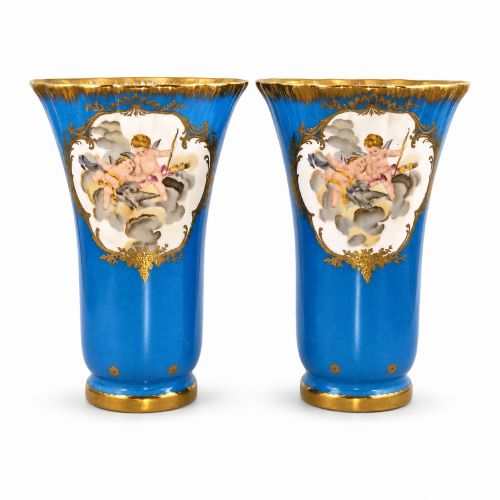
- A bright sky-blue porcelain ground colour developed at Sèvres. It often serves as a backdrop for gilt enrichment.
- Potpourri
- A lidded vessel perforated to release scent from dried materials inside. These pieces frequently feature elaborate pierced ceramic work.
Rococo Style Ceramic Vase: Frequently Asked Questions
How do I identify a Sèvres style vase?
These pieces typically feature rich coloured grounds, elaborate gilding, and hand-painted pastoral scenes reminiscent of the French royal factory. Many carry imitation marks, so attribution relies on the quality of the painting and the weight of the porcelain body.
Look closely at the enamel work and the integration of any ormolu mounts. Continental workshops across the nineteenth century produced extensive tributes to the factory without intending to deceive buyers.
What distinguishes Dresden porcelain from other types?
Dresden pieces often incorporate vibrant floral decoration, Watteau figures, and intricate lidded forms influenced by Meissen traditions. Workshops in the region utilised specific factory marks and blue grounds that help date their output to the late nineteenth century.
Examine the base for historic marks, such as the AR cipher, which connect the vessel to these German decorating studios. The painting displays a distinct palette focused on detailed miniatures and bright gilding.
Where should I display a large lidded vase?
These substantial vessels suit prominent surfaces such as mantelpieces, sideboards, or dedicated pedestals where their height and mounts can be appreciated. Garniture sets look best arranged symmetrically across a focal point in a room.
Ensure the placement protects delicate handles and ormolu mounts from accidental knocks. Their decorative presence makes them natural centrepieces for traditional or eclectic interiors.
Are these vases functional or purely decorative?
Most pieces serve primarily as decorative objects, garniture elements, or table lamps rather than containers for fresh flowers. Lidded jars and potpourri vessels were designed to hold dried scents or stand alone as ornaments.
Converting some examples into lamps occurred during later periods to suit modern interiors. Their primary value remains visual, driven by the ceramic artistry and the associated bronze mounts.